Woven Wire Mesh or Polyurethane Screen Media for Aggregate Production?
Choosing between woven wire mesh and polyurethane screen media is rarely a simple materials question. In aggregate production, it affects screening efficiency, plant uptime, finished gradation stability, and maintenance planning across the whole line. For project managers, the real issue is not which medium is “better” in general, but which one creates the lowest operational risk under actual site conditions.
That distinction matters because screening media is often evaluated too narrowly at purchase stage. A lower unit price may look attractive, yet frequent shutdowns, blinding, oversized carryover, or inconsistent product separation can erase any apparent savings. On the other hand, specifying polyurethane everywhere can also be a mistake if the material, aperture size, and tonnage profile favor steel wire mesh.
The decision starts with the material, not the media catalog
In quarry and mining applications, screen media performance is driven first by feed characteristics. Hard, abrasive stone with sharp edges behaves differently from damp, sticky, or clay-contaminated material. The same vibrating screen can deliver very different results depending on moisture, particle shape, top size fluctuation, and fines content.
Woven wire mesh usually performs well where operators need high open area and efficient stratification, especially in dry material with relatively free-flowing feed. Its lighter structure and larger open area often support better throughput and sharper screening in many standard aggregate applications.
Polyurethane screen media tends to gain advantage where wear life, noise reduction, and anti-blinding behavior are more important than maximum open area. In difficult conditions—such as wet feed, highly abrasive stone, or where pegging is frequent—polyurethane can reduce maintenance intervention and improve operating continuity.
This is why project teams should avoid a blanket rule. If the feed condition changes seasonally, the “right” media may also change by deck position or by time of year.
Where woven wire mesh still has a strong advantage
Woven wire mesh remains a practical choice in many aggregate plants because it is efficient, widely available, and comparatively economical to replace. For project managers under commissioning pressure or cost control targets, these are meaningful advantages.
Its strongest case usually includes the following conditions:
- Dry to moderately moist material
- Applications requiring high screening capacity
- Smaller apertures where accuracy matters
- Operations with planned maintenance access and manageable wear rates
- Plants that need fast replacement and flexible aperture changes
The high open area of wire mesh can support better production rates than thicker modular media in some applications. That matters when the screen is already a capacity bottleneck in the crushing and screening circuit. If the plant’s economics depend on maximizing tons per hour, woven wire may deliver better value even if wear life is shorter.
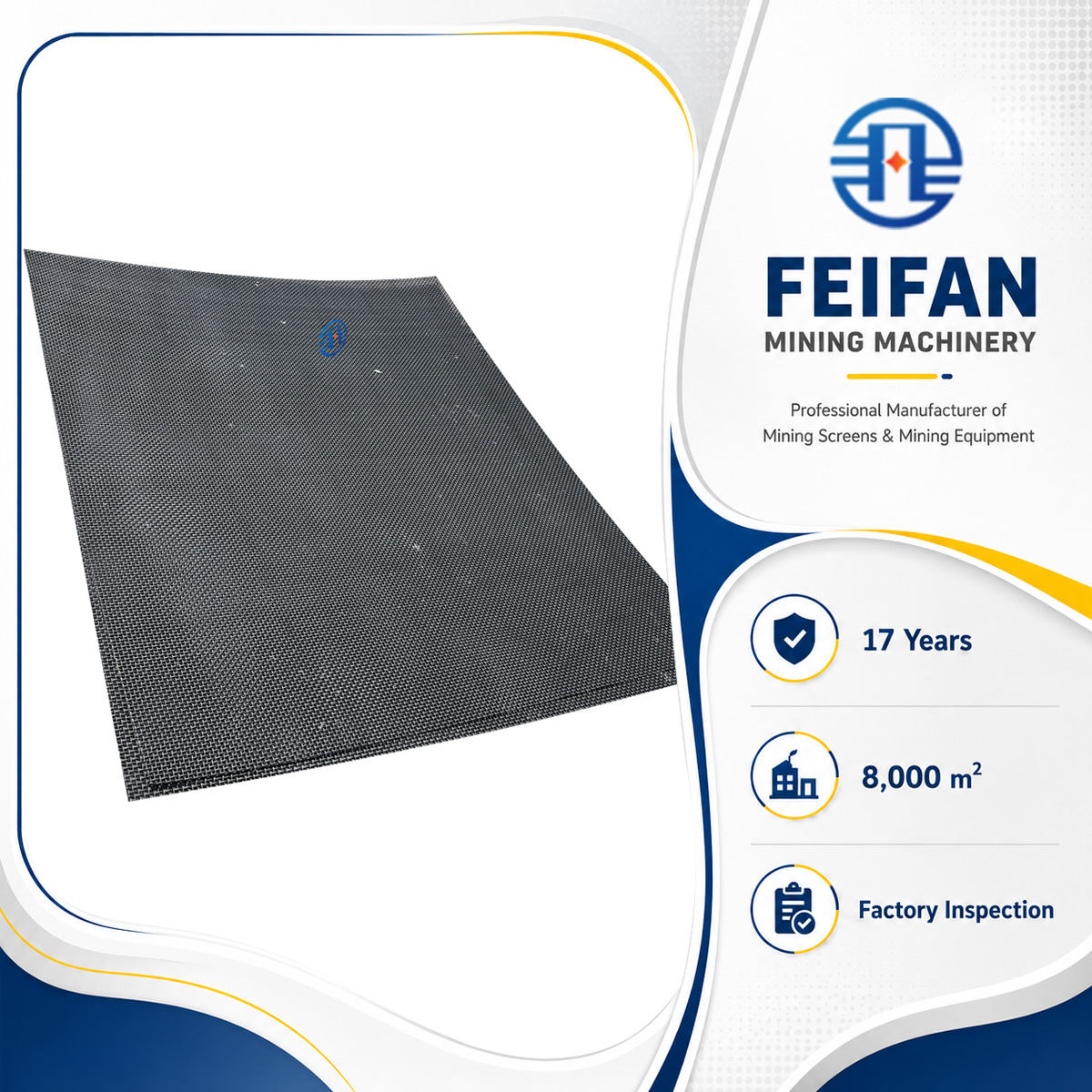
It is also easier for many operations to keep multiple wire mesh specifications in stock. For instance, quarries producing several commercial aggregate sizes may prefer the replacement flexibility of products such as OEM 5mm 7mm 8mm 9mm sieve mesh screen for quarry crusher mining vibrating screen mesh when fast deck adjustment is part of routine production planning.
Where polyurethane becomes the safer operational choice
Polyurethane is often selected not because it screens more aggressively, but because it lowers disruption. In many plants, especially those processing abrasive rock for long daily shifts, maintenance stoppages are more expensive than the media itself.
Its value becomes clearer under these conditions:
- High abrasion and rapid wear on steel mesh
- Sticky or wet material causing blinding or pegging
- Sites where maintenance labor is limited or shutdown windows are short
- Projects with strict noise or safety considerations
- Operations prioritizing service life consistency over peak open area
Polyurethane typically offers longer wear life than woven wire in abrasive duty. That can improve maintenance predictability, which is important for project managers coordinating crushers, conveyors, stockpiles, and loadout as one system. Fewer screen media changeouts can mean fewer disruptions to downstream production and less risk of missing contract supply commitments.
There is also a quality-control angle. As woven wire wears, aperture distortion can gradually affect sizing accuracy. Polyurethane, depending on design and quality, may maintain aperture integrity longer in certain wear environments. For plants selling tightly specified aggregates, this can reduce the risk of off-spec material.
The trade-off most teams underestimate: open area versus service life
The most common selection error is treating wear life as the only metric. A media panel that lasts longer is not automatically the more economical choice if it reduces effective screening area enough to cut throughput or increase near-size carryover.
Woven wire mesh generally offers more open area, which supports faster passage of material. Polyurethane usually sacrifices some open area because of thicker panel structure. That difference can materially affect capacity, especially on final classification decks or when screening difficult near-size fractions.
For project evaluation, the better question is:
What is the total production value gained or lost over the media life cycle?
This should include:
- Tons screened per hour
- Screening efficiency at target sizes
- Frequency and duration of shutdowns
- Labor required for replacement
- Risk of off-spec product
- Inventory and procurement lead time
In some plants, wire mesh wins because the added throughput outweighs replacement frequency. In others, polyurethane wins because unplanned stoppage is the larger cost driver.
Deck-by-deck selection is often better than full conversion
Many project teams frame the decision too broadly: woven wire or polyurethane for the whole screen. In practice, hybrid selection is often the more efficient route.
Top decks handling larger, more abrasive material may benefit from polyurethane’s wear resistance. Lower decks, where finer separation and higher open area are critical, may still favor woven wire mesh. This mixed approach can balance maintenance life and screening performance without forcing the plant into a single-media compromise.
For retrofit projects, this is especially useful. Instead of redesigning the full screening arrangement, managers can improve one problematic deck first, observe wear and efficiency, and then decide whether broader conversion makes sense.
Procurement and project risks beyond technical performance
From a project management perspective, media selection also affects supply chain and execution risk. Not all screen media suppliers deliver the same dimensional consistency, fastening reliability, or after-sales responsiveness. This matters because poorly fitting panels or inconsistent wire quality can create startup delays, vibration issues, and premature failure.
When specifying wire mesh, buyers should verify wire diameter, aperture tolerance, steel grade, edge preparation, and compatibility with the screen machine tensioning system. When specifying polyurethane, they should confirm panel hardness, reinforcement structure, fastening method, and actual application references under similar feed conditions.
Lead time should not be treated as a routine purchasing detail. If a remote or export project depends on imported replacement media, downtime exposure increases. In those cases, a standardizable specification—whether wire mesh or polyurethane—may be more valuable than a theoretically optimal but difficult-to-source option. This is one reason some operators keep proven sizes such as OEM 5mm 7mm 8mm 9mm sieve mesh screen for quarry crusher mining vibrating screen mesh within a broader spares strategy for quarry and mining screens.
What a sound selection process looks like
A good decision is usually based on trial data, not preference. If the operation is large enough, compare media on one screen deck under the same feed and operating parameters. Monitor not only wear life, but also throughput, blinding frequency, product quality, and maintenance hours.
Project managers should also involve both operations and maintenance teams. Operators usually focus on capacity and separation performance; maintenance teams see fastening failure, replacement difficulty, and wear pattern consistency. The best choice is often the one that performs acceptably across both perspectives.
There is no universal winner between woven wire mesh and polyurethane screen media. In aggregate production, the stronger option depends on whether the plant’s biggest problem is capacity loss, wear rate, blinding, labor availability, or shutdown cost. Woven wire mesh remains highly competitive where throughput, flexibility, and lower upfront cost matter most. Polyurethane becomes compelling where wear, noise, and maintenance disruption are the main constraints.
For project decision-makers, that is the practical conclusion: choose the media that solves the plant’s limiting factor, not the one with the most attractive brochure claim.
Leave A Message
If you are interested in our products and want to know more details, please leave a message here, we will reply you as soon as we can.