Does rubber screen mesh reduce noise in screening plants?
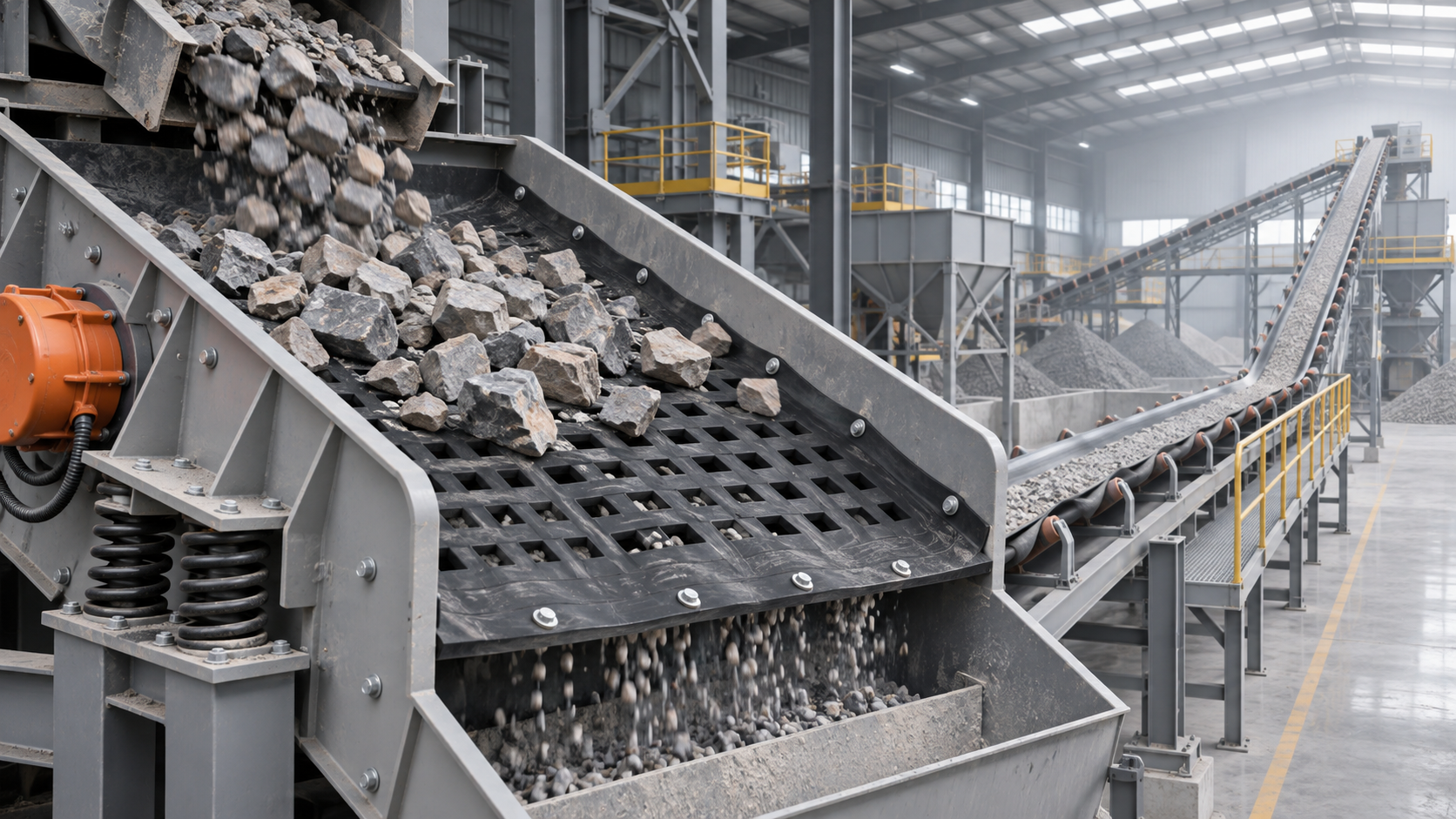
Noise from vibrating screens can affect worker comfort, site compliance, and project operations. Rubber Screen Mesh can help reduce screening noise by absorbing impact and vibration, particularly when compared with conventional steel screen media.
However, the results depend on material properties, installation, operating conditions, and the wider plant environment. For project managers planning a new aggregate facility or upgrading an existing line, understanding these factors is essential to balancing noise control with screening performance, wear life, and maintenance costs.
How much noise reduction can rubber screen mesh deliver?
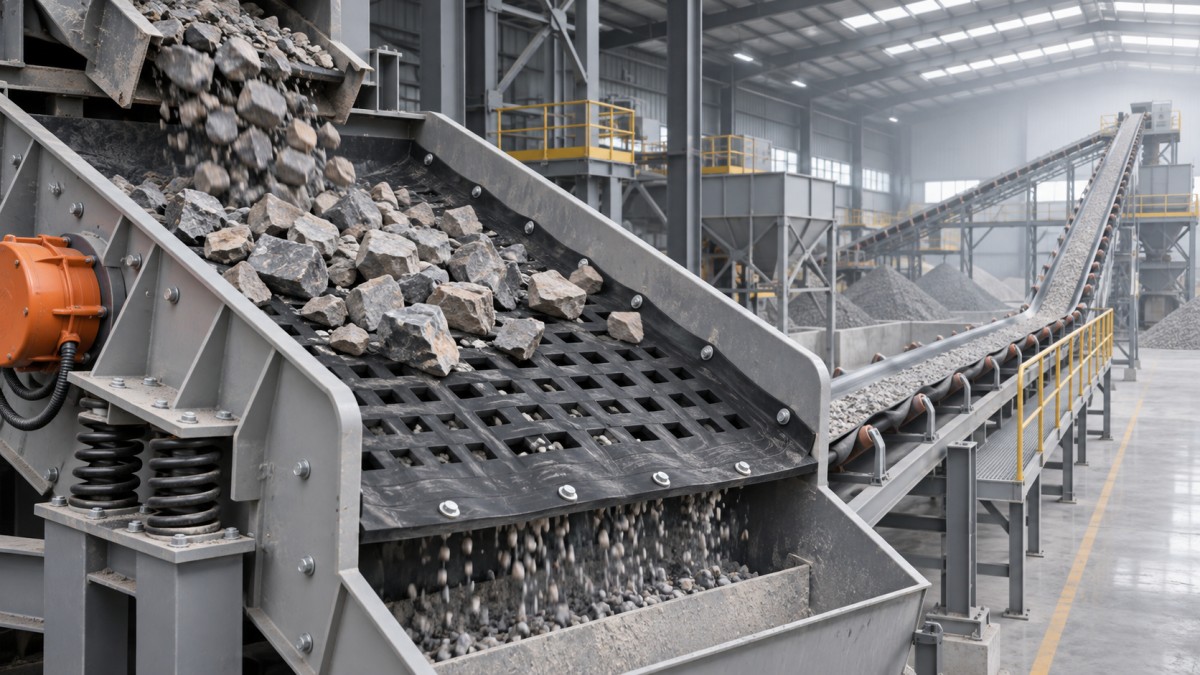
Rubber screen mesh can reduce the noise generated when aggregate strikes the screening surface. Its elastic structure absorbs some impact energy that would otherwise produce ringing and vibration.
The improvement depends on how much of the plant’s total noise comes from the screen media. Crushers, motors, chutes, conveyors, and material discharge points may still dominate.
There is no dependable reduction figure for every installation. Ask potential suppliers for measurements from comparable applications, and treat any claimed decibel saving as an estimate until verified on site.
A reduction that seems modest on a decibel meter may still be useful, but its operational value depends on worker exposure, nearby receptors, and applicable project requirements.
When is a rubber screen upgrade most worthwhile?
Rubber media is especially worth considering when coarse, heavy material falls onto a steel deck and impact noise is a significant part of the measured sound.
It may also suit projects where screen media replacement is already scheduled, because the team can evaluate noise benefits alongside wear life and planned maintenance costs.
For a new facility, assess media selection during equipment design. Early coordination can help confirm deck support, panel dimensions, load capacity, access, and compatibility with the screening duty.
The business case is less compelling when another machine is the primary noise source. A plant-wide assessment can prevent spending on a screen upgrade that misses the main problem.
Will quieter screen media affect production?
Potentially. Rubber and steel media differ in stiffness, thickness, aperture geometry, and open area. Those differences can change how material moves and passes through the deck.
For a given aperture size, thicker rubber sections may provide less open area than woven wire. Lower open area can restrict capacity or reduce screening efficiency in some duties.
Material characteristics matter too. Wet, sticky, or near-size particles can cause blinding or pegging, although the behavior of a particular rubber panel depends on its design and operating conditions.
Before approving a change, compare required product sizes, feed rate, moisture, bed depth, and acceptable carryover. Ask the supplier to propose a media configuration for those conditions.
Where capacity is critical, trial a representative section or one deck before converting the entire plant. Check whether any mixed-media arrangement is permitted by the equipment supplier.
How should project managers measure the results?
Start with baseline measurements before installation. Record sound levels at consistent operator positions and relevant site boundary locations, using suitable instruments and applicable local measurement methods.
Document feed rate, material type, moisture, operating speed, and which machines are running. Repeat measurements under comparable conditions after the rubber media has settled into service.
Track production at the same time: throughput, product grading, oversize carryover, downtime, and panel wear. A quieter screen that creates a production bottleneck may not deliver the expected value.
Separate area noise measurements from personal exposure assessments. Worker exposure also depends on time spent in different locations, and compliance decisions should follow applicable occupational and environmental requirements.
If results are uncertain, engage a qualified acoustics professional. They can help identify dominant sources and select measurement locations appropriate to the project and its permit conditions.
What costs and maintenance risks should be included?
Compare total ownership cost rather than purchase price alone. Include panel cost, expected service life, installation labor, replacement frequency, disposal, and any changes in production or energy use.
Rubber can offer useful wear resistance in suitable impact applications, but life varies with abrasion, feed size, deck loading, and material chemistry. Request application-specific wear references.
Confirm the fixing system and support arrangement before ordering. Incorrect fit, loose panels, or damaged supports can create noise, accelerate wear, and lead to unplanned shutdowns.
Check panel weight and access requirements as well. A design that reduces replacement frequency may still need lifting equipment or additional labor during maintenance.
Agree on spare panel availability and delivery times before commissioning, particularly for remote projects. Record panel positions and replacement dates to build a reliable operating history.
How does rubber compare with steel and polyurethane?
Steel wire screens can provide high open area and are widely used where capacity and accurate sizing matter. Their metallic impact and ringing may contribute significantly to noise.
Polyurethane media can also damp impact noise and provide wear resistance. Its suitability depends on the formulation, aperture design, support system, and material being screened.
Rubber is often considered for demanding impact duties, while steel or polyurethane may be preferable elsewhere. Compare specific products against the same feed, output, and maintenance requirements.
Different decks can use different media when equipment design permits. For example, a coarse-duty upper deck may justify rubber while a finer deck uses media selected for separation performance.
What else should be considered in a plant-wide noise plan?
Screen media is one part of the solution. Chute liners, reduced drop heights, equipment isolation, maintenance, barriers, and operational scheduling may address other significant noise sources.
Assess these measures together with dust control, drainage, access, and production flow. Changes around a screen should not obstruct inspection or create avoidable maintenance difficulties.
For silica sand projects, washing equipment should also be evaluated as part of the overall layout. One related option is the OEM Single Spiral Sand Washer for Silica Sand Plants with Reducer Transmission Wear Liners and Low Failure Rate Machine .
That washer serves a different process function from screen media. Its suitability depends on washing requirements, capacity, water management, and integration with the rest of the line.
How to make the final decision
Rubber Screen Mesh can reduce impact noise, especially on coarse-duty decks, but the benefit must be assessed against plant-wide noise, screening performance, and lifecycle cost.
For a defensible investment, establish a baseline, obtain a duty-specific proposal, and verify results against production and maintenance targets. Expand the upgrade when measured benefits support it.
Leave A Message
If you are interested in our products and want to know more details, please leave a message here, we will reply you as soon as we can.