Wire Mesh Types Used in Quarry Screening, Crushing, and Material Separation
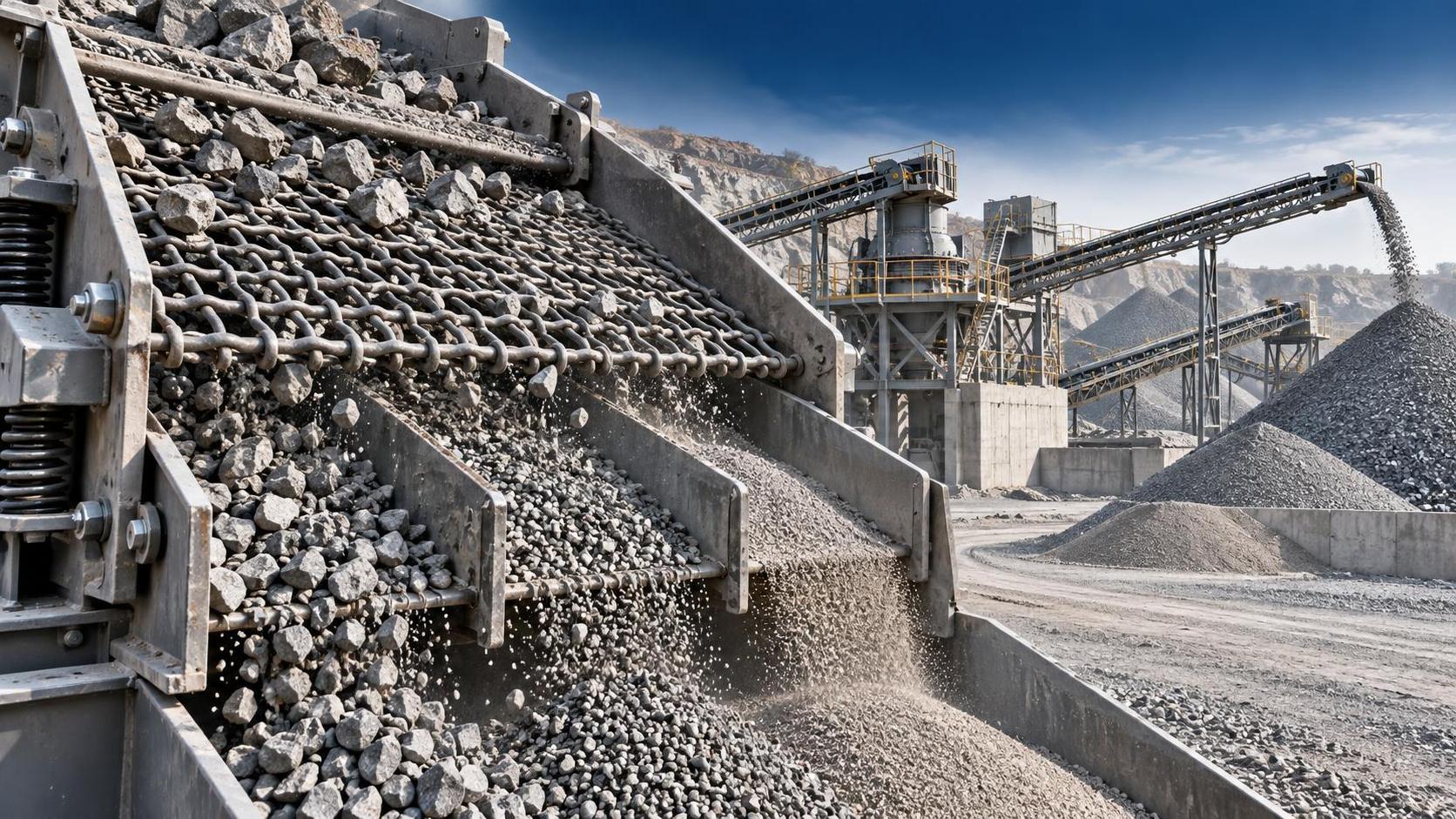
In quarry screening, crushing, and material separation, wire mesh is not a small consumable detail. It is the working surface that decides what passes, what stays, and how consistently a plant can produce the required aggregate grades. A screen panel that wears too quickly, blinds over with damp fines, or fails at the hooks can interrupt an entire production line long before the crusher itself needs attention.
For operators, the practical question is rarely “Which mesh is best?” The better question is: Which screening media matches the material, feed size, moisture level, vibration intensity, and target product size in this section of the plant? Woven steel, polyurethane, rubber, and self-cleaning screens all have a place. Their value depends on where and how they are used.
Why wire mesh selection matters in a quarry
A vibrating screen separates material by aperture size, but actual screening performance depends on much more than the nominal opening. The shape of the wire, open area, panel tension, material flow, and particle behavior all affect capacity and accuracy. A screen with a larger open area may deliver higher throughput, while a thicker wire may survive a harder, more abrasive feed. Neither choice is automatically correct.
This balance becomes especially important after primary or secondary crushing. Freshly crushed stone often has sharp edges and irregular shapes. Quartz sand, clinker, granite, basalt, and recycled aggregate can each create different wear patterns. If the mesh is too light, wire breakage may occur early. If it is too heavy for a fine separation duty, useful open area is lost and the screen can become a bottleneck.
Woven wire mesh: the standard choice for many dry screening duties
Woven wire mesh remains one of the most widely used screening media in aggregate plants. It is made by weaving high-carbon steel wire, spring steel wire, or other wear-resistant wire into square, rectangular, slotted, or specialty openings. Its broad range of aperture sizes makes it suitable for scalping, grading, and final sizing across many quarry applications.
For dry crushed stone and gravel, square openings are commonly selected when a relatively uniform particle size is required. They provide a balanced combination of sizing accuracy and open area. Rectangular openings, often installed with the long dimension running in the direction of material flow, can improve capacity when the priority is moving more material through the deck. However, they may allow more elongated particles to pass, so product specification should always guide the decision.
Crimp style also matters. Lock crimp, flat-top crimp, and intermediate crimp constructions influence the stability of the openings and the surface profile of the screen. A flatter top surface can be useful where smoother material movement is desired, while a more defined crimp can improve wire locking for demanding vibration conditions.
Woven steel mesh is generally a practical option when operators need high screening efficiency, fast replacement, and a familiar solution for dry, abrasive feed. The trade-off is that very wet or sticky material can clog conventional openings, particularly in the fine screening range.
Heavy-duty woven screens for primary and secondary crushing circuits
Near the front of a quarry plant, screen media must withstand impact as well as abrasion. Large blasted rock, oversize material from a jaw crusher, and heavy recirculating loads can quickly damage light-gauge mesh. Heavy-duty woven wire screens use larger wire diameters and reinforced edge preparations to resist this environment.
These panels are often installed on scalping decks or intermediate decks, where the aim is to remove fines before further crushing or to control the size of material entering the next crusher stage. Operators should inspect high-impact zones carefully. A panel may look acceptable across most of its surface but fail early where material first lands. Feed distribution, chute alignment, and the condition of rubber impact bars can be as important as the screen itself.
When a crusher is processing abrasive feed, screen performance should also be reviewed alongside crusher wear management. For example, plants running vertical shaft impact equipment for manufactured sand, clinker, or quartz applications may coordinate screen maintenance with rotor inspections and replacement planning for components such as OEM Economic Wear Parts VSI-7000 With Closed Rotor And Vibration Monitor For Cement Plant Clinker And Quartz Sand Machine. Stable crusher output and properly matched screen apertures help reduce unnecessary recirculation.
Self-cleaning wire mesh for sticky, damp, or difficult material
Some materials do not behave neatly on a standard square mesh. Clay-bearing gravel, moist manufactured sand, weathered rock, and fine material with a high moisture content can stick inside the openings. Once blinding begins, effective open area falls. The screen may continue vibrating, but the deck is no longer separating material efficiently.
Self-cleaning wire mesh is designed for these conditions. Instead of rigidly locked intersections, it uses specially formed wires that move independently during vibration. This movement helps dislodge particles that would otherwise wedge in the apertures. Common designs include harp wire, crimped self-cleaning mesh, and anti-clogging screen configurations.
The benefit is not simply fewer blocked openings. It can also mean less manual cleaning, more stable production during changing weather, and better use of the full screen deck. Still, self-cleaning mesh is not a universal replacement for conventional wire cloth. Because of its moving-wire structure, it may have different wear characteristics and may not be the best option where extremely precise sizing is required. It works best when blinding is the main operating problem.
Polyurethane screen mesh: long wear life in abrasive or wet applications
Polyurethane screen mesh is commonly used where abrasion, water, and long service intervals are major concerns. It is especially relevant in washing plants, wet classification systems, fine aggregate production, and sections handling highly abrasive sand or gravel. Polyurethane panels are typically modular or tensioned designs with molded apertures rather than woven wire.
Compared with steel wire mesh, polyurethane usually offers stronger resistance to abrasion and can reduce operating noise. Its flexible surface may also help limit pegging in certain materials. The drawback is lower open area in many panel designs, which can reduce capacity if the screen deck is not sized appropriately. For this reason, polyurethane is often selected where durability and uptime matter more than maximum instantaneous throughput.
A mixed deck can be a sensible answer. A quarry may use heavy woven steel on the feed end, where impact is highest, and polyurethane panels in the lower-wear areas or fine wet-screening zones. This approach recognizes that material conditions change as they travel across the deck.
Rubber screens and perforated plate: where impact control takes priority
Rubber screen media is another option for coarse, high-impact screening. Its ability to absorb impact can protect the deck structure and reduce noise, making it useful for large aggregate, demolition material, or harsh scalping duties. Rubber generally lasts well against impact, although its aperture precision and open area may not suit fine classification.
Perforated steel plate is also used for very coarse separation, particularly where a rigid screening surface is needed. It is strong and durable, but it has less open area than many woven designs. In practice, it is chosen for a specific heavy-duty purpose rather than as a general substitute for wire mesh.
How to choose the right mesh before ordering
Before replacing a screen panel, operators should record more than the opening size stamped on the old mesh. A useful selection checklist includes:
- Material characteristics: hardness, abrasiveness, moisture, clay content, particle shape, and maximum feed size.
- Screening duty: scalping, intermediate separation, final grading, dewatering, or washing.
- Required cut size: the product size specification and allowable oversize or undersize.
- Screen machine details: deck dimensions, tensioning system, vibration amplitude, frequency, and screen inclination.
- Current failure mode: wire breakage, edge tearing, blinding, pegging, rapid abrasion, or low capacity.
It is also worth checking the orientation of slotted openings and the direction of material flow. A minor installation error can change the effective behavior of the wire mesh and make a well-selected panel perform poorly. Correct tension is equally important: loose mesh can move excessively, wear at the hooks, and develop premature fractures.
Daily habits that extend screen media life
Screen mesh rarely fails for one reason alone. Poor feed distribution can overload one side of the deck. Oversized tramp material can strike the panel repeatedly. Worn side liners may allow material to bypass the intended path. Even a simple blocked spray bar in a wet system can change how material carries across the screen.
During routine checks, look for shiny polished areas, broken wires, stretched hooks, uneven wear bands, and material build-up along the sidewalls. These clues reveal how the material is actually moving. Replacing panels in time is usually less costly than waiting for a damaged mesh to contaminate multiple product sizes or force an unplanned shutdown.
The most suitable wire mesh is therefore the one that supports the real working conditions of the plant, not just the aperture listed on a drawing. By matching screen media to each stage of crushing and separation, quarry operators can protect product quality, maintain steady throughput, and make maintenance decisions with far fewer surprises.
Leave A Message
If you are interested in our products and want to know more details, please leave a message here, we will reply you as soon as we can.