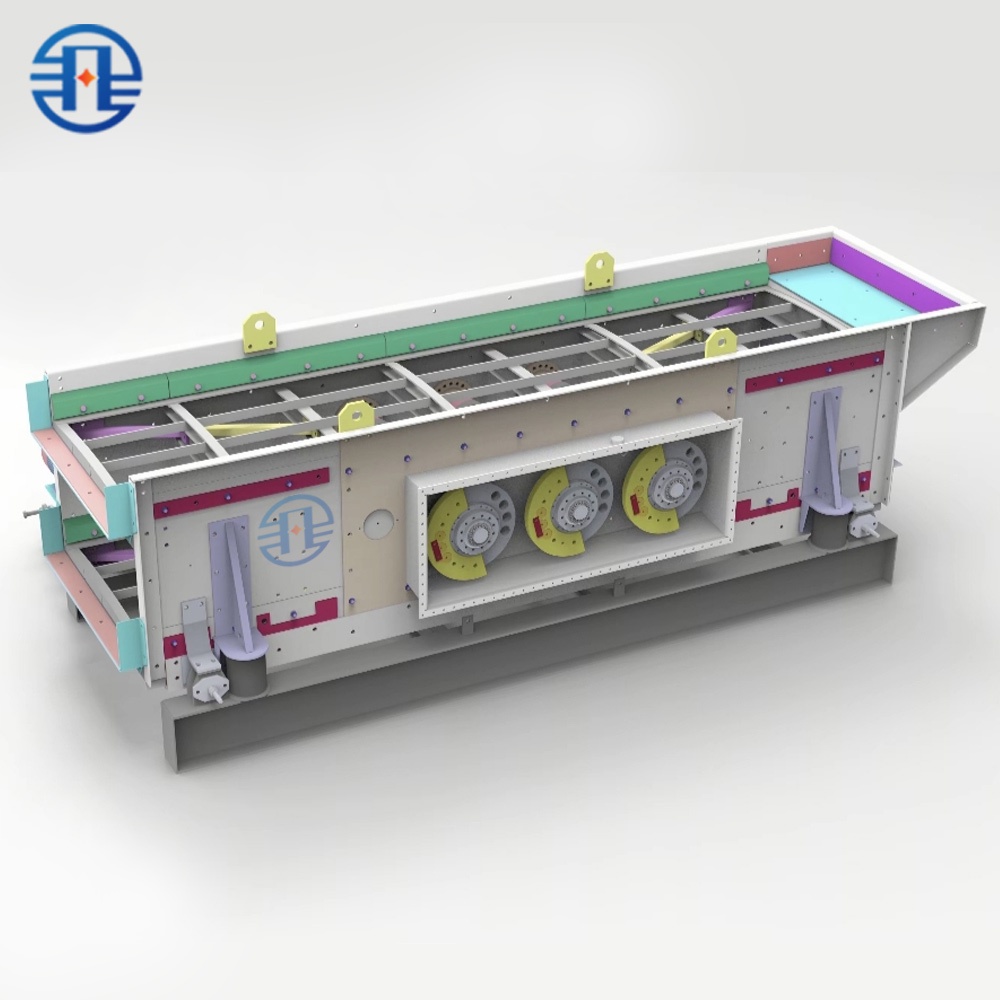
Accept a Horizontal Vibrating Screen only when documented tests demonstrate that capacity, separation quality, mechanical condition, and safety functions meet the agreed specifications.
For quality control and safety teams, smooth operation alone proves little. Acceptance requires representative material, reliable measurements, clear limits, and records supporting each decision.
This guide explains how to verify vibration, throughput, screening efficiency, bearing temperature, noise, and protective measures before releasing the equipment for routine aggregate production.
What must be agreed before the acceptance test?
Start with the purchase specification, approved drawings, operating manual, and acceptance protocol. Convert every guarantee into a measurable requirement with a defined test method.
Record the screen model, deck arrangement, aperture sizes, screen media, drive configuration, motor ratings, and intended duty. Confirm that installed components match approved documentation.
Define feed grading, moisture, bulk density, near-size content, and allowable variation. These conditions strongly influence capacity and separation, making undocumented comparisons unreliable during acceptance.
Separate factory acceptance from site acceptance. A factory run can verify assembly and motion, while production guarantees generally require representative feed and installed plant conditions.
Is the installation safe enough to begin testing?
Before energizing, isolate hazardous energy and inspect foundations, supports, springs, fasteners, lubrication, and clearances. Remove shipping restraints according to the manufacturer’s commissioning instructions.
Check screen panel seating, tensioning systems, side seals, discharge chutes, and feed arrangements. Loose panels or bypass gaps can invalidate otherwise acceptable separation results.
Confirm that the vibrating body cannot contact fixed structures throughout its expected movement, including startup and shutdown. Inspect flexible connections and surrounding access routes.
Verify guards around drives, shafts, couplings, and other moving components. Check safe access, warning labels, isolation points, and protection against falling material before startup.
Test emergency stops and installed interlocks using an approved procedure. Resetting a protective device must not automatically restart equipment; confirm the specified restart sequence.
Are vibration measurements consistent with the approved design?
Run the empty screen first and observe startup, steady operation, and shutdown from safe locations. Stop for impacts, abnormal movement, rubbing, or unstable supports.
Measure rotational speed with a suitable tachometer and motion with approved vibration instruments or indicators. Take readings at the manufacturer’s designated measurement locations.
Record displacement on both sides and at relevant feed and discharge positions. Specify whether values represent peak amplitude or peak-to-peak displacement, commonly called stroke.
Compare results with the approved motion pattern, whether linear, elliptical, or another specified trajectory. Do not apply a generic stroke value across different designs.
Unequal readings may indicate uneven loading, spring problems, structural issues, or drive synchronization faults. Repeat measurements under load before deciding whether an imbalance requires correction.
Can the screen sustain guaranteed throughput with representative feed?
Introduce material gradually, then establish the specified operating rate. Begin performance sampling only after feed, screen loading, and product discharge have stabilized sufficiently.
Measure throughput using a calibrated belt scale or an approved timed weighing method. Record calibration status, measurement duration, and whether tonnage uses wet or dry mass.
Inspect feed distribution across the deck width. Concentrated loading can overload one area, accelerate wear, and reduce separation even when total feed appears acceptable.
Observe bed depth, material travel, blinding, pegging, and discharge behavior from protected positions. Record buildup or spillage instead of treating these as minor housekeeping issues.
Demonstrate sustained performance for the agreed duration. Brief peak capacity does not establish continuous capability, particularly when moisture or near-size material creates difficult screening conditions.
Does each product meet its separation requirement?
Collect representative samples from feed and every relevant discharge stream during the same stable period, allowing for material transit time where necessary in the sampling plan.
Use an approved sampling method that captures the stream representatively. Avoid convenient surface grabs, which can bias results because particles segregate during handling and discharge.
Analyze particle size using the agreed sieve method and moisture basis. For multiple decks, assess each specified cut and final product separately against contractual limits.
Define efficiency before calculating it. Undersize recovery, oversize recovery, and overall screening efficiency describe different outcomes and should never be substituted without agreement.
For undersize recovery, divide undersize mass reporting to the intended undersize stream by undersize mass entering in the feed, then multiply by one hundred.
Calculate these masses from measured stream rates and sieve fractions on a consistent basis. Reconcile the mass balance within the agreed measurement uncertainty before acceptance.
Also check misplaced particles in saleable products. High undersize recovery can coexist with excessive oversize contamination, so one favorable percentage cannot establish acceptable screening performance.
Do temperature, power, and noise remain acceptable under load?
Trend bearing temperatures throughout the loaded run, recording ambient temperature, measurement location, instrument, and elapsed time. Compare readings with limits for the actual bearing arrangement.
A stable temperature within limits supports acceptance; continued temperature rise requires investigation. Avoid universal temperature thresholds because lubrication, speed, seals, and bearing designs differ.
Record motor current and, where specified, power consumption under representative load. Investigate overload, phase imbalance, unexpected fluctuations, or readings inconsistent with the approved drive configuration.
Measure noise at defined positions under documented operating conditions. Record background noise and the measurement method; distinguish equipment acceptance limits from occupational exposure assessment.
What should trigger a failed test or a retest?
Stop testing for unsafe motion, failed protective functions, structural contact, serious leakage, or rapidly increasing temperatures. Apply the site’s isolation procedure before investigating defects.
When performance misses its target, first verify feed conditions, sampling quality, instrument calibration, and installation. Then investigate machine settings, media selection, and mechanical condition.
Document every adjustment to speed, stroke, feed rate, or screen media. Changes must remain within approved limits, and affected performance checks must be repeated afterward.
Do not accept a lower feed rate as proof of the original capacity guarantee. Any revised duty requires explicit agreement and corresponding acceptance criteria.
What evidence is needed before signing acceptance?
The acceptance report should identify equipment, test personnel, instruments, calibration records, feed characteristics, operating settings, sampling methods, raw measurements, calculations, photographs, and outstanding defects.
Assign each requirement a pass, fail, or pending result. Link corrective actions to responsible parties, completion dates, and defined retest evidence before closing exceptions.
Conditional acceptance should identify permitted operation and unresolved obligations clearly. Safety deficiencies that prevent safe operation must be resolved before the equipment enters service.
A Horizontal Vibrating Screen is ready for acceptance when representative tests prove capacity and separation, mechanical readings remain acceptable, and protective functions operate correctly.
For an integrated equipment and screen media supplier such as Feifan, acceptance documentation should connect machine settings, installed panels, and process conditions to verified results.