How to investigate bearing overheating on a horizontal vibrating screen
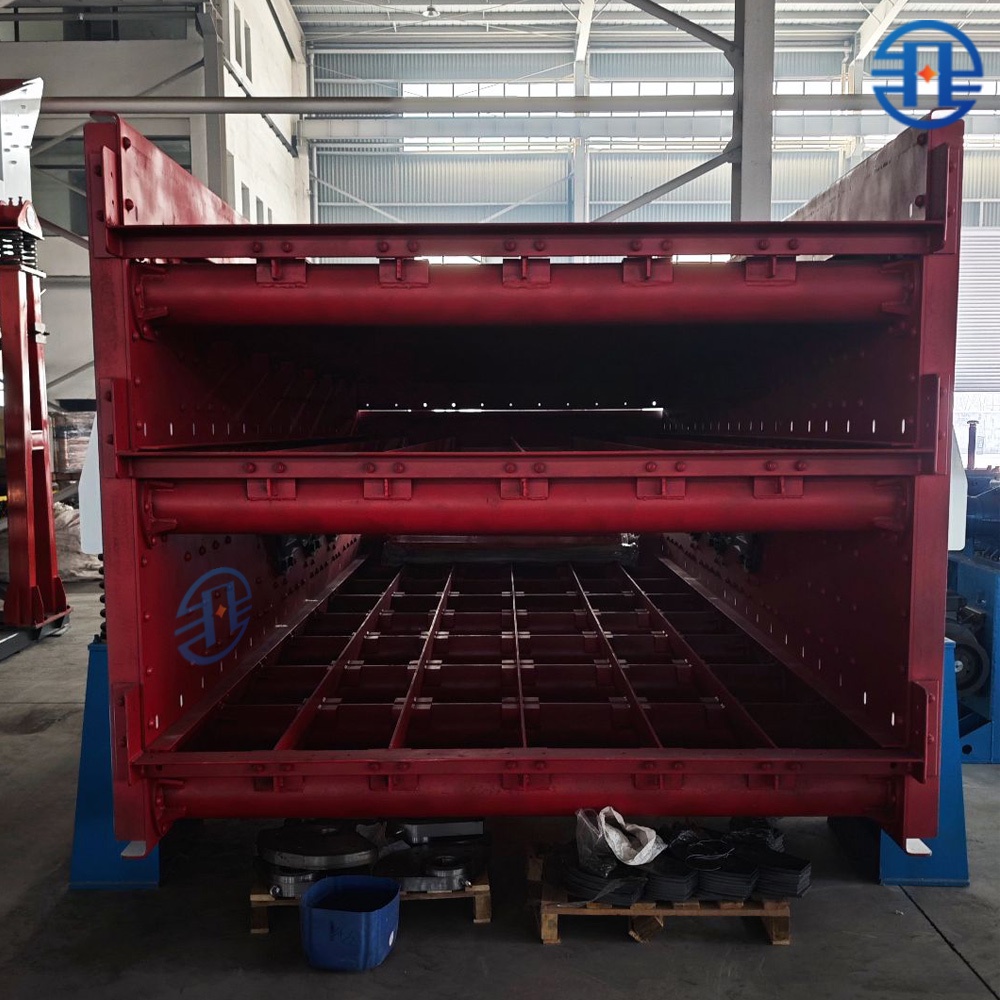
How to investigate bearing overheating on a horizontal vibrating screen
Bearing overheating on a Horizontal Vibrating Screen can point to lubrication problems, contamination, incorrect internal clearance, or abnormal loading. The expensive mistake is to assume that every hot housing needs more grease—or a new bearing. Either response can leave the original fault untouched.
A useful investigation follows the evidence: confirm the temperature trend, make the machine safe, inspect the lubrication system, then work outward through the bearing arrangement, exciter, and screen structure. In sand and gravel plants, the source of the problem may be nowhere near the hottest bearing.
Confirm what “overheating” means on this machine
Use the screen and exciter manufacturer's alarm and shutdown limits. There is no single temperature threshold suitable for every bearing arrangement, lubricant, speed, and ambient condition. An external housing reading also does not equal the temperature inside the bearing.
Record the measuring point, instrument, ambient temperature, operating time, feed condition, and readings from comparable bearing positions. Infrared readings can be misleading on shiny surfaces or when measurement locations change. Use installed sensors where available, and compare readings taken consistently.
The pattern often narrows the search:
- Heating immediately after greasing: investigate excess quantity, an obstructed relief path, or a lubricant change.
- One position hotter than its equivalent: suspect a local lubrication, seal, fit, or bearing problem, while allowing for design differences.
- Several positions heating together: check shared lubrication conditions, speed, process loading, and vibration behavior.
- Heating after bearing replacement: review the bearing designation, mounting procedure, fits, and residual clearance.
A rapid rise, abnormal noise, smoke, lubricant leakage, or a shutdown alarm calls for stopping under the site's approved procedure—not running longer to collect a better trend. Do not approach exposed rotating parts or touch a housing to judge its temperature.
Make the inspection safe without losing evidence
Before opening guards, checking fasteners, or disconnecting lubrication lines, isolate and lock out all relevant energy sources. Confirm zero motion and control stored energy using the manufacturer's instructions. Exciter weights, spring-supported assemblies, and connected equipment require particular attention. Allow hot components to cool before handling them.
Before cleaning, photograph leaks, displaced seals, grease deposits, loose hardware, and material buildup. Take lubricant samples from suitable locations using clean tools. Wiping everything down first can remove the evidence that distinguishes water ingress from overfilling.
Check lubrication delivery—not just the maintenance record
Start with the actual lubrication arrangement. A grease-lubricated bearing, an oil-bath exciter, and a circulating-oil system need different checks. Confirm the specified lubricant, quantity or level, replenishment interval, and approved alternatives against the machine documentation.
For grease systems, inspect the delivery route. A grease gun developing pressure does not prove that grease reached the bearing: a line may be blocked, a fitting damaged, or a distributor malfunctioning. Conversely, excessive grease can cause churning and heat. Do not keep pumping because the housing remains hot, and do not remove plugs or seals unless the manufacturer's procedure permits it.
For oil-lubricated exciters, check level under the specified stopped or running conditions. Check breathers, leaks, and any fitted pumps, filters, coolers, or flow indicators. Both insufficient oil and excessive level can create trouble. A sight glass alone may not reveal whether oil is reaching every required location.
Ask whether the lubricant changed recently. Matching viscosity or consistency labels does not establish compatibility. If products were mixed, seek guidance from the lubricant supplier and equipment manufacturer rather than assuming that topping up will correct the condition.
Look for the contamination route
Wet screening and washdown expose seals and breathers to water and abrasive fines. Inspect seal wear, shaft contact surfaces, damaged covers, and nearby spray direction. Milky oil, gritty grease, rust staining, or metallic debris justify further investigation, although appearance alone cannot establish the full damage mechanism.
Replacing contaminated lubricant without repairing the entry path is usually temporary. Check whether cleaning practices direct high-pressure water at bearing housings, especially when equipment is cooling after shutdown.
If the problem followed maintenance, revisit the installation
A bearing that fits the shaft is not necessarily the correct bearing. Verify the full designation, including clearance class and any application-specific features. Vibrating-screen service imposes demanding loads, so substitutions require engineering confirmation.
Review shaft and housing measurements, mounting records, and the method used to establish operating clearance. Excessive interference or incorrect mounting can reduce clearance and generate heat. Loose fits can allow ring movement and damage the seating surfaces. Where the design requires axial movement for thermal expansion, confirm that it has not been unintentionally restricted.
Also inspect seal installation, cover alignment, spacers, and retaining components. A rubbing seal can heat a housing even when the rolling elements are not the original problem. Do not select a larger-clearance bearing as a blanket remedy; the correct choice depends on the complete arrangement.
Follow the load back into the screen
Horizontal screens use different exciter configurations, so investigate against the correct drawings. Check the drive, coupling or belt condition, exciter mounting, and synchronization or timing where applicable. Incorrect speed or disturbed eccentric-weight settings can change bearing loads. Never adjust weights experimentally to reduce temperature.
Look beyond the exciter for broken or mismatched springs, loose structural connections, cracked members, packed material, and contact with chutes or guards. Uneven feed and blinded decks can change material distribution and operating behavior. Compare stroke and motion at the manufacturer's specified measuring points using a suitable method.
Recent screen-media changes also deserve attention. Shandong Feifan Mining Machinery manufactures screening equipment, while Binzhou Feifan Wire Mesh produces polyurethane and steel screen media within the same group. That equipment-and-media scope is relevant here: a troubleshooting review should consider deck configuration, media weight, and material retention alongside the bearing assembly, without assuming any media change caused the fault.
Restart only when there is something specific to verify
Before restart, document the identified fault, corrective work, lubricant details, and unresolved questions. Refit guards, clear personnel, and follow the approved commissioning procedure. Where permitted, compare no-load and loaded behavior without changing several variables simultaneously.
Trend temperature at consistent locations alongside speed, vibration, noise, and feed conditions. A cooler housing during a short empty run does not prove the repair will hold under production load. If heating returns, stop according to the applicable limits and send the OEM a concise evidence package: bearing designation, temperature history, lubrication records, photographs, and recent maintenance changes. That gives the next investigation a firmer starting point than another bearing replacement.
Leave A Message
If you are interested in our products and want to know more details, please leave a message here, we will reply you as soon as we can.