Wire Mesh Opening Size and Wire Diameter: How They Affect Screening Results
Wire Mesh Opening Size and Wire Diameter: How They Affect Screening Results
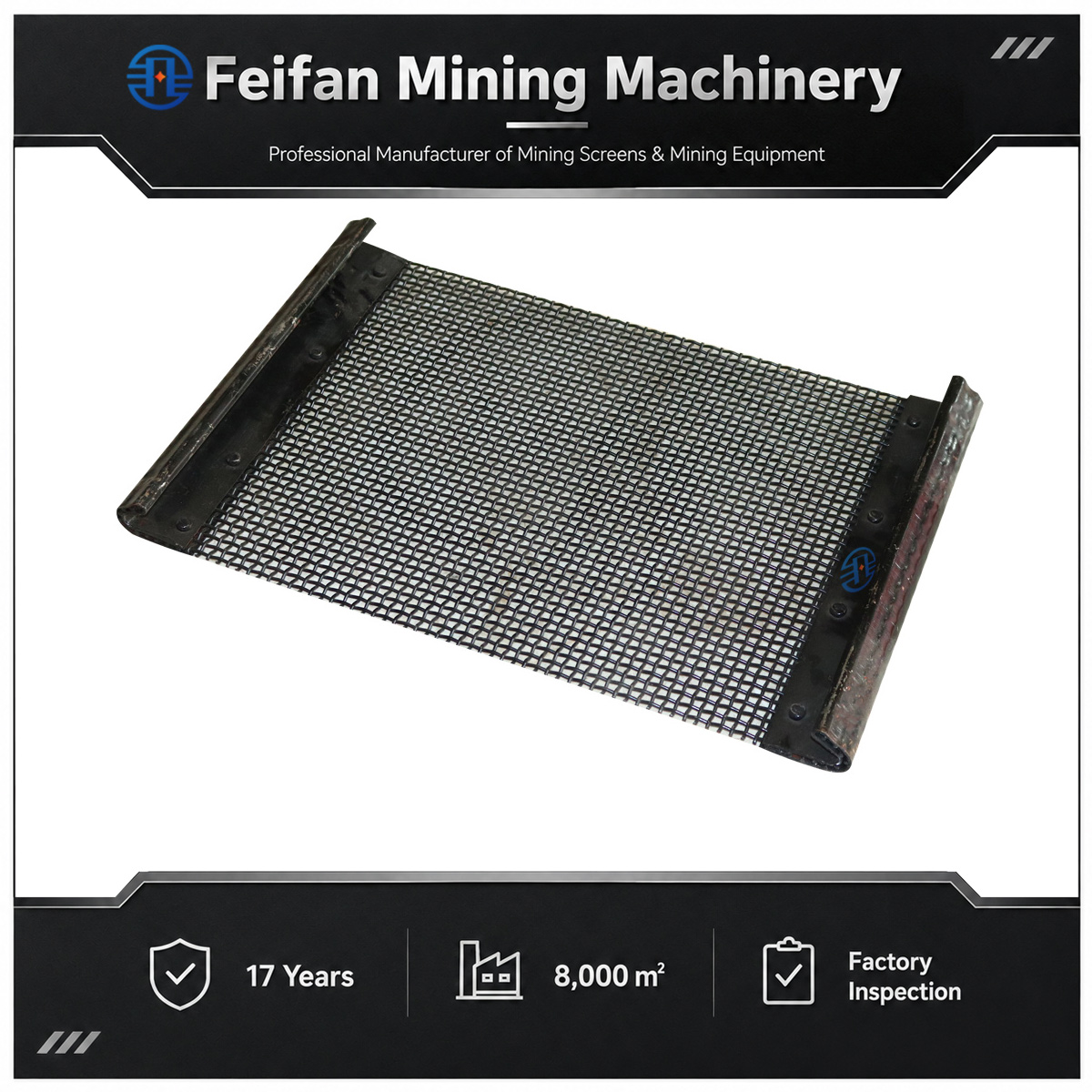
In screening applications, the relationship between wire mesh opening size and wire diameter directly influences capacity, precision, and material flow. Choosing the right wire mesh is not only about matching particle size, but also about improving wear resistance, reducing blinding, and maintaining stable performance. In mining and aggregate plants, small changes in these two parameters can shift the balance between throughput and separation quality more than many buyers expect.
This matters because screening is rarely an isolated step. The performance of crushers, feeders, conveyors, and the final grading process all depend on how consistently the screen deck performs. If the opening is too small, production may choke. If the wire is too thick, open area drops and material stratification changes. If the wire is too thin, wear life may become unacceptable in abrasive stone or sand applications.
Opening size decides the cut point, but not the whole result
Opening size is usually the first parameter engineers look at because it defines the nominal separation size. In simple terms, it is the clear space through which undersize particles can pass. But an opening size on paper is not always the same as screening performance in the field.
Real material rarely behaves like ideal lab samples. Moisture, flaky particles, near-size material, and feed distribution all affect whether particles actually pass through the mesh. A 10 mm opening may not deliver a clean 10 mm cut if the feed contains a high proportion of elongated stone or sticky fines. In these situations, buyers often blame the screening machine first, while the wire mesh specification is the quieter but more decisive issue.
For this reason, mesh selection usually needs to consider three dimensions together: target product size, particle shape, and the amount of near-size material in the feed. When near-size content is high, screen efficiency becomes more sensitive to both mesh design and operating conditions.
Wire diameter affects strength, open area, and service life
Wire diameter is often treated as a durability choice, but its effect is broader. A thicker wire improves mechanical strength and generally extends wear life, especially in high-impact zones or abrasive aggregate screening. The trade-off is that thicker wire reduces the open area of the mesh. Less open area means fewer opportunities for particles to pass through during each vibration cycle.
That is why two wire mesh panels with the same opening size can behave very differently. If one uses a thicker wire, it may last longer but deliver lower capacity or slightly different efficiency. A thinner wire can increase open area and improve throughput, yet it may fail faster under heavy feed or poor loading conditions. There is no universal best option. The better choice depends on abrasion level, impact load, required uptime, and how expensive unscheduled replacement is at that site.
Why opening size and wire diameter must be evaluated together
The practical mistake is selecting opening size first and treating wire diameter as a secondary detail. In reality, the two define the effective screening surface together. A wider opening with thicker wire may perform similarly to a slightly smaller opening with thinner wire, depending on feed characteristics and machine motion. This is one reason experienced plants compare not only aperture size, but also open area percentage, expected wear pattern, and installation position on the deck.
For example, the top deck in a multi-deck vibrating screen often sees heavier impact and larger stone. It may justify stronger wire or even a different screening medium. Lower decks, handling finer classification, may need a more open design to preserve efficiency. The right answer is often mixed rather than uniform across all decks.
Common selection problems on site
A frequent issue is trying to solve blinding only by enlarging the opening. Sometimes that works, but sometimes the root cause is wet feed, poor vibration condition, or the wrong screen media for the material. In sticky or difficult screening duties, polyurethane panels or hybrid configurations may be more practical than changing steel wire mesh alone.
Another problem is specifying mesh only by nominal aperture during procurement. Without confirming wire diameter, material grade, hook type, panel dimensions, and tensioning requirements, two suppliers may quote products that look comparable but behave very differently in service. That is one reason integrated manufacturers tend to identify issues earlier: they see the interaction between screen media, machine structure, and upstream crushing.
In aggregate lines, this upstream link is easy to overlook. Crusher settings influence particle shape and gradation, which then change how the mesh performs. When feed shape is highly flaky or the fines content shifts, screening results can move even if the mesh specification stays the same. This is also why equipment choices such as FEIFAN Hydraulic Quick Open Cover 2VSI-15 With Max Feed 45mm And CE Certification For Asphalt Road Material And Building Sand VSI Crusher may indirectly affect downstream screening by changing the characteristics of the produced material.
What experienced buyers usually confirm before finalizing a mesh
The most reliable approach is to review the mesh as part of the process, not as a spare part alone. In practice, the following points are usually worth confirming before final selection:
- Required product size tolerance, not just nominal cut size
- Feed moisture, clay content, and near-size proportion
- Impact load on each deck position
- Expected maintenance interval and replacement accessibility
- Whether steel wire mesh, polyurethane, or a mixed solution is more suitable
These are not abstract considerations. They affect downtime, stock of spare panels, and the stability of final aggregate grading. Plants running multiple products often value consistency more than peak hourly capacity, so they may accept a slightly lower open area in exchange for longer stable runs.
A practical manufacturing perspective
Companies that manufacture both screening equipment and screen media tend to have a clearer view of these trade-offs. In Binzhou, Shandong, FEIFAN’s group structure reflects that kind of linkage: Binzhou Feifan Wire Mesh Co., Ltd. focuses on polyurethane screen meshes and steel screens, while Shandong Feifan Mining Machinery Co., Ltd. produces crushers, screening machines, and conveyors, supported by an import and export company for overseas projects. With a 66,000-square-meter factory, 156 workshop employees, 13 senior engineers, and more than ten national invention patents, the group’s experience is not limited to one component. It spans the line from material preparation to screening and after-sales service.
That matters for buyers comparing options across Africa, Central Asia, and the Americas, where feed material, maintenance conditions, and project expectations can vary sharply. A mesh that performs well in one quarry may not be the right answer in another. Technical review should still come back to the same basics: opening size, wire diameter, material behavior, and machine condition.
If screening results are unstable, do not assume the answer is simply “smaller opening” or “thicker wire.” Usually the better next step is to verify the target cut size, check the actual feed gradation, and compare open area against wear demands. In many plants, that short review saves more time than repeated mesh replacement. And if the whole line is under evaluation, from shaping to final classification, upstream equipment choices such as FEIFAN Hydraulic Quick Open Cover 2VSI-15 With Max Feed 45mm And CE Certification For Asphalt Road Material And Building Sand VSI Crusher may also need to be considered as part of the same conversation.
Leave A Message
If you are interested in our products and want to know more details, please leave a message here, we will reply you as soon as we can.