Why Wire Mesh Breaks Prematurely on Vibrating Screens and How to Prevent It
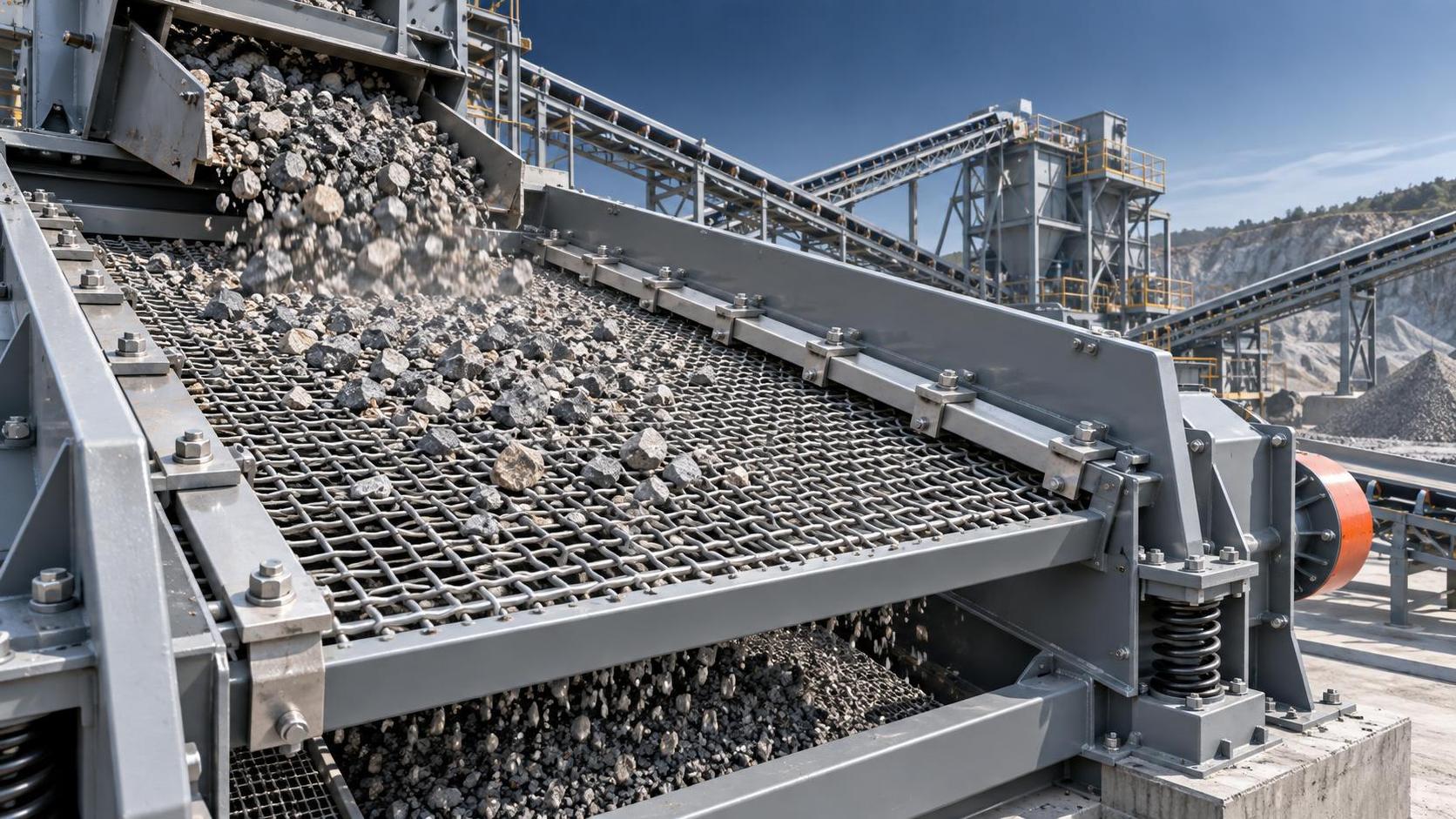
A screen deck that starts losing wire after only a short period rarely has a single “bad mesh” explanation. In day-to-day aggregate or mining work, the first signs may be a broken edge wire, a torn corner near a clamp bar, or a polished patch that suddenly opens into a hole. Once the opening changes shape, screening accuracy drops, carryover increases, and the crew may have to stop the machine for an unplanned changeout.
The practical answer is to treat premature wire mesh failure as a system problem. Mesh life depends on correct tension, secure clamping, feed distribution, material impact, vibration condition, and the relationship between wire diameter, opening size, and duty. Replacing the panel without correcting the underlying cause usually produces the same failure in the same area.
Read the break pattern before removing the mesh
The location and appearance of the damage often point to the cause. Before discarding a failed panel, inspect both the top surface and the underside, then compare it with adjacent panels. A wire mesh panel that breaks at the hooks behaves differently from one that wears through in the middle of the deck.
This inspection matters because a screen can appear to have an abrasion problem when the real issue is vibration-induced rubbing. Likewise, a panel may fail at the center because material is being dropped from too high, not because its wire is too light.
Incorrect tension causes fatigue long before a visible break
Woven mesh needs enough tension to remain stable on the deck. A loose panel moves slightly every time the screen accelerates and changes direction. That movement creates repeated bending at the hooks, along support rails, and at contact points beneath the cloth. The wires may survive for a while, but fatigue cracks develop and eventually spread through the weave.
Over-tensioning can also shorten life. Excessive force can deform hooks, stretch the cloth beyond its intended condition, or concentrate stress at one end of the panel. The goal is not simply to tighten until no further movement is possible. The goal is even, secure tension across the full width and length of the installed mesh.
Installation details that prevent tension-related damage
- Clean accumulated fines, rust scale, and trapped stones from the tension rail before fitting the panel.
- Make sure both hooks engage fully and sit straight rather than being twisted or partially caught.
- Tighten tensioning devices in a balanced sequence, especially on wide decks.
- Confirm that the panel is seated on all support rails instead of bridging over a worn or bent member.
- Recheck tension after the first operating period, because new cloth can settle into the deck arrangement.
A panel that shifts visibly, makes a metallic slapping sound, or shows shiny rubbing marks below the hooks should be stopped and corrected. Continuing to run it often damages both the mesh and the tensioning components.
Feed impact can destroy even a properly installed panel
The feed end carries the harshest load. Large particles arriving in a narrow stream hit the same small area repeatedly, forcing wires apart and bending them at high frequency. Wet sticky feed can make the situation worse because it creates a thick material bed that drags over the cloth instead of stratifying and passing normally.
Watch the material path with the screen operating under normal load. Ideally, feed spreads across the usable width of the deck rather than landing in one concentrated band. A chute that directs material against a single corner will usually produce a matching worn or broken zone. Excessive vertical drop, poor chute angle, and poorly controlled feeder discharge are common reasons.
Where the feed is especially coarse or abrasive, the upper deck may need a more impact-resistant arrangement than the finishing deck. A heavier woven wire, a different weave pattern, a replaceable impact section, or polyurethane media in selected areas may be more suitable. The correct choice depends on the required opening, particle shape, moisture, and expected load; switching all decks to heavier media without reviewing capacity can reduce screening performance.
Do not ignore the vibrating screen itself
Wire mesh is often the first part to show that the machine is no longer moving correctly. A screen designed to operate with stable stroke and consistent motion can damage media quickly when a mechanical condition changes. Loose side plates, cracked cross members, worn support rails, failing bearings, damaged springs, or an out-of-balance drive can transfer irregular force into the deck.
Look for uneven material travel, one side of the deck carrying more load, unusual vibration at the structure, or repeated failure in the same row of panels. These signs justify a closer check of the screen body and drive system. Installing a new panel before resolving structural movement may only hide the problem until the next shutdown.
Support rails deserve particular attention. A rail with a sharp edge, missing cap, cracked weld, or worn crown can cut into the underside of the mesh. The damage may initially look like normal abrasion from the top, but turning over the removed panel often reveals localized wear lines that match the rail positions. Repairing or replacing the support surface is usually more effective than changing wire specification alone.
Select the mesh for the actual duty, not only the opening size
Opening size controls separation, but it does not fully define a suitable screen cloth. Two panels with the same aperture can have different wire diameters, weave types, open area, rigidity, and resistance to impact. A light wire may offer useful open area for fine screening, yet it can fail prematurely on a heavily loaded scalping deck. A very heavy wire can withstand impact but may reduce open area and change throughput.
When reviewing a replacement specification, compare the failed panel with the operating conditions rather than ordering by opening alone. Consider:
- Top size and shape of the feed material
- Whether the deck is scalping, intermediate screening, or final sizing
- Abrasiveness and moisture of the material
- Average loading pattern across the deck
- Required cut accuracy and acceptable near-size carryover
- Support rail spacing and tensioning method
For hard rock applications, the screen selection should also be coordinated with the crushing circuit. Stable feed gradation reduces localized overloading on downstream decks. In mobile systems, such as a Heavy Duty Crawler Stone Crushing Machine For Hard Rock Mining With Large Capacity Mobile Crushing Plant, the crusher discharge, feeder setting, transfer chute, and screen load should be considered together. A well-matched crushing and screening flow helps prevent large surges from striking a screen deck beyond its intended duty.
A practical response when a panel fails early
Do not replace the mesh immediately and return the machine to the same settings. First, identify whether failure occurred at a hook, rail contact point, feed zone, or open screening area. Next, inspect the deck for loose clamps, damaged rails, trapped material, and distorted support members. Then observe material distribution during operation and check whether the feed is falling onto one narrow location.
Only after those checks should the replacement media be chosen. If the old panel failed through impact, changing to a slightly heavier wire or reinforced feed-end section may be justified. If it failed at the hooks, the priority is tensioning and deck condition. If broad abrasive wear caused the failure, review wire diameter, material bed depth, and whether a different screen media type is better suited to that deck.
Keeping a simple record of panel position, failure location, material condition, and running symptoms can reveal patterns that are not obvious during a rushed maintenance stop. Over several replacements, this record helps distinguish normal wear from a recurring mechanical or feed-related problem. The longest-lasting wire mesh installation is usually not the heaviest available panel; it is the panel correctly matched to a stable screen, properly tensioned deck, and controlled material flow.
Leave A Message
If you are interested in our products and want to know more details, please leave a message here, we will reply you as soon as we can.