How worn springs change horizontal vibrating screen motion
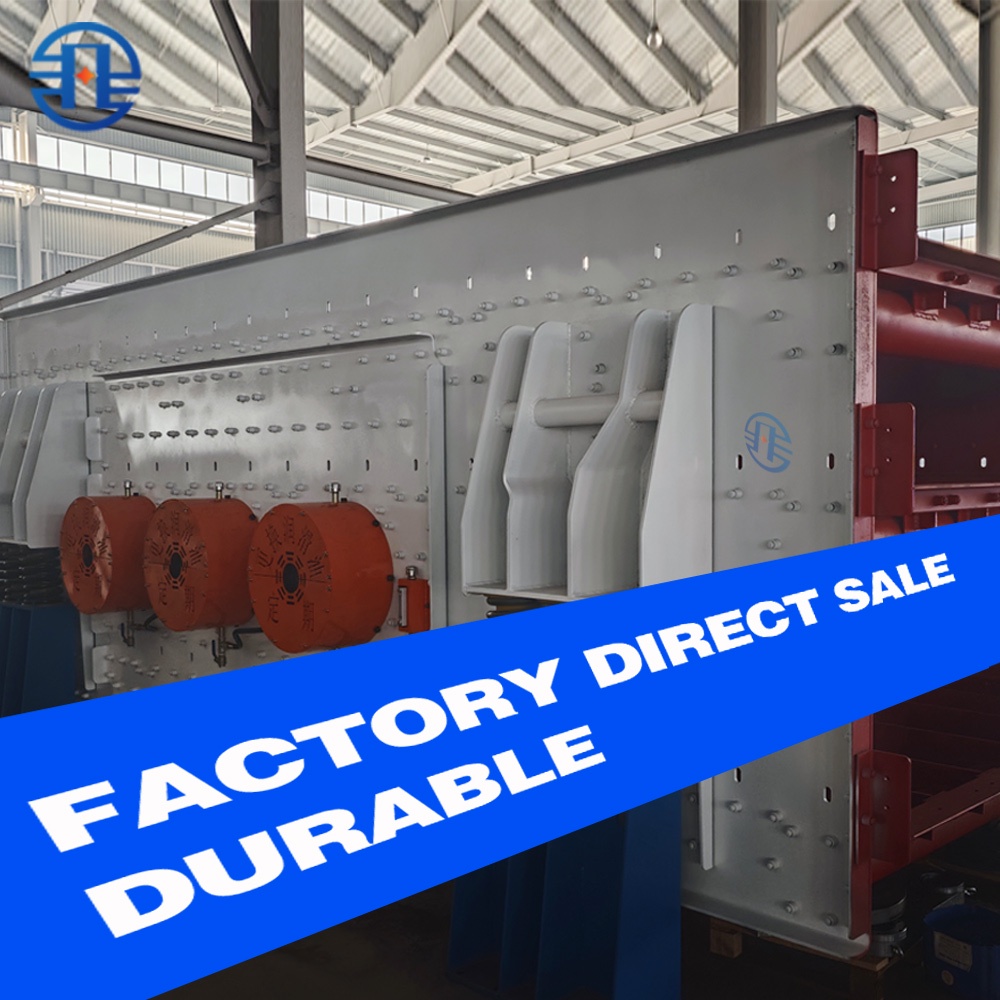
Worn support springs can make a horizontal vibrating screen rock, twist, or develop unequal stroke at its corners even when the exciter is operating correctly. The important distinction is between a change in the screen’s overall vibration and a change in how different parts of the screen move relative to one another. Unequal spring support is especially relevant to the second pattern.
A spring fault does not automatically produce a larger stroke. Its effect depends on the failure mode, operating speed, material load, and screen design. Permanent settlement, a cracked coil, and a spring that contacts adjacent coils create different support conditions—and require different corrective decisions.
What the springs control—and what they do not
On a conventional horizontal vibrating screen, the exciter arrangement generates the working motion. Depending on the design, that motion may be linear or elliptical. The support springs carry the vibrating assembly and help isolate its movement from the supporting structure; they do not independently determine the intended throw direction.
Nevertheless, the springs form part of the machine’s dynamic system. Their stiffness, position, and loading influence its natural frequencies and resistance to vertical movement, pitching, and rolling. Changing one support can therefore alter the motion of the whole assembly, not just the corner above it.
A simplified relationship for one vibration mode is:
fn = (1 / 2π) √(k / m)
Here, k represents the effective stiffness for that mode and m its effective vibrating mass. A real screen has several interacting modes, so this relationship explains the direction of a change rather than predicting the machine’s complete response.
Where operating frequency is well above the relevant support-system natural frequencies, moderate, uniform spring softening may have only a limited effect on steady-state stroke. Excitation force and vibrating mass remain major influences. Unequal deterioration is more disruptive because it changes the balance of support and can introduce rotational movement.
Different spring defects produce different motion changes
Permanent settlement changes geometry before it proves stiffness loss
A spring with permanent set has lost free height. Under load, it may lower one part of the screen, change spring alignment, and redistribute reactions among the remaining supports. However, reduced height alone does not establish that its spring rate has fallen significantly.
This distinction matters when diagnosing a low corner. The cause could be permanent spring deformation, excessive local loading, a damaged seat, or movement in the support structure. Replacing a spring without checking those conditions can leave the underlying fault unresolved.
Fatigue also does not necessarily cause a gradual, readily measurable loss of stiffness before failure. A spring can develop a fatigue crack while its external dimensions still appear acceptable.
Cracking or breakage changes the support load path
A cracked or broken spring can reduce or destabilize its load-carrying contribution. The resulting behavior depends on where it breaks and whether the fragments remain seated. Broken sections may contact one another, producing intermittent stiffness and impact rather than simple softening.
As support reactions redistribute, the screen can develop increased pitch or roll. Impact loading can also affect spring seats, brackets, and nearby structural connections. A visible break is therefore not merely an explanation for poor screening; it is a reason to stop and assess the assembly before further operation.
Coil contact can make a support locally stiffer
Excessive compression, incorrect springs, or inadequate clearance can cause coil contact during part of the vibration cycle. Once coils contact, the effective stiffness rises sharply. The motion can become clipped or impact-like, with increased force transmitted into the support.
This is why “worn springs make the screen softer” is an unreliable general diagnosis. Deterioration can produce settlement, reduced support, intermittent contact, or a combination of these conditions.
How altered support appears in screen motion
Pitching is rotation between the feed and discharge ends. It changes the local trajectory along the deck, potentially altering material lift and travel. Some screens have designed differences between feed-end and discharge-end motion, so measurements must be compared with the intended motion pattern rather than an assumption that every point should be identical.
Rolling is rotation from side to side. Unequal lateral support can produce different vertical movement on opposite sides. Material may distribute unevenly, but an uneven bed can itself create unequal loading. Bed appearance alone cannot establish which problem came first.
Twisting or diagonal motion differences suggest that the screen is not moving as a simple rigid body. Spring imbalance is one candidate, but loose connections, structural damage, and exciter problems can produce similar symptoms. Persistent diagonal differences warrant inspection beyond the springs.
The timing of movement also matters. Two measurement points can show similar peak-to-peak displacement while reaching their peaks at different times. Their amplitudes look acceptable in isolation, yet the phase difference reveals rocking. A single stroke reading cannot capture that distinction.
Spring-related changes can be especially noticeable during acceleration or coast-down, when excitation passes through support-system resonances. Increased transient rocking is useful evidence, but repeated starts and stops should not be used as an informal diagnostic test on a machine already showing abnormal movement.
Checks that distinguish spring faults from similar problems
Start with the machine’s drawings, specified spring arrangement, and previous vibration records. Establish the operating speed, exciter settings, deck configuration, and material condition associated with the reported change. Comparing a loaded screen with an earlier empty-running measurement can create a misleading diagnosis.
Before close inspection, isolate and lock out all energy sources. Springs contain stored energy; unloading or removal requires the manufacturer’s support and lifting procedure. Never loosen spring retainers or enter beneath an assembly that has not been properly secured.
With the screen safely stopped, check:
- Spring condition: cracks, broken coils, corrosion, rubbing marks, coil-contact marks, leaning, and displaced seating.
- Support geometry: installed heights, seat elevations, alignment, clearances, and evidence of bracket or foundation movement.
- Load distribution: retained material, blocked discharge areas, uneven feed, and changes in deck or liner mass.
- Other load paths: contacting chutes, tight flexible connections, loose fasteners, and structural cracks that can restrain or distort movement.
Installed height is useful only when interpreted against the specified spring and its load. Equal heights do not prove equal stiffness, and unequal heights do not by themselves prove a defective spring. Free-height measurement requires safe unloading; confirmation of spring rate requires a controlled load-deflection assessment.
If inspection establishes that operation is safe, obtain synchronized motion measurements at designated points on both sides and at both ends. Use the same coordinate directions and record speed and loading conditions. Compare horizontal and vertical displacement, trajectory angle, and phase where suitable instrumentation is available.
Keep the measurement definition consistent: peak-to-peak stroke is twice the corresponding single amplitude. Motion indicators can reveal gross differences, but they cannot replace phase-capable measurements when rocking or twisting is suspected. Measurements must be taken without approaching moving parts or removing operating guards.
Correct the support condition, then verify the motion
A replacement spring must match more than external dimensions. Spring rate, free height, load capacity, end configuration, and seating requirements all matter. A dimensionally similar substitute can create an imbalance that was not present before repair.
Whether to replace one spring, a support group, or a complete set depends on the manufacturer’s requirements and the condition of the remaining springs. Repeated settlement, widespread corrosion, or inconsistent load-deflection behavior argues against treating a single visible failure as isolated. Adding shims merely to restore height does not restore spring characteristics and should not substitute for an approved repair.
After correction, verify alignment, clearances, seating, and motion under comparable operating conditions. Use machine-specific acceptance limits rather than a generic vibration-severity threshold. A vibrating screen deliberately operates with substantial motion, so a limit intended for conventional rotating machinery may be inappropriate.
If abnormal stroke or phase differences remain, investigate the exciter, synchronization system where fitted, structural connections, and external restraints. The repair is complete only when the intended motion is restored—not simply when the screen stands level again.
Leave A Message
If you are interested in our products and want to know more details, please leave a message here, we will reply you as soon as we can.