Why Mining Screen Mesh Fails Early in High-Impact Primary Screening Areas
Why Mining Screen Mesh Fails Early in High-Impact Primary Screening Areas
In high-impact primary screening areas, Mining Screen Mesh often fails long before its expected service life, causing unplanned downtime, material loss, and costly maintenance interventions.
For after-sales maintenance teams, identifying whether failure comes from impact loading, unsuitable mesh selection, installation errors, or worn components is essential for restoring reliable screening performance.
The central diagnosis is straightforward: early screen failure is rarely caused by one isolated defect. It usually results from impact energy, poor material distribution, inadequate support, and operating conditions acting together.
Start With the Failure Pattern, Not the Replacement Request
Before ordering a replacement Mining Screen Mesh, maintenance personnel should inspect the failed panel carefully. The location, shape, and timing of damage provide useful evidence about the actual cause.
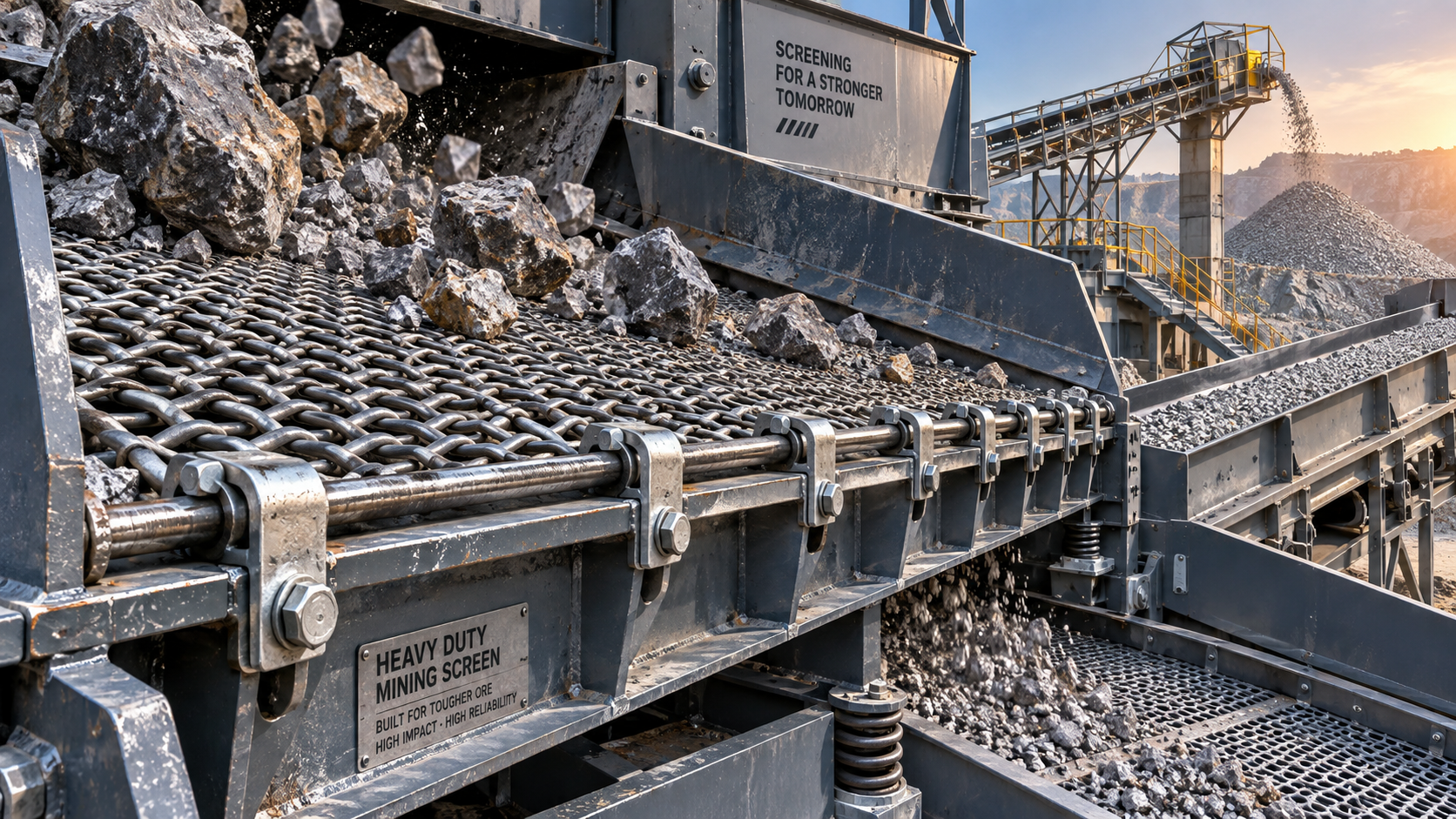
A large hole near the feed end usually indicates concentrated impact from oversized rock. Damage concentrated on one side often points to uneven feed distribution or incorrect chute alignment.
Cracks around fixing holes commonly suggest excessive tightening, loose clamping, panel movement, or insufficient support beneath the screen deck. These failures should not be treated as ordinary wear.
Rapid abrasion across the entire surface may indicate that the aperture, wire diameter, material grade, or panel type does not match the abrasive properties of the feed.
Maintenance records should document mesh type, panel dimensions, aperture, wire diameter, material type, installation date, operating hours, throughput, and the exact damage location on the deck.
This information allows teams to compare repeated failures objectively. Without consistent records, a site may keep replacing screens while the underlying mechanical or process problem remains unchanged.
High Impact at the Feed End Is the Most Common Cause
Primary screening receives material directly from loaders, trucks, feeders, or crushers. Large rocks can strike the screen surface with far greater force than the mesh was designed to absorb.
When stone drops vertically onto a small area, impact energy is concentrated at the feed end. The panel bends repeatedly, wires fatigue, and localized openings develop quickly.
Oversized particles are especially damaging when the feed contains sharp, flat, elongated, or heavy material. These pieces can catch the mesh surface and create tearing under vibration.
A practical inspection point is the feed chute. Check whether material lands on the first one or two panels instead of being distributed across a wider receiving area.
Chute liners, dead boxes, rock shelves, and correctly positioned impact bars can reduce direct contact. Their purpose is to slow, spread, and redirect material before it reaches the screen.
For severe primary-duty applications, a sacrificial blank panel, punch plate, or heavier-duty media at the feed end may protect finer downstream screening sections from premature damage.
Changing only the screen material without controlling impact often produces a short improvement followed by the same failure pattern. Energy management must come before mesh replacement decisions.
Incorrect Mesh Selection Creates Hidden Weak Points
Mining Screen Mesh must be selected according to feed size, particle shape, moisture, abrasiveness, required cut size, vibration conditions, and the screen machine’s support arrangement.
A finer aperture does not automatically provide better performance. Smaller openings require thinner supporting members or denser wire patterns, which may reduce impact resistance under heavy primary feed.
Using a light-duty woven wire panel in a scalping position is a common mismatch. The mesh may achieve accurate separation initially but fail quickly under repeated large-particle impacts.
Wire diameter matters as much as aperture. Increasing wire diameter can improve durability, but it also reduces open area and may affect capacity, stratification, and material flow.
High-carbon steel, spring steel, polyurethane, rubber, and perforated plate each offer different strengths. Material selection should follow the duty zone rather than applying one solution across the entire deck.
Polyurethane panels can provide strong abrasion resistance and noise reduction, but they require suitable apertures, support spacing, and installation conditions. They are not universal replacements for steel media.
Where plant capacity permits, staged screening media can be effective. Heavy-duty protection at the loading zone can be combined with higher-open-area mesh where material is already stratified.
Support Rails and Tensioning Often Determine Service Life
Even correctly specified mesh can fail early when it is poorly supported. Worn crown bars, damaged rails, missing rubber strips, and uneven deck surfaces create concentrated bending stresses.
Inspect all support members during every planned mesh change. A polished rail, sharp edge, or collapsed rubber cap can cut into the panel from below during normal vibration.
Loose screen media moves against clamps and support bars. This fretting action enlarges fixing holes, wears panel edges, and eventually causes cracks that look like material defects.
Over-tightening is equally harmful. Excessive force can deform hooks, stretch woven wire, damage polyurethane mounting areas, or prevent the screen from moving as designed under vibration.
Use the manufacturer’s recommended tensioning sequence and torque values. Tighten progressively and evenly from the specified starting points, then recheck fasteners after initial operating hours.
Screen box side plates also deserve attention. Cracks, distorted cross members, or damaged tension rails can prevent panels from seating correctly, even when new components appear properly installed.
A reliable maintenance standard includes checking support geometry with a straightedge. Panels should sit evenly, without rocking, unsupported spans, exposed sharp edges, or inconsistent clamping pressure.
Screen Motion Problems Can Destroy Good Mesh Quickly
Abnormal vibration changes the load carried by every Mining Screen Mesh panel. Incorrect stroke, speed, direction, or amplitude can increase impact, reduce material travel, and accelerate fatigue.
If material remains near the feed end, the first panels receive repeated loading instead of transferring particles along the deck. This situation produces wear far faster than normal screening duty.
Broken springs, uneven spring heights, loose bearings, worn exciters, and structural cracks can cause unstable motion. Maintenance teams should investigate these conditions before changing screen specifications.
Excessive vibration may cause media to hammer against rails. Insufficient vibration can cause bed buildup, blinding, and local overload. Both conditions shorten panel life through different mechanisms.
Inspect vibration direction and compare measured operating data with the screen manufacturer’s specifications. A visual assessment alone may miss changes caused by worn bearings or altered counterweight settings.
Feed rate also matters. Sudden surges can create a deep material bed that absorbs stratification capacity while subjecting the feed-end mesh to heavy, repeated particle impacts.
Coordinate with plant operators when failures occur after production changes. Higher crusher output, different blast fragmentation, or wetter feed may explain damage that was absent under previous conditions.
Use Failure Evidence to Choose the Correct Corrective Action
A durable corrective action should match the observed failure mode. Replacing mesh with a stronger option is useful only when the screen structure and process conditions support that choice.
For central impact holes, improve feed distribution, reduce drop height, and use stronger feed-end media. For edge tears, inspect clamps, rail alignment, and side sealing arrangements.
For widespread wire breakage, review material grade, wire diameter, tension, stroke, and feed size. For clogged apertures, investigate moisture, clay content, aperture shape, and cleaning systems.
When abrasion is the primary issue, compare wear rates between materials rather than relying on appearance. A more expensive panel can be economical when it reduces changeouts and downtime.
Maintenance teams should calculate cost per operating hour, not only purchase price per panel. Labor, lost production, equipment access, safety exposure, and spare stock all affect the true cost.
In complete aggregate plants, crusher settings and primary screen performance must be reviewed together. Excessive oversize from crushing can overload the screen and create avoidable media damage.
For sites upgrading crushing and screening systems, equipment compatibility matters. The FEIFAN Heavy Load Symons Cone Crusher Working In Mountain Area Stone Quarry Site Crusher can be considered alongside screen capacity, feed gradation, and downstream media requirements.
Build a Practical Inspection Routine for Primary Screening Areas
Daily checks should focus on loose clamps, broken wires, visible holes, material buildup, damaged side seals, unusual vibration, and feed striking the same location repeatedly.
Weekly inspections should include support rail wear, rubber strip condition, bolt tightness, chute liner condition, spring alignment, bearing temperature, and screen box structural integrity.
During planned shutdowns, remove failed media carefully and inspect the underside. Hidden rail damage or trapped fines can explain why replacement panels repeatedly fail in identical positions.
Keep one failed panel from each major failure event for comparison. Photographs and physical samples help suppliers, engineers, and site teams distinguish abrasion, fatigue, impact, and installation damage.
Do not wait for complete panel rupture before acting. Small cracks, loose edges, and isolated wire breaks can spread rapidly, contaminating product size and increasing the risk of larger failures.
A controlled trial is often the best selection method. Change one variable, such as feed-end panel type or chute configuration, then compare operating hours under similar production conditions.
Conclusion: Longer Mesh Life Requires System-Level Maintenance
Early Mining Screen Mesh failure in primary screening areas is usually a system warning, not simply a consumable-material problem. Impact control, suitable media, stable vibration, and sound support are all necessary.
After-sales maintenance personnel should diagnose the failure location first, inspect surrounding components, verify operating conditions, and select corrective actions based on evidence rather than replacement habits.
When feed impact is distributed, panels are properly supported, and screen motion remains within specification, replacement intervals become more predictable, downtime decreases, and screening efficiency improves across the plant.
Leave A Message
If you are interested in our products and want to know more details, please leave a message here, we will reply you as soon as we can.