Why is a linear vibrating screen losing screening efficiency?
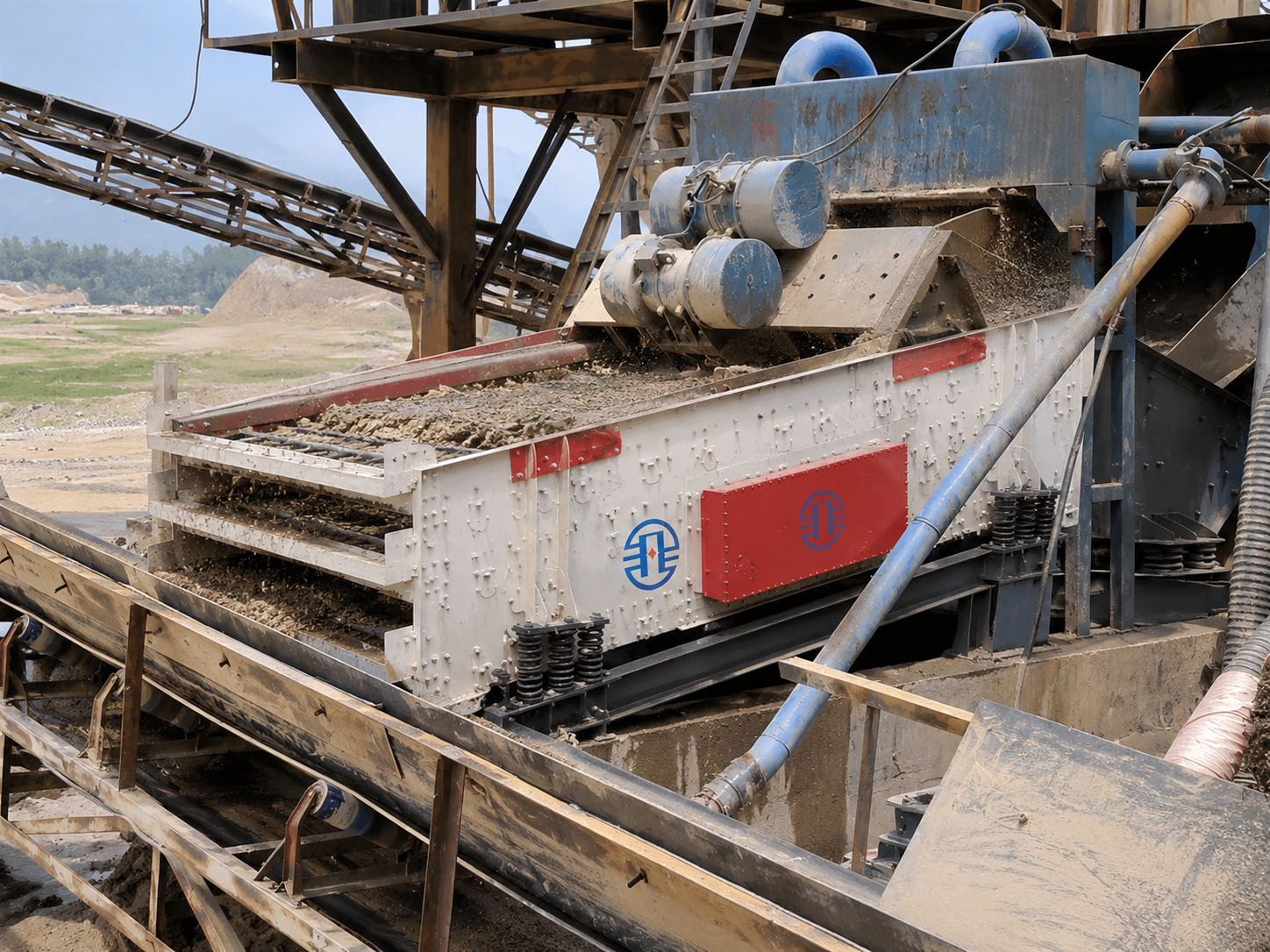
A Linear Vibrating Screen loses screening efficiency when particles no longer have enough opportunity to reach and pass through the correct openings, or when damaged openings allow oversized particles into the undersize stream. Start by comparing the current feed, screen condition, and vibration behavior with a period when separation was acceptable. A drop in throughput alone does not establish whether the screen is separating poorly: both product streams need to be examined.
Establish what has changed in the separation
Take representative samples of the feed, oversize discharge, and undersize discharge under steady operating conditions. A sieve analysis shows whether material that should pass the screen is leaving with the oversize, or whether oversized material is contaminating the undersize. Record the sampling location and operating conditions so that later results are comparable. If material is segregated across a belt or chute, a sample from only one side can give a misleading result.
Consider the proportion of particles close to the screen aperture. These near-size particles need more opportunities to present themselves in an orientation that lets them pass. A feed containing more near-size material can reduce efficiency even when the machine and screen panels are in good condition. Increased feed moisture or clay content changes the picture further: particles can adhere to each other and to the mesh, effectively enlarging the material presented to the openings.
Inspect the deck and material distribution
Blinding occurs when fine material sticks to the surface or forms a film over openings. Pegging occurs when particles lodge in individual apertures. Both reduce open area, but they call for different remedies. Sticky deposits may point to feed conditioning, washing, or a screen medium suited to wet material. Repeated pegging calls for a review of aperture shape, material size distribution, and mesh design. Any proposed change should be assessed against the required product size.
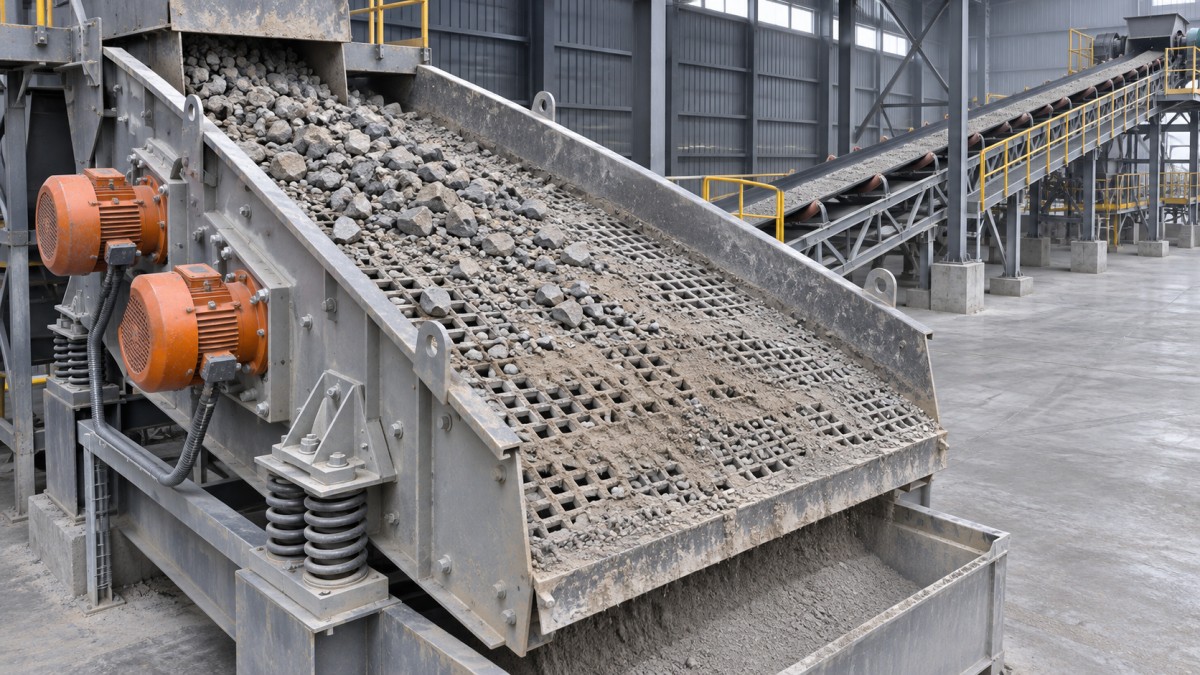
After isolating the machine and allowing it to stop, inspect the full deck, including areas beneath feed points and along the sides. Torn panels, loose fasteners, poor tension, and gaps at panel joints can allow coarse particles to bypass the intended openings. Worn openings can also increase undersize contamination before visible holes appear. Measure suspect apertures and compare them with the specified screen media; the nominal aperture alone does not describe the current condition.
Observe the running screen from a safe position. A narrow stream landing on one side leaves part of the deck underused while overloading the rest. A deep bed near the feed end can prevent fines from reaching the surface, even when the total feed rate appears reasonable. Inspect the chute for buildup or uneven delivery, and assess whether the feed spreads across the usable width without excessive impact on a single panel.
Match the feed rate to the separation duty
Capacity depends on more than the machine’s nameplate rating. Aperture size, bulk density, moisture, the proportion of near-size particles, and the required product quality all affect the load a deck can handle. A rate that works for dry, free-flowing aggregate may produce excessive carryover when the feed becomes wetter or finer.
If conditions allow, reduce the feed rate while keeping other settings stable, then repeat the sampling. Improved recovery of undersize material suggests insufficient screening opportunity at the original loading. Little change directs attention toward issues such as blinded openings, poor vibration, or feed segregation. Avoid treating a lower feed rate as a permanent fix until the cause and production requirement have been evaluated.
Upstream processing also affects the material presented to the screen. For example, the application described for the OEM Reliable Automatic Lubrication HX-10 With Annular Liner And 50-500t/h Capacity For Mine Waste Reprocessing And Glass Aggregate Machine makes feed size distribution relevant when assessing a connected screening stage. Its stated capacity range alone does not establish the suitable load for a particular screen.
Investigate vibration and mechanical condition
A linear screen relies on its vibration to move material along the deck while repeatedly exposing particles to the openings. Measure operating frequency and stroke at the designated points and compare the results with the machine’s approved settings. A speed reading by itself is insufficient: an apparently correct frequency can coexist with inadequate stroke, an uneven motion, or a mechanical fault.
Compare corresponding measurement points on both sides. A noticeable difference in motion, unusual noise, or a change in material travel can indicate loose connections, damaged springs, exciter problems, or structural issues. The measurements should be interpreted using the equipment documentation and the actual measurement method. Inspect mounts, springs, bearings, and fasteners with the machine isolated; do not adjust exciter weights or drive settings without the specified procedure.
Increasing vibration is not a universal remedy. It changes material travel and loading on the structure, and an unsuitable adjustment can shorten residence time or exceed design limits. Similarly, a steeper or faster-moving bed can clear the discharge while leaving more near-size particles in the oversize stream.
Verify the correction with the same evidence
Change one controllable condition at a time where production permits, and repeat the feed and product sampling at a comparable rate. Record moisture observations, screen media condition, vibration measurements, and the location of any remaining buildup. Judge the result against both oversize carryover and undersize contamination: improving one product stream is not sufficient if the other no longer meets its size requirement.
Leave A Message
If you are interested in our products and want to know more details, please leave a message here, we will reply you as soon as we can.