Why does a banana screen use multiple deck slopes?
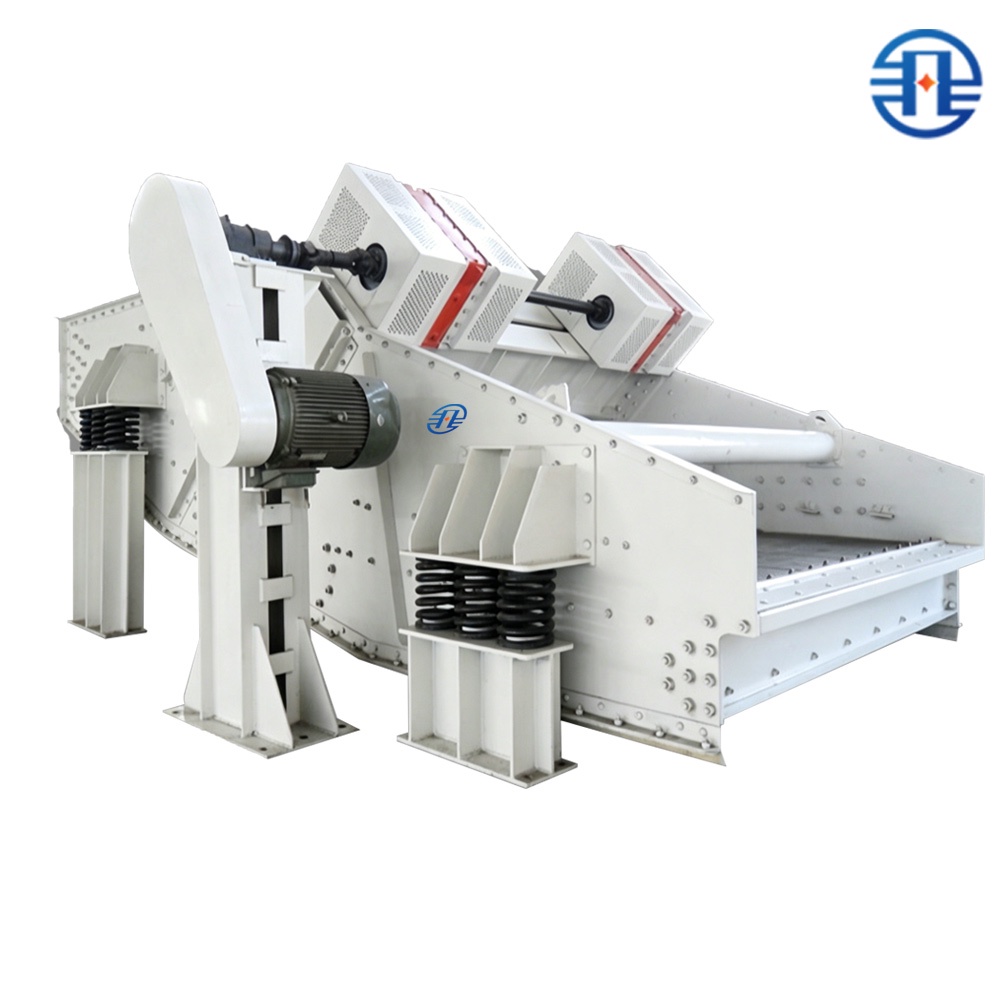
A banana screen uses multiple deck slopes to match material movement to the changing bed depth along the screening surface. The steep feed-end section moves a deep incoming bed forward rapidly; progressively flatter sections slow the material as the bed becomes thinner, giving particles more opportunity to reach and pass through the openings.
This geometry is intended to distribute the screening work more effectively than a single incline under certain high-feed conditions. It does not guarantee a constant bed thickness or a particular separation efficiency. Feed characteristics, vibration settings, screen media and loading all influence whether the intended material profile is achieved.
What changes as material travels down the deck?
At the feed end, the screen receives the full flow, including coarse particles that will remain on the deck and finer particles that can pass through it. The resulting bed is relatively deep. A steep slope encourages faster transport, reducing the tendency for material to accumulate at the inlet and helping accommodate a high feed rate.
As undersize particles pass through the openings, less material remains on the deck. If material continued at the same high velocity over the entire surface, the remaining fines would have less time to work their way down through the bed and encounter an opening. Flatter downstream sections reduce the gravitational component driving material forward, increasing the opportunity for separation before discharge.
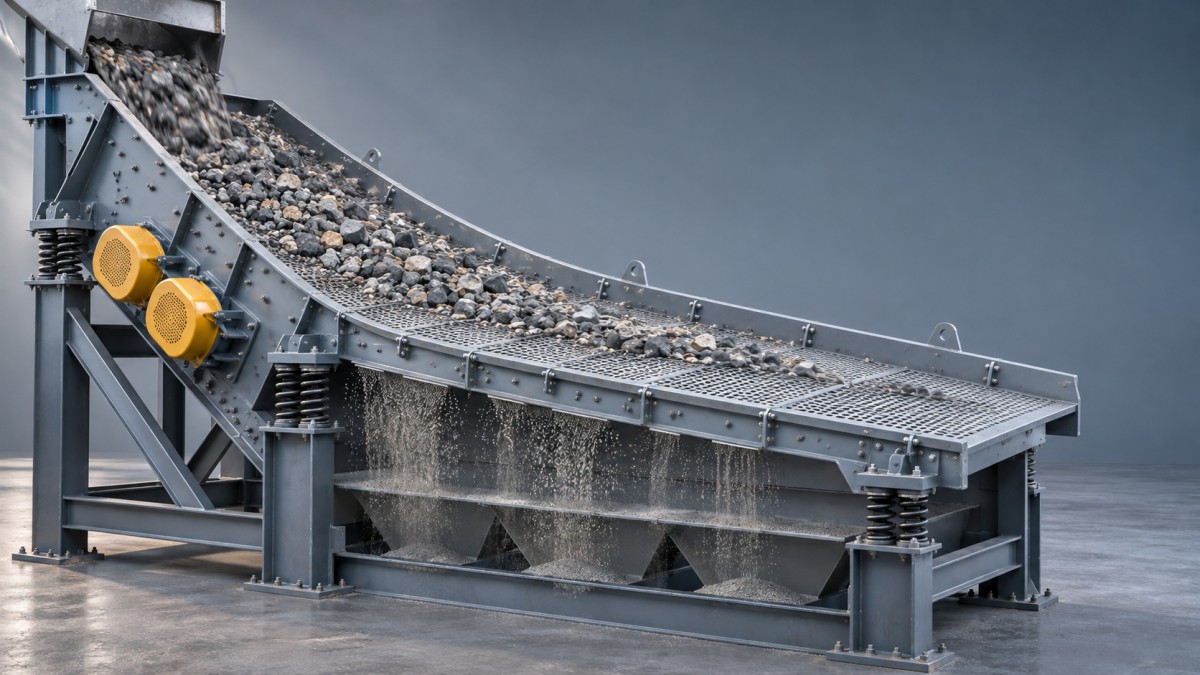
The name Equal Thickness Screen describes the design objective of managing the bed as the load decreases. It should not be read as a guarantee that the bed is physically uniform from feed to discharge. The actual profile depends on both the slope arrangement and the way the machine is operated.
Why not use one slope for the entire deck?
A single steep deck can move material quickly, but rapid travel may leave insufficient opportunity to recover difficult-to-screen particles. A single shallow deck can provide longer exposure to the screening surface, but the feed-end bed may become too deep at the required throughput. In a deep bed, fine particles must travel farther through other material before they can reach an aperture.
Multiple slopes address these competing demands within one deck: rapid transport where the load is greatest, followed by more controlled travel as the load falls. The benefit depends on having enough material removed along the deck to make that change useful. A conventional inclined or horizontal screen may be a better fit when the feed rate, separation requirement or available layout does not justify a multi-slope design.
Deck angle is only one part of the mechanism. Vibration amplitude, frequency and motion direction affect how particles are lifted, transported and stratified. Two screens with similar slope profiles can therefore produce different results if their motion or media differ. A slope schedule should be assessed as part of the complete machine, not as an isolated performance specification.
Capacity and separation efficiency are connected, but not interchangeable
Higher material velocity at the feed end can support a higher loading rate, but capacity is meaningful only when the required separation is maintained. If too many undersize particles leave with the oversize, the screen may be moving the required tonnage without producing an acceptable split.
Near-size particles—those close to the aperture dimension—are particularly important. They have fewer opportunities to pass than particles much smaller than the opening and can become trapped in or block apertures. A flatter discharge section can provide additional exposure, but it cannot compensate indefinitely for excessive feed, unsuitable media or a separation that is difficult for the material being processed.
Feed gradation also changes the load seen by each section. A feed containing substantial readily removable fines can shed mass early, making the progressive reduction in slope useful. If little material passes through the first sections, the downstream bed may remain deeper than intended. Conversely, removing much of the undersize early does not automatically ensure a clean oversize product if near-size particles remain in the bed.
Conditions that can change the expected result
Moisture and clay: Damp or sticky material can agglomerate, blind openings or carry fines with coarse particles. Greater residence time alone may not restore screening performance; media selection, washing where appropriate, and the condition of the feed need separate consideration.
Screen media: Aperture size and shape, open area, panel design and wear all influence passage. A slope profile cannot be evaluated independently of the media fitted to each section. Media choices that improve wear life may also change available open area, so the effect on the required separation should be checked.
Feed distribution: Material concentrated on one side creates a local deep bed even when the total feed rate appears acceptable. Chute design and the distribution across the screen width therefore affect how much of the deck is actually doing useful work.
Upstream crushing: Crusher settings and circulating load influence the size distribution presented to the screen. For example, when a circuit includes a cone crusher such as the FEIFAN Standard Model Spring Cone Crusher For General Stone And Ore Crushing Applications Crusher, the screen assessment should use the expected crusher discharge and any recirculated material, rather than crusher nameplate capacity alone.
What should be checked when comparing designs?
Begin with the required feed rate and its expected variation, the feed size distribution, the desired cut size and the acceptable amount of misplaced material. Moisture, clay content, particle shape and bulk density help establish how reliably the material will move and pass through the media. Where feed properties vary, a design based only on an average sample can conceal the limiting condition.
Ask how the proposed deck slopes, vibration parameters and media arrangement relate to those feed conditions. The useful comparison is not simply deck area or the number of slope changes, but whether the supplier’s sizing basis accounts for the expected bed depth and separation duty along the deck. Available headroom, feed-chute geometry, maintenance access and structural loads must also accommodate the proposed machine.
The defining advantage of multiple slopes is the ability to manage transport and screening opportunity differently along the same surface. That advantage is most relevant when the feed-end load is high and meaningful removal of undersize changes the bed substantially downstream. The right selection is the one that achieves the required split at the design feed conditions—not necessarily the screen with the steepest inlet or the most deck sections.
Leave A Message
If you are interested in our products and want to know more details, please leave a message here, we will reply you as soon as we can.