When is rubber screen mesh suitable for abrasive aggregate?
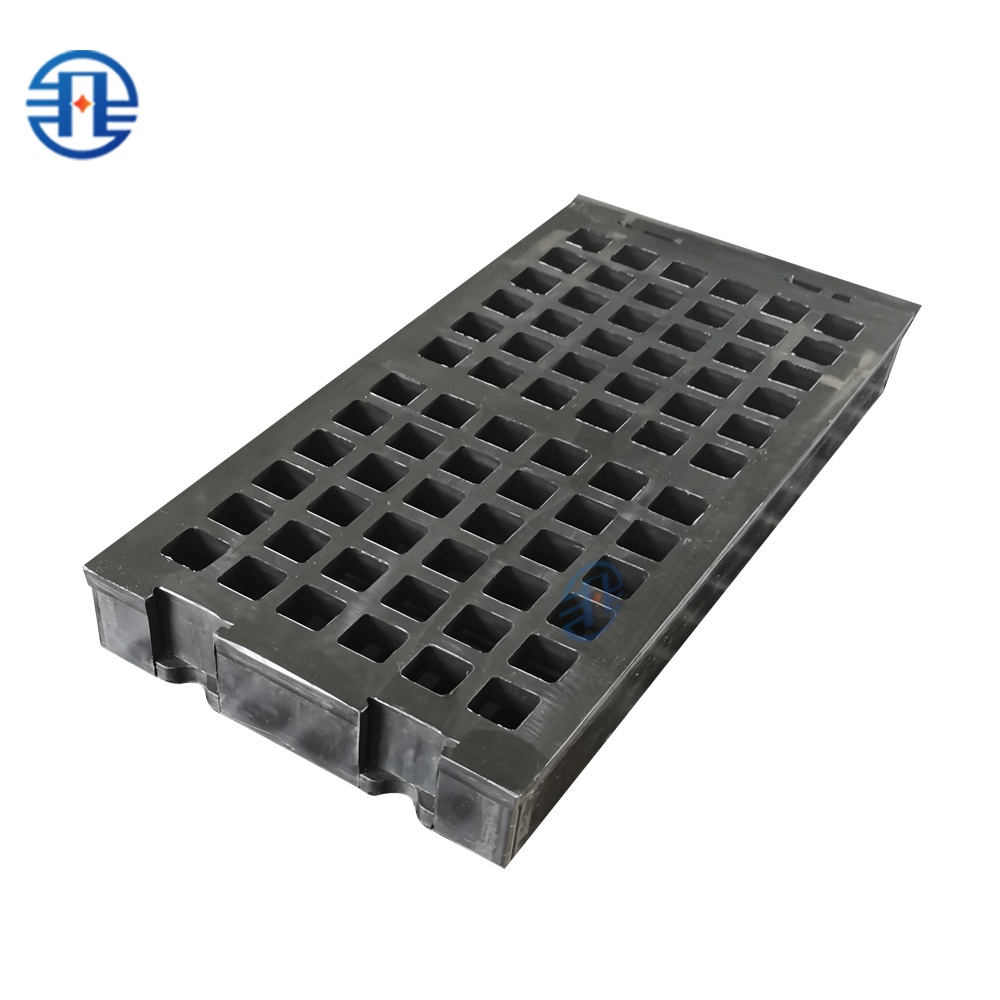
Rubber Screen Mesh is worth considering for abrasive aggregate when coarse particles strike the deck heavily, wire panels wear or break frequently, and noise or maintenance interruptions are a concern. It is less compelling when the deck must pass a high proportion of near-size material through small openings. The decision depends on the duty of the individual deck, not simply on how abrasive the rock is.
Start with the failure you need to solve. A rubber surface may absorb impact and resist wear in a demanding feed zone, but its thicker sections can reduce the open area available for screening. If the existing screen already struggles to meet throughput or separation requirements, that trade-off deserves particular attention.
Where rubber is a strong candidate
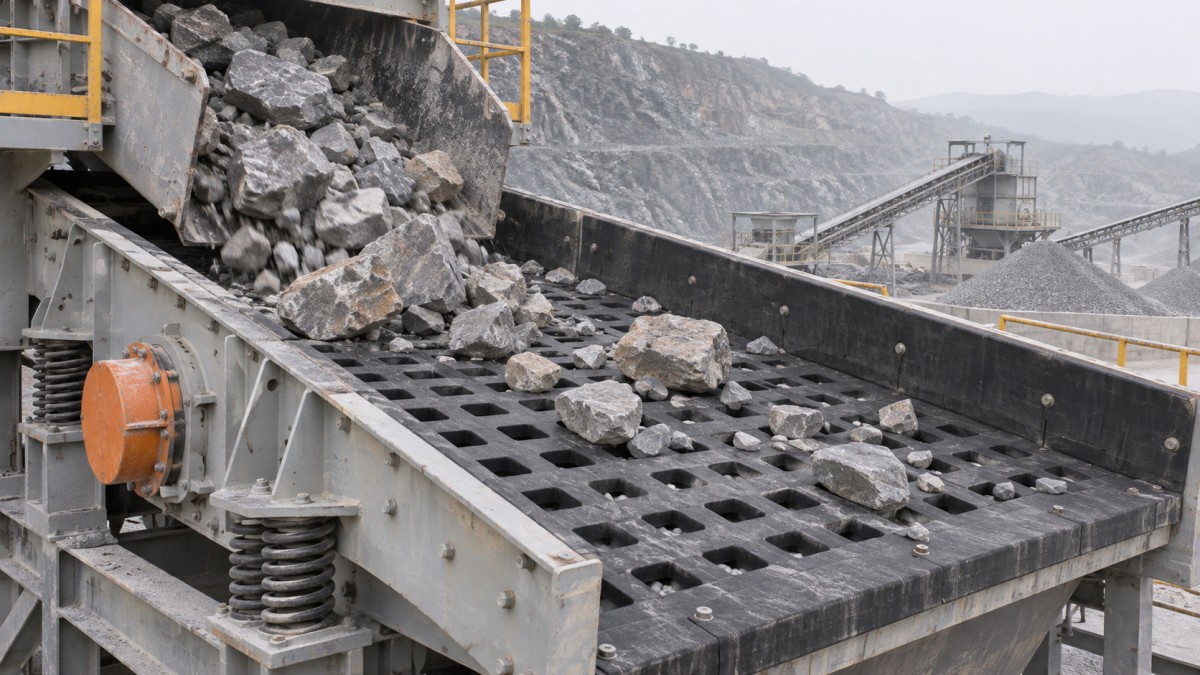
Coarse primary and secondary screening duties are often the best place to evaluate rubber. Large, angular pieces can strike the feed end with enough force to damage a conventional wire deck, while abrasive material sliding over the surface gradually wears it down. A suitably designed rubber panel can cushion some of that impact and provide more material to wear through.
Rubber can also be useful where metal-on-rock noise is a concern. The screening surface can reduce some impact noise, although the complete machine, feed arrangement and surrounding structure also contribute to the sound level. A quieter panel should be assessed as part of the installation rather than assumed to solve the whole problem.
The feed end and discharge end do not necessarily need the same surface. If impact damage is concentrated where material lands, a rubber section in that zone may be worth considering while retaining a higher-open-area surface elsewhere. This depends on the screen’s panel system and support arrangement.
Check the separation before choosing the material
The nominal aperture is only one part of the specification. Rubber panels generally need thicker supporting sections than woven wire, so a panel with the same stated opening can have less open area. Less open area may restrict capacity or leave more undersize material in the oversize product, especially when the feed contains many particles close to the separation size.
Consider the shape and effective depth of the openings as well. A thicker screening surface can make it harder for some particles to pass, particularly elongated or flat pieces. Aperture shape, deck inclination and the motion of the screen all influence the result. Compare complete panel designs, not just aperture dimensions on a quotation.
Moisture and fines deserve a separate check. Wet, sticky material may blind the openings, while near-size particles can become lodged in them. Flexible screening media can help in some conditions, but rubber does not automatically prevent blinding or pegging. If blockage is already limiting production, discuss the feed characteristics and available aperture designs before changing media.
Rubber, polyurethane or woven wire?
Rubber is a practical candidate where coarse feed, impact and wear dominate the problem. Its potential disadvantage is reduced screening area, especially on finer separations or capacity-limited decks.
Polyurethane is another wear-resistant option and is available in a range of panel and aperture designs. It may suit applications where wear resistance and separation performance both matter. Its suitability still depends on the specific compound, panel geometry and impact conditions; the material name alone does not establish which surface will last longer.
Woven wire often offers higher open area, making it attractive where capacity or screening efficiency is the priority. It can be a sensible choice when impact is controlled and its service life is acceptable. However, frequent wire breakage or rapid wear can make the lower purchase cost less meaningful once replacement work and lost production are included.
These choices can also be combined across decks or within a compatible modular deck. The useful comparison is the performance of the proposed panel in its intended position, including how it is supported and replaced.
Look beyond the screen panel
Feed conditions can shorten the life of any screening surface. A concentrated stream landing on one small area, a large drop height or uneven distribution across the deck can create local damage even when the panel material is otherwise suitable. Inspect the feed chute, impact zone and loading pattern before treating the mesh as the only cause of failure.
In a plant review that also includes upstream crushing equipment, the FEIFAN Global Export Standard Package Safe Long Distance Mining Ore Sand Transportation Impact Machine is a related product to explore. The screen media should still be selected from the actual feed and deck requirements; a change elsewhere in the circuit can alter the particle size and loading presented to the screen.
What to establish before requesting a panel
Give the supplier enough information to assess both wear and screening performance. The most useful starting details are:
- Feed and product requirements: rock type, particle size distribution, moisture, required separation size and target throughput.
- Deck conditions: screen dimensions, deck position, inclination, support spacing and the existing fixing or tensioning system.
- Current performance: panel life, location and type of damage, blockage, product contamination and any capacity constraint.
- Feed arrangement: where material lands, how evenly it spreads and whether the impact zone can be adjusted.
Ask for the proposed aperture, panel thickness, open area and fixing details, then compare them with the existing surface. Check that the screen and supports can accommodate the proposed panel and that replacement access is practical.
Where operating conditions allow, a controlled trial in the affected section or on a comparable deck can make the decision clearer. Record operating hours, wear pattern, throughput and product quality over a representative period. A longer-lasting panel is a worthwhile improvement only if the screen continues to make the required separation at the required production rate.
Leave A Message
If you are interested in our products and want to know more details, please leave a message here, we will reply you as soon as we can.