Wheel Type vs Spiral Sand Washer for Clay Sand: Water Use, Fines Loss, and Capacity
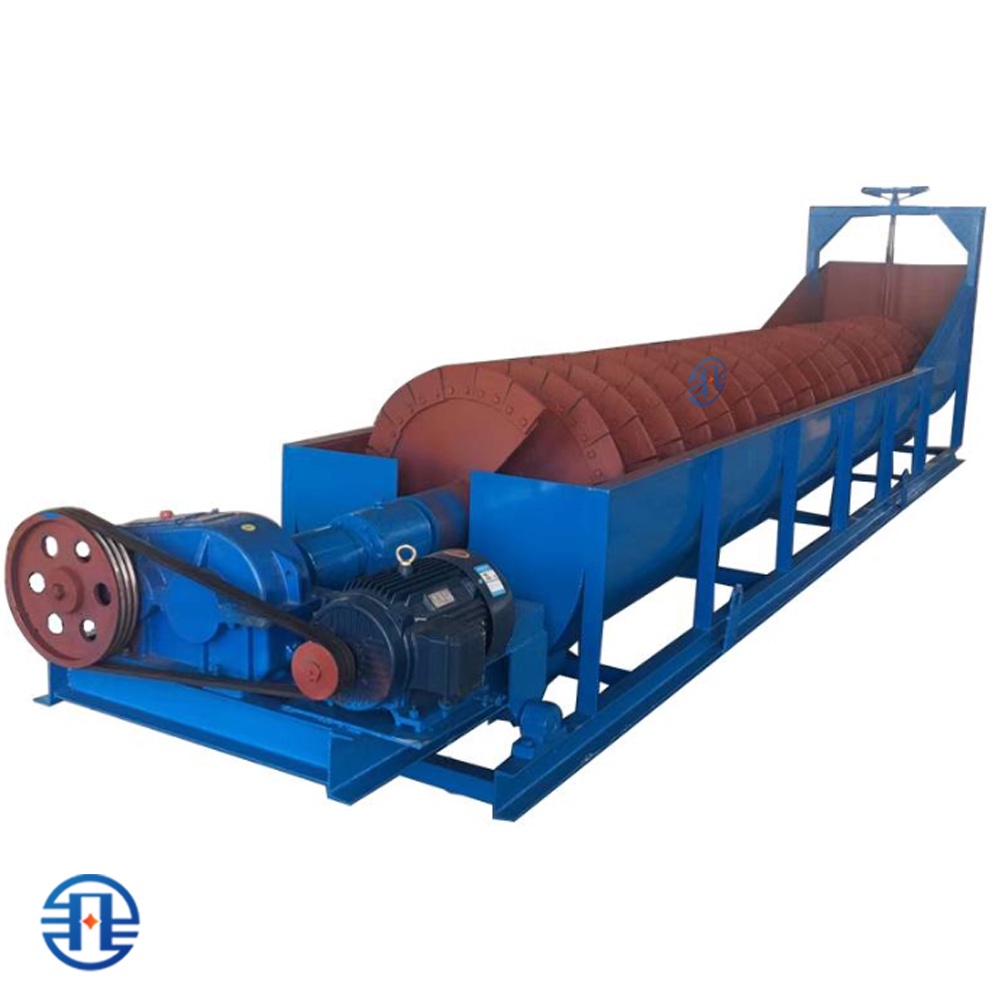
Wheel Type vs Spiral Sand Washer for Clay Sand: what the comparison really means
When people ask, “Is a wheel type sand washing machine better than spiral for clay sand,” they are often comparing the wrong thing. Clay sand is not difficult only because it is dirty. It is difficult because clay changes how the material behaves inside the washer: it sticks, forms agglomerates, traps fine particles, and raises slurry viscosity. That means the practical comparison is not just machine against machine. It is a question of how each washer handles three operating pressures at the same time: water use, fines loss, and throughput under unstable feed conditions.
A wheel type sand washer is generally chosen when the plant cares most about finished sand cleanliness with relatively lower fines loss and a more controlled water circuit. A spiral sand washer is often selected when the feed contains heavier mud contamination, larger tonnage swings, or material that needs stronger scrubbing before classification. Neither choice is universally better. The better machine is the one whose washing mechanism matches the clay content, feed gradation, and the plant’s water management limits.
The key mechanical difference is straightforward. A wheel washer lifts sand from a water bath with buckets or blades, allowing part of the slurry to overflow while cleaner sand dewaters on the wheel before discharge. A spiral washer pushes material forward along a trough while the screw agitates and rubs the feed. That extra agitation is exactly why spiral units are attractive for clay-bearing material, but it is also why they can consume more water and carry more fine particles out with the overflow if the process is not tuned carefully.
Water use is rarely about the nameplate machine alone
In commercial evaluation, water consumption should be discussed as a system issue, not a brochure figure. Spiral washers usually need a deeper slurry zone and more sustained flow to keep clay dispersed and prevent the trough from packing. In many plants, that translates into higher circulating water demand. Wheel washers can be more economical in water use when the incoming material is already reasonably screened and the clay fraction is not excessively plastic. Their washing action is gentler, so they often work well in plants aiming to reduce fresh-water makeup and simplify water recovery.
But there is a catch. If the feed contains sticky clay lumps and the wheel washer is expected to do both scrubbing and final washing, water efficiency can disappear quickly. Operators may compensate by increasing spray water or recirculating more slurry, yet still leave bound clay on the sand. In that situation, the machine appears to save water on paper while the line loses efficiency in practice.
This is why upstream feed control matters more than many buyers expect. A stable and metered feed reduces sudden clay loading and lets either washer operate closer to design conditions. In some process layouts, adding controlled feeding equipment such as FEIFAN Variable Frequency Control GZD-960 Electric Vibrating Feeder For Precise Material Supply In Ceramic Raw Material Processing Electric Vibrating Feede helps smooth material delivery before washing, which is often more valuable than trying to solve all variability inside the washer itself.
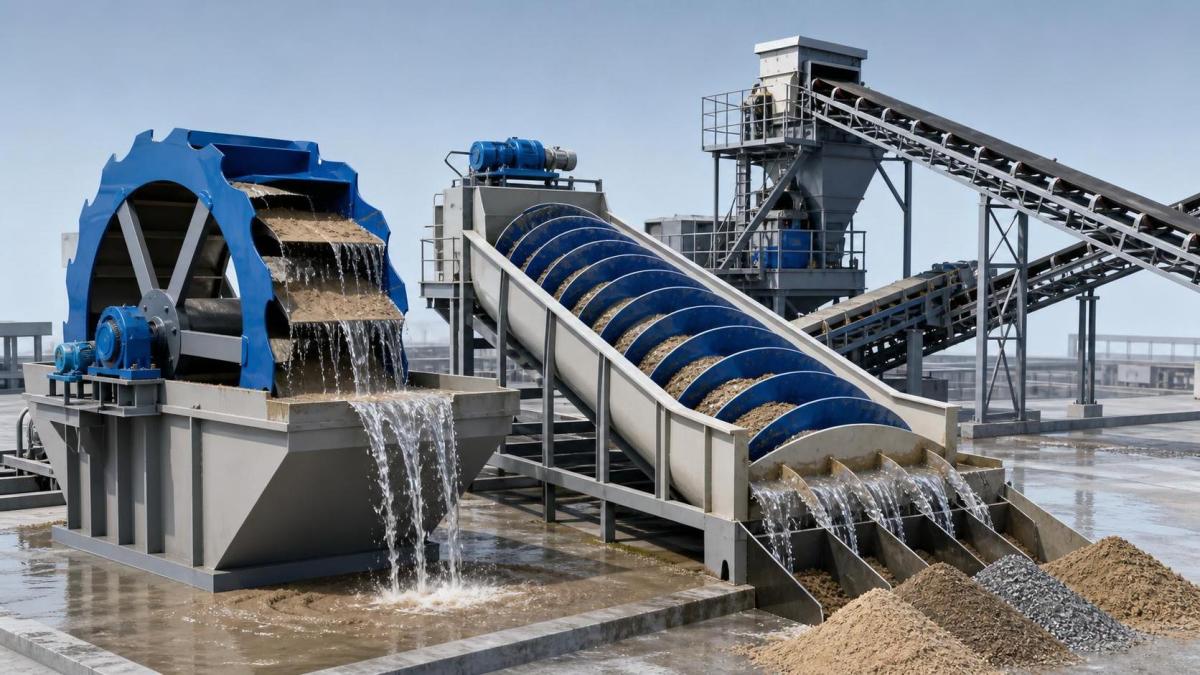
Fines loss is where many purchasing decisions go wrong
“Cleaner sand” and “less fines loss” are not the same result. In aggregate production, a certain portion of fines may be required for target grading, workability, or downstream product acceptance. If too much fine sand leaves with the wastewater, the plant may meet a cleanliness target but miss the commercial yield target. That is one of the most common misunderstandings in washer selection.
Wheel type washers are often preferred when retaining fine sand is important. Their separation pattern can be gentler, and in many standard sand applications they are less likely to wash out usable fines than a spiral machine running with aggressive overflow. This is one reason wheel washers are common in manufactured sand lines where operators are balancing cleanliness against product recovery.
Spiral washers, however, are not automatically poor at fines retention. The real issue is whether the clay fraction is true waste or whether it is carrying valuable fine sand with it. If the feed has heavy clay contamination, the spiral’s stronger scrubbing action may release clean fine sand that a wheel unit would leave locked inside mud balls. In those cases, short-term overflow losses may be offset by better actual washing efficiency. The evaluation has to look at final saleable yield after dewatering and recovery, not just what exits the washer at one point in the circuit.
A useful commercial question is not “Which machine loses fewer fines?” but “Which fines are being lost?” That distinction changes the economics.
Capacity figures need context, especially in clay-rich feed
Capacity claims are easy to misread because clay reduces effective throughput long before the machine reaches a mechanical limit. With clean or moderately contaminated sand, wheel washers can deliver stable production and predictable discharge moisture. Once the feed becomes sticky and the clay percentage rises, the effective capacity may fall because the material is no longer behaving like free-flowing sand.
Spiral washers usually tolerate heavier mud loads better, particularly where stronger agitation is needed to break down coated particles. That can make them look like the higher-capacity option for clay sand, and in many rougher washing duties that is true. Still, the higher nominal capacity only matters if the plant can handle the corresponding slurry volume, settling load, and water recovery requirement downstream. A washer that processes more feed but overloads the thickener, pond, or dewatering stage is not really adding usable capacity.
How experienced plants usually make the choice
In equipment assessment, the smarter approach is to start from material behavior and plant constraints. If the sand contains limited clay, the product specification is sensitive to fine sand recovery, and water is expensive or restricted, a wheel type washer is often the more economical answer. If the feed arrives with obvious clay coating, sticky agglomerates, or strong contamination swings, a spiral washer may justify its higher water burden because it performs more real washing work per ton of difficult material.
That is also how many full-line suppliers evaluate the problem. Companies with experience across crushing, screening, washing, and feed control do not isolate the washer from the rest of the circuit. In our industry, especially in aggregate EPC projects, the final result depends on how the washer interacts with upstream screening efficiency, feeder stability, and downstream water recovery. Manufacturers with long-term exposure to sand and gravel process design, including integrated groups such as those operating across screening media, mining machinery, and export delivery, tend to look first at the whole plant balance rather than forcing a single equipment answer.
So, is a wheel type sand washing machine better than spiral for clay sand? Sometimes yes, but only when “better” means lower water demand and stronger fine-sand retention under moderate clay conditions. When the real problem is heavy clay contamination and unstable feed, spiral washers often make more operational sense. For business evaluation, the decision should be based on saleable yield, circulating water burden, and usable hourly output under actual feed conditions, not on a simplified machine-to-machine comparison.
A good procurement discussion usually ends with three material questions: how much clay is truly present, how much fine sand must be retained, and what water recovery limit the plant can tolerate. Once those answers are clear, the washer choice becomes much less theoretical.
Leave A Message
If you are interested in our products and want to know more details, please leave a message here, we will reply you as soon as we can.