Wheel Type or Spiral Sand Washer for Clay Sand: Which Removes Mud More Effectively?
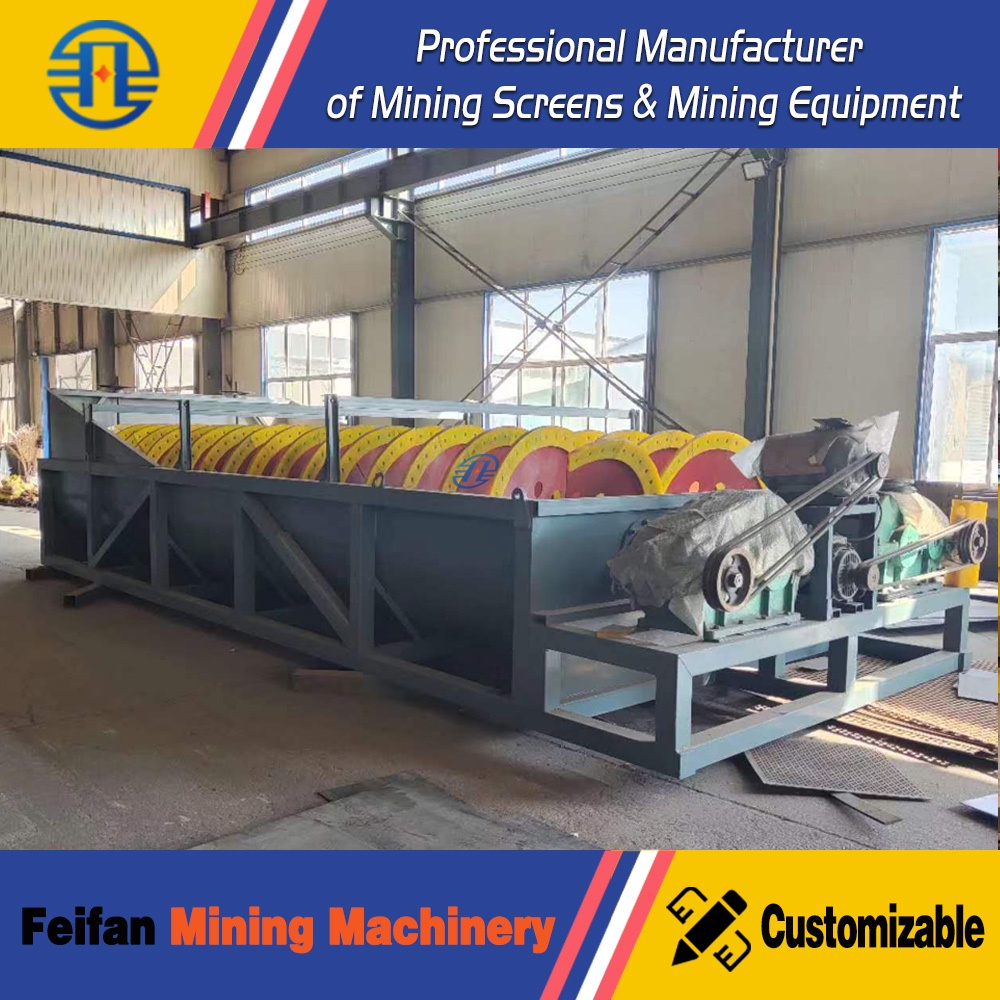
The real issue is not wheel vs. spiral, but how the clay behaves in your feed
When people ask, “Is a wheel type sand washing machine better than spiral for clay sand,” they are usually trying to solve one very practical problem: the finished sand still carries mud, and that mud keeps showing up later as poor grading stability, weak concrete performance, stockpile contamination, or customer complaints about cleanliness. In other words, the question is less about machine category and more about whether the washer can break clay adhesion, separate slurry from usable sand, and do it without throwing away too many fines.
That is why a simple answer like “spiral removes more mud” or “wheel recovers cleaner sand” is often misleading. Clay-rich material does not behave like ordinary manufactured sand with a little dust on the surface. Once the feed contains sticky mud, soft agglomerates, or high moisture variation, washing performance depends on the interaction between scrubbing intensity, residence time, overflow control, and downstream dewatering. A machine that performs well on light silt may struggle badly on plastic clay.
Where wheel type sand washers usually perform well
A wheel type unit is generally chosen when the feed is already relatively fine and the main task is rinsing away surface dust, light mud film, and suspended impurities. Its operating logic is straightforward: the sand settles in the tank, the wheel lifts it, and water drains off during discharge. This gives it two advantages in many aggregate plants. One is relatively gentle handling of the material. The other is better control over fine sand loss when the feed does not contain excessive clay slurry.
For technical evaluation, wheel type equipment tends to fit plants that care about finished sand appearance, moderate water consumption, and cleaner discharge with limited over-scrubbing. It is commonly more suitable when mud content is low to medium, particle size is fairly consistent, and the plant already has acceptable upstream crushing and screening control. If the clay is mostly free dust rather than sticky lumps, a wheel washer can produce stable results at reasonable operating cost.
The limitation appears when the feed includes cohesive clay balls or heavy muddy coating. A wheel washer rinses efficiently, but it is not primarily a strong scrubbing machine. If the mud stays attached to the particle surface or travels as compacted lumps, rinsing alone may not fully separate it.
Why spiral machines are often preferred for clay-bearing sand
A spiral sand washer usually has an advantage when the material needs more than washing and actually needs agitation. The rotating spiral pushes the material forward while continuously turning and rubbing it in the water tank. That longer residence path can help disperse sticky mud, soften agglomerates, and expose the sand surface more thoroughly. In clay-bearing river sand, weathered overburden sand, or feed with fluctuating moisture, that extra mechanical action often matters more than nominal capacity.
This is the basis for the common industry view that spiral units remove mud more effectively in difficult clay conditions. The statement is directionally true, but only within limits. If the feed contains large clay lumps, very high slime content, or heavy organic contamination, even a spiral washer may need upstream screening, log washing, or a dedicated attrition stage. A spiral machine is not a cure for every dirty feed. It is simply more forgiving when the mud is adherent and harder to release.
In practice, many production lines perform better when screening and washing are considered together rather than as isolated machines. For example, stable feed sizing ahead of the washer reduces inefficiency caused by oversized trash or uneven load distribution. That is where equipment such as FEIFAN Wear Resistant Banana Vibrating Screen with Bolted Construction for Long-Lasting Aggregate Screening Vibrating Screen can fit naturally into a clay-sand process discussion: not as a substitute for washing, but as a way to improve feed classification before the washer has to deal with mud removal.
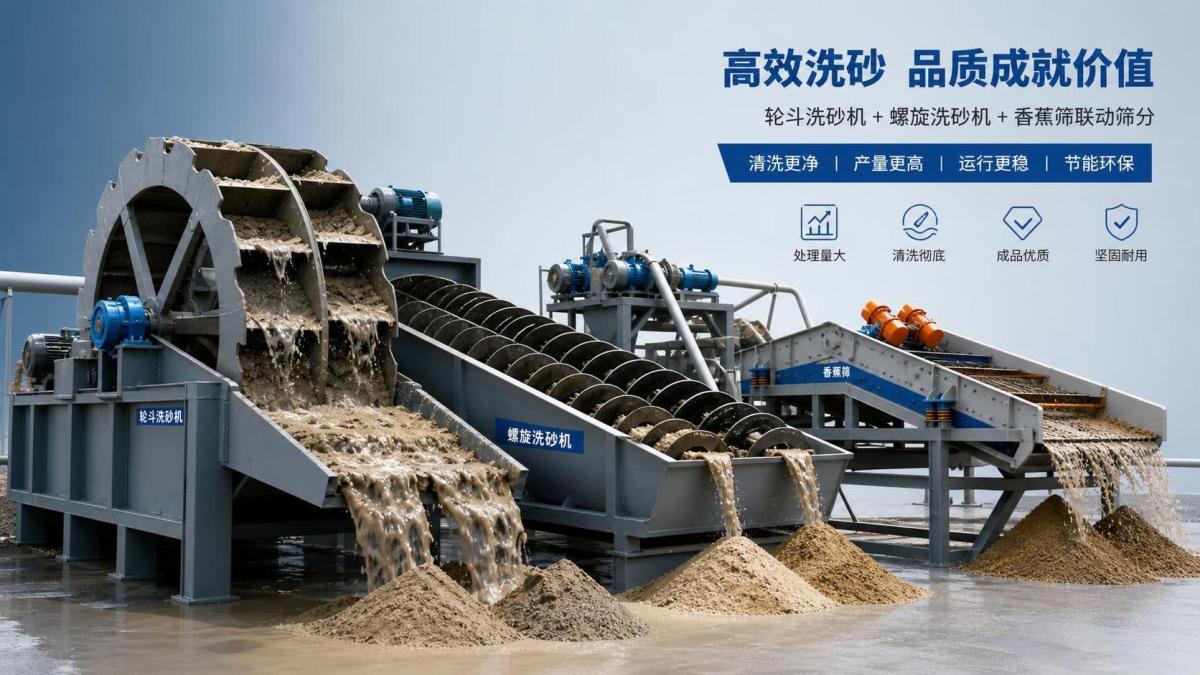
A useful way to compare them
This comparison is more useful than broad claims about which machine is “advanced.” The correct choice depends on what kind of mud has to be removed and what loss of fine particles is acceptable in the finished product.
The most common mistake in selection
The usual mistake is evaluating the washer only by output capacity. For clay sand, capacity figures without feed description are weak decision inputs. Two plants may both plan for the same tons per hour, yet one handles free-draining crushed sand with minor dust while the other processes wet natural sand with clay pockets. The same washer will not behave the same way.
Another mistake is assuming visible cleanliness at discharge means the process is optimized. Clean-looking sand can still carry problematic ultrafines, and “aggressive” washing can also remove useful fine fractions that are needed for gradation. Technical assessment should therefore look at more than appearance. Feed gradation, mud form, fines balance, water circuit design, and the specification of the final sand all belong in the decision.
How experienced plants usually make the decision
In engineering practice, the question “Is a wheel type sand washing machine better than spiral for clay sand” is better reframed into four checks:
1. Is the mud mostly loose silt, or is it sticky clay bonded to the sand surface?
2. How much finished fine sand can the plant afford to lose in exchange for cleaner product?
3. Does the upstream circuit already remove oversize, trash, and unstable feed fractions?
4. Is the washing stage part of a full wet process, including dewatering and slurry management, or is it expected to solve everything alone?
Groups that build complete aggregate lines usually learn this quickly. In our sector, especially in EPC-oriented projects, washer performance is rarely judged in isolation. Feed preparation, screen efficiency, discharge moisture, and wear life all affect whether the chosen machine actually meets project expectations over time. That is one reason integrated manufacturers with in-house screening, crushing, and washing experience tend to evaluate the process line as a system instead of comparing single machines by brochure logic.
If the clay burden is clearly high and mud removal is the primary bottleneck, spiral washing often has the stronger engineering case. If the material is less adhesive and the plant is sensitive to fine sand recovery, a wheel type washer may be the better-balanced option. Where the feed sits in between, the right answer usually comes from process testing and line matching, not from machine labels alone. Even the supporting equipment, including classification screens such as the FEIFAN Wear Resistant Banana Vibrating Screen with Bolted Construction for Long-Lasting Aggregate Screening Vibrating Screen, can shift the result by improving feed consistency before washing begins.
So the short answer is this: spiral sand washers generally remove mud more effectively in clay-rich sand, but wheel type machines can be the better choice where fines retention, simpler rinsing, and controlled operating cost matter more. For a technical evaluator, that distinction is the one worth carrying into the selection meeting.
Leave A Message
If you are interested in our products and want to know more details, please leave a message here, we will reply you as soon as we can.