What Roller and Scraper Issues Are Most Common on Wet Belt Conveyor Lines?

Start with the rollers, because wet lines usually fail there first
If you are answering the question, “What are common problems with belt conveyors in wet conditions,” the short version is this: rollers stop turning freely, scrapers stop cleaning effectively, and both problems quickly push the belt out of stable running. On wet aggregate and mining lines, that chain reaction shows up as material carryback, mistracking, edge wear, rising power draw, and unplanned stoppages.
For after-sales maintenance teams, the practical job is not naming the fault. It is spotting which part failed first, what wet material is doing to the contact surfaces, and which repairs will hold after restart.
Check whether rollers are seized, dragging, or packed with fines
A roller does not need to be fully locked to become a problem. In wet service, many problem rollers still turn, just badly. They hesitate, wobble, or develop a dead spot where slurry has worked into the bearing area and fines have built around the shaft ends.
- Look for dark slurry rings around the ends of the roller. That often tells you water and fines are reaching places they should not.
- Watch the belt surface as it passes over carrying idlers. A small repeated bounce usually points to one damaged or packed roller.
- Touch is useful only after lockout. A roller that feels rough, notched, or hot compared with nearby units is already on its way out.
- Do not inspect only the carrying side. Return rollers on wet lines often collect sticky fines faster and become the hidden source of belt damage.
One common mistake is replacing only the visibly failed roller. If two or three nearby rollers are already heavily contaminated, the new one ends up working in the same bad conditions and you get the same callout again.
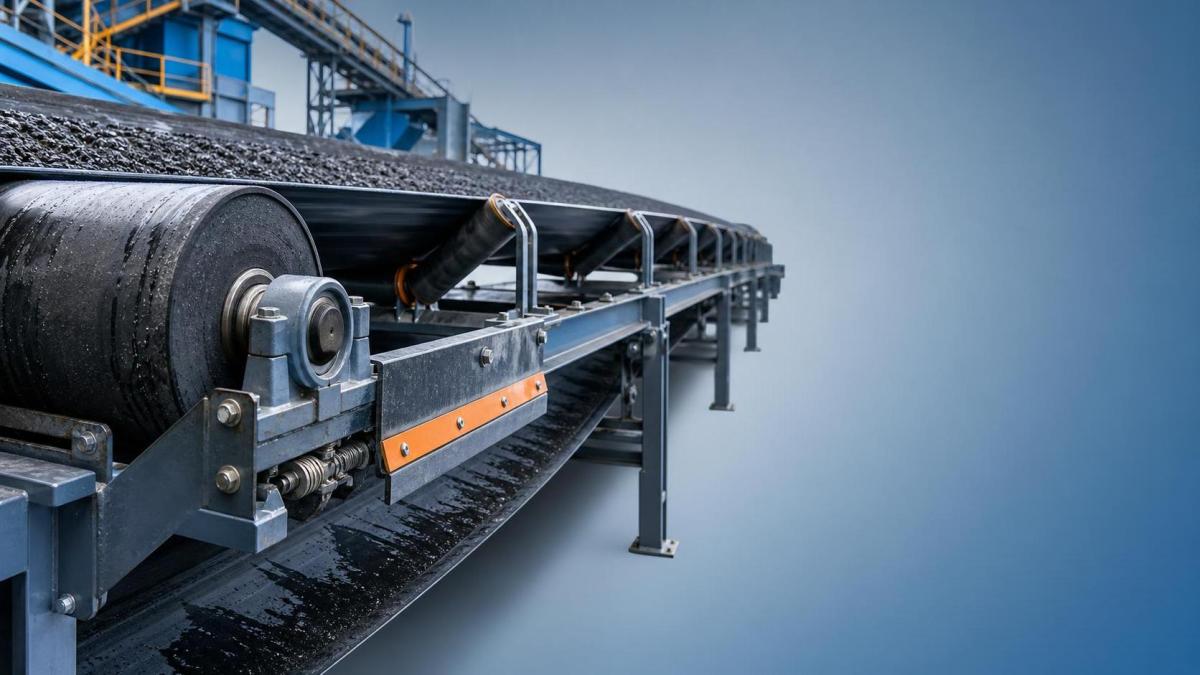
Do not treat material buildup as a housekeeping issue
Wet carryback changes conveyor geometry. That is why scraper complaints and roller complaints usually arrive together. Once sticky fines cake onto return rollers, pulleys, and frames, the belt rides differently. What starts as buildup becomes mistracking, then edge damage, then premature cleaner wear.
When buildup is severe, check these points in order:
- Head pulley discharge: if material is not leaving cleanly, the primary scraper may be too worn, too soft for the duty, or poorly tensioned.
- Return path: look for strips of packed material on return rollers and under the plough area. This usually means cleaning is already inadequate upstream.
- Chute leakage: on wet lines, side spillage often gets dragged back onto the return belt and makes the cleaner look worse than it is.
If the belt is carrying clay-rich fines or washed aggregate slurry, frequent cleaning intervals matter more than occasional heavy cleanup. Once buildup hardens, scraper settings that worked last week may stop working entirely.
Inspect scraper wear patterns, not just blade thickness
A worn blade is obvious. Uneven blade contact is the more useful clue. On wet belt conveyor lines, scraper blades often wear faster on one side because the belt is mistracking, the mounting frame is out of square, or the blade is bouncing over material lumps instead of staying in stable contact.
Do not over-tighten a scraper to force a cleaning result. That often hides the real issue for one shift, then gives you accelerated blade wear, added belt drag, and sometimes a damaged splice.
When the belt starts wandering, do not blame the frame too early
Wet conditions amplify small tracking errors. A little carryback on one return roller, one dragging idler, or one area of hardened buildup on a pulley can shift the belt enough to make operators suspect structure misalignment.
A quick field rule: if the belt tracks differently empty versus loaded, or dry versus freshly washed material, the root cause is often material-related rather than a basic frame problem. In that case, clean the return path, inspect roller freedom, and check scraper contact before adjusting training devices.
Watch for corrosion where water sits, not where it splashes
On wet conveyor lines, corrosion usually becomes serious in low points, under caked fines, around brackets, and inside neglected roller assemblies. Splash zones look dramatic, but trapped moisture causes the longer-term damage. Pay close attention to cleaner mounts, fasteners, return roller supports, and any area where compacted wet fines stay against steel.
This matters because seized hardware turns a simple cleaner replacement into a cutting job. Once that happens, downtime grows fast.
Separate conveyor faults from upstream screening and feed problems
Some wet-line scraper issues are made worse by what arrives on the belt. If the feed suddenly contains more sticky fines, elongated particles, or oversize leakage from the screen, the cleaner system may seem to fail overnight even though the conveyor hardware has not changed much.
That is where line-level troubleshooting helps. On aggregate plants, maintenance teams often need to look one station upstream. In some cases, screening media condition affects how much troublesome material reaches the conveyor in the first place. If a line is already being serviced, components such as OEM welded rod screen mesh steel wire mesh for screen gravel quarry vibrating screen mesh may be part of the broader maintenance discussion, especially when wet screening performance is contributing to unstable downstream conveying.
A practical shutdown checklist for wet conveyor lines
- Lock out and clean enough to see contact surfaces. Do not judge rollers or scrapers through a layer of packed fines.
- Spin-check suspect rollers by section. Prioritize head end return rollers and any area with visible carryback.
- Measure scraper condition across the full width. Uneven wear tells you more than overall wear.
- Inspect the belt surface and splice. A damaged splice can destroy scraper performance and mimic a tension problem.
- Look at buildup patterns, not just quantity. One-sided buildup usually matches one-sided tracking or cleaner contact issues.
- Restart and observe under the same wet load condition that caused the complaint. A dry test run can miss the real failure mode.
The most common problems with belt conveyors in wet conditions are rarely isolated parts failures. Rollers, scrapers, carryback, and tracking affect each other. The fastest maintenance approach is to inspect them in that order: roller freedom, return-path buildup, scraper contact, then belt tracking under load. That sequence usually gets you to the real cause before the next shutdown window disappears.
Leave A Message
If you are interested in our products and want to know more details, please leave a message here, we will reply you as soon as we can.