What Makes a Linear Vibrating Screen Suitable for Fine Material Grading?
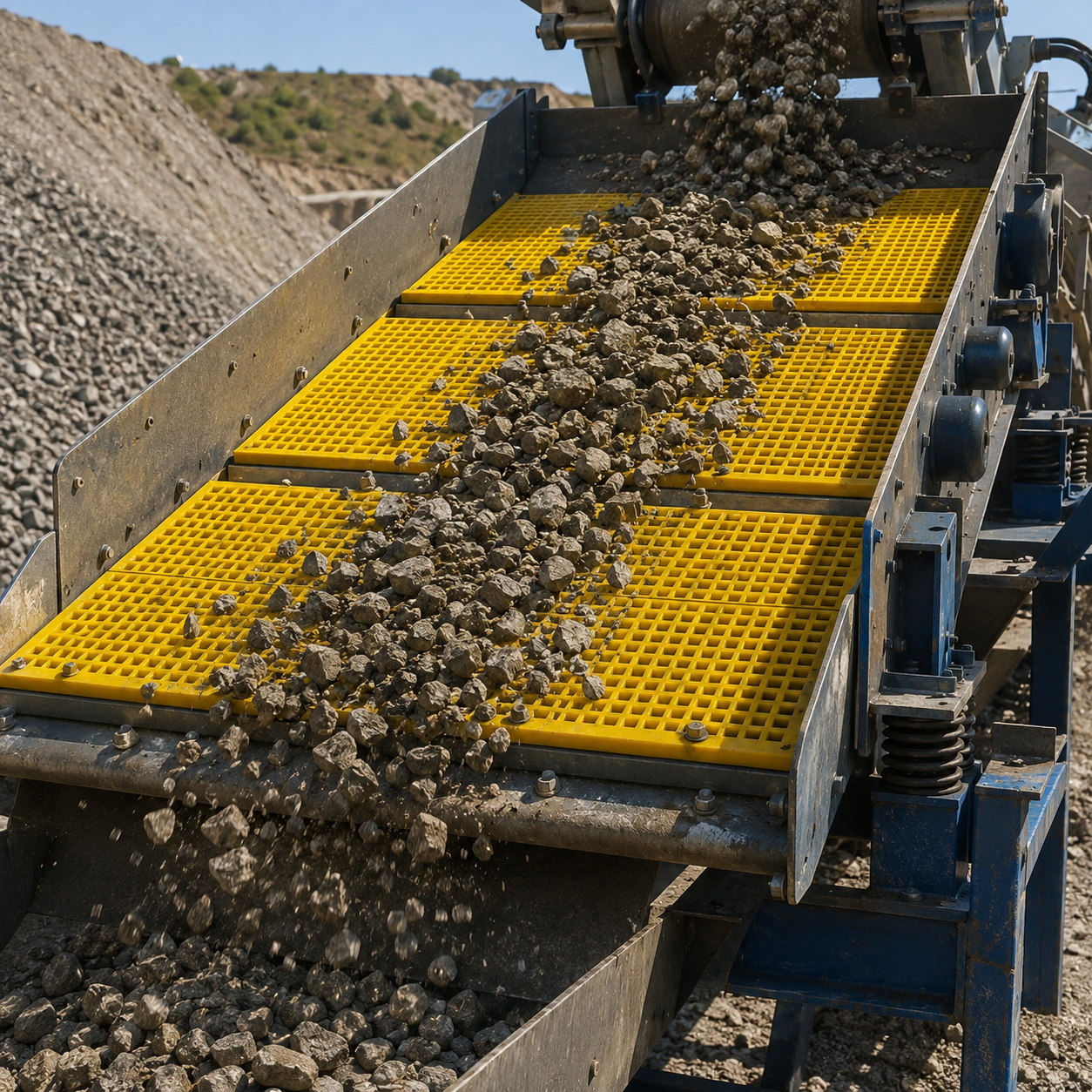
When precision matters in fine material separation, a Linear Vibrating Screen stands out for its stable motion, high screening efficiency, and consistent grading performance. For mining and aggregate operations seeking cleaner particle classification, understanding what makes this equipment suitable is essential. In this article, we explore the key structural and operational advantages that make it a reliable choice for fine material grading.
In practice, fine material grading is rarely just about “making particles smaller.” The real challenge is achieving a narrow and repeatable size split when feed characteristics are unstable, moisture fluctuates, and throughput targets remain high. That is where the suitability of a Linear Vibrating Screen is usually judged—not by brochure parameters, but by how well it maintains separation efficiency under real operating conditions.
Why fine material grading is more demanding than coarse screening
Screening large stone or oversize aggregates is comparatively forgiving. Fine material grading is not. As particle size becomes smaller, several process problems become more pronounced:
- Particles are more likely to stick together because of moisture or clay content.
- Near-size particles become harder to separate cleanly.
- Screen openings are more vulnerable to blinding and pegging.
- A small change in vibration behavior can noticeably affect product quality.
This is why equipment selection for fine grading usually focuses on motion stability, deck utilization, vibration uniformity, and screen media compatibility. A machine that works well for coarse separation does not automatically perform well in the fine range.
The motion pattern is the core reason
The defining feature of a Linear Vibrating Screen is its straight-line motion. This is generated by synchronized vibration motors or exciters that create a consistent forward-throwing action across the deck. For fine material grading, that matters for two reasons.
One is residence time. Fine particles need enough time and enough contact opportunities with the screen surface to pass through the openings. Linear motion tends to move material forward in a controlled and even way, rather than creating excessive circular tumbling. This helps maintain a more uniform bed depth, which is critical for stratification.
The other is directional transport. In fine screening, the goal is not simply to shake harder. Overly aggressive or chaotic movement can keep particles suspended rather than helping them find the apertures. A linear trajectory gives a better balance between conveying speed and screening opportunity, especially when the cut size is tight.
Stratification efficiency often determines grading quality
A useful way to understand suitability is to look at stratification. On a screening deck, coarse particles should rise while finer particles migrate downward toward the screen surface. If stratification is poor, fine particles remain trapped in the upper layer and are carried away as misplaced oversize.
Linear vibrating screens are widely used because their vibration characteristics support this layering effect effectively. With proper amplitude, frequency, deck angle, and feed distribution, the material bed loosens and rearranges in a repeatable manner. That directly improves the probability of undersize particles reaching the screen openings.
For information researchers comparing screening technologies, this is an important distinction: good fine grading is not only about aperture size. It is about whether the machine creates the right particle movement environment for separation to happen.
Deck design and screen surface matter as much as the drive
Even a well-designed Linear Vibrating Screen will underperform if the deck layout and screen media are mismatched to the application. Fine grading depends heavily on the relationship between feed size distribution, open area, wear resistance, and anti-blocking performance.
In quarry, mining, and aggregate applications, operators often choose between woven wire, polyurethane, or other modular media depending on abrasion level and required precision. Fine apertures such as 5 mm, 7 mm, 8 mm, or 9 mm are common transition points where media choice starts affecting both cut accuracy and maintenance frequency. In such cases, matching the machine with suitable screen panels or meshes becomes part of the grading strategy, not just a replacement item. For example, buyers evaluating wear life and aperture consistency may also look at options such as OEM 5mm 7mm 8mm 9mm sieve mesh screen for quarry crusher mining vibrating screen mesh when considering how the whole screening system will perform over time.
The key point is that the suitability of the screen body and the suitability of the screen media must be judged together. Many field problems described as “machine inefficiency” are actually caused by poor media selection.
Stable vibration helps maintain product consistency
For fine material producers, consistency is often more valuable than peak capacity. A grading system that produces fluctuating product quality creates downstream problems in blending, washing, dewatering, stockpile management, and customer acceptance.
Linear vibrating screens are favored in many plants because their operating behavior is relatively predictable when properly installed and maintained. Stable amplitude and balanced excitation reduce random shifts in separation performance. This is particularly useful when the screen is integrated into continuous-process lines such as sand and gravel production, manufactured sand classification, or mineral preprocessing.
From an operational point of view, predictable vibration behavior also makes troubleshooting easier. If cut quality changes, engineers can more readily investigate feed rate, moisture, aperture wear, or motor synchronization rather than dealing with inherently unstable machine motion.
They are especially practical in dry fine screening scenarios
Not every fine grading task uses dry screening, but where dry classification is required, the Linear Vibrating Screen is often a practical choice. It is commonly used in applications involving:
- Fine aggregate grading in sand and gravel plants
- Crushed stone sizing before secondary process stages
- Dry mineral classification where moderate moisture can be controlled
- Industrial raw material screening with defined cut sizes
Its suitability becomes more obvious when the process requires a clear and stable particle range rather than simple oversize removal. That said, if material has very high moisture, strong stickiness, or a heavy clay fraction, performance can decline unless upstream conditioning or alternative screening methods are considered.
Common misunderstanding: finer screening is not solved by increasing vibration force
One of the more common misconceptions in the field is that difficult fine screening can be corrected by using stronger vibration. In reality, higher force alone may shorten residence time, increase wear, and reduce classification sharpness.
What usually matters more is tuning several variables together:
- Appropriate vibration amplitude and frequency
- Correct deck inclination
- Uniform feed distribution across the screen width
- Suitable screen media material and aperture type
- Controlled feed moisture and bed thickness
This is why experienced operators treat the Linear Vibrating Screen as part of a system. The machine may be fundamentally suitable, but performance depends on how well surrounding process conditions support fine separation.
How to judge suitability before making a decision
For readers in the research stage, a more useful question than “Is a Linear Vibrating Screen good?” is “Under what conditions is it the right screening method?” A practical evaluation should include:
- The target cut size and allowable off-spec percentage
- Feed gradation stability
- Material moisture and clay content
- Required throughput per deck area
- Wear environment and media replacement frequency
- Available installation space and maintenance access
If the process involves repeatable feed conditions, dry or moderately moist materials, and a need for accurate grading in the fine range, a Linear Vibrating Screen is often a sound technical choice. If the material is highly sticky or the required cut is extremely fine, further comparison with other screening or classification technologies may be necessary.
What makes it suitable in one sentence
The reason a Linear Vibrating Screen is suitable for fine material grading is not just that it vibrates, but that it creates a controlled, stable, and repeatable screening environment in which fine particles have a better chance of stratifying, contacting the screen surface, and passing through the correct apertures.
That is the real value behind its widespread use in mining, aggregates, and related process industries. For anyone trying to understand screening equipment at a basic level, this is the practical takeaway: fine grading depends on motion quality, deck design, and media matching working together. Remove any one of those, and the screening result usually stops being precise.
Leave A Message
If you are interested in our products and want to know more details, please leave a message here, we will reply you as soon as we can.