What Is a Complete Crushing Plant and How Do Its Stages Work Together?
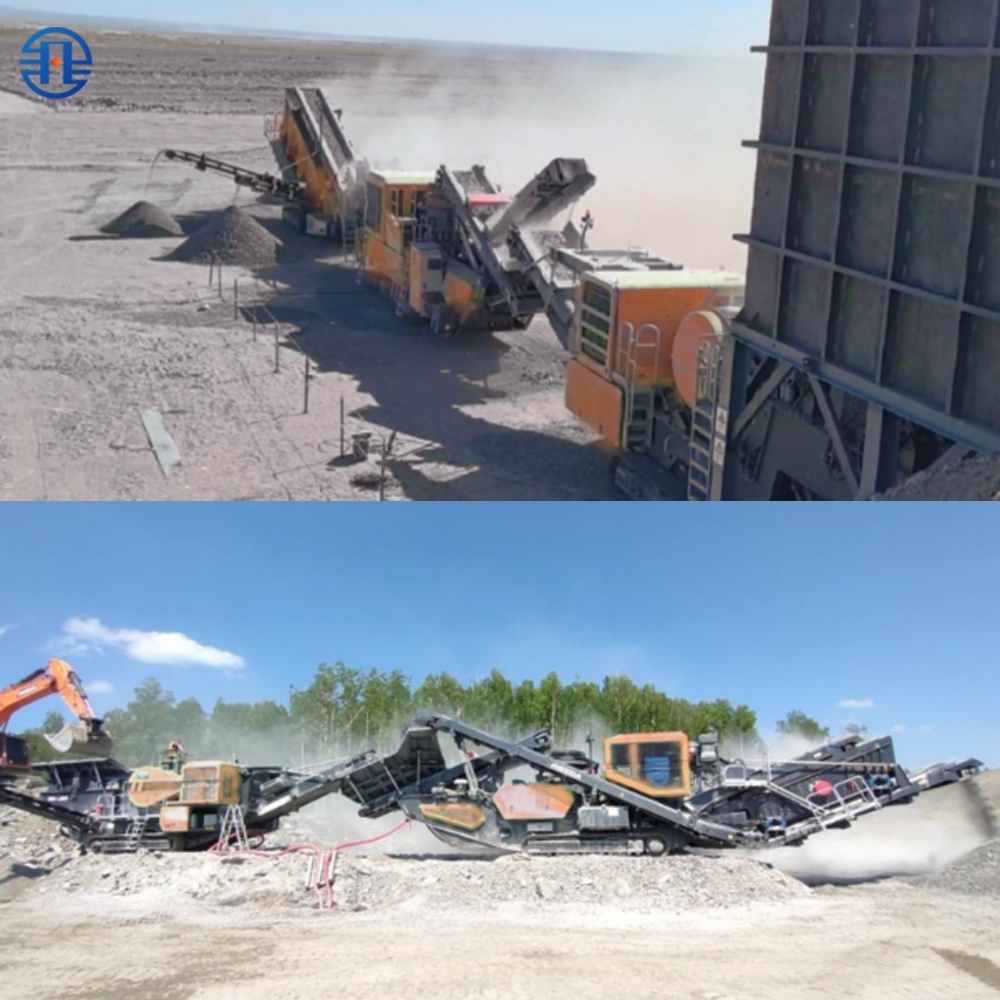
A complete crushing plant is an integrated process line that turns blasted rock, river stone, recycled concrete, or other feed material into controlled aggregate sizes. Its value does not come from simply placing a crusher, screen, and conveyor together. The stages must be sized and arranged so that material flows continuously, oversized particles return for further reduction, finished products remain separated, and one weak machine does not restrict the whole line.
For an operator or project planner, the practical question is: how does material move through the plant, and where can poor coordination reduce output or compromise aggregate quality? Understanding the sequence makes it easier to judge whether a proposed line matches the feed, required products, and operating conditions.
It Starts With the Feed, Not the Crusher
Every crushing plant begins with material receiving and feeding. A hopper accepts raw material from trucks, loaders, or a quarry stockpile, while a vibrating or apron feeder meters that material into the first crusher. This stage is often underestimated. An irregular feed containing large boulders, excessive fines, clay, or moisture can make an otherwise capable crusher operate inefficiently.
The feeder has two jobs: absorb variations from the loading process and deliver a controlled, even stream downstream. If it is undersized, trucks or loaders wait unnecessarily. If it feeds too aggressively, the primary crusher can choke, causing uneven wear, lower reduction efficiency, and stoppages. Where the raw feed contains a high percentage of fines, a grizzly section may remove material that does not need primary crushing before it reaches the crusher.
Plant design therefore starts with a realistic understanding of feed size, hardness, abrasiveness, moisture, clay content, and expected variation. Nameplate capacity alone is not enough; capacity depends on the material actually entering the system.
Primary Crushing Reduces the Material to a Manageable Size
The primary crusher receives the largest feed and performs the first major size reduction. Jaw crushers are commonly used where large, hard rock must be handled, while gyratory-type arrangements may be considered for larger continuous operations. The purpose at this point is not necessarily to produce final aggregate. It is to reduce the run-of-mine material to a size that conveyors, screens, and downstream crushers can process reliably.
A primary crusher should be evaluated alongside its feed opening, permissible top size, discharge setting, and the feeding equipment ahead of it. A crusher may have sufficient theoretical throughput but still become the plant bottleneck if the feed contains pieces beyond its opening or arrives in uneven surges.
The discharge from primary crushing normally passes onto a conveyor, often through a transfer point designed to control spillage and protect the belt from impact. These transfer points appear secondary on a layout drawing, but poor chute design can cause blockages, accelerated liner wear, dust leakage, and material segregation before screening begins.
Screening Decides What Needs More Crushing
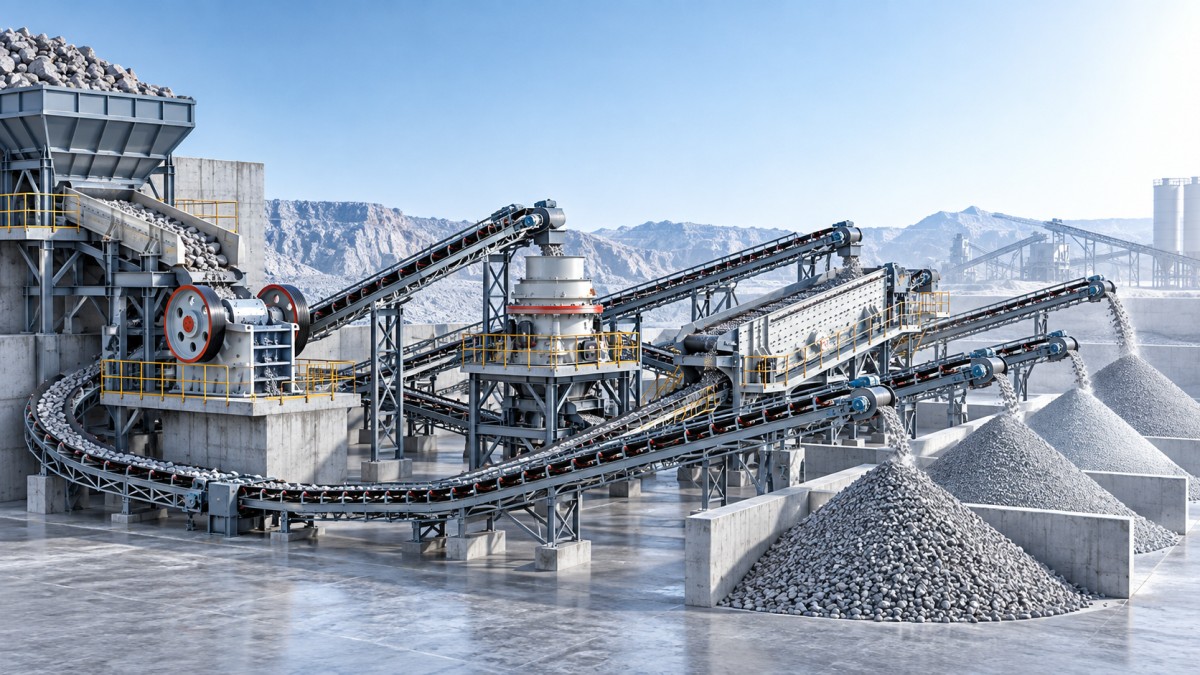
Screening is the control point of a Complete Crushing Plant. A vibrating screen separates material by size, directing particles that already meet the specification toward finished-product stockpiles and returning oversized material to another crushing stage. Without effective screening, a plant can over-crush acceptable aggregate, increase wear consumption, and produce an inconsistent gradation.
The screen selection must reflect the target product sizes and the characteristics of the material. Sticky or wet feed can blind screen openings. Highly abrasive stone can shorten the service life of screen media. Fine screening may require a different deck arrangement and mesh choice than coarse scalping. Polyurethane media, woven wire, and other screen types each have a place, but the selection should follow material behavior and required separation accuracy rather than a generic preference.
A useful way to read a flowsheet is to trace every size fraction after the screen:
- Material below the target size should move directly to a designated finished stockpile or later washing stage.
- Intermediate material may be routed to secondary crushing if a smaller aggregate product is required.
- Oversized material should return in a controlled closed circuit until it meets the screen cut point.
This recirculation is what allows the plant to produce graded products instead of a mixed pile of crushed stone.
Secondary and Tertiary Crushing Shape the Final Product
After primary crushing, secondary crushing further reduces the material and begins to influence particle shape. Cone crushers are commonly used for hard and abrasive aggregate because they can operate in a closed circuit with screens and produce a controlled range of sizes. Their performance depends heavily on a stable feed, correct chamber selection, suitable closed-side setting, and routine monitoring of wear parts.
In frequent crushing duties, wear management should be treated as part of the production plan rather than a maintenance detail. A cone crusher equipped with wear-resistant components can support continuity where abrasive feed and high recirculating loads are expected. For readers comparing equipment for that role, the OEM Wear Resistant Spare Parts Equipped Cone Crusher For Frequent Material Crushing Scenarios Machine illustrates the type of machine consideration that belongs in the secondary-crushing decision: not only reduction ratio, but also liner life, spare-parts availability, and the practical time required for maintenance.
Some lines add a tertiary crusher or vertical-shaft impact crusher when the objective includes manufactured sand, stricter shape requirements, or a higher proportion of fine aggregate. Adding another stage can improve product control, but it also adds circulating load, energy use, wear points, and operating complexity. It should solve a defined product-quality requirement rather than be included simply because a larger plant has one.
Washing and Conveying Complete the Process
Where the final aggregate must have low dust, reduced clay contamination, or a clean sand fraction, washing equipment follows crushing and screening. Sand washers, hydrocyclones, dewatering screens, or other systems may be selected according to the fines content, water availability, and discharge requirements. Washing cannot correct every upstream problem. Excessive clay or poorly controlled fines entering the circuit can still reduce efficiency and increase water-treatment demands.
Conveyors then link every stage and deliver separate products to stockpiles. They are the plant's material-handling backbone. Belt width, speed, incline, transfer design, and stockpile arrangement must all support the planned tonnage. A plant with correctly selected crushers can still underperform when belts are too narrow, transfer points plug, or product piles overlap and contaminate one another.
How the Stages Work as One System
The stages are interdependent. Feeding affects crusher utilization; crushing determines the load arriving at screens; screen efficiency controls the recirculating load; recirculating load affects secondary-crusher capacity and wear; conveying determines whether each section can sustain its output. A change at one point therefore tends to appear elsewhere.
For example, opening a crusher setting may raise instantaneous throughput but send more oversize material to the screen and increase recirculation. Tightening the setting may improve gradation but reduce net capacity and accelerate wear. Similarly, adding screen area can improve separation, yet it will not solve a primary crusher that is receiving poorly prepared feed.
When assessing a proposed plant, ask for the process logic rather than only an equipment list: What is the maximum feed size? Which products are required? Where is each screen cut made? Which material streams recirculate? What happens to fines, clay, and water? Which machine limits production when material conditions become difficult?
A well-matched crushing plant is defined by those answers. The goal is a stable flow of specification-compliant aggregate with manageable wear, maintenance, and energy demand, rather than the highest output claimed by any single machine.
Leave A Message
If you are interested in our products and want to know more details, please leave a message here, we will reply you as soon as we can.