What Does an Apron Feeder Do in Heavy-Duty Material Handling?
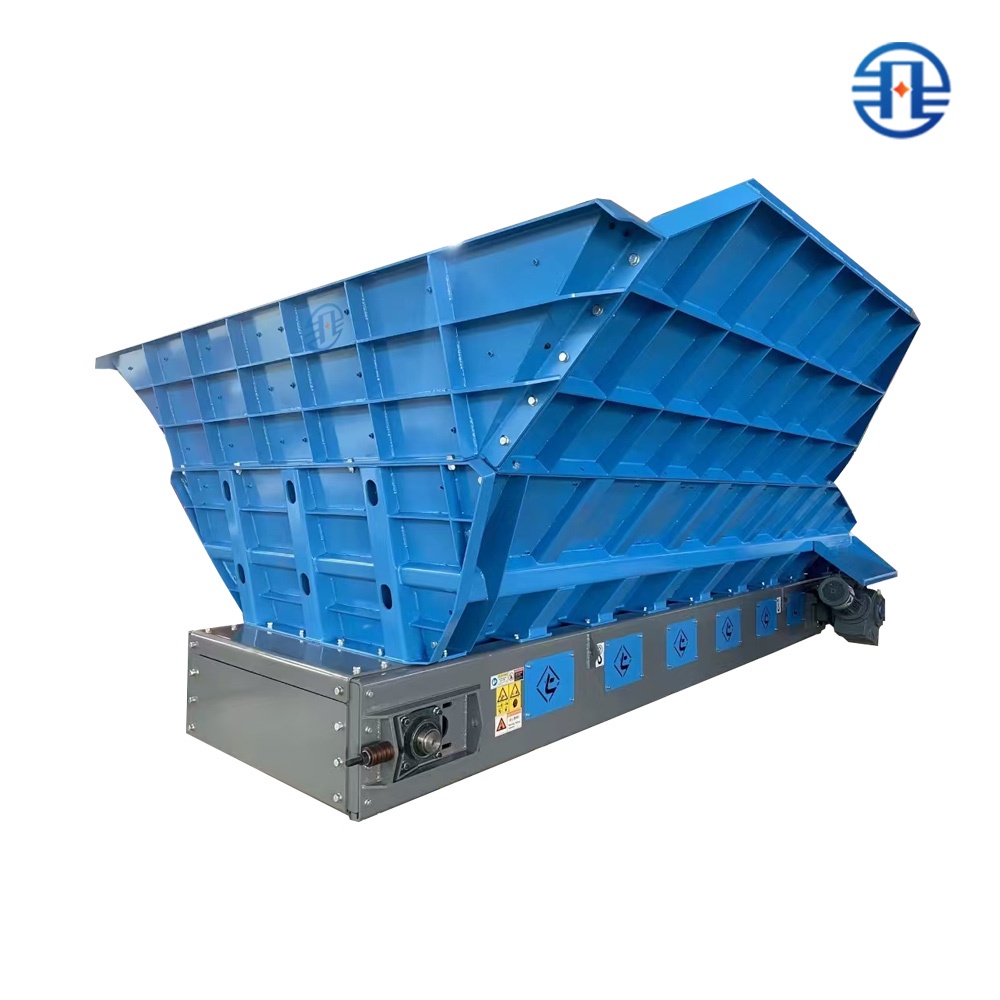
In heavy-duty material handling, an Apron Feeder plays a vital role in moving large, abrasive, and high-impact materials from hoppers or stockpiles to downstream equipment with steady, controlled feeding. For mining, aggregates, and bulk processing operations, understanding how an Apron Feeder works helps buyers and project planners choose reliable systems that improve efficiency, reduce wear, and support continuous production.
That matters because in many plants, feeding equipment is not just a transfer point. It is the first control point of the process. If feed becomes unstable, the entire line downstream—crusher, screen, conveyor, stockpile system—starts operating under avoidable stress. For readers trying to understand the basics, the core question is simple: why use an Apron Feeder instead of another feeding method, and what problem is it really solving?
Its main job is controlled extraction under harsh conditions
An Apron Feeder is designed to withdraw bulk material from a hopper, bin, or dump point and deliver it at a controlled rate to the next stage of processing. Unlike lighter-duty feeders, it is built specifically for situations where the material is heavy, coarse, abrasive, wet, or impact-loaded.
In practical terms, that means it often sits under a primary crusher surge bin, beneath a truck dump hopper, or at the front end of an aggregates or mining line. Material does not simply “fall through” the system. The feeder meters it forward using overlapping steel pans mounted on chains, driven by a robust head shaft and drive assembly.
This configuration allows the machine to handle boulders, sharp rock, and uneven loading without the problems that would quickly damage lighter conveying equipment. In operations processing sand and gravel, quarry stone, ore, or similar bulk solids, that distinction is important. An Apron Feeder is not selected because it is the cheapest way to move material. It is selected because it survives where other equipment may struggle.
How it works in a real production line
The operating principle is straightforward. Material is loaded onto steel pans. Those pans are pulled forward by heavy-duty chains. As the pans travel, the material is discharged in a controlled stream onto a crusher, belt conveyor, screen, or transfer chute.
The value of that “controlled stream” is often underestimated by people new to the sector. Downstream machines generally perform better when feed is even. A primary crusher, for example, is more likely to maintain stable throughput and acceptable wear patterns when it receives a consistent load rather than surges followed by gaps.
That is why Apron Feeders are often part of a broader material handling logic rather than a standalone machine choice. The feeder, crusher, transfer chute, and conveyor should be understood as one operating system. Even support components further along the line—such as pulley assemblies on conveyors—affect reliability. In aggregate plants where continuity matters, components like FEIFAN OEM High Strength Conveyor Drive Pulley Lagging Drum Pulley For Mining Sand Gravel Aggregate Production Line Equipment are part of the same conversation about durability, traction, and stable transport after the feeding stage.
Where Apron Feeders are typically used
Apron Feeders are common in mining, quarrying, aggregates, cement raw material handling, and some metallurgical applications. Their typical use cases include:
- Feeding run-of-mine ore to primary crushers
- Extracting blasted rock from receiving hoppers
- Handling wet or sticky bulk material where flow is inconsistent
- Metering coarse stone in sand and gravel lines
- Managing heavy stockpile reclaim where impact loads are high
These are not marginal conditions. They are among the most punishing material handling environments in industry. High drop heights, variable lump sizes, tramp material, moisture, and abrasive fines all increase the risk of equipment wear and unplanned shutdowns. That is where the Apron Feeder earns its place.
Why not just use a belt feeder or vibrating feeder?
This is one of the most common early-stage questions, and the answer depends on the material and loading conditions.
A belt feeder can be effective when material is smaller, more uniform, and less damaging to the belt surface. It is often favored for accurate metering in less aggressive duty. A vibrating feeder is useful where controlled flow and some pre-screening effect are needed, especially for lighter or medium-duty applications.
An Apron Feeder becomes the preferred option when three factors appear together: high impact, large lump size, and severe abrasion. If trucks are dumping blasted rock into a hopper, the feeder below that hopper must tolerate shock loading and carry material that may include irregular, sharp, or heavy pieces. That is not a favorable environment for every feeder type.
So the decision is not about which machine is “better” in general. It is about which machine matches the front-end duty of the plant. Misjudging that point can create recurring maintenance costs that outweigh any initial savings.
What operational advantages does it offer?
The first advantage is durability. Apron Feeders are engineered for long service life in severe-duty environments, especially when properly sized and matched to the material.
The second is feed stability. A controlled and continuous material flow supports downstream process efficiency and can reduce operational fluctuations in crushing and screening circuits.
The third is lower risk of catastrophic failure under overload conditions compared with lighter-duty systems. That does not mean Apron Feeders are maintenance-free. Chains, rollers, pans, drives, liners, and lubrication systems still require attention. But in the right application, they offer a more predictable wear profile.
The fourth advantage is handling versatility. Coarse rock, sticky clay-mixed feed, or moisture-affected material may all be manageable, provided the machine is correctly designed for the duty.
Where buyers and planners often get it wrong
A common mistake is focusing on rated capacity alone. Capacity figures without context can be misleading. Material bulk density, lump size distribution, surcharge loading, hopper geometry, and variable feed conditions all influence whether the feeder will perform reliably.
Another mistake is treating the feeder as an isolated purchase. In reality, hopper design, discharge opening, chute angle, crusher acceptance, and conveyor interface all affect performance. A well-built Apron Feeder can still underperform if the upstream and downstream interfaces are poorly engineered.
There is also a tendency to overlook wear environment. Fine abrasive material may seem less dramatic than large rock, but continuous abrasion can be equally destructive over time. In some plants, the recurring issue is not structural overload but accelerated wear on liners, pans, chains, and transfer points.
Finally, some buyers assume “heavier” always means “safer.” Overspecification can increase capital cost and energy consumption without solving the real bottleneck. The goal is not to buy the largest feeder available. It is to match the feeder to actual duty conditions.
What to check when evaluating an Apron Feeder
For an information-stage reader, the most useful evaluation framework is practical rather than theoretical.
- What material will it handle: ore, gravel, blasted rock, wet fines, mixed feed?
- What is the largest lump size and expected gradation?
- Will loading be controlled or impact-heavy from trucks or loaders?
- What feed rate must be maintained, and how much variation is acceptable?
- How does the feeder connect to the crusher, screen, or conveyor system?
- What maintenance access is available on site?
- How critical is uptime to the overall production target?
These questions often reveal whether an Apron Feeder is necessary, or whether another feeder type would be sufficient.
It is also worth looking at line-wide component compatibility. A feeder may discharge reliably, but if downstream conveyors suffer slippage or premature wear, plant stability still suffers. That is why some project teams review heavy-duty handling components together, from feeder pans and chains to conveyor pulleys such as FEIFAN OEM High Strength Conveyor Drive Pulley Lagging Drum Pulley For Mining Sand Gravel Aggregate Production Line Equipment.
Why Apron Feeders remain relevant
Despite improvements in other feeder technologies, the Apron Feeder remains a standard choice in severe-duty applications because the basic industry challenge has not changed: large, abrasive, irregular material still needs to be extracted safely and steadily from bulk storage or dump points.
For mining and aggregates operations, the feeder is often less visible than the crusher, but its role is just as strategic. A weak front-end feeding system can limit the performance of the entire plant. A properly selected Apron Feeder, by contrast, supports stable throughput, protects downstream equipment, and reduces the operational instability that turns into maintenance cost and lost production.
For anyone learning the category, that is the most useful takeaway. An Apron Feeder does more than move material. It regulates one of the hardest parts of bulk handling: turning irregular, heavy, high-impact feed into a manageable and continuous process flow.
Leave A Message
If you are interested in our products and want to know more details, please leave a message here, we will reply you as soon as we can.