What causes premature screen mesh wear in a quarry?
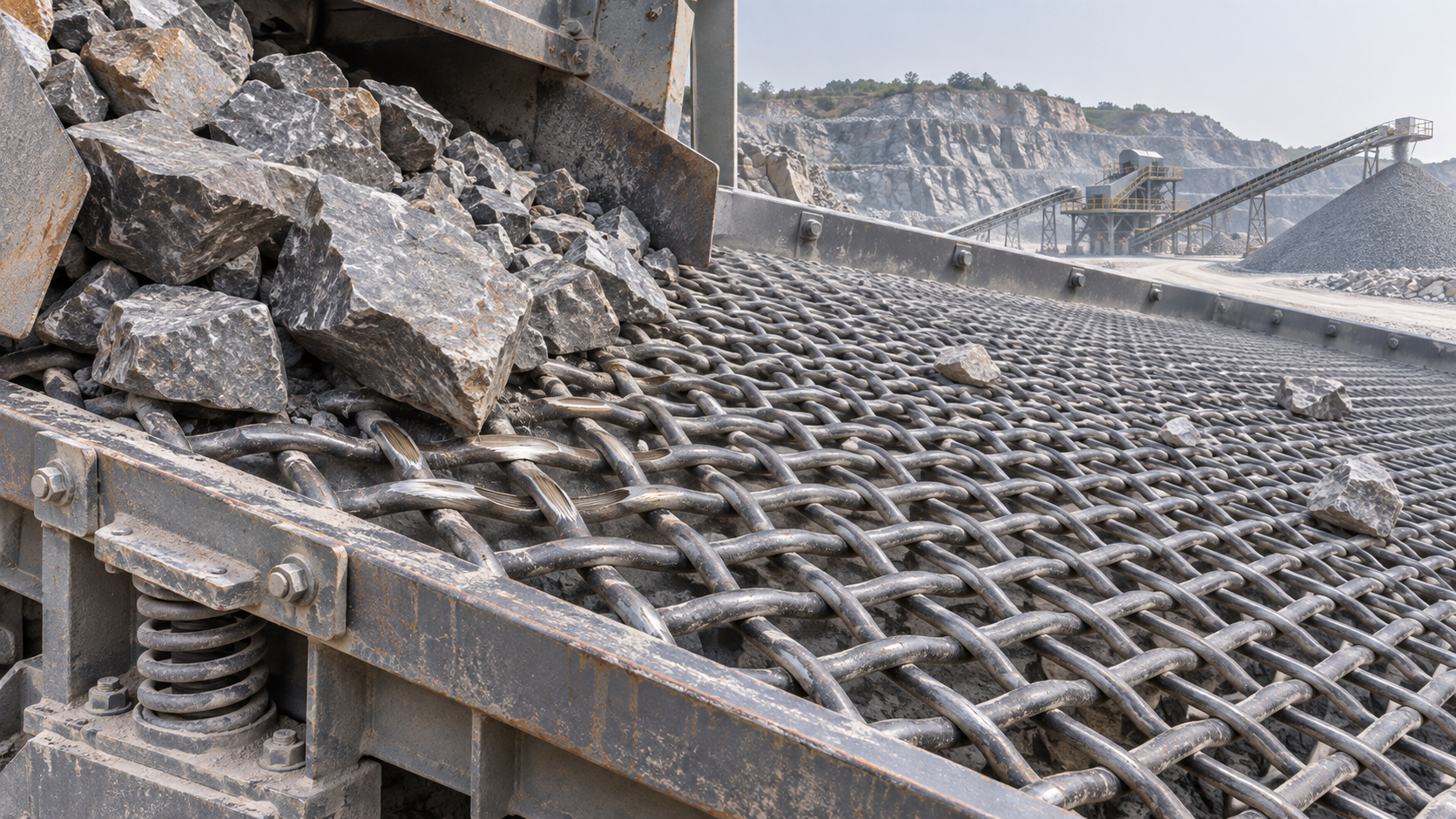
Premature Screen Mesh wear often starts with a mismatch between the screen surface and the way material reaches it. Abrasive stone removes material gradually, while a high-impact feed point, loose mesh or damaged support can cause a local failure long before the rest of the deck is worn. The location and shape of the damage provide the first clues: examine them alongside feed conditions and installation details before changing the mesh specification.
Read the wear pattern before replacing the mesh
Compare the failed area with the rest of the panel and with neighboring panels. Uniform thinning across a deck points toward sustained abrasion, although the feed rate and material hardness still need review. A hole concentrated beneath the feed point suggests repeated impact or a deep bed of coarse rock striking the same area. Damage confined to one side can indicate uneven feed distribution, but a worn side seal or a poorly aligned chute can produce a similar pattern.
On woven wire, fractures near hooks, clamp rails or support bars deserve a different investigation from wire that has become thin and polished. A broken wire may be fatigued by movement against a support, especially if the mesh is loose or the support rubber has worn through. Record the position of the damage before removal; a loose panel on the workshop floor cannot reveal where it was moving on the deck.
Feed impact and abrasion
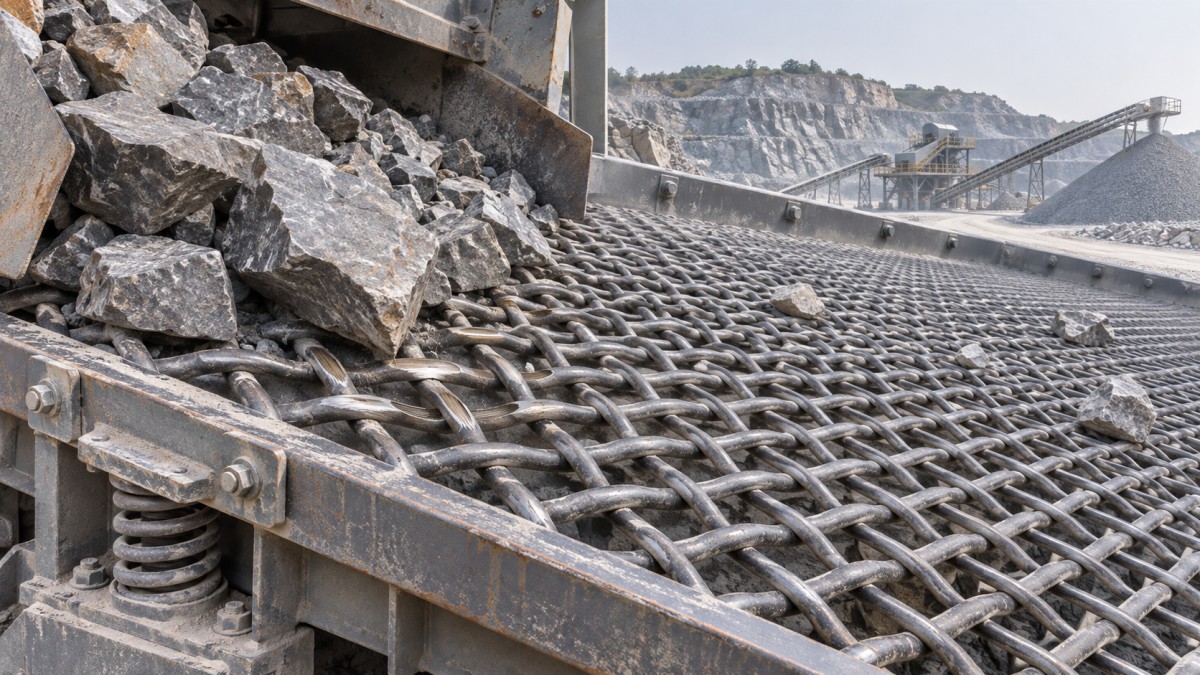
Hard, angular aggregate abrades the surface as particles move across it. Wet sand carrying abrasive fines can also erode a panel even when individual particles are small. Compare wear at the feed end and discharge end: a concentrated loss at the inlet calls for a closer look at the drop height, feed trajectory and whether rock is striking an exposed section of mesh.
A feed box, impact protection or a change in chute geometry can spread the initial load across the deck. Any alteration should maintain a controlled flow onto the screen; directing material toward one edge simply moves the wear problem. Also inspect the condition of protective liners, since a missing liner can expose a previously shielded panel to direct impact.
Excessive loading creates a separate problem. A deep bed keeps particles in contact with the surface for longer and can prevent near-size material from reaching the openings. Reducing the feed rate may improve separation, but the cause of the overload should also be examined: an uneven feed or a restricted discharge can create a local buildup even when total plant throughput appears acceptable.
Installation faults that shorten panel life
For tensioned woven wire, inadequate tension allows the cloth to flex and rub on the supporting frame. Excessive or uneven tension can distort the cloth or overload its hooks and fastening points. Inspect the crown and support bars for damage, replace worn support rubber, and tension the mesh to the screen and mesh suppliers’ instructions. Retensioning procedures vary with the design; apply the specified procedure after installation and initial operation.
Modular polyurethane panels rely on a different fastening arrangement. A panel that does not seat properly, a damaged fastening element or a distorted frame can allow movement and concentrated stress around the attachment points. Inspect adjacent panels and the supporting structure as well as the damaged panel. Replacing only the visibly torn piece leaves the underlying movement unresolved.
Metal-to-metal contact is especially revealing. Polished spots on support bars, damaged rubber strips or matching marks on the underside of the mesh show where repeated rubbing has occurred. Compare those marks with fracture locations before concluding that the wire itself was defective.
Mesh selection must match the duty
A smaller aperture does not automatically mean a longer-lasting screen. In woven wire, opening size and wire diameter together determine open area and the amount of material available to resist wear. A heavier wire can improve abrasion resistance, but it reduces open area if the aperture remains unchanged; reduced screening capacity or material buildup may follow. Assess the required product size and throughput together with expected wear.
Polyurethane offers a different balance of wear resistance, flexibility and open area. Its suitability depends on particle size, impact, moisture and the panel design. Wet or sticky material can blind openings and force material to travel farther across the surface. In that duty, the FEIFAN OEM Self Cleaning Flexible Panel for High Moisture Sand and Gravel Polyurethane Vibrating Screen Panel is relevant to the selection discussion; its fit, opening geometry and performance still need to be assessed against the actual feed and screen arrangement.
Blinding and abrasive wear can appear together, but they call for different evidence. If openings are packed with fines, inspect moisture, clay content and whether the screen surface is moving as intended. If the openings remain clear while wires or panel ribs become progressively thinner, abrasion is the more direct explanation. Increasing aperture size may reduce blockage, but it can also change the product grading.
Separate deck problems from mesh problems
Abnormal vibration can fatigue mesh and fasteners. Inspect for loose structural connections, damaged springs and uneven movement across the machine, then compare operating settings with the screen manufacturer’s specifications. A change in amplitude or motion should be evaluated as a machine-level adjustment because it also affects conveying speed, bed depth and separation.
Keep a record of panel position, installation date, feed condition and failure location for each replacement. Comparing panels exposed to the same feed but mounted in different positions helps distinguish a localized support or distribution fault from a material-selection issue. After a correction, inspect the same locations during routine shutdowns to see whether the wear pattern has changed.
Leave A Message
If you are interested in our products and want to know more details, please leave a message here, we will reply you as soon as we can.