Spiral Sand Washing Machine vs Wheel Type: How the Two Systems Work
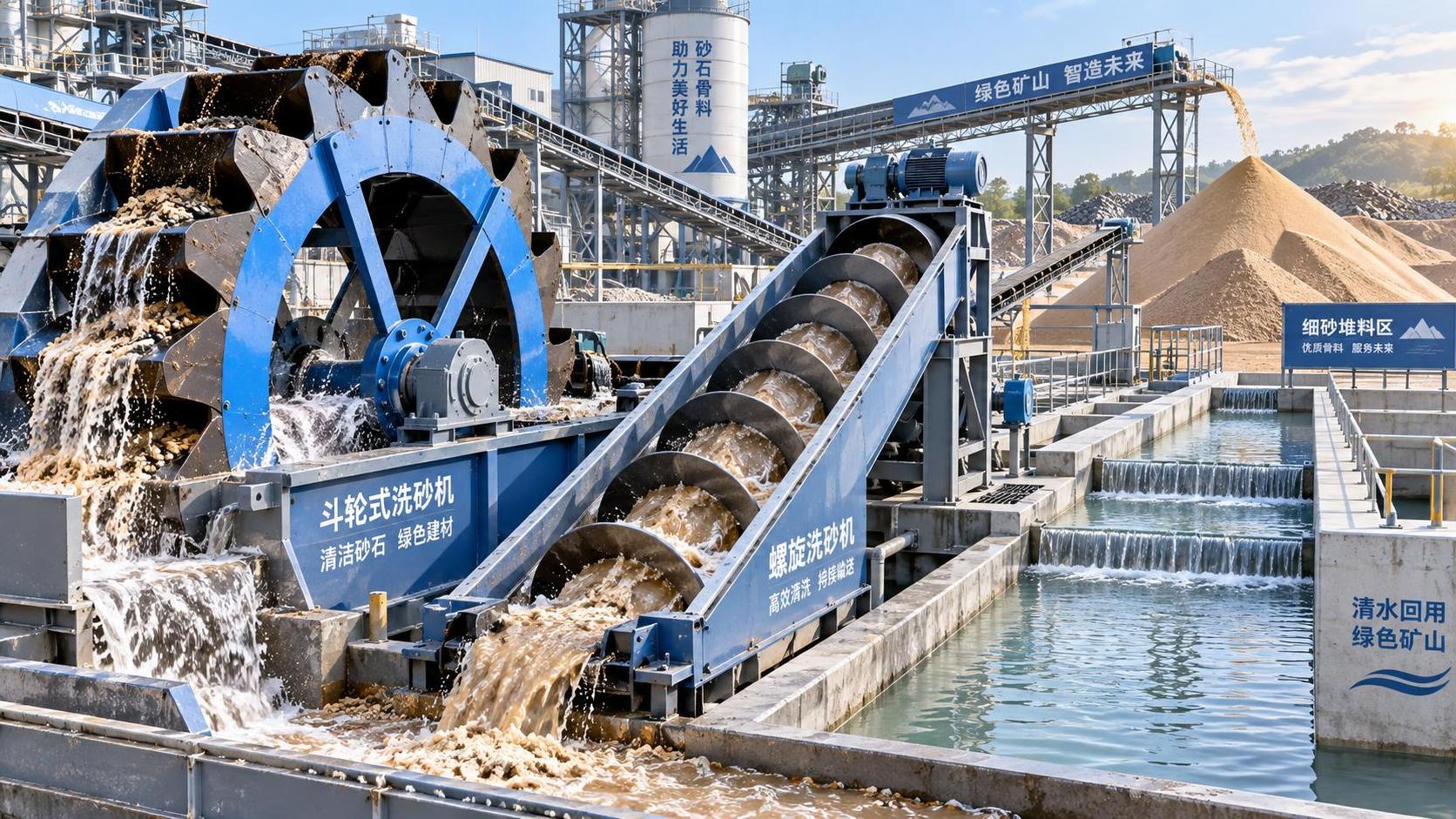
Choosing between a spiral sand washing machine vs wheel type unit is not mainly about which design looks simpler. The practical difference is how each system moves sand through water, how much fine material it retains, and how well it handles clay, slurry, and changing feed conditions. A wheel washer is often the better fit for cleaner, coarser manufactured sand with limited water availability. A spiral washer is usually chosen when the feed contains more mud, clay, or difficult fines and requires a more intensive washing action.
For operators, the right choice affects daily production stability as much as final sand quality. A machine that is well matched to the feed can produce clean, usable sand with manageable water and maintenance demands. A poorly matched machine may lose too much valuable fine sand, leave clay in the product, overload downstream dewatering equipment, or require repeated adjustment.
How a wheel type sand washer works
A wheel type sand washer, also called a bucket wheel washer, uses a slowly rotating wheel fitted with buckets or scoops. Sand slurry enters the washing tank, where water agitation loosens surface dirt and carries very fine particles away with the overflow. As the wheel turns, its buckets lift the settled sand out of the water. Excess water drains through openings in the buckets before the sand is discharged.
This arrangement is mechanically straightforward. The sand has a relatively short washing path, and the wheel recovers much of the sand that settles at the bottom of the tank. That makes it suitable for ordinary crushed sand or natural sand that is already reasonably clean and does not contain large amounts of sticky clay.
In operation, a wheel washer is often valued for its compact layout and lower water demand. It can be a practical choice for small and medium sand lines, especially where the feed has been screened properly before washing. However, short washing time is also its limitation. If clay lumps break down slowly, or if the feed contains a high proportion of very fine slurry, a wheel washer may not separate contaminants thoroughly enough on its own.
How a spiral sand washer works
A spiral sand washer uses one or two rotating screw shafts inside an inclined washing trough. Feed enters the lower end of the trough. The rotating spiral blades stir the material in water while pushing the heavier sand upward toward the discharge end. Light contaminants, dissolved clay, and suspended fines move with the water toward the lower overflow end.
The longer travel distance gives the material more time to be washed and classified. During this movement, particles rub against each other and against the water flow, which helps release adhering mud and clay. This is why spiral washers are commonly considered for heavier-duty washing duties, such as raw material with visible contamination, quarry sand with clay-bearing fines, or feed from wet crushing and screening stages.
A spiral system can process a continuous flow effectively, but it normally requires more installation length and a more deliberate water-management arrangement. Its discharge sand may also carry more moisture, so the line may need a dewatering screen, hydrocyclone, or stockpile drainage area depending on the required final moisture and fine-sand recovery target.
The differences that matter in daily operation
The comparison should not be reduced to “wheel for low capacity, spiral for high capacity.” Capacity matters, but feed quality and product requirements matter more. A wheel washer can be productive in a properly prepared line. A spiral washer can still perform poorly when it is fed unevenly, supplied with inadequate water, or asked to recover fines that should instead be handled by a separate recovery circuit.
Start with the material, not the machine name
Before selecting a washer, look at the material after crushing and screening. Check whether the contamination is loose dust, fine silt, sticky clay, organic matter, or a mixture of these. Loose dust can often be removed with modest washing. Sticky clay is more difficult because it coats sand particles and may remain attached unless the material is agitated for long enough.
Feed size also matters. Large particles and uncontrolled oversize can damage components or reduce washing efficiency. A washing machine should receive material within its intended size range, after scalping and screening. Sending unscreened mixed feed into a washer is a common source of poor product consistency, regardless of whether the system uses a wheel or spiral.
Plant operators should also watch the proportion of particles near the lower end of the required sand grading. Those fines may be undesirable clay, but they may also be valuable manufactured sand. If the overflow is carrying excessive usable sand, changing only the washer setting may not solve the problem. The line may need better feed classification or a fine-sand recovery stage.
Water management changes the result
Both systems depend on water flow, but more water is not automatically better. Too little water allows slurry and clay to remain in the product. Too much uncontrolled water can wash valuable fine sand away and make settling ponds or recycling equipment harder to manage.
Observe the discharge and overflow together. Clean-looking discharge sand is not enough if the overflow contains a visible amount of usable sand. Likewise, a low overflow loss is not a success if the product still fails cleanliness requirements. Stable feed rate, controlled water addition, and regular removal of settled sludge are more effective than frequent, large adjustments by the operator.
For manufactured sand lines, washing performance starts upstream. Crushing settings influence particle shape and fine content, while screening determines whether the washer receives a controlled feed. Where mixed stone must be converted into consistent sand, equipment such as the FEIFAN High Efficiency Dual Crushing Modes VSI-7000 With Wear Resistant Liner And Vibration Monitor For Mixed Stone Sand Making VSI Crusher belongs to the upstream discussion: the washer must be selected for the gradation and fines profile produced by the sand-making stage, not treated as an isolated machine.
When each option is usually the more sensible choice
Choose a wheel type washer when the incoming sand is already well screened, clay content is limited, site space is constrained, and the operation needs a relatively simple washing stage. It is especially suitable where water conservation and uncomplicated routine operation are priorities.
Choose a spiral washer when the material needs a longer and stronger washing process. It is better suited to feed with persistent mud or clay contamination, operations that require more intensive classification, and plants designed with enough space and water treatment capacity to support the system.
There are also cases where neither machine alone is sufficient. High-silt material, strict fine-sand recovery requirements, or recycled process water may call for a broader washing circuit that combines screening, washing, dewatering, and slurry treatment. In that situation, selecting the washer first can lead to an incomplete design.
Three checks before making a final selection
- Inspect the feed at different times of day. A sample taken from one clean stockpile may not represent material after rain, a change in quarry face, or a different crushing setting.
- Define what must be removed and what must be retained. Clay, dust, and ultra-fines are not the same thing. The acceptable loss of usable fine sand should be considered before setting washing intensity.
- Review the complete water circuit. Confirm water supply, slurry discharge, settling capacity, recovery equipment, and the moisture level acceptable for the next process.
The practical decision in a spiral sand washing machine vs wheel type comparison is therefore based on washing difficulty, not appearance. A wheel type system offers efficient, straightforward washing for cleaner material. A spiral system provides more intensive treatment for difficult feed, but asks more from the site layout and water circuit. Match the machine to the actual feed condition and the whole production line will be easier to stabilize.
Leave A Message
If you are interested in our products and want to know more details, please leave a message here, we will reply you as soon as we can.