Single vs Double Spiral Sand Washing Machine: What Changes in Output and Cleanliness?
Check the selection logic before you compare capacity numbers
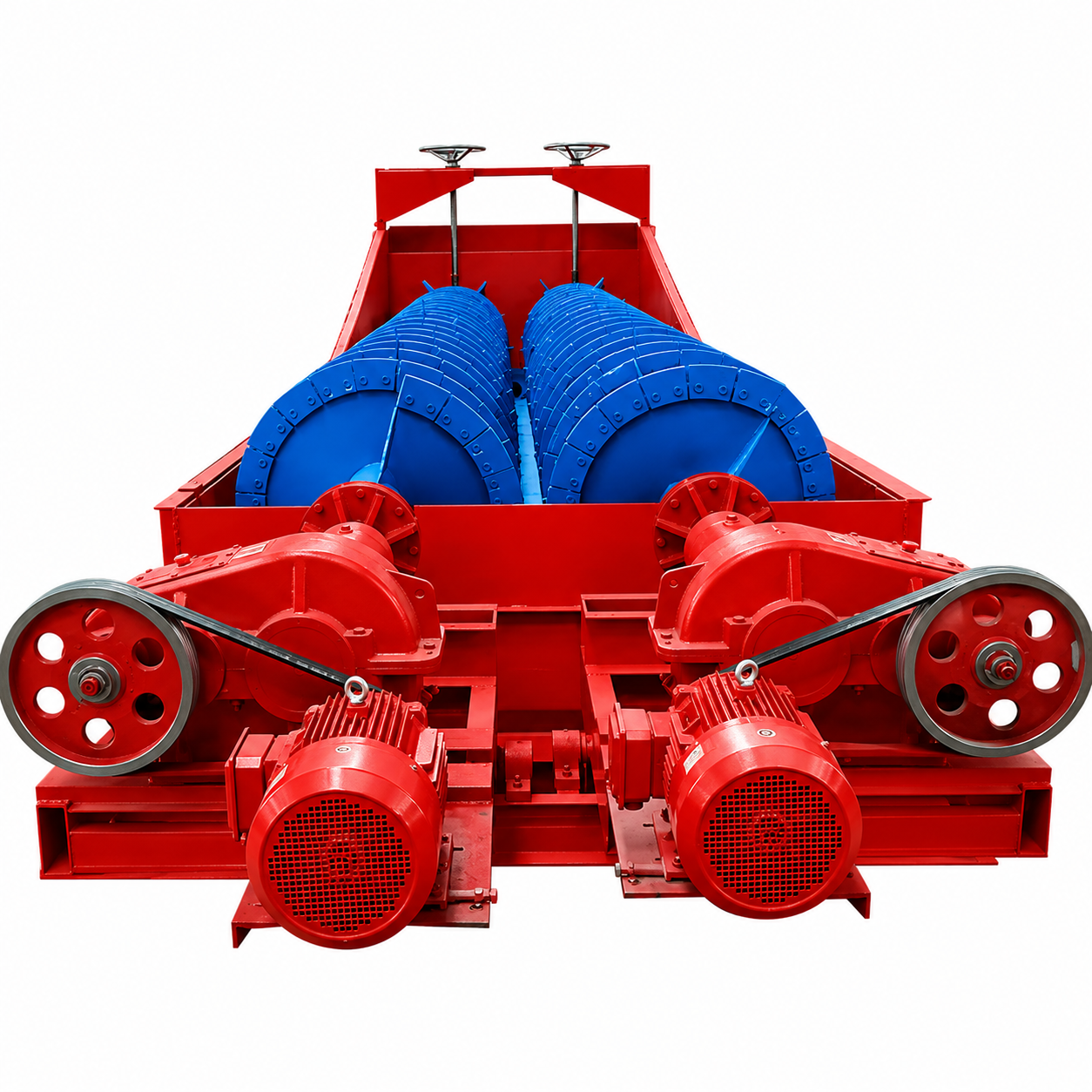
When technical teams ask, what is the difference between single and double spiral sand washing machine, the first mistake is jumping straight to nameplate output. In real plant evaluation, output and cleanliness move together, and both are shaped by feed condition. A double spiral unit usually gives you more washing area, more material turnover, and a longer effective cleaning path. That tends to support higher throughput and better removal of clay, silt, and adhering impurities. A single spiral machine is simpler and often easier to match with moderate-capacity lines, but it reaches its limit faster when feed contains more mud or when the plant needs tighter control of final sand cleanliness.
So the right comparison starts with three jobsite questions: how dirty is the feed, how much finished sand per hour does the line actually need, and how much fine material can the process afford to lose in washing. If those are not clear, the single-versus-double discussion stays too abstract to be useful.
Look at feed condition, not just feed size
A spiral washer handles more than particle size. It reacts strongly to mud content, stickiness, and the proportion of fine particles already present in the feed. In cleaner manufactured sand or lightly contaminated natural sand, a single spiral machine may wash adequately if downstream quality targets are not severe. Once the feed carries heavier clay contamination or fluctuates between dry and sticky conditions, a double spiral machine usually gives more stable washing performance.
- Check whether the feed has loose silt or bonded clay.
- Check how often the raw material changes during the week or season.
- Check whether the upstream screen is already removing excess fines consistently.
That last point matters more than many buyers expect. If prescreening is unstable, the washer is forced to do both classification and cleaning at the same time, and that usually makes performance comparisons misleading.
Output changes because material movement changes
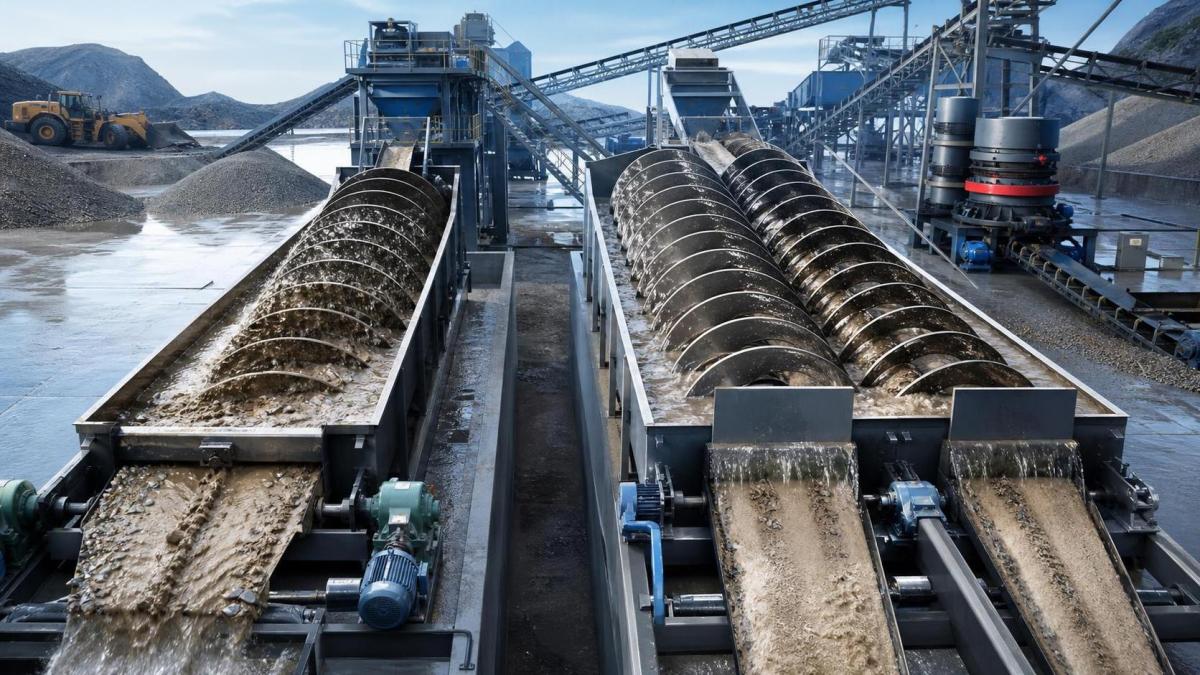
The practical output difference is not just “one spiral versus two spirals.” It comes from how much material the machine can agitate and convey without overloading the washing zone. Double spiral machines generally process more material in parallel, with better bed disturbance and less chance of one side of the trough becoming the bottleneck. That is why they are commonly selected for larger aggregate lines.
But higher theoretical output is only useful if the line around it can support it. If the dewatering screen, stockpile arrangement, water supply, or tailwater handling is undersized, the extra washer capacity will not turn into saleable product. In other words, the output comparison has to be done at line level, not machine level.
Cleanliness improves with retention and agitation, but fines loss can rise too
This is where many evaluations get more serious. A double spiral washer often produces cleaner finished sand because the material is scrubbed and turned more thoroughly. For technical evaluators, that can be a real advantage when downstream concrete, mortar, or high-spec aggregate applications need lower impurity carryover.
The tradeoff is that more aggressive washing can also increase the carry-off of useful fines if water flow, slope, and overflow management are not tuned well. If your target gradation relies on retaining part of the fine fraction, a cleaner product is not automatically a better product. The right question is whether the washer helps you hit the finished sand specification consistently, not whether it simply removes more fines.
A good evaluation step is to compare expected cleanliness against acceptable fine material loss. If the project values surface cleanliness more than fine fraction retention, double spiral often has the edge. If yield protection is critical and the feed is already fairly clean, a single spiral machine may be the better balance.
Do not separate washer choice from the screening section
In practice, the washer only performs as well as the classification stage feeding it. If upstream screening sends too much undersize fluctuation into the wash circuit, even a well-sized machine will look unstable. That is one reason many line designers review washing and screening together. In systems where ore classification and material separation need flexible deck arrangements, a product such as FEIFAN Modular Deck Banana Type Vibrating Screen for Customizable Ore Classification and Material Separation Vibrating Screen may enter the discussion at the process level, because the consistency of feed presentation directly affects sand washer output and final cleanliness.
Water and sludge handling can change the answer
A double spiral setup may support stronger cleaning, but that does not mean every site should choose it. If the plant has tight water circulation limits, weak settling performance, or expensive sludge disposal, the more intensive washing route can create pressure elsewhere in the system. That pressure shows up as muddy overflow, unstable recovery of fines, or extra maintenance in pumps and pipelines.
The check here is straightforward:
- Confirm available process water volume and quality.
- Review how overflow water returns to the plant.
- Check whether the sludge system was sized for current feed contamination, not just nominal tonnage.
A washer that cleans well on paper can become the wrong machine if the water circuit cannot support stable operation.
Maintenance is not a side note
Single spiral machines usually win on simplicity. Fewer rotating elements generally mean a more straightforward maintenance routine, fewer wear points to inspect, and easier shutdown planning. Double spiral machines introduce more components into the wear environment, so your maintenance team needs enough access, spare parts planning, and discipline in inspection intervals.
For technical evaluators, the real question is not “which machine wears less,” because that depends heavily on feed abrasiveness and operating practice. The question is whether the site can keep the selected machine in its proper operating window. A larger machine that is neglected will not stay cleaner or more productive for long.
A practical selection sequence
If you need a working rule, use this order. Start with the finished sand cleanliness target. Then review feed contamination and fine fraction sensitivity. After that, test whether the required line throughput points toward a single or double spiral arrangement. Finally, check water balance, screening stability, and maintenance support before locking the specification.
That sequence usually leads to a cleaner decision than starting from machine size alone. A single spiral sand washing machine is often the sensible choice for moderate capacity, cleaner feed, and simpler maintenance conditions. A double spiral machine usually makes more sense when feed is dirtier, throughput targets are higher, and product cleanliness has tighter tolerance. The difference is real, but it only becomes meaningful when you judge it against the whole process, not one equipment label.
Leave A Message
If you are interested in our products and want to know more details, please leave a message here, we will reply you as soon as we can.