Rubber Screen Mesh Service Life: What Determines Replacement Intervals?
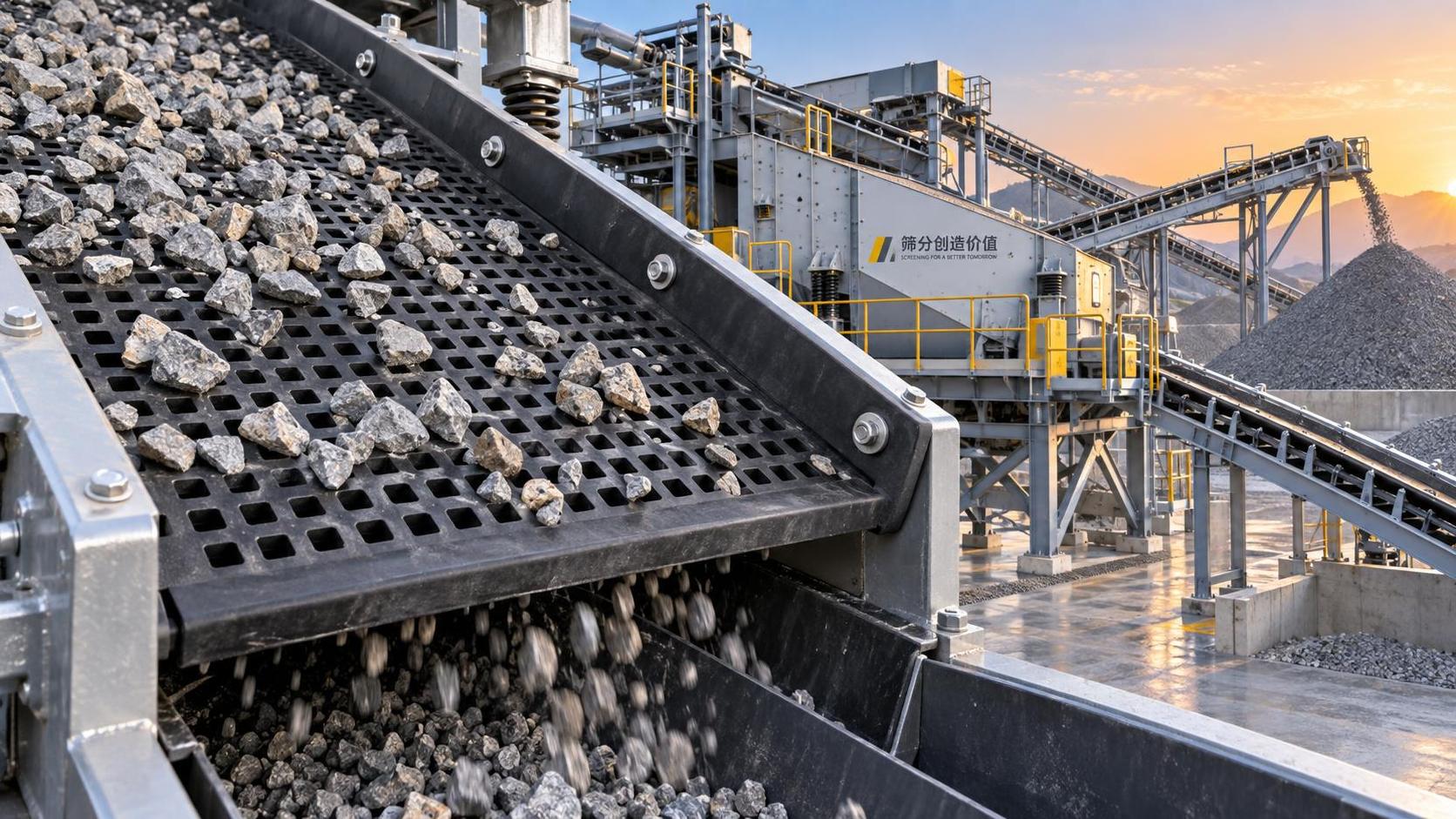
Replacement intervals for a Rubber Screen Mesh should be set by wear condition and separation performance, not by a calendar alone. A panel can remain physically intact while its apertures have enlarged enough to send oversize material downstream. Conversely, a mesh showing surface abrasion may still screen accurately if the opening geometry, fastening area, and elastic body remain stable. The cost question is therefore broader than panel price: the relevant comparison is the installed cost per processed ton, including lost production, labor, blocked apertures, and the effect of poor classification on later crushing or washing stages.
The fastest wear usually occurs where material first strikes the deck. If the feed lands directly on the screening surface with high velocity, sharp particles repeatedly cut and tear the rubber around the impact zone. A properly designed feed box, chute liner, or distribution plate spreads the burden across more of the deck. When wear is concentrated in the first rows while the rest of the panel looks nearly new, the cause is often feed presentation rather than an unsuitable mesh compound.
Material Characteristics Set the Basic Wear Rate
Hardness alone does not explain service life. Angular crushed stone often abrades a rubber surface more aggressively than rounded material of similar hardness because its edges scrape rather than roll. Highly siliceous sand, dry fines, and particles containing sharp fractured faces can progressively remove rubber from aperture bridges. Sticky clay presents a different problem: it may not cut the mesh rapidly, but it blinds openings, raises the material bed, and increases the load carried by the panel.
Feed size must be judged against both aperture size and panel thickness. Large top-size material passing over a fine opening subjects the mesh to flexing, local impact, and repeated bending at the aperture bridges. A nominally fine-duty panel selected only for its opening size may fail early when it receives coarse material from a poorly controlled crusher discharge. The screening duty should state the largest expected lump, the normal feed distribution, moisture condition, and whether the mesh is installed in a scalping, sizing, dewatering, or final classification position.
Rubber formulation also has to match the duty. A softer compound can absorb impact and reduce noise, but excessive softness under a heavy material bed may allow aperture distortion or premature fatigue. A harder compound may resist sliding abrasion better, yet it can transfer impact energy into the fastening region and deck supports. The correct choice follows the dominant damage mechanism rather than a simple assumption that a harder screen medium will always last longer.
Screening Conditions Can Shorten Life Before the Mesh Wears Out
Vibration settings strongly influence both throughput and panel stress. Stroke, frequency, deck angle, and direction of throw determine how long material remains in contact with the Rubber Screen Mesh and how it travels across the surface. A screen operating outside its intended motion can cause material to surge, stall, or repeatedly strike a small deck area. These conditions raise localized loading and often lead to torn fixing holes, cracked edges, or worn strips along the material path.
Higher throughput is not automatically the source of failure. A well-distributed, correctly stratified material bed can be less damaging than a lower feed rate dropped in intermittent surges. The more revealing observation is whether material covers the deck evenly. Bare tracks beside overloaded lanes indicate uneven feed distribution. Those overloaded lanes will wear first, while unused screen area makes the installed mesh appear less durable than it actually is.
Near-size particles deserve special attention. When particles repeatedly lodge in openings, the panel experiences local deflection and reduced open area. Cleaning balls or other anti-blinding arrangements may improve throughput, but they do not solve a fundamental mismatch between aperture shape, material moisture, and the required separation. A blocked panel is sometimes replaced as “worn” even though its primary problem is blinding. Inspection should distinguish filled apertures, polished aperture edges, and actual loss of opening shape.
Installation Quality Is Part of the Wear System
Rubber panels require continuous support from a clean, level deck structure. Worn support rails, trapped stone, loose fasteners, or gaps beneath the panel allow the mesh to flex beyond its design range. The resulting damage often appears as splits around fixing points or tears that follow unsupported areas. Replacing only the visible damaged panel without correcting the support condition commonly produces another early failure in the same location.
- Confirm that rail caps, tensioning bars, and side sealing strips are intact before fitting new media. A panel bearing on exposed steel can be cut from underneath even when the top surface sees moderate wear.
- Use the fastening method specified for the panel profile. Over-tightening can deform molded holes or compress rubber sections unevenly; insufficient tension permits movement that enlarges holes and abrades the panel edges.
- Keep adjacent panels aligned. A raised edge becomes an impact point, while a gap can trap material and initiate tearing at the joint.
Transport and storage affect installation quality as well. Panels stacked under heavy loads, folded during handling, or stored in direct heat for prolonged periods can acquire distortion before reaching the screen. The result may be difficult seating, irregular tension, and inconsistent aperture geometry. Mesh should be kept flat and protected from sharp objects that can score the working surface or fixing features.
Recognizing the Replacement Trigger
Visible rubber loss is only one replacement trigger. Aperture enlargement changes the cut size and can contaminate a finished fraction with oversize material. Rounded or torn openings may also reduce screening precision even where total open area appears acceptable. When downstream equipment begins receiving an unstable size distribution, inspect the screen deck before adjusting crusher settings or washing parameters.
Replacement planning benefits from recording the panel location, material handled, hours in service, failure appearance, and changes made to the circuit. Hours alone are weak evidence because a screen may run under very different feed conditions from one production campaign to the next. Location-based records reveal whether a failure follows the feed path, a particular support rail, or a recurring vibration issue.
Specify the Mesh With the Whole Circuit in View
A screen mesh specification should include more than dimensions and aperture size. Panel thickness, opening shape, reinforcement method, support arrangement, clamping style, screen motion, feed top size, and moisture all influence its useful interval. Providing the deck layout matters because the same material may need impact-resistant panels at the feed end and higher-open-area panels farther down the deck. Applying one panel type across every position can simplify purchasing while increasing total replacement consumption.
Upstream crushing behavior should be reviewed when a new line or machine changes the feed shape. An impact crusher such as OEM Reliable Performance Low Noise Continuous Mining Sand Industrial Production Impact Machine can alter the proportion of angular particles and fines entering the screen. The mesh selection should therefore be checked against the resulting gradation and particle shape, rather than copied unchanged from an earlier crushing arrangement.
Keeping a limited stock of high-wear feed-end panels and commonly used fastening components reduces the duration of a planned changeout. However, full spare sets stored without a confirmed deck revision or aperture requirement can become unsuitable after process changes. The most useful spare strategy is tied to the actual screen layout and recorded wear pattern.
A durable Rubber Screen Mesh is one that preserves required separation long enough to justify its installed cost under the real material and vibration conditions. Replacement becomes predictable when inspections focus on aperture accuracy, support integrity, feed distribution, and localized damage, rather than treating every worn surface as the same failure.
Leave A Message
If you are interested in our products and want to know more details, please leave a message here, we will reply you as soon as we can.