Reducing Screen Noise and Blinding with Rubber Mesh in Wet Aggregate Lines
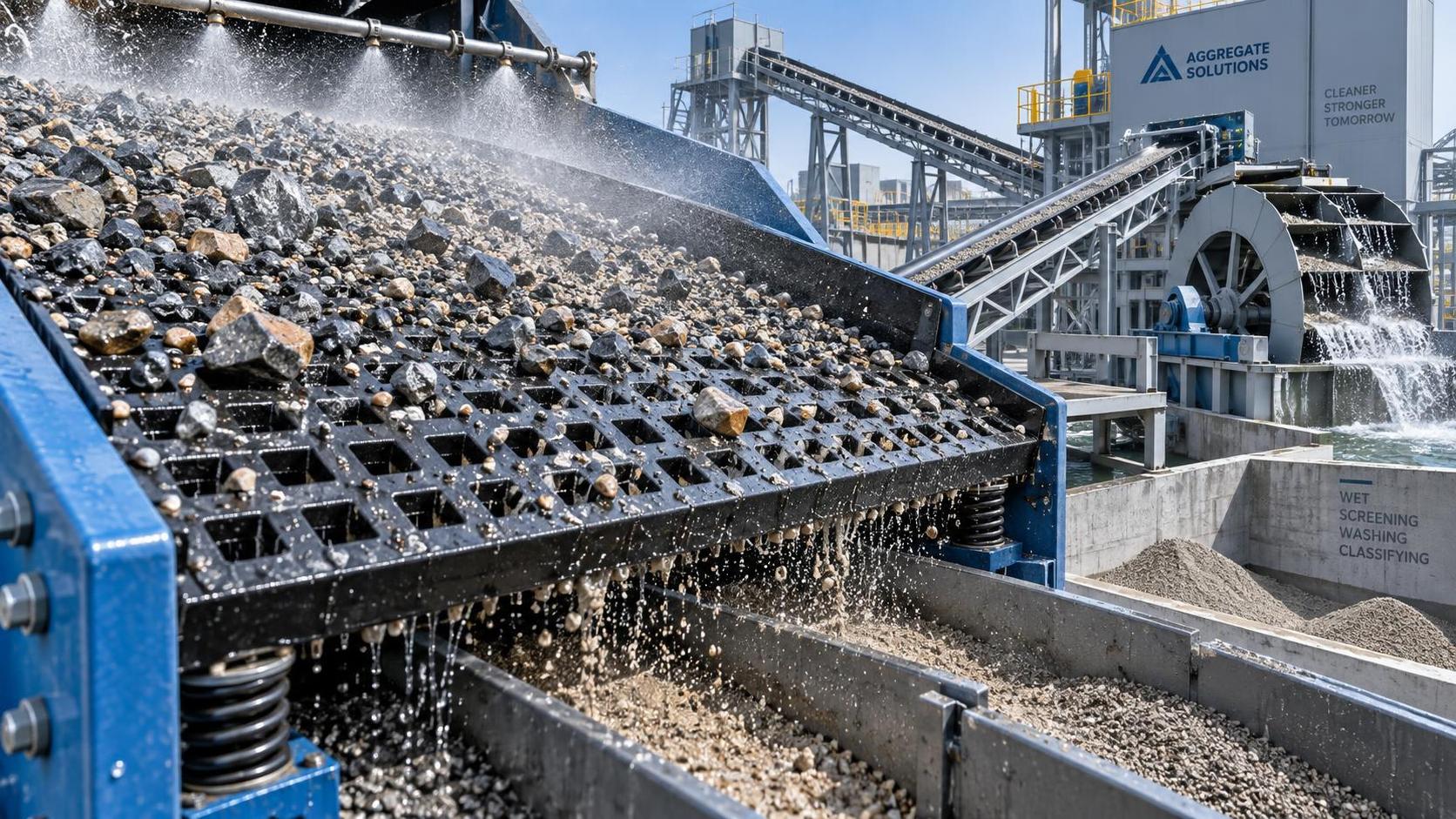
Reducing Screen Noise and Blinding with Rubber Mesh in Wet Aggregate Lines
Introduction: Wet aggregate lines often lose production when screen openings blind, panels transmit excessive noise, and operators repeatedly stop equipment for cleaning.
For moisture-rich, clay-bearing, or sticky feed, Rubber Screen Mesh is usually a practical operating improvement rather than a simple replacement wear part.
Its flexible screening surface can reduce material buildup, soften particle impact, and help vibrating screens maintain a more stable separation rate during difficult shifts.
What Operators Usually Need to Solve First
Operators searching for Rubber Screen Mesh generally want to reduce unplanned cleaning, lower screen noise, and prevent wet material from blocking critical apertures.
The immediate concern is rarely theoretical screening efficiency. It is whether the deck can keep passing specification material without constant intervention or lost tonnage.
Wet aggregates create a demanding combination of water, fines, clay, and impact. These conditions can make rigid wire panels blind quickly, especially on fine screening decks.
When openings block, usable screen area decreases. Material then rides over the deck, carries incorrectly sized particles downstream, and creates unstable loads for later equipment.
Noise is another operating concern. Steel-on-rock impact, vibrating deck resonance, and loose panel seating can create a harsh work environment around the screening plant.
Rubber Screen Mesh helps address both concerns because its elastic surface absorbs part of the impact energy while allowing apertures to flex during vibration.
Why Wet Material Causes Blinding and Carryover
Blinding occurs when particles lodge in openings or when sticky fines bridge across the aperture. Water alone is not always the problem; clay content often drives the issue.
Near-size particles are especially troublesome. They can enter an opening partially, become trapped by moisture and fines, then reduce the active screening area progressively.
Feed variation makes this harder to control. A screen may perform acceptably during dry periods but blind rapidly after rain or when excavation reaches clay-contaminated layers.
High feed depth can worsen the condition. Material packed too deeply cannot stratify effectively, so moisture-rich fines remain trapped among larger particles instead of finding the openings.
Operators should inspect whether blinding is concentrated near the feed end, center deck, or discharge end. The location often indicates whether loading or aperture selection is responsible.
Persistent carryover may also signal an unsuitable screen angle, insufficient vibration stroke, or damaged support bars. Mesh selection works best when the complete screen setup is sound.
How Rubber Screen Mesh Reduces Blinding
Rubber Screen Mesh uses flexible material around each aperture. During vibration, the openings deform slightly, helping dislodge particles that would remain stuck in rigid wire.
This elastic action is particularly useful for damp sand, crushed stone with clay fines, recycled aggregate, and quarry feed that changes moisture content throughout the day.
The mesh does not eliminate every blockage condition. Extremely plastic clay, overloaded decks, or incorrect aperture size can still cause poor separation and require process adjustments.
However, flexible panels often extend the useful screening interval between manual cleaning stops. That can improve operator productivity and make shift output easier to predict.
For fine decks, select aperture dimensions according to the required finished product, not simply the largest opening that appears resistant to blinding in a short trial.
Compare the product size distribution before and after installation. A panel that stays cleaner but allows too much oversize to pass does not solve the actual production problem.
Reducing Noise Around Vibrating Screens
Noise on aggregate lines comes from several sources, including rock impact, deck vibration, loose fasteners, worn liners, bearings, and material striking transfer chutes.
Rubber screening surfaces can lower impact noise because they cushion contact between aggregate particles and the deck more effectively than conventional steel wire panels.
The improvement is usually most noticeable where coarse, sharp, or abrasive stone lands directly on the screen. Proper feed distribution remains essential for consistent results.
A quieter deck does not mean operators should ignore hearing protection. Screen plants still require appropriate workplace controls, inspections, and personal protective equipment.
Check panel tension and fastening after initial operation. A poorly secured panel can move against support rails, create unnecessary noise, and shorten both mesh and frame life.
Also examine side plates, cross members, springs, and drive components. Mechanical vibration caused by worn parts can mask the benefits of a quieter screening surface.
Choosing the Right Rubber Screen Mesh Configuration
Start with the material characteristics: maximum feed size, moisture level, clay percentage, abrasiveness, target cut size, and the amount of near-size material in the feed.
Next, confirm the screen deck location. Top decks normally receive greater impact, while lower decks often need more precise separation and stronger resistance to blinding.
Panel thickness should match operating conditions. Thicker rubber can improve impact resistance, but it may reduce open area and change screening behavior on fine cuts.
Open area matters because it influences capacity. Operators should compare the actual effective open area, not only the nominal aperture dimension shown on a specification sheet.
Consider the screen’s fixing system before ordering. Correct dimensions, side-hook design, rail seating, and support-bar spacing prevent installation problems that lead to premature damage.
For variable material sources, keep records of panel life, cleaning frequency, throughput, and product quality. These records provide stronger selection guidance than visual impressions alone.
Installation and Daily Operating Practices
Before installing new panels, clean the support rails and inspect them for uneven wear. Damaged rails can create local stress points and cause early mesh failure.
Install each panel evenly and follow the recommended tension method. Uneven tension may allow movement, reduce screening accuracy, and concentrate wear around fastening points.
During startup, listen for unusual rattling and observe material flow across the full deck width. Material should spread evenly instead of forming a heavy central stream.
Inspect the mesh regularly for torn apertures, detached edges, worn fastening areas, and embedded steel fragments. Early replacement prevents product contamination and unexpected downtime.
Washdown practices should remove buildup without damaging panel connections. Avoid directing high-pressure water repeatedly at vulnerable seams, hooks, or areas already weakened by abrasion.
When wet processing includes sand recovery, coordinate screen performance with downstream dewatering. Stable feed classification improves the consistency of washing and final stockpile moisture.
For integrated wet aggregate systems, an OEM Spiral Sand Washer for Concrete Plant Aggregate Supply with Stable Dewatering Performance and Wear Resistant Liner Machine can support cleaner sand handling after effective screening.
When Rubber Mesh Is the Better Operating Choice
Rubber mesh is often a strong choice when wet, abrasive, or impact-heavy aggregate repeatedly blinds wire screens and forces operators into frequent cleaning routines.
It is especially relevant where noise exposure is high, feed moisture changes seasonally, or production losses from screen stoppages outweigh the initial panel cost difference.
Rigid steel screens may still suit dry, high-capacity applications requiring maximum open area. The best choice depends on actual feed conditions, not a single material preference.
Run a controlled trial on the deck causing the most disruption. Measure cleaning stops, hourly tonnage, oversize carryover, noise observations, and panel wear over comparable shifts.
A useful evaluation considers total operating cost. Include labor time, lost production, replacement frequency, product quality corrections, and maintenance interruptions instead of panel price alone.
Conclusion
Rubber Screen Mesh can improve wet aggregate screening by reducing aperture blinding, absorbing impact noise, and helping operators maintain more consistent material separation.
Its value is greatest when selection matches the feed, aperture, screen deck, and operating conditions. Proper installation and routine inspection are equally important.
For operators, the clearest decision standard is practical performance: fewer cleaning stops, steadier throughput, acceptable product grading, reduced noise, and predictable panel service life.
Leave A Message
If you are interested in our products and want to know more details, please leave a message here, we will reply you as soon as we can.