Reducing Pegging and Blinding with Polyurethane Screen Mesh Panel Designs
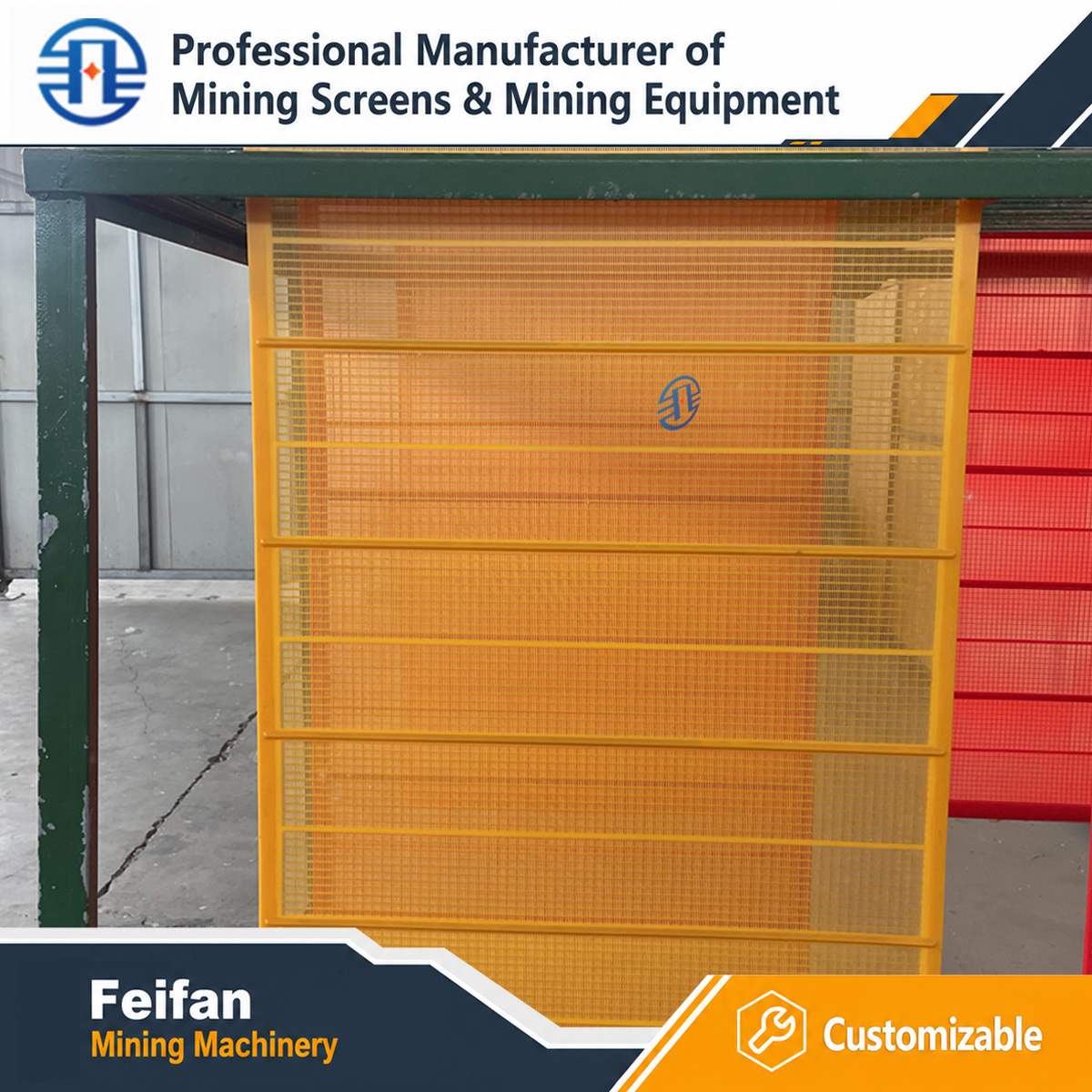
When a vibrating screen begins to retain near-size material, the problem is rarely limited to lower throughput. Operators may see wet particles wedged in apertures, a thin layer of clay coating the deck, or material rolling across the surface instead of stratifying and passing. These symptoms—usually described as pegging and blinding—can force repeated shutdowns, uneven product sizing, and unnecessary screen-panel changes.
The practical answer is not simply to select a harder screen surface or install the largest possible opening. A properly matched Polyurethane Screen Mesh panel reduces pegging and blinding by combining controlled flexibility, abrasion resistance, aperture geometry, and a fastening system that keeps the deck stable under vibration. The panel must still be matched to the feed condition, screen motion, deck position, and required cut size; even a well-made panel cannot compensate for excessive moisture, poor feed distribution, or an overloaded screen.
Recognize whether the deck is pegging, blinding, or overloaded
These conditions can look similar from a distance, but they require different responses. Pegging occurs when individual particles become trapped in an aperture. It is most common when flat, elongated, or nearly cubic stones are close to the nominal opening size. A 10 mm particle entering a 10 mm square opening may lodge rather than pass, especially when the particle has sharp edges or carries moisture.
Blinding is different. Instead of single particles lodging in openings, fine wet material, clay, sticky dust, or damp sand forms a coating over the screening surface. The openings gradually close, reducing effective open area. This often appears as an increasingly dull screen surface with poor fines recovery, even though the panel itself may have no visible damage.
Overloading creates another pattern: material forms a deep bed over the deck, preventing smaller particles from reaching the apertures. The screen may be mechanically sound, but separation falls because the feed layer is too thick or is concentrated on one side. Before changing panel material, inspect the deck while it is operating safely and determine which condition is dominant.
- Isolated blocked holes: usually indicates pegging or worn aperture edges.
- Widespread coating and packed fines: points to blinding caused by moisture, clay, or sticky material.
- A heavy moving blanket of material: suggests feed overload or poor distribution.
- Fast wear in one area only: may indicate an uneven feed stream or impact zone problem.
This distinction matters because a panel intended to flex and release near-size particles is not automatically the right answer for clay-bound feed. Likewise, changing to a larger aperture may reduce pegging but can compromise the product specification.
How polyurethane panel behavior helps keep apertures open
Polyurethane panels are valued in aggregate screening because the material can flex under vibrating motion and particle impact. That controlled movement can help dislodge particles that would remain fixed in a rigid aperture. The goal is not uncontrolled softness: excessive deflection can reduce dimensional accuracy, accelerate fatigue, and interfere with secure mounting. A suitable formulation provides enough elasticity to release lodged particles while maintaining stable aperture shape during service.
Abrasion resistance also supports long-term screening consistency. As abrasive stone travels across a panel, the aperture edges gradually wear. With some materials, this wear can quickly enlarge openings and alter the cut point. Polyurethane can provide a durable working surface in abrasive sections, particularly where a panel must withstand repeated particle contact while still offering flexible aperture action.
Panel thickness and supporting ribs affect this balance. A thick panel may offer strong wear life but can reduce open area and increase the distance particles must travel through each aperture. A thinner section can increase opening efficiency but may not suit high-impact feed. The right design should be considered as a complete structure: top surface thickness, aperture wall profile, reinforcing framework, panel dimensions, and fastening points all influence performance.

Panel design details that directly affect pegging
Aperture shape should match particle behavior
Square apertures are widely used because they offer a predictable sizing cut. However, they are often vulnerable to pegging when the feed contains a high proportion of near-size, angular particles. Elongated slots can improve passage for certain materials and may reduce plugging in some duties, but they also change the effective sizing behavior. A slot is not a universal upgrade; its orientation relative to material travel and the required product shape must be considered.
For difficult near-size fractions, tapered openings can be useful. A panel with a larger opening below the wear surface creates an escape path for particles that enter the aperture. This reduces the chance that a stone becomes wedged against a straight wall. The top opening must still meet the required specification, while the underside geometry helps prevent retained particles.
Open area is important, but it is not the only measure
A panel with more open area can pass more material when all other conditions are equal. Yet very thin bridges between apertures may not withstand heavy impact, and an open pattern that is too aggressive can allow the panel to flex excessively. In a high-wear scalping or primary screening zone, a more robust design may be more reliable than one optimized only for theoretical capacity.
Look at effective open area after the panel has been installed, not only the percentage stated in a drawing. Support rails, clamp bars, panel joints, blocked apertures, and feed depth all affect the real working area. A deck that stays clean with slightly less nominal open area can outperform a high-open-area deck that blinds rapidly.
Panel modules and joints need attention
Modular panels make local replacement easier, but poorly supported joints can create dead zones where fine material accumulates. A panel should sit flat on the supporting frame, with no rocking movement, lifted corners, or gaps that allow fines to pack beneath it. Movement between a panel and the deck can damage fasteners and eventually create false openings or material bypass.
During installation, check that each panel is fully seated and that the fixing system suits the screen deck. A panel that is too loose may shift under vibration; one that is forced into place can remain under stress and fail prematurely. Clean the supporting rails before fitting replacements, especially after a period of wet screening.
Adjust the screen process before blaming the panel
Screen media works within a process, not in isolation. When blinding begins suddenly after rain, a material change, or crusher adjustment, investigate the incoming feed first. Excessive moisture and clay can coat any screen surface. A wash stage, spray arrangement, feed conditioning step, or change in stockpile management may be needed before a different panel design can show its value.
Feed distribution is equally important. Material should spread across the usable screen width as early as possible. A narrow feed stream dropping onto one section causes local impact, unequal wear, and a deep material bed that prevents stratification. Check the feed box, chute alignment, and transfer point. The first portion of the deck often needs impact-resistant panels, while downstream areas may benefit from a design with greater open area or more active aperture flexing.
Screen motion should also be checked against the material. Insufficient vibration can leave particles sitting in openings, while unsuitable stroke, speed, or deck inclination can move material too quickly or too slowly. Do not adjust operating settings beyond the equipment manufacturer’s approved range, but confirm that the screen is running as intended and that springs, bearings, drive components, and deck supports are in good condition.
Choosing a design by the actual screening zone
Where mobile crushing is part of the process, feed variation can become more pronounced as material source, moisture, and crushing ratio change. Matching the screen deck to the expected feed size distribution should be part of plant planning, including arrangements around equipment such as the FEIFAN OEM Factory Direct Sale Mobile Crusher Plant For Quarry And Construction Waste Crawler Mobile . The screen media selection should be reviewed whenever the crushing circuit is changed, because a different proportion of near-size material can quickly alter pegging behavior.
Maintenance habits that prevent a small blockage from becoming downtime
Inspect panels during normal scheduled stops rather than waiting for a visible capacity loss. Look for trapped particles, polished or enlarged apertures, torn bridges, loose fasteners, and packed material beneath the modules. Record where wear appears. Repeated damage in the same location usually reveals a feed-distribution or support-frame issue, while uniform aperture blockage is more likely tied to feed moisture or material characteristics.
Do not strike polyurethane panels aggressively with metal tools to clear blockages. This can cut the surface or damage the supporting structure. Use an appropriate cleaning method for the installed screen and isolate the equipment before any manual work. When a panel is replaced, compare it with adjacent panels rather than changing an entire deck without identifying the underlying cause.
A well-selected polyurethane design keeps apertures available for screening, but the most reliable result comes from treating pegging and blinding as a deck-and-process issue. Check the material, observe the location and form of blockage, confirm feed distribution and screen motion, then select aperture geometry and panel construction that address the actual mechanism.
Leave A Message
If you are interested in our products and want to know more details, please leave a message here, we will reply you as soon as we can.