Preventing Aggregate Rollback and Spillage on Inclined Belt Conveyors
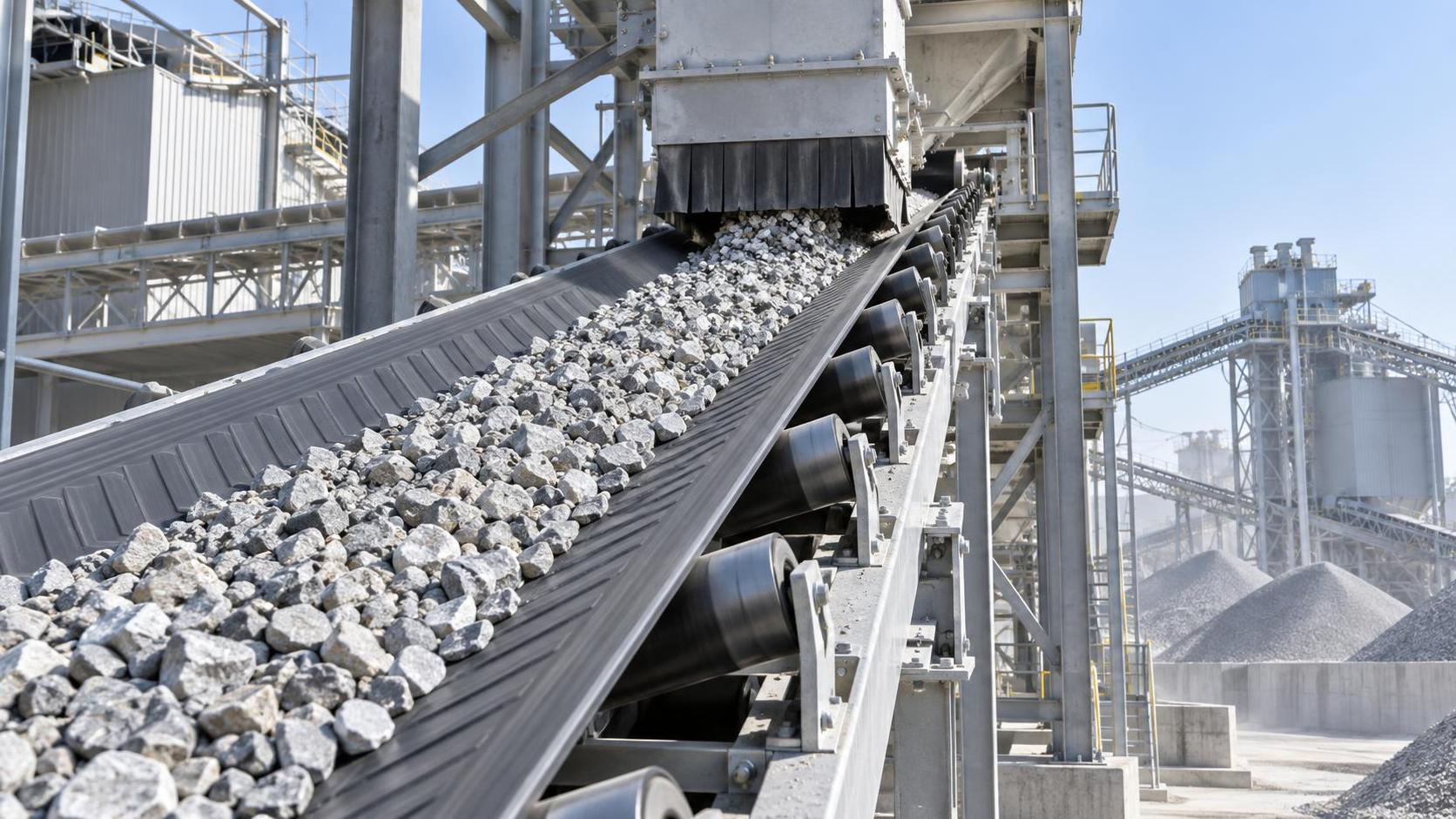
On an inclined conveyor, a small amount of aggregate rolling backward can quickly become a larger operating problem. Material may collect at the loading point, spill along the return side, overload cleaners, or create slip and trip hazards around walkways. Fines that escape the belt can also contaminate adjacent material streams and make housekeeping more difficult. For an inclined belt conveyor for aggregate plant duty, rollback and spillage are usually controlled not by one component alone, but by matching belt geometry, loading conditions, containment, and maintenance practices to the actual material.
The first practical rule is simple: do not treat visible spillage as only a skirt-seal problem. Before replacing seals or increasing their pressure, determine whether the material is sliding, rolling, bouncing, or being discharged off-center. Each behavior points to a different corrective action. A containment system can manage small leakage, but it cannot compensate for an unsuitable incline angle, poor transfer design, or unstable belt tracking.
Start by identifying how the material is moving
Rollback is most likely when coarse, rounded, wet, or loosely graded aggregate is carried at an incline near the material’s natural angle of repose. Individual stones may tumble down the belt even while the finer fraction remains in place. This often appears as a moving layer of coarse particles above a relatively stable bed. By contrast, sliding rollback tends to involve a larger section of material moving as a mass, particularly after surges or when wet fines reduce friction between the load and the belt.
Spillage has a different appearance. Material accumulating immediately outside the loading chute often indicates poor sealing, an overloaded transfer, or a belt that is sagging between idlers. Material thrown beyond the discharge may indicate excessive belt speed, poor trajectory control, or a discharge chute that does not receive the material stream correctly. A pile that consistently forms on one side of the conveyor is often related to mistracking, off-center loading, uneven idler condition, or a chute outlet that directs the burden toward one edge.
Check whether the incline and belt surface are appropriate
The belt’s carrying surface is the main defense against rollback. Smooth belts are generally suited to lower inclines and stable, controlled material loading. As the conveyor angle increases, the belt may require a higher-friction cover, chevrons, cleats, sidewalls, or a pocket-belt arrangement, depending on material size and required capacity. The correct choice depends on the actual aggregate mix, especially the maximum particle size, percentage of fines, moisture condition, and whether the material is crushed or naturally rounded.
Chevron belts can improve grip for many crushed aggregate applications, but their profile must be compatible with the material. A profile that is too shallow may not restrain larger stone. One that is too aggressive can trap fines, complicate cleaning, and increase carryback. Cleated systems provide greater restraint, yet they also introduce more demanding transfer and cleaning requirements. The loading chute must place material between the cleats without impact that could damage the belt profile or bounce stone backward.
Do not assess conveyor angle from a drawing alone. Field conditions may change after modifications to support structures, transfer towers, or stockpile arrangements. Confirm the actual centerline incline, not just the nominal slope. Then compare it with the material behavior seen during normal feed and during peak loading. A conveyor that performs acceptably with dry crushed stone may become unstable when wet fines or rounded oversize enters the stream.
The loading zone often determines whether spillage develops
Even a correctly selected incline belt can spill if the loading zone is poorly controlled. Aggregate should enter in the direction of belt travel and at a velocity as close as practical to belt speed. When material falls vertically onto a moving belt, it can rebound, spread sideways, and strike the skirt area with enough force to escape. An incoming stream that opposes belt travel creates drag and can pull the belt off center.
A well-designed transfer chute gradually turns and centers the stream. Its outlet should distribute material near the middle of the belt rather than dumping it onto one side. A centered load reduces tracking problems and allows skirts to seal more consistently. The chute should also avoid creating a high, narrow pile that becomes unstable as the belt accelerates uphill.
Inspect the impact zone beneath the chute. Damaged idlers, excessive idler spacing, or inadequate support bars allow the belt to deflect under load. Once the belt drops between supports, the skirt seal loses contact and fine material escapes. Increasing skirt pressure may temporarily reduce leakage, but excessive pressure creates friction, accelerates belt-cover wear, and can worsen tracking. The better correction is usually to restore a stable belt line and adjust the seal to light, even contact.
Loading-zone inspection points
- Confirm that the feed stream is centered and follows the direction of travel.
- Look for belt sag under the chute while the conveyor is fully loaded, not only when empty.
- Check whether skirt rubber is worn unevenly or folded beneath itself.
- Inspect chute liners for holes, gaps, or ledges that retain material and release it unpredictably.
- Verify that impact idlers or support beds rotate freely and support the belt continuously.
- Observe whether the loading depth rises sharply during feeder surges.
Control feed rate before solving the belt symptoms
Variable feed is a frequent hidden cause of both rollback and spillage. A conveyor may look stable at average tonnage but lose containment when a feeder releases a dense slug of material. The burden becomes deeper, the material can shear backward on an incline, and the load may exceed the designed capacity of the skirted loading zone. This is particularly relevant where a crusher discharge alternates between finer product and intermittent coarse fragments.
Review feeder settings, chute opening, and upstream crusher discharge pattern together. Where crushing performance affects the size distribution and steadiness of feed, upstream equipment condition is part of conveyor control. Components such as an OEM High Precision Machining Cone Crusher With Tight Fitting For Stable Crushing Performance Crusher may be relevant when evaluating whether inconsistent crushing output is contributing to sudden coarse surges at the conveyor. The purpose is not merely to reduce conveyor loading; it is to maintain a predictable burden that the inclined belt and its containment system can handle.
Operators should watch the belt during normal production transitions rather than only during steady-state operation. Start-up, feed interruptions, screen changes, and wet material batches are the moments when rollback tendencies become visible. A control setting that prevents excessive surge loading may reduce losses more effectively than repeated cleanup and seal adjustment.
Tracking, cleaning, and return-side housekeeping
Belt tracking affects containment throughout the conveyor. A belt running slightly off center may still carry material, yet it leaves reduced sealing clearance on one side and may contact structure or skirt hardware on the other. Tracking corrections should begin with basic mechanical checks: alignment of pulleys and idlers, condition of bearings, buildup on pulleys, belt splice condition, and the position of the loading stream. Adjusting a single idler without finding the cause can move the problem farther down the conveyor.
Carryback is another contributor to spillage. Material adhering to the belt passes around the head pulley and falls along the return run, where it can accumulate under idlers and cause mistracking. Primary and secondary scrapers should be selected and adjusted for the belt cover and conveyed aggregate. Scrapers that are too lightly set leave carryback; those set too aggressively can damage the belt, particularly if coarse particles are trapped at the blade.
Cleaning devices need regular inspection because their effectiveness changes as blades wear. Check that scraper contact is even across the belt width, that tensioners move freely, and that discharged fines have a clear path away from rotating components. Do not allow return-side buildup to reach idler rolls. Once material packs around an idler, it changes the running surface and can create a persistent tracking fault.
A practical response when rollback or spillage appears
- Reduce the feed to a stable rate and observe the belt under controlled loading.
- Determine whether the loss begins at the feed point, along the incline, at the discharge, or on the return side.
- Separate coarse rollback from fine leakage; they may occur at the same time but require different remedies.
- Check belt position and support condition before tightening skirt seals.
- Inspect the conveyed material after changes in crushing, screening, moisture, or source stockpile conditions.
- Verify the suitability of the belt profile and incline when rollback continues despite stable loading and correct transfer alignment.
Safety controls should be maintained during every inspection. Material cleanup near moving belts must follow the site’s isolation procedures. Guards, pull-cord switches, emergency stops, and access routes should remain clear of accumulated aggregate. Repeated manual cleanup is not a long-term control measure; it is evidence that the conveyor, transfer point, or operating conditions need correction.
Reliable inclined conveying depends on keeping the material stream stable from crushing and screening through loading, elevation, discharge, and belt cleaning. When the observed symptom is linked to the actual failure mechanism—insufficient grip, unstable feed, belt sag, poor centering, mistracking, or carryback—the corrective action becomes more durable and far less dependent on frequent housekeeping.
Leave A Message
If you are interested in our products and want to know more details, please leave a message here, we will reply you as soon as we can.