Polyurethane screen mesh or woven wire for high-impact screening?
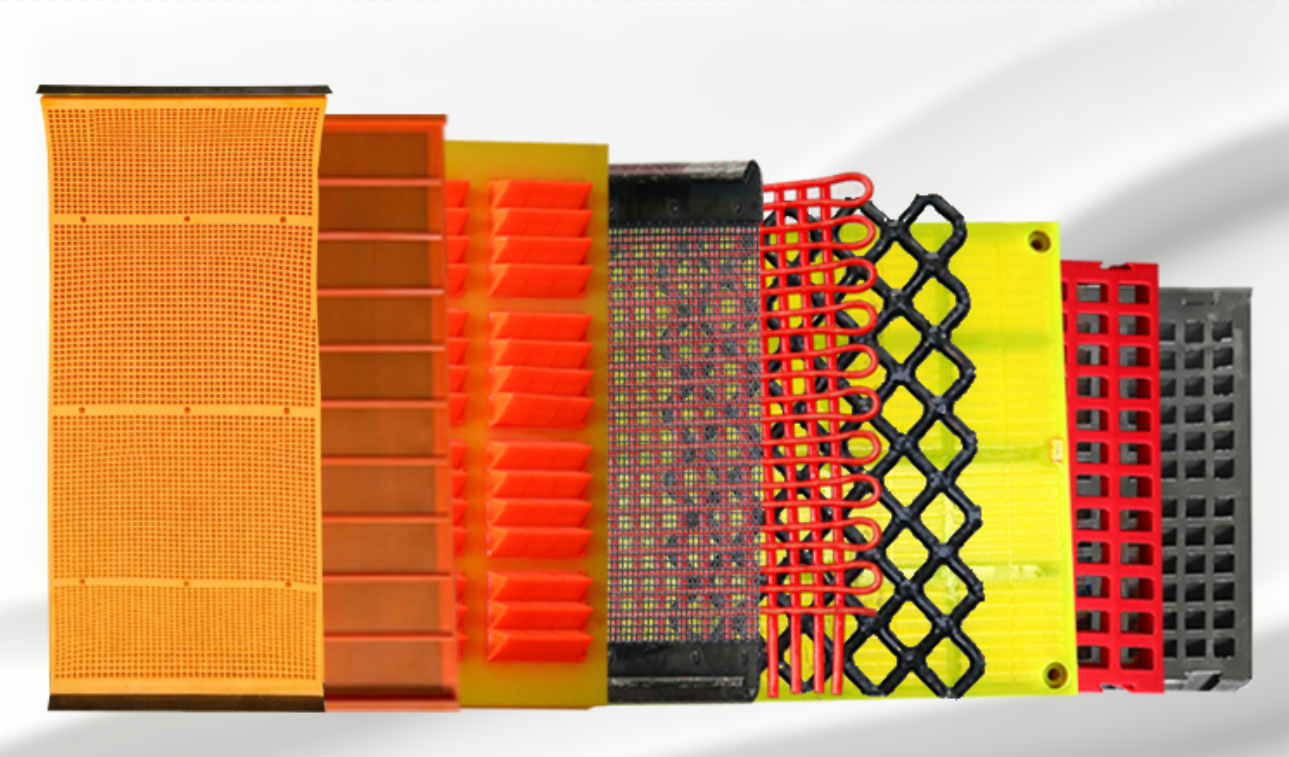
For high-impact screening applications, selecting between polyurethane screen mesh and woven wire can directly affect uptime, classification accuracy, and operating cost. The choice is not simply “rubber-like media versus steel.” It depends on where the material lands, how the screen vibrates, how much near-size material is present, whether the feed is wet or sticky, and how costly an unplanned deck change would be.
In aggregate and mining plants, woven wire remains a practical choice for many duties because it offers high open area and sharp separation. Yet when large, abrasive stone repeatedly strikes the deck, its apparent cost advantage can disappear quickly. A properly specified Polyurethane Screen Mesh may be the better working choice in those zones, especially where impact, abrasion, and frequent maintenance are the real bottlenecks.
Start with the impact zone, not the purchase price
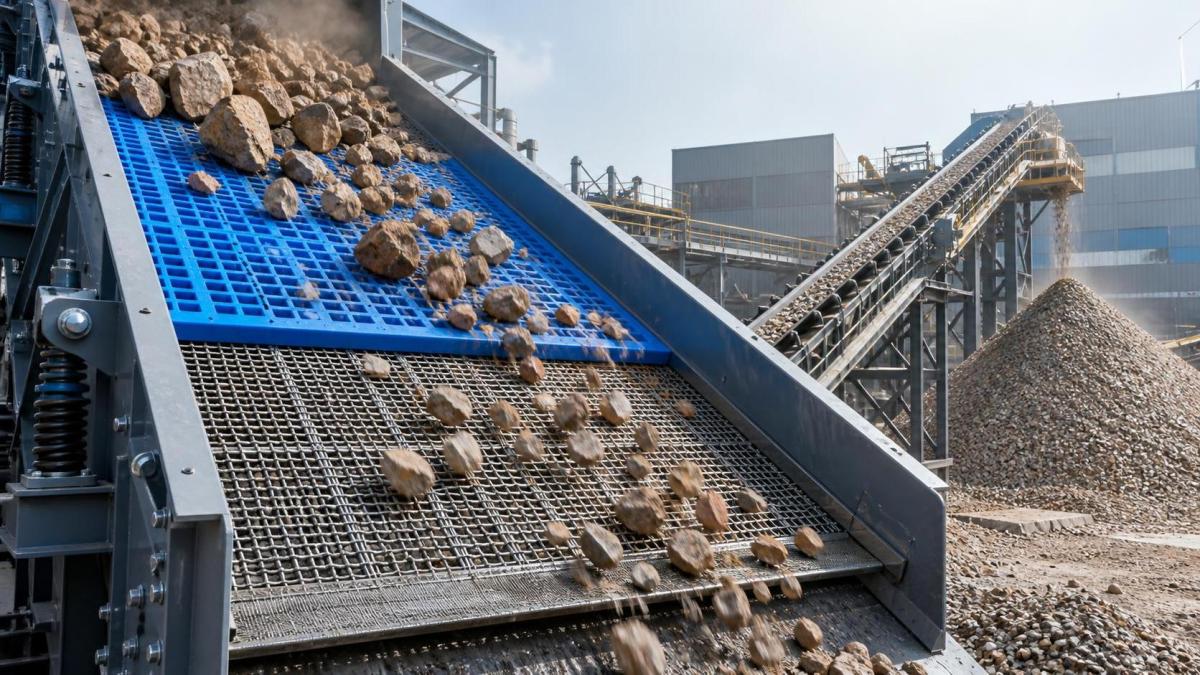
The first question for a technical evaluator is simple: where does the material hit the screen? On a scalping deck or the feed end of a large vibrating screen, material can arrive with substantial energy. Oversize rock may bounce, roll, and strike the surface before it begins to stratify. Woven wire is rigid, which helps preserve aperture shape, but repeated direct impact can lead to broken wires, loosened hooks, or early failure around high-stress areas.
Polyurethane absorbs part of that impact energy. Its elastic behavior reduces the sharp point loading that often damages steel wire. This is why polyurethane panels are commonly considered for the first section of a demanding screen deck, even where the remaining sections continue to use wire cloth. A mixed-media deck is often more sensible than changing every panel to one material.
That said, polyurethane is not automatically the right answer for every impact application. If the required aperture is very fine, if maximum open area is essential, or if the material is dry and easy to screen, woven wire may still deliver better throughput. The practical decision is based on the screening duty, not on a general statement that one material “lasts longer.”
Where woven wire still has a strong case
Woven wire has two advantages that are difficult to ignore: open area and aperture precision. Compared with a polyurethane panel of the same nominal opening, wire cloth often provides more open screening surface. That matters when a plant is close to capacity, especially on dry crushed stone, manufactured sand feed, or applications where the screen has limited deck area.
It also responds well when the specification requires a clean, predictable cut and the material is not excessively abrasive. For example, a secondary screening stage handling relatively controlled feed may benefit from wire mesh because the material has already been reduced and the impact load is lower. In this situation, selecting a heavy polyurethane panel simply because it is durable can restrict capacity without solving a real maintenance issue.
The limitation is that woven wire needs correct tension and secure installation. Poor tensioning causes movement at the hooks, accelerates fatigue, and can make even good-quality wire fail prematurely. When operators describe wire as “short life,” the root cause is sometimes screen setup, worn support rails, or an unsuitable feed arrangement rather than the wire itself.
Why polyurethane performs differently under abrasive feed
A polyurethane screen panel is generally better suited to abrasive aggregate, hard rock, and wet materials that impose both wear and impact. The surface flexes slightly under load, helping it tolerate repeated strikes from coarse particles. This flexibility may also assist with self-cleaning behavior in some applications, although it should not be mistaken for a cure for severe blinding.
Blinding usually starts upstream of the screen media decision. Excessive moisture, clay contamination, flaky particles, inadequate spray water, wrong vibration settings, or too much near-size material can all cause trouble. Polyurethane may reduce pegging in certain conditions because of its resilient apertures, but a sticky feed can still blind any panel. Technical teams should inspect the material rather than assume that changing media will correct a process problem.
The trade-off is open area. Polyurethane panels need supporting structure around each aperture, and that structure reduces the available screening surface. For a screen operating close to its tonnage limit, this can be significant. The remedy may be a larger aperture design, a different panel geometry, an additional deck section, or a review of feed distribution. Simply installing polyurethane without checking the capacity calculation can create a new bottleneck.
A practical comparison for high-impact screening
Screen media must match the machine and the crushing circuit
Screen media is often evaluated separately from the rest of the plant, but it should not be. Crusher setting, feed gradation, conveyor transfer height, screen amplitude, screen angle, and support-rail condition all influence media life. A cone crusher producing too much near-size material can overload the screen even if the panel itself is well designed. Likewise, a poorly controlled transfer chute can concentrate impact on one side of the deck and wear out a narrow strip of mesh.
For plants reviewing both crushing and screening performance, equipment selection should be treated as one process decision. A hydraulic cone crusher with responsive control may help operators maintain a more stable product gradation, which in turn can make screen loading more predictable. This is relevant when considering equipment such as the OEM Fast Response Hydraulic Control Cone Crusher Improving Working Efficiency For Crushing Line Crusher, particularly as part of a broader crushing-line review rather than as an isolated machine purchase.
Companies with both screen-media and equipment manufacturing experience can be useful at this stage because they can examine the interaction between the panel, the vibrating screen, and the material stream. Binzhou Feifan Wire Mesh Co., Ltd. produces polyurethane and steel screen media, while the wider Feifan group also manufactures crushers, screening machines, conveyors, and complete aggregate production-line equipment. That integrated perspective matters when an early panel failure may actually point to a machine, feed, or process issue.
What to confirm before issuing a screen-media specification
A workable specification should include more than aperture size. Ask for the feed top size, material type, moisture condition, bulk density where available, target cut size, expected feed distribution, and the deck position. Confirm the screen model, mounting system, support-rail layout, vibration direction, and whether the media is installed in an impact zone or a separation zone. For polyurethane panels, also verify the locking arrangement and panel dimensions; a panel that does not sit firmly on the support structure can wear from below as well as above.
For high-impact duties, a sensible approach is often to use polyurethane at the feed end and retain woven wire where throughput and fine separation matter most. But this should be validated against actual operating observations. Look at where breakage occurs, whether material is landing centrally, whether the screen is overloaded, and whether the problem is wear, blinding, or poor classification. Those are different failures and they need different answers.
Choose polyurethane when impact resistance, abrasion life, and reduced deck-change frequency carry more weight than maximum open area. Choose woven wire when capacity, fine separation, and a relatively controlled feed are the priority. In difficult aggregate applications, the best answer is frequently a deliberate combination of both—not a blanket conversion from steel to polyurethane.
Leave A Message
If you are interested in our products and want to know more details, please leave a message here, we will reply you as soon as we can.