When Vibrating Screen Side Plates Crack: Causes, Inspection, and Repair
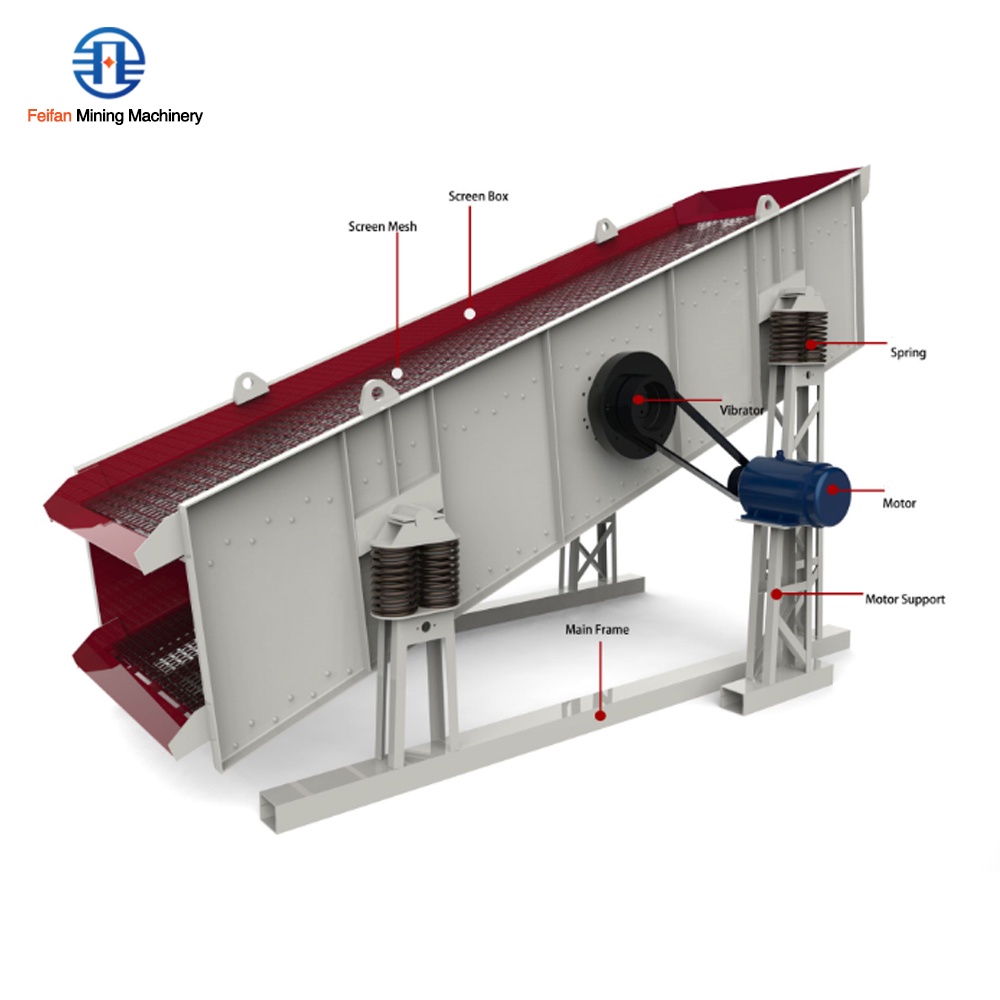
A cracked Vibrating Screen side plate is more than a visible defect on a machine frame. In a quarry or aggregate plant, it can quickly become the starting point for unstable motion, loose fasteners, damaged cross members, broken screen media, and an unplanned shutdown at the worst possible time. For after-sales maintenance personnel, the real task is not simply to weld the crack and restart the machine. It is to determine why the plate cracked, whether the surrounding structure has been affected, and whether the repair will survive the screen’s next operating cycle.
Side plates carry alternating loads every second the machine runs. They support the vibrator assembly, connect the deck structure, and transfer motion through the entire screening body. A small crack around a bolt hole, stiffener, or bearing housing may therefore signal a much wider fatigue problem. Early inspection and disciplined repair work protect both screening performance and operator safety.
Where Vibrating Screen side plate cracks usually begin
Most cracks do not appear randomly. They tend to develop at locations where stress is concentrated or where the screen body is repeatedly pulled out of alignment. Common starting points include:
- Vibrator mounting holes and bearing-seat areas
- Cross beam connections and side plate gussets
- Spring support zones or suspension brackets
- Discharge-end corners, especially on heavily loaded decks
- Old weld repairs, drilled holes, sharp cut-outs, and plate edges
A hairline crack near the exciter is especially important. The force generated by the vibrator is transmitted directly through this area, so even a short crack can lengthen rapidly when the machine returns to full amplitude. A crack at the discharge end may point to uneven material flow, impact from oversize material, or a deck that has been operating with loose bolts.
Maintenance teams should also remember that the visible end of a crack is not always the true origin. Dirt, paint, rust, and accumulated fines can conceal the earlier section of the fracture. The actual damaged zone may extend farther along the plate or into an adjacent structural member.

Why side plates crack: look beyond “metal fatigue”
Fatigue is often the final mechanism, but it is rarely the complete explanation. A properly designed and properly operated side plate should withstand repeated cyclic loading for a long service life. When cracking occurs prematurely or repeatedly, one or more operating conditions usually need correction.
1. Loose fasteners and insufficient clamping force
Loose bolts are among the most common causes of structural damage on a Vibrating Screen. When a cross beam, vibrator housing, or deck component loses clamping force, the connection begins to move microscopically during operation. That movement creates fretting, enlarges holes, and concentrates stress at the plate edge. By the time a crack is noticed, bolts may already be stretched, damaged, or no longer able to provide reliable preload.
Do not simply tighten a loose bolt and consider the issue solved. Inspect hole roundness, bolt shank condition, mating surfaces, washers, and the torque procedure used during the previous service. Replacing only one failed fastener in a fatigued joint can leave the underlying problem in place.
2. Incorrect vibration parameters or unbalanced excitation
Excessive stroke, incorrect rotational speed, mismatched counterweights, or an unbalanced dual-vibrator arrangement can impose forces far beyond the intended design condition. These issues may show up as abnormal screen motion, uneven material travel, unusual noise, or frequent loosening of components.
In twin-shaft or dual-motor arrangements, synchronization matters. If the excitation system is not properly phased, the screen body can twist rather than move in its intended linear, circular, or elliptical path. Side plates are then forced to absorb loads they were not designed to carry.
3. Feed impact and uneven material distribution
A screen may be structurally sound but still suffer damage when the feed system sends material onto one side of the deck. Large rocks dropping directly onto the inlet area create repeated impact loading, while an uneven feed bed causes one side plate to work harder than the other. This is common when chute liners are worn, distribution boxes are poorly adjusted, or upstream conveyors are not centered.
Check the feed trajectory, not just the screen itself. A simple adjustment to a chute, baffle, or feed box can reduce localized loading and prevent a newly repaired plate from cracking again.
4. Worn springs, damaged support structures, or poor isolation
Springs and rubber mounts keep vibration within the screening machine instead of transferring it into the base frame. A broken spring, uneven spring height, seized rubber mount, or distorted support frame can change the screen’s working angle and introduce torsional stress. The machine may look only slightly tilted at rest, yet become severely distorted under full operating load.
Measure spring free height, inspect for coil damage or rubber separation, and compare all support points. The foundation, skid, and steel support structure should also be checked for cracks, corrosion, and loose anchor bolts.
5. Improper previous repairs
A rushed weld repair can turn one crack into a recurring failure point. Welding directly across a crack without stopping its ends, removing damaged material, or restoring the correct geometry often leaves high residual stress in the plate. Heat input can also affect nearby bolt holes or bearing mounting areas if the procedure is not controlled.
Drilling random holes at the crack tip, adding thick patch plates without engineering review, or welding while the vibrator remains installed are all risky shortcuts. They may change stiffness locally and move the fatigue crack to a new location.
A practical inspection sequence before deciding on repair
Shut down, isolate, and lock out the machine before inspection. The screen must be fully stopped; never assess a suspected crack by placing hands or tools near a vibrating structure.
- Clean the suspected area. Remove dust, grease, corrosion, and loose coating from both sides of the plate where access allows. A wire brush or suitable surface preparation method helps reveal the true crack path.
- Inspect visually under good light. Look for paint lines, rust bleeding, polished areas around fasteners, elongated holes, and distortion around cross beams and vibrator mounts.
- Use crack detection where needed. Dye penetrant testing is useful for surface-breaking cracks. Magnetic particle inspection can be effective on suitable ferromagnetic steel components. For critical structural zones, involve qualified inspection personnel.
- Check adjacent members. Examine the opposite side plate, cross beams, deck supports, springs, exciter brackets, and base frame. A crack on one side often has a related cause elsewhere.
- Record dimensions and operating evidence. Mark crack ends, measure length and location, photograph the area, and note screen speed, stroke, feed condition, and recent maintenance history.
A useful field habit is to compare the damaged side with the opposite side. Differences in bolt-hole wear, paint abrasion, spring compression, or beam alignment can reveal a problem that is easy to miss when viewing only the cracked section.
Repair decisions: when welding is reasonable—and when it is not
The repair method should depend on crack location, plate thickness, structural function, and the condition of the surrounding area. A minor crack in a non-critical region may be repaired following an approved welding procedure. A crack near the vibrator mounting zone, bearing support, or multiple intersecting structural members requires a more cautious approach. In such cases, engineering evaluation or replacement of the side plate may be safer than an on-site weld.
For an approved weld repair, the usual principles are straightforward: arrest the crack at both ends as specified by the repair procedure, remove cracked and fatigued material to create a proper groove, prepare clean surfaces, use compatible consumables, and control heat input. The repaired zone should be inspected after welding and before repainting. If reinforcement is required, its shape and placement must avoid creating sharp stiffness transitions.
Never weld on a vibrating screen while bearings, exciter components, springs, or sensitive electrical equipment remain exposed to welding current or excessive heat. Remove or isolate affected components according to the machine manufacturer’s service guidance. After repair, verify frame alignment, reinstall fasteners using the required tightening sequence, and conduct a controlled no-load test before returning to production.
Screen media can influence structural loading
Side plate failures are not caused by screen media alone, but media selection affects the loads transmitted through the deck. Excessively heavy panels, poorly seated modules, loose fixing systems, or blocked apertures can increase vibration stress and reduce material movement. When replacing worn media, confirm that the panel size, support arrangement, fastening method, and open area match the screen design.
For aggregate applications requiring durable modular media, the FEIFAN OEM Heavy Duty PU Panel for Crushed Stone Gravel Aggregate Plant Polyurethane Vibrating Screen Mesh can be considered as part of a properly matched screening system. The key point is fitment: panels should sit evenly on support rails, locking components should be secure, and no section should rock or move under operating vibration.
What to monitor after the machine returns to service
The first hours after a side plate repair are critical. Run the machine initially without material where possible, then introduce feed gradually. Listen for impact noises, watch for abnormal screen travel, and recheck fastener torque after the prescribed running period. Inspect the repaired area again after early production shifts rather than waiting for the next routine shutdown.
Long-term prevention is built into normal maintenance discipline: maintain balanced excitation, keep feed centered, replace damaged springs as matched sets where appropriate, inspect bolt preload, and record crack locations before they become major failures. For plants operating abrasive crushed stone or high-tonnage aggregate, regular checks of screen media, deck support rails, and structural joints are just as important as checking bearings and motors.
A side plate crack is a warning from the machine. Treating it as a root-cause investigation—not merely a welding job—helps maintenance teams restore safe operation, protect screening efficiency, and avoid the far more expensive consequences of a major structural failure.
Leave A Message
If you are interested in our products and want to know more details, please leave a message here, we will reply you as soon as we can.