Key Safety and Dust-Control Requirements for Complete Crushing Plant Design
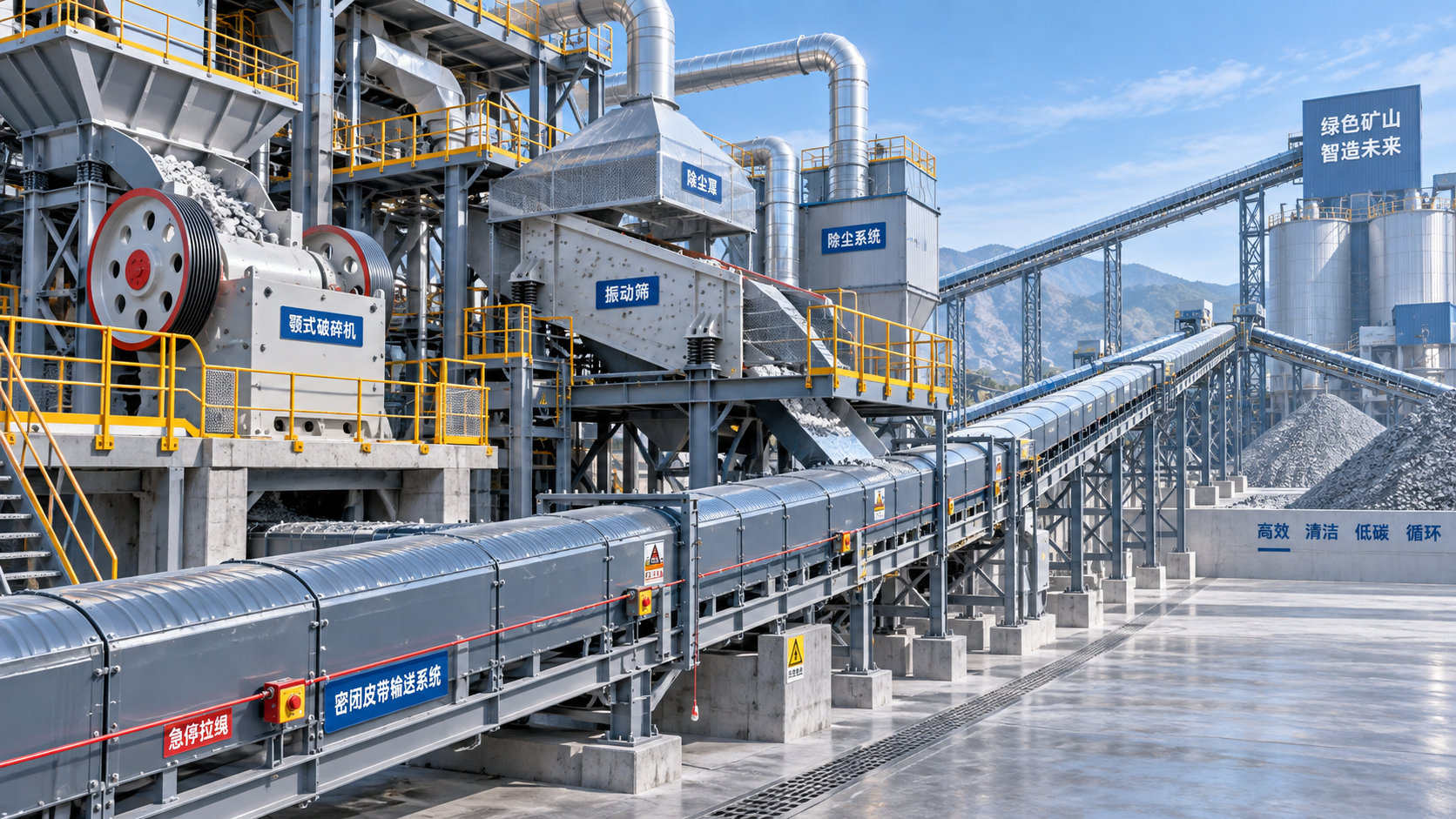
Key Safety and Dust-Control Requirements for Complete Crushing Plant Design
A well-designed Complete Crushing Plant is not defined only by tonnes per hour, product gradation, or installed motor power. Those figures matter, but they do not tell a safety manager whether an operator can safely clear a blockage, whether a fitter can isolate a conveyor before maintenance, or whether workers are repeatedly exposed to airborne dust at transfer points.
In aggregate production, many risks are created early, during layout and equipment selection, then become expensive to correct after commissioning. A crusher installed too close to a wall may be difficult to maintain safely. An open chute may create a persistent dust plume no matter how often the floor is cleaned. A poorly positioned emergency pull-cord may satisfy a drawing review but be unreachable in a real incident. For quality-control and safety teams, the practical task is to review the plant as an operating system rather than a collection of machines.
Start With a Safe Material Flow, Not Individual Equipment
The safest layout usually has the simplest material path. Every extra transfer point adds opportunities for spillage, dust release, belt mistracking, and manual intervention. This is especially relevant where blasted stone has variable moisture, clay content, or top size. A design that handles ideal feed but repeatedly bridges or overloads under normal quarry variation is not a robust design.
Feeders, crushers, screens, conveyors, and stockpile systems should be selected as a matched line. The actual feed envelope, expected fines content, moisture condition, and required maintenance access should be reviewed before finalizing chute geometry. A common mistake is to focus on crusher capacity while treating transfer chutes as secondary steelwork. In practice, chute design often determines whether material remains controlled or becomes a source of dust, carryback, and unplanned cleanup.
Adequate walkways, platforms, handrails, stairs, and access doors should be part of the original plant arrangement. Access that relies on climbing structural members, stepping over belts, or removing guards for routine inspection is a warning sign. Operators need clear sightlines to feeders, discharge points, screen decks, and critical belt sections, but they should not need to stand close to moving components to obtain that view.
Guarding and Isolation Must Reflect Real Maintenance Work
Crushers and screens contain obvious pinch points, rotating shafts, couplings, flywheels, drive belts, and vibrating assemblies. Conveyor systems introduce a longer list of exposure points: head and tail pulleys, return rollers, take-up units, belt cleaners, and transfer zones. Fixed guarding should prevent routine contact while still allowing inspection and servicing without creating a temptation to leave a guard off after work is completed.
Interlocked access guards can be appropriate in certain areas, but they are not a substitute for a disciplined lockout/tagout procedure. Before changing crusher wear parts, replacing screen media, clearing a blockage, or servicing a conveyor, all relevant energy sources must be isolated. That may include electrical power, stored mechanical energy, gravity hazards, hydraulic pressure, and material retained above the work zone. The exact isolation procedure should follow local legal requirements and the equipment manufacturer’s instructions, but the plant design must make isolation points identifiable and accessible.
Emergency stops deserve the same practical review. Pull-wire switches along accessible conveyor routes, local stop controls near operating positions, and clearly marked emergency buttons at key equipment should be evaluated by walking the plant, not only reviewing a schematic. Controls must be reachable without entering a danger zone. They should also be tested as part of commissioning and routine inspection, with reset procedures that prevent unexpected restart.
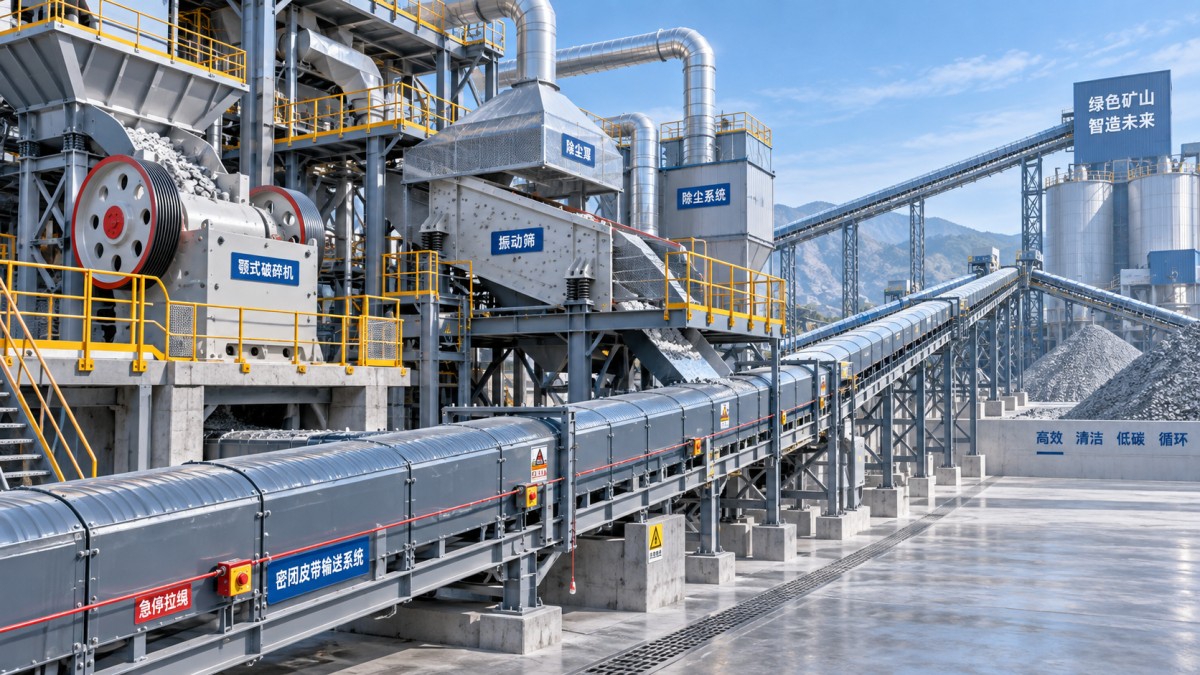
Dust Control Begins at the Source
Dust is often discussed as a housekeeping issue, yet the more serious concern is worker exposure and the operating problems caused by fugitive fines. Dust can obscure walkways, accelerate bearing contamination, interfere with electrical equipment, and make leaks harder to identify. Where silica-bearing rock is processed, exposure control requires particularly careful attention to applicable workplace rules and local monitoring requirements.
The preferred approach is to contain dust where it is generated. Primary tipping points, crusher feed openings, screen discharge chutes, and conveyor-to-conveyor transfers should be enclosed as far as practical. Enclosures need enough volume and a considered air path; simply boxing in a transfer point without controlled extraction can force dust out through every opening.
A dust-collection system should be designed around the actual points of release, not attached as an afterthought. Extraction hoods, duct routing, fan selection, and filter maintenance access all need review. The collector must remain serviceable in dusty conditions, and accumulated material must be removed safely. For wet suppression, water quality, spray placement, drainage, freezing risk, and the effect of added moisture on final product specifications should be considered. Water can be effective, but excessive application may create belt slip, screen blinding, or unacceptable product moisture.
Transfer Points Need Attention Beyond the Hood
Good transfer-point control combines several details: centered material loading, adequate chute angles, sealed skirting, stable belt tracking, and sufficient settling distance before the belt exits the enclosure. If material impacts a belt at the wrong angle or velocity, it bounces, abrades liners, and carries dust into the open plant. Quality teams should inspect these areas while the line is loaded, because an empty-belt inspection rarely shows the real problem.
Screening deserves similar attention. Worn, loose, or incorrectly tensioned screen media can affect particle separation, create noise, and increase the likelihood of unplanned intervention. Depending on the material and machine configuration, an OEM manganese steel quarry mining screen mesh crimped wire crusher vibrating screen mesh may be considered where durable woven screening media is suitable. The decision should be based on aperture requirement, wire wear, open area, feed characteristics, and the screen manufacturer’s fastening arrangement—not only on the purchase price of the mesh.
Design for Inspection, Cleaning, and Product Control
Safety and quality intersect at inspection points. Sampling stations, magnet locations, screen-deck access, and discharge belts should allow checks without exposing personnel to moving machinery or unstable material. If sampling requires leaning over a conveyor or entering an unguarded zone, the arrangement needs reconsideration. A safe sample point is more likely to be used consistently, which improves confidence in gradation and contamination control.
Designers should also think about where spillage will go. Floors beneath conveyors and screens should permit safe cleanup, and drainage should not direct slurry toward electrical equipment, foundations, or pedestrian routes. Excessive reliance on compressed air for cleaning can re-suspend fine dust; methods should be selected in line with site procedures and dust-control objectives.
For EPC projects, coordination between equipment manufacturing, steelwork, electrical controls, and site civil works is critical. A machinery supplier with experience across crushers, vibrating screens, belt conveyors, and screen media can identify interface issues earlier—for example, whether a dust hood conflicts with screen maintenance space or whether a conveyor gallery allows access to a pull-wire switch. The value is not in adding more components; it is in ensuring that the components work together under operating conditions.
A Commissioning Review Should Test the Design Assumptions
Before handing over a Complete Crushing Plant, the safety review should include loaded operation where possible. Check belt tracking, chute leakage, dust escape, noise at working positions, guard integrity, emergency-stop function, access routes, and visibility around mobile or loading areas. Maintenance personnel should be involved in this review because they will quickly identify access constraints that are not obvious to a design team.
The most useful final question is straightforward: when feed conditions deteriorate, can the plant be inspected, stopped, isolated, and restored without asking someone to take a shortcut? If the answer is uncertain, the issue belongs on the commissioning punch list. Throughput can be optimized over time; a layout that normalizes unsafe intervention is much harder to fix once the plant is running.
Leave A Message
If you are interested in our products and want to know more details, please leave a message here, we will reply you as soon as we can.