Is a Wheel Type Sand Washing Machine a Good Choice for High-Clay Sand?
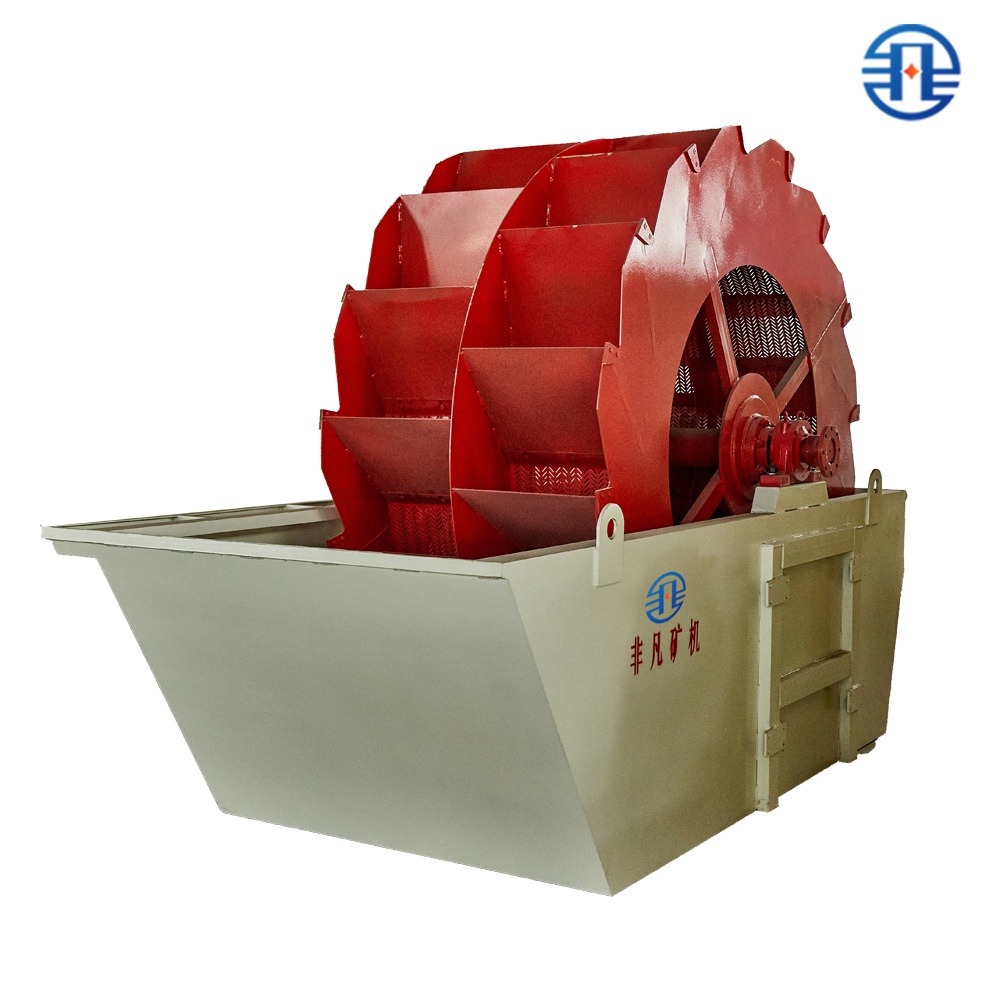
When does a wheel type sand washer make sense for clay-heavy material?
If your raw sand contains a little surface mud, a wheel type machine can do the job well. If the feed is sticky, plastic, and clearly high in clay, the answer changes. In that situation, a wheel washer is usually not the better first choice.
This is the point many buyers are really trying to understand when they ask, Is a wheel type sand washing machine better than spiral for clay sand? The short version is simple: wheel washers are commonly preferred for cleaner sand, light fines recovery, and compact layouts, while spiral washers are generally more suitable when the material carries heavier clay contamination and needs stronger scrubbing during washing.
That does not mean a wheel machine is a bad product. It means the washing principle matters. High-clay feed behaves differently from free-flowing sand, so the machine has to break up mud coatings, move sticky fines out of the product, and stay stable when the feed condition changes.
Why does clay create trouble for a wheel washer?
Because clay does not wash off as easily as loose dust. It tends to stick to the sand surface, form lumps, and stay suspended in water. A wheel washer mainly relies on soaking, gentle agitation, and bucket lifting. That is often enough for stone powder and light soil, but high-clay material usually needs more active rubbing and conveying inside the wash zone.
In practical terms, operators usually see three problems when clay content is high:
- Finished sand still looks muddy or fails downstream cleanliness targets.
- Fine sand loss increases because suspended slurry carries usable particles away.
- Production becomes unstable when wet, sticky feed suddenly rises after rain or changes in the quarry face.
That is why the comparison is not really about which machine is “more advanced.” It is about which machine matches the feed condition.
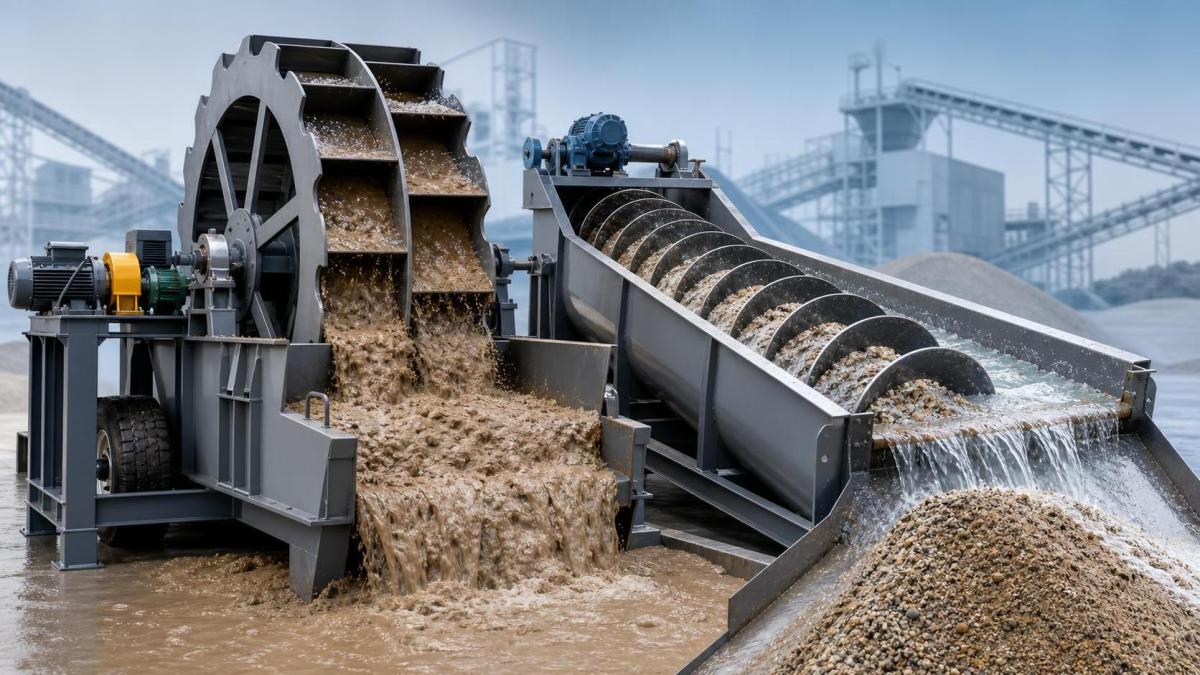
So why is a spiral washer often chosen for clay sand?
A spiral washer keeps the material moving through the tank while turning and pushing it forward. That longer path gives more washing time, and the spiral action helps break up soft agglomerates better than a wheel-only lift cycle. For clay-bearing sand, that extra washing path is often the difference between “looks cleaner” and “actually washed clean enough for use.”
It also tends to be easier to build a process around a spiral machine when the plant needs both washing and dewatering control. In some lines, a spiral-based option such as OEM Single Spiral Sand Washer for Silica Sand Dewatering with Low Moisture Discharge and Easy Maintenance Machine may fit the discussion, especially when the buyer is comparing material retention, discharge condition, and maintenance access across different layouts. That does not prove it is right for every clay application, but it reflects the kind of machine category buyers usually review when clay becomes a real issue.
Can a wheel type unit still work on high-clay sand?
Yes, but only under specific conditions. A wheel washer may still be workable if the clay is not truly heavy, if the feed has already been pre-screened, or if another stage upstream has already removed much of the sticky mud. It can also make sense where the final product requirement is not especially strict.
This is where many people get misled by the phrase “high-clay.” On site, that label is often used loosely. Some material is just damp and dirty. Some contains clay balls, coating, and slurry problems throughout the line. Those are not the same washing task.
If you are evaluating a wheel washer for this kind of feed, check these points before deciding:
- Does the raw material form sticky clumps when wet?
- Is there a lot of minus slurry already entering the washer?
- Does the customer need cleaner construction sand or just basic removal of loose dirt?
- Will the plant run in rainy conditions where clay loading changes sharply?
If most answers point to unstable, sticky feed, a wheel washer starts to look less attractive.
What should buyers compare instead of focusing only on machine type?
Machine type matters, but it should not be the only filter. The better question is: what does the whole washing duty require? A compact comparison helps:
What mistakes are common when choosing between wheel and spiral?
The most common mistake is evaluating the washer based on dry feed appearance. Dry sand can look manageable, but once water is added, the clay behavior becomes obvious. Another mistake is judging the machine only by rated capacity. Throughput on paper says very little if the product comes out dirty or if usable fines are lost with the overflow.
A third mistake is separating the washer decision from the rest of the line. With clay-heavy feed, pre-screening, slurry recovery, and dewatering all affect results. In many cases, the right answer is not simply “wheel or spiral,” but “what process arrangement gives stable washed sand day after day?”
Is a wheel type sand washing machine better than spiral for clay sand if water use is a concern?
Water use matters, but it should not override wash effectiveness. If the machine saves water but leaves clay on the product, the plant may lose more in rework, waste, or lower product value than it saves in utilities. For high-clay material, the better approach is to look at the complete water circuit: washer, settling system, fines recovery, and discharge moisture together.
That is one reason buyers sometimes review spiral-based dewatering options such as OEM Single Spiral Sand Washer for Silica Sand Dewatering with Low Moisture Discharge and Easy Maintenance Machine during early planning. The goal is not to chase one machine label. It is to understand how washing and moisture control interact in the actual plant.
What is the practical buying rule?
If the feed is mostly free sand with light contamination, a wheel washer can be a sensible and efficient choice. If the material is genuinely high in clay, especially sticky clay, a spiral washer is usually the safer starting point for evaluation.
Before locking in a machine, ask for the decision to be based on four things: raw material condition when wet, target cleanliness of the final sand, expected fine sand loss, and how the washer fits into the full process line. That sequence gives a more reliable answer than comparing machine names alone.
Leave A Message
If you are interested in our products and want to know more details, please leave a message here, we will reply you as soon as we can.