How to Size an Inclined Belt Conveyor for Aggregate Plant Throughput
How to Size an Inclined Belt Conveyor for Aggregate Plant Throughput
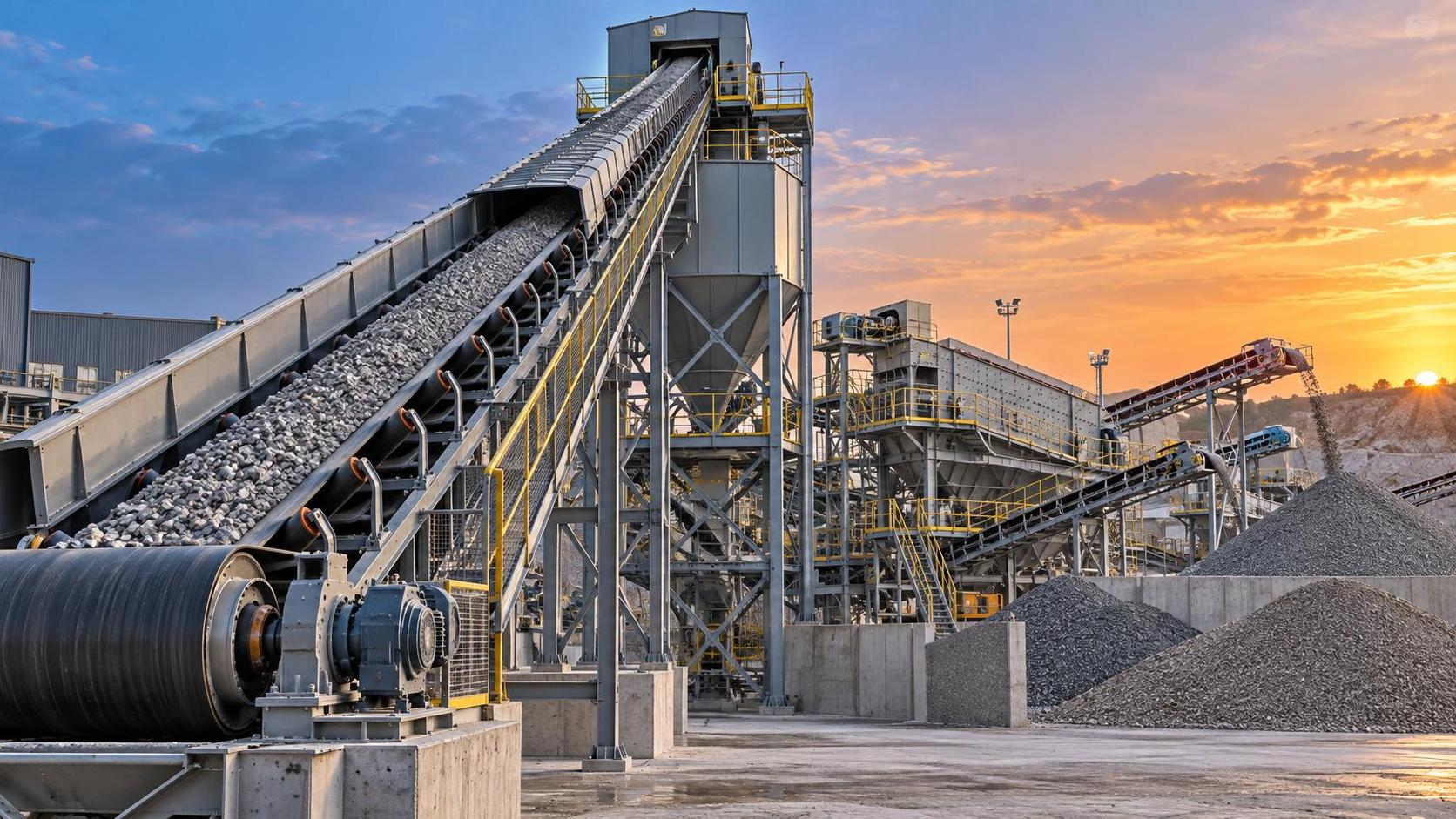
Selecting an inclined belt conveyor for aggregate plant throughput is not simply a matter of choosing a wider belt. In a quarry or crushing station, the conveyor sits between machines with very different operating behavior: a feeder may deliver a relatively steady stream, while a jaw crusher or screen can create short, heavy surges. If the conveyor is undersized, the line loses output. If it is oversized without a clear reason, the project absorbs unnecessary steelwork, drive power, civil work, and maintenance cost.
The right approach begins with the production target, then works backward through material properties, belt speed, incline angle, loading conditions, lift height, and discharge arrangement. For project managers, the key is to size the conveyor for the plant’s real operating condition—not just the nominal capacity written on a flow sheet.
Start With the Design Throughput, Not the Average Output
The first number to confirm is the design mass flow, normally expressed in tonnes per hour. However, the average daily production figure is often not enough. A plant expected to produce a certain annual volume may run fewer hours than assumed, experience variable feed, or need to recover production after planned maintenance. The conveyor must handle the peak operating rate that occurs during normal production, rather than an optimistic average.
For example, a transfer conveyor below a vibrating screen should be checked against the maximum discharge from all screen decks feeding it at the same time. A reclaim conveyor under a surge bin requires another view: the bin may release material at a rate higher than the upstream crusher’s average output. These are common places where a conveyor looks adequate on paper but becomes the restriction in operation.
Ask the equipment supplier to state clearly whether the proposed capacity is based on a continuous, evenly loaded belt or includes allowance for practical loading variation. “Rated capacity” can mean different things in different quotations. That distinction affects both purchase price and plant availability.
Belt Width, Speed, and Material Cross-Section Work Together
Conveyor capacity is fundamentally determined by the cross-sectional area of material carried on the belt, belt speed, and bulk density. In simplified terms:
Capacity = loaded material area × belt speed × bulk density
In practice, each part of that equation needs judgment. The usable material area depends on belt width, troughing angle, surcharge angle, and how centrally the material is loaded. Bulk density can vary significantly between dry crushed stone, moist sand, recycled aggregate, and material containing fines or clay. A design based on one density value may be misleading if the quarry face or feed blend changes through the year.
It is tempting to compensate for insufficient width by increasing belt speed. That can work within limits, but higher speed is not free capacity. Fast belts can increase wear at transfer points, make tracking more sensitive, increase dust generation, and throw fines at the head pulley if the discharge chute is poorly designed. For abrasive aggregate, a moderate speed with sufficient belt width is often easier to operate than a narrow, high-speed conveyor pushed near its limit.
Maximum lump size also matters. Large, sharp stone needs adequate edge clearance and a loading zone that prevents impact close to the belt edge. A belt selected only from tonnes per hour may carry the required volume yet still be unsuitable for the largest feed rock.
The Incline Changes More Than the Motor Size
An inclined conveyor has to lift material vertically as well as move it horizontally. The vertical lift is determined by conveyor length and angle, and it directly affects drive power, belt tension, braking requirements, and structural loading. A longer route at a gentler angle may cost more in belt and supporting structure, but it can reduce lift resistance and improve material stability. A shorter, steeper conveyor saves footprint but may introduce rollback and spillage risk.
The practical angle depends on the aggregate’s particle shape, moisture content, fines percentage, and the belt surface. Clean, dry crushed stone behaves differently from wet sand with sticky fines. On a standard smooth belt, material can slide backward before the nominal capacity calculation becomes the limiting factor. Where site layout requires a steep lift, a chevron belt, cleated belt, or another conveying arrangement may need to be considered rather than simply adding motor power.
Do not overlook downhill operating conditions either. A conveyor that carries material down a slope can be driven by the load. Depending on the duty and layout, the drive system may require controlled braking or a regenerative arrangement. This should be addressed during design, not after commissioning.
Check the Transfer Point Before Finalizing the Conveyor
Many conveyor problems originate at the loading chute, not on the belt itself. Material should enter near the belt centerline and in the direction of belt travel as far as practical. If rock drops from height, the belt, idlers, skirt rubber, and supporting frame all absorb the impact. A conveyor can have adequate theoretical capacity but still suffer belt damage and repeated cleanup because the feed is poorly controlled.
For crushed aggregate, review the following with the plant layout:
- feed opening size and maximum rock lump;
- drop height from the upstream machine or chute;
- expected fines, moisture, and sticky contamination;
- skirtboard length and access for replacement;
- space for impact idlers, belt cleaners, and maintenance work;
- discharge trajectory and whether the downstream hopper can accept it without blockage.
This is especially important when conveyors connect crushers, screens, and stockpiles in a compact plant. A change in one machine’s elevation can alter chute geometry enough to affect the entire transfer point.
Specify the Drive and Structure for Operating Reality
Drive power should account for belt movement, idler resistance, material lift, acceleration, and expected operating losses. The final motor and gearbox selection should be based on a complete resistance and tension calculation, not only on throughput. Long conveyors and high-lift conveyors may also require attention to starting torque, take-up travel, belt rating, pulley diameter, and whether a soft starter or variable-frequency drive is appropriate for the control philosophy.
The structure deserves the same scrutiny. Quarry conveyors operate outdoors, often in dust, rain, heat, or corrosive local conditions. Galvanized or painted steel systems, walkways, guarding, covers, and drainage details should be matched to the site environment and maintenance plan. A low initial price can become expensive if there is no safe access to replace idlers, inspect the head pulley, or clean a blocked chute.
For complete crushing stations, it is useful to source conveyor sizing alongside the crusher, screen, feeder, and screen media selection. Companies that manufacture both conveying equipment and screening components can often identify interface issues earlier. Our group’s mining machinery, wire mesh, and export operations support this whole-line view, from individual conveyors to EPC-oriented aggregate plant layouts. An Even Feeding Belt Conveyor | Mineral Transport Line for Full Quarry Crushing Station is typically evaluated as part of the material flow system, not as an isolated machine.
Questions to Put in the RFQ
A useful request for quotation should include more than a required tonnage. Provide the material description, bulk density if known, maximum and typical lump size, moisture condition, conveyor center distance, vertical lift, feed method, operating hours, local power supply, ambient conditions, and site restrictions. Also identify whether the conveyor is a critical path machine. A short discharge conveyor may stop the entire plant if it fails, while another unit may have standby capacity elsewhere in the process.
Request the supplier’s proposed belt width, speed, belt type, drive power, pulley arrangement, idler spacing, take-up method, and included safety devices. If multiple suppliers quote different widths or motor ratings, do not compare price alone. Compare the assumptions behind each design: density, incline, loading method, and capacity margin. That is usually where the real difference lies.
Make the Conveyor a Reliable Part of the Process
A properly sized inclined belt conveyor for aggregate plant service should move the required material without being constantly adjusted, cleaned, or run at its mechanical limit. The best specification balances throughput with stable loading, acceptable belt speed, realistic incline performance, maintainable transfer points, and a drive sized for the full duty cycle.
Before releasing a purchase order, review the conveyor against the latest plant layout and confirm the material flow at startup, normal production, and surge conditions. That final check is often more valuable than choosing the lowest quote, because conveyor bottlenecks are difficult and costly to correct once steelwork, chutes, and electrical systems are already installed.
Leave A Message
If you are interested in our products and want to know more details, please leave a message here, we will reply you as soon as we can.