How to Select Mesh Size and Vibration Parameters for a Linear Vibrating Screen
Meta Title: How to Select Mesh Size and Vibration Parameters for a Linear Vibrating Screen
If you are evaluating a Linear Vibrating Screen, the real question is not simply “what mesh opening do I need?” It is whether the screen can separate your target size accurately, keep up with required capacity, and stay stable under real material conditions. Mesh size, vibration amplitude, frequency, deck angle, and material behavior all work together. If one is selected in isolation, the screen may look acceptable on paper but perform poorly in production. That is why a good selection process starts from the material and the finished product requirement, not from the machine model alone.
In practical screening work, many selection mistakes happen because people focus too early on nominal aperture size. That matters, of course, but it is only one part of the result. A screen opening that works well for dry, free-flowing crushed stone may fail when the feed contains moisture, flaky particles, or a high percentage of near-size material. The same applies to vibration parameters. Higher amplitude or higher frequency is not automatically better. The right combination depends on what you are trying to separate and how the material behaves on the deck.
Start with the cut point, not the screen model
The first decision is the target separation size. In other words, what size should pass, and what size should stay on the deck? Once that cut point is clear, mesh size can be estimated, but it should not be copied directly from the desired final product size without adjustment.
For example, if the feed contains a large amount of near-size particles, or if the material is damp and sticky, choosing a mesh opening exactly equal to the target product size often leads to low efficiency and blinding. In these cases, technical evaluators usually need to leave a reasonable allowance based on the particle shape, moisture condition, and required screening efficiency. There is no universal correction factor that fits every site, so this part should be checked against actual test data or supplier experience.
A simple rule of judgment helps here: if your production line is sensitive to product grading accuracy, be more cautious about mesh selection. If your process is more capacity-driven and a small grading fluctuation is acceptable, the aperture selection can be slightly less conservative.
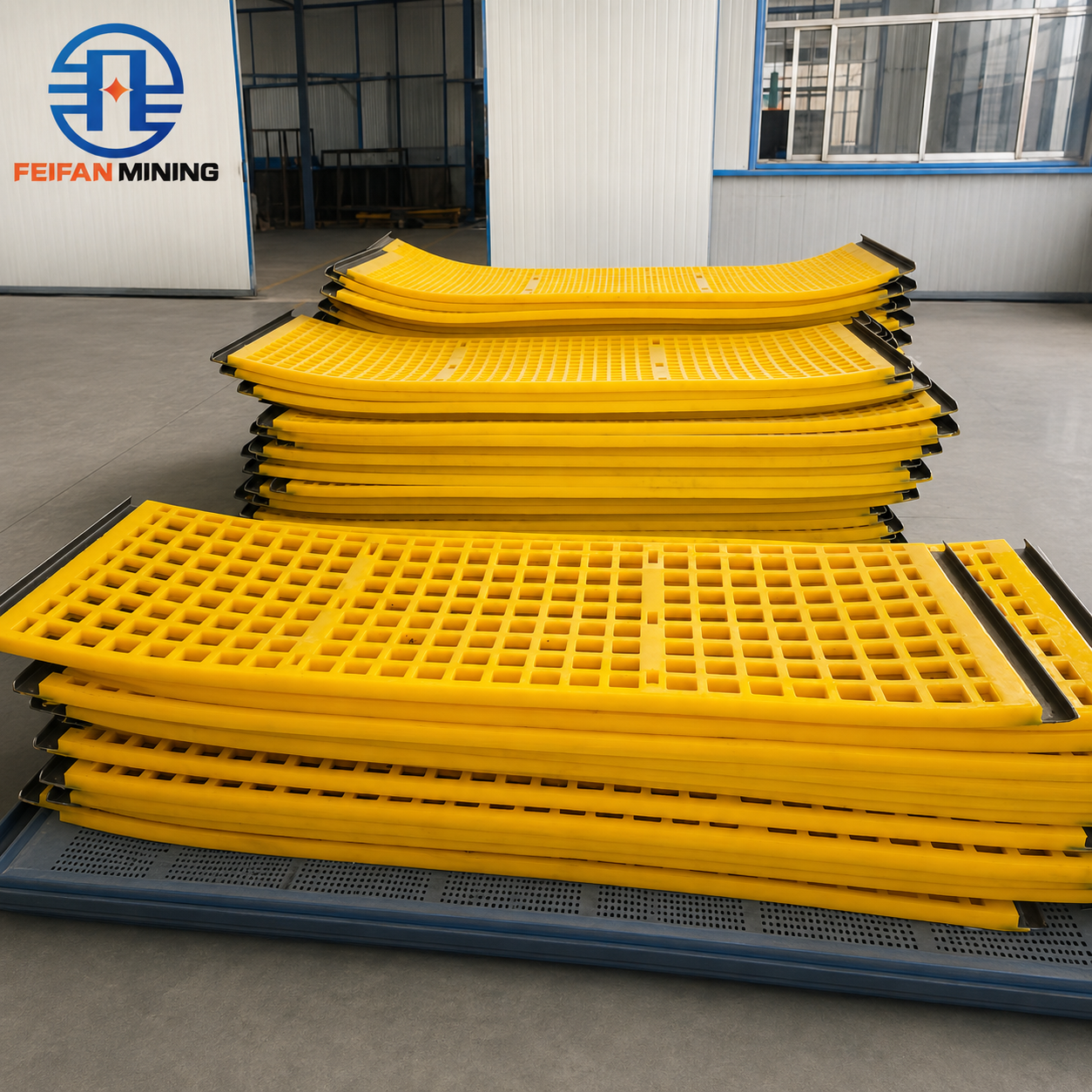
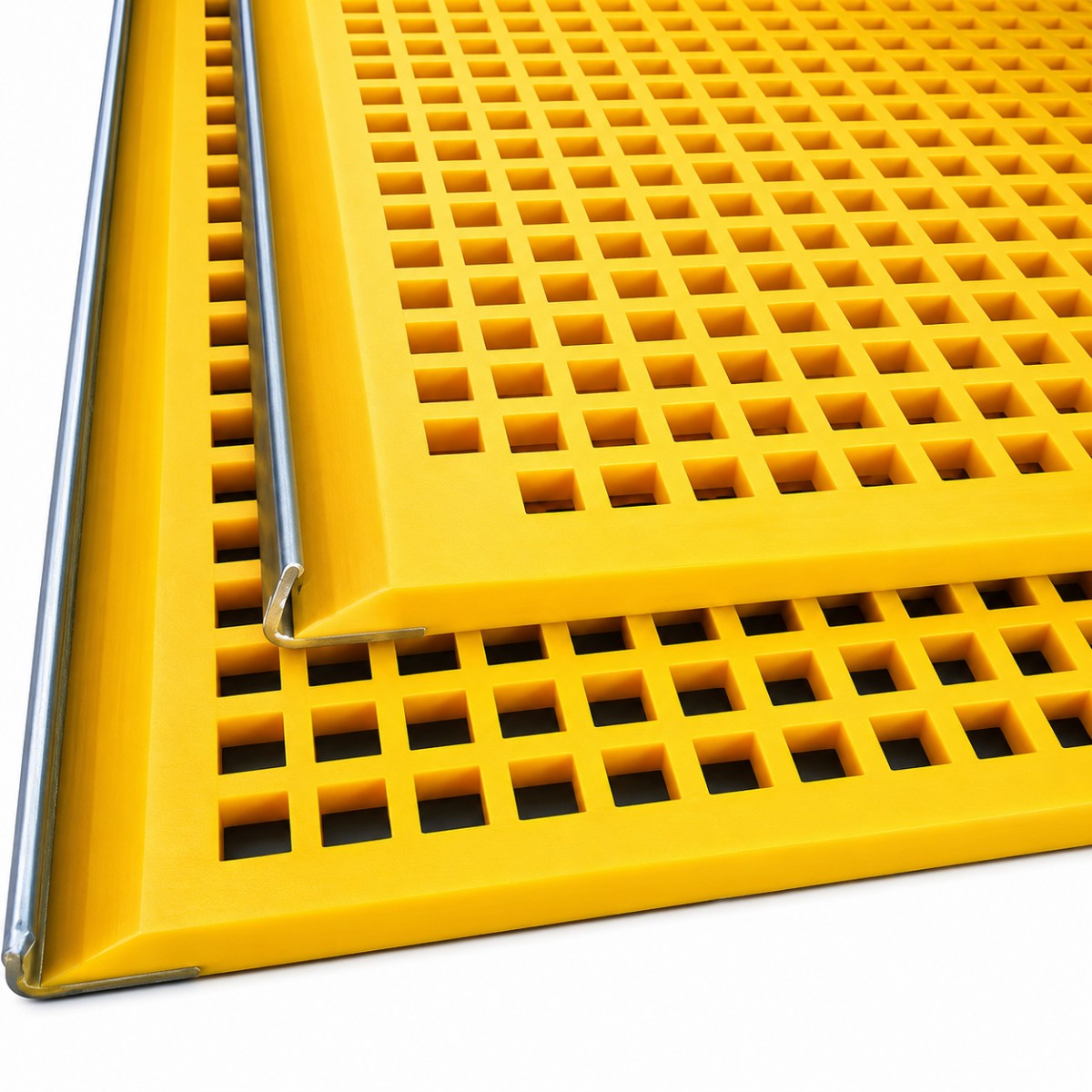
One more thing many people overlook: the screen media itself affects the effective opening. Polyurethane panels, woven wire mesh, and perforated steel plates do not behave the same way in real use. Wear pattern, open area, and anti-blinding behavior can change the actual screening result over time.
How mesh size affects screening efficiency in a Linear Vibrating Screen
Mesh size determines both separation precision and the probability of particles passing through the deck. When the opening is too small, capacity drops and near-size particles tend to accumulate on the surface. When it is too large, you gain throughput but lose classification accuracy.
In actual plant evaluation, these are the conditions worth checking before fixing the mesh opening:
- Particle size distribution of the feed, especially the percentage near the cut size
- Moisture content and clay contamination
- Particle shape, because flaky or elongated material behaves differently from cubic material
- Required product specification and allowable oversize or undersize content
- Expected wear life and replacement cycle of the screen media
If the material is clean, dry, and evenly graded, the screen has more room to run efficiently with a tighter aperture. If the feed fluctuates a lot, it is better to evaluate the worst-case condition rather than the average one. Plenty of screening systems perform well during commissioning but lose stability once real feed variation starts.
A short answer many buyers are actually looking for is this: choose mesh size according to the target cut size, then adjust it based on moisture, near-size content, particle shape, and required capacity. Do not finalize the aperture before checking how the material will move and stratify on the deck.
Vibration parameters: where many selection errors begin
For a Linear Vibrating Screen, the key vibration parameters usually include amplitude, vibration frequency, vibration direction angle, and deck inclination. These directly influence material throwing, stratification, and travel speed.
Here is the common misunderstanding: some evaluators assume stronger vibration always improves screening. In reality, excessive amplitude can move material too quickly across the deck, reducing residence time and hurting fine separation. Excessive frequency may help with thin-layer screening of finer material, but if it is not matched with amplitude and feed condition, it can still produce poor results.
In broad terms, coarser and heavier material often needs enough amplitude to loosen and transport the bed effectively. Finer classification usually needs better stratification control and stable material spread, which may favor a different frequency-amplitude balance. The correct setting depends on the material layer thickness and how quickly particles can reach the screen surface.
When evaluating machine data from suppliers, ask for more than motor power and deck size. Ask how the recommended vibration parameters match your feed condition. A parameter set that works for aggregate with low moisture may not be suitable for ore with sticky fines.
Do not separate screen selection from the rest of the line
A vibrating screen never works alone in a real plant. Feed consistency, discharge arrangement, and upstream and downstream matching all influence the final result. In many sand and gravel lines, unstable feed rate causes more screening trouble than the screen body itself.
That is why experienced evaluators usually look at the conveyor and feeding section together with the screen. If the material stream arrives unevenly, even a well-selected screen will show poor efficiency and accelerated wear. In high-volume raw stone transport systems, it can make sense to review conveying equipment such as Multilayer Bracket Belt Conveyor | Mineral Transport Line for High-Volume Raw Stone as part of the overall line balance, especially where feed continuity is affecting the screen deck load.
This is also where a one-stop manufacturing and EPC background becomes useful. A group with long-term involvement in screening machines, custom screen meshes, conveyors, and complete aggregate lines is usually in a better position to judge equipment matching than a supplier who only sells one isolated machine. In our field, experience from actual line integration often matters more than a clean catalog specification.
What technical evaluators should verify before making a decision
Before you approve a Linear Vibrating Screen configuration, these checks usually save time later:
- Confirm the required cut size and acceptable product tolerance
- Check real feed data, not only design capacity
- Review moisture, clay content, and seasonal variation
- Match screen media type to wear condition and anti-blocking needs
- Verify whether the proposed amplitude and frequency suit coarse screening or fine classification
- Check deck number, deck area, and material residence time together
- Look at upstream feeding uniformity and downstream conveying capacity
If one of these items is uncertain, the selection should remain open. A rushed choice usually leads to one of two outcomes: either the screen is oversized and cost-heavy, or it is undersized and becomes the bottleneck of the plant.
There is also a practical point about supplier evaluation. A manufacturer with in-house capability in screen mesh production, vibrating equipment fabrication, and production line integration can usually provide more grounded advice on how aperture design and vibration settings interact. That matters when the project is not a single equipment purchase but part of a larger crushing and screening system.
Common mistakes that look small but cost a lot
One is selecting mesh size based only on theoretical particle diameter. Another is asking for maximum capacity without considering screening efficiency. A third is ignoring wear life. An opening that gives perfect separation on day one may drift out of tolerance quickly if the screen media is not suited to the material abrasiveness.
Another mistake is treating test data from one material source as universal. Quarry stone, river pebble, metallic ore, and recycled material each behave differently. Even within one site, blasted rock can vary enough to affect screening performance. If the feed source changes, it is worth rechecking the selection logic.
For plants running multiple decks, remember that the top deck and bottom deck do not need the same thinking. The upper deck usually carries the heavier burden of impact and coarse separation, while lower decks are more sensitive to fine grading accuracy and blinding.
Final selection logic
The best way to choose a Linear Vibrating Screen is to work backward from the finished product requirement, then verify whether the mesh size, vibration parameters, screen media, and line matching support that result under real feed conditions. If the material is difficult, prioritize stable performance over idealized lab efficiency. If the line is high-capacity and continuous, pay close attention to feed uniformity and equipment matching across the system.
For technical evaluation, the right question is not “which screen is strongest?” It is “which configuration will keep separation accuracy, throughput, and maintenance under control at the same time?” That is usually where a sound decision is made.
FAQ
Should mesh size always match the final product size exactly?
No. In many cases it needs adjustment for moisture, near-size material, particle shape, and required efficiency.
Is higher vibration amplitude better for screening efficiency?
Not by itself. Too much amplitude can shorten residence time and reduce fine separation performance.
What matters more, frequency or amplitude?
Neither should be judged alone. The useful result comes from their combination and how it fits the material condition.
When should I reconsider the selected screen media type?
When you face blinding, rapid wear, unstable product grading, or changing feed characteristics.
Can a good screen still perform badly in production?
Yes. Uneven feeding, overloaded conveyors, poor deck load distribution, or wrong media choice can all undermine a well-built screen.
Internal Link Anchor Text Suggestions
- Polyurethane screen mesh selection guide: screen media product or knowledge page
- How to choose a vibrating screen for aggregate production: equipment selection article
- Belt conveyor matching in crushing and screening lines: conveyor solution page
- Common causes of screen blinding and pegging: maintenance or troubleshooting article
- Complete sand and gravel production line design: EPC or turnkey solutions page
External Authority Source Directions
- Mining or aggregate industry association technical guidance
- Official technical documentation from major vibrating screen manufacturers
- Academic or engineering research on particle screening efficiency and vibration behavior
Leave A Message
If you are interested in our products and want to know more details, please leave a message here, we will reply you as soon as we can.