How to choose screen mesh openings for crushed aggregate
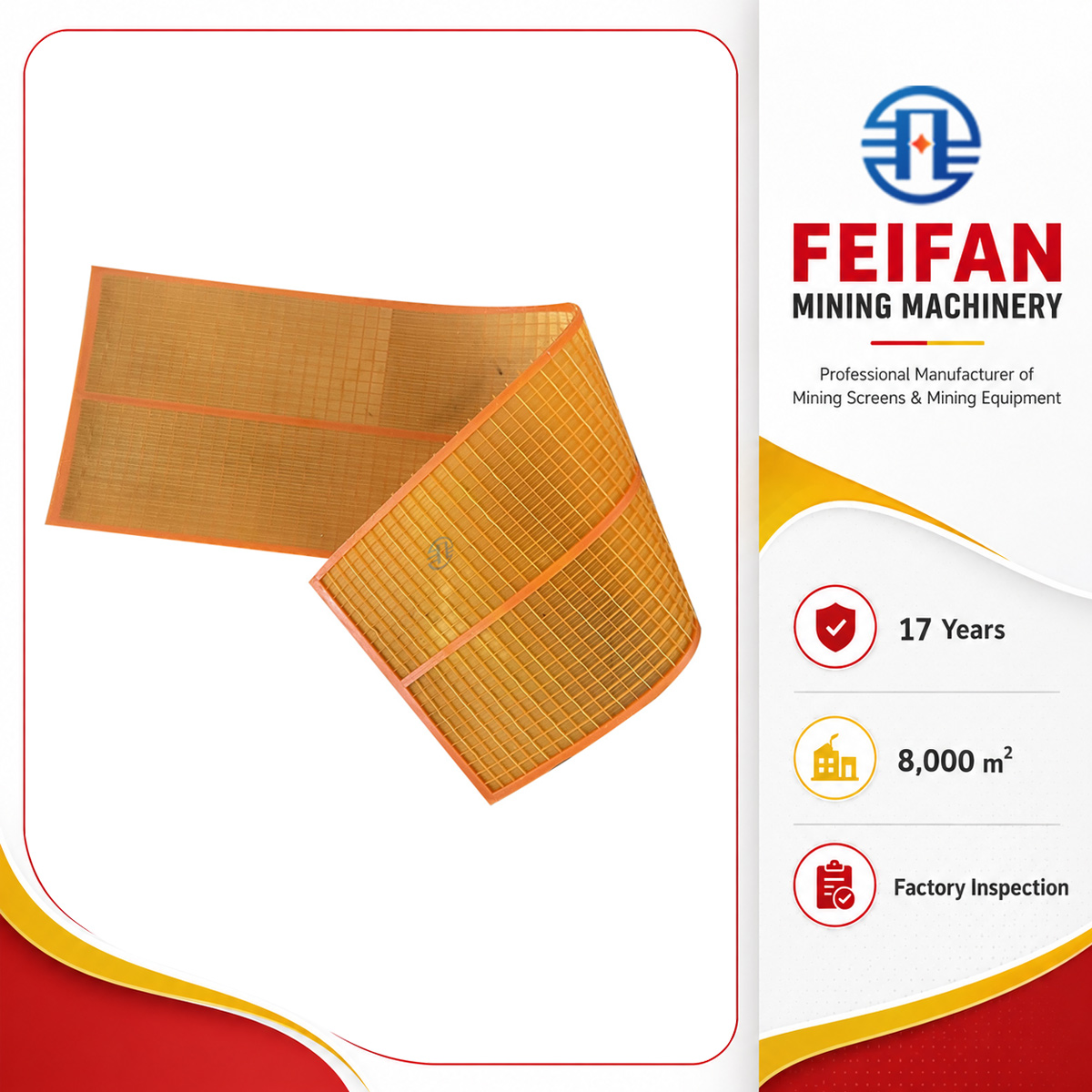
Choosing the right screen mesh opening is critical to producing crushed aggregate that meets grading specifications without sacrificing screening efficiency. Yet matching an opening to a nominal product size is only the starting point. Feed gradation, particle shape, moisture, deck configuration and separation accuracy all influence the result. For a technical evaluator, the practical question is not simply “What size opening do we need?” but “What opening will produce an acceptable grading at the required throughput, under our actual operating conditions?”
Start with the product specification, not the screen catalog
Define the required size range and identify the applicable grading limits, including the permitted material passing each test sieve. A nominal 20 mm aggregate, for example, is not necessarily produced to specification by installing a 20 mm screen opening. The finished product may have limits for both oversize and undersize, and those limits must be checked using the specified laboratory sieves and test method.
Next, review a representative feed gradation and the required mass flow. Pay particular attention to material close to the intended separation size. These near-size particles are difficult to classify: some pass only after repeated contact with the screen, while others remain in the oversize stream. A feed rich in near-size material generally requires more screening opportunity than a feed with the same total tonnage but fewer borderline particles.

Translate the target separation into a trial opening
The opening is the clear space available for particles to pass, usually stated in millimeters. It is not the wire diameter or the overall distance from one wire center to the next. When comparing suppliers, confirm whether dimensions refer to clear openings and how they are measured, particularly for molded polyurethane panels or non-square apertures.
A useful starting point is to select an opening near the desired separation size, then assess whether a different aperture is needed to achieve the specified product grading. Do not assume a universal correction factor. An inclined vibrating deck presents a different effective opening to the material, and particles do not approach the surface in a uniform orientation. Bed depth, vibration and the time available for screening also affect the observed cut.
For example, if the oversize product contains too much material below the specified lower size, the evaluator should investigate insufficient screening opportunity, blinding or excessive feed before simply increasing the opening. A larger aperture may reduce undersize carryover, but it can also allow more borderline material into the undersize product. The correct adjustment depends on which stream is out of specification.
Compare opening shapes against the feed
Square openings offer a practical reference for many aggregate separations and are commonly considered when particle-size control is important. They do not, however, reproduce a laboratory sieve separation exactly under production conditions.
Rectangular or slotted openings can provide more open area and may help material pass when near-size particles or moisture restrict capacity. Their trade-off is that elongated particles can pass lengthwise, so the product may contain particles longer than the slot’s narrow dimension. Check whether that is acceptable for the intended use and test method.
Other aperture designs, including configurations intended to reduce pegging or blinding, may be worth evaluating for difficult feed. Ask the supplier for the opening dimensions, open area and expected wear behavior rather than comparing nominal sizes alone.
Account for moisture, wear and screen construction
Wet or sticky fines can coat the surface and block openings; dry, angular particles may wedge into them. If the mesh blinds during normal production, its effective open area falls and separation can deteriorate even though the specified aperture has not changed. Wet screening, a different aperture geometry or a change in screen media may help, provided the plant can accommodate the associated water and process requirements.
Media selection also changes the capacity and maintenance calculation. Woven steel screens can offer substantial open area, but wire thickness, abrasion and pegging resistance need attention. Polyurethane panels can suit abrasive or high-impact duties and may offer useful wear life, although their thicker construction can reduce open area for a given opening. Compare actual panel designs, support arrangements and replacement access rather than treating either material as universally superior.
Wear changes the picture over time. An enlarged opening can allow oversize contamination into the passing product, while blocked openings can send excessive fines to the oversize stream. Inspect and measure the mesh at intervals, especially near feed impact zones and where product grading begins to drift.
Check the whole circuit before ordering
A screen does not operate in isolation. Confirm the number and arrangement of decks, available screen area, inclination, vibration settings and feed distribution. Excessive bed depth or uneven loading can prevent fine particles from reaching the mesh. Likewise, a crusher setting change may shift the feed gradation enough to affect a previously satisfactory screen selection.
Material handling deserves attention too. Carryback on return belts can create cleanup work and introduce stray material around transfer points. Where belt cleaning is part of the plant assessment, the FEIFAN OEM High Efficiency Impact Resistant Belt Cleaner Scraper System For Crusher Plant Dust Control Belt Conveyor Parts is a related conveyor component to consider. It does not replace dust extraction or correct a screen-sizing problem, but belt maintenance can support a cleaner, more manageable circuit.
Validate the opening with production samples
Before committing to a full set of panels, agree on a trial plan where practical. Sample the feed and both product streams during representative operating conditions, then conduct sieve analyses using the relevant specification. Record throughput, moisture conditions, deck loading and visible blinding alongside the grading results. Repeat sampling as operating conditions change; a single clean sample may not represent a wet shift or a different feed source.
- Check that both the oversize and undersize streams meet their intended grading requirements.
- Compare product yield and throughput, not just whether the screen appears to be passing material.
- Inspect openings and media condition after the trial, including areas exposed to impact and abrasion.
- Confirm panel dimensions, fixing details and compatibility with the existing deck before purchase.
FEIFAN manufactures polyurethane and steel screen media as well as crushing and screening equipment, allowing evaluators to discuss the mesh alongside the wider production line. Share the feed analysis, target grading, operating conditions and deck details when requesting a recommendation. A sound choice is one that remains practical after the initial sample passes: it should support the required product quality while fitting the plant’s capacity and maintenance needs.
Leave A Message
If you are interested in our products and want to know more details, please leave a message here, we will reply you as soon as we can.