How to Choose Between Wheel Type and Spiral Sand Washers for Sticky Feed
How to Choose Between Wheel Type and Spiral Sand Washers for Sticky Feed
Is a wheel type sand washing machine better than spiral for clay sand? In practice, that question is often framed too narrowly. Sticky feed is not difficult only because it contains sand and clay together. The real issue is how tightly the clay binds to the sand particles, how much slurry the plant can handle, and how clean the final material must be before it moves to screening, stockpiling, or concrete use. A washer that performs well on damp manufactured sand may struggle when the feed contains plastic clay, weathered overburden, or fine contaminant that refuses to break apart in water.
For project managers, the useful comparison is less about which machine is “better” in general and more about which one is more forgiving under your feed conditions. Wheel type sand washers are usually chosen where the feed is already reasonably classified, the mud content is limited, and the plant needs cleaner finished sand with lower loss of fine particles. Spiral sand washers, by contrast, are typically more tolerant when the material is wetter, dirtier, or more heavily mixed with clay and silt. That difference matters because sticky feed does not fail gently. Once it starts coating blades, screens, chutes, and transfer points, the whole line becomes unstable.
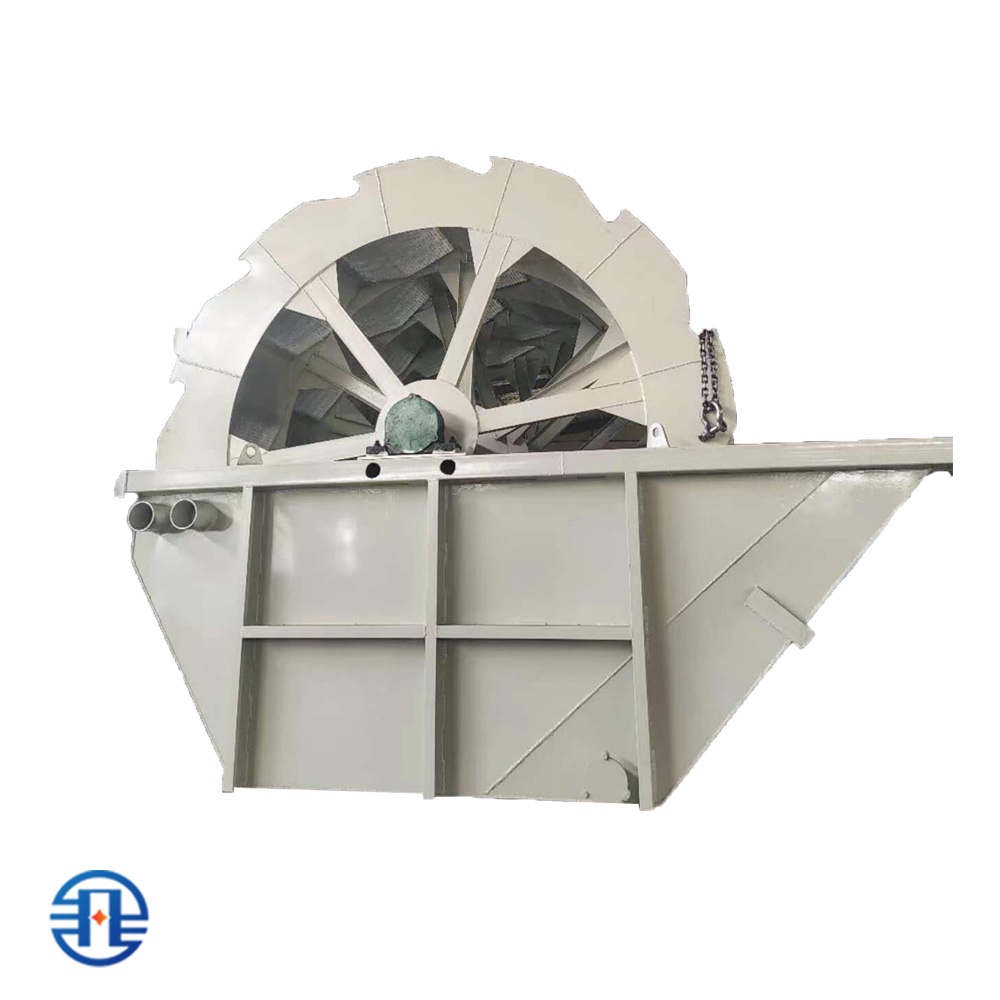
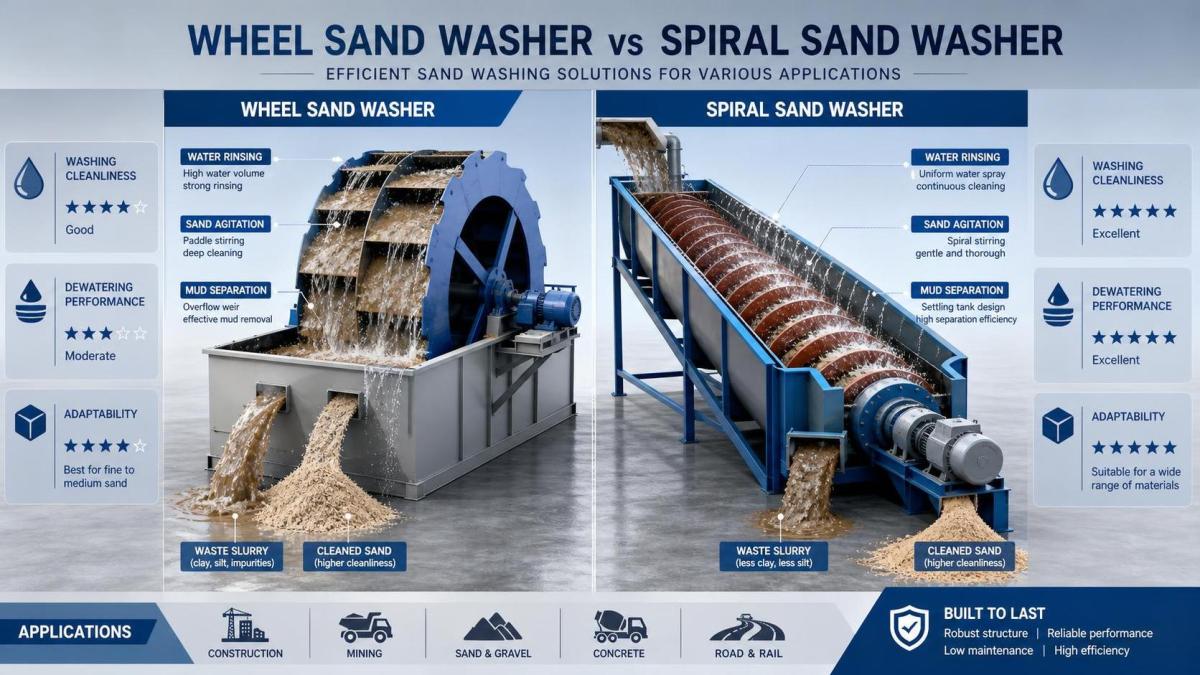
A wheel washer relies on repeated lifting and draining. Sand settles in the tank, the wheel scoops it up, and water carries part of the light impurities away. This gives it a natural advantage when the target is shape retention, dewatering effect, and cleaner surface washing rather than aggressive scrubbing. If your feed is mostly sand with only moderate clay contamination, a wheel type unit can produce a more saleable product with relatively simple operation. It is also often preferred when excessive loss of fine sand would directly affect grading control.
A spiral washer works differently. The screw body pushes material forward while turning and rubbing the feed in water. That means it does more than rinse. It also loosens adhered mud and helps disperse some clay lumps, especially when the feed contains more natural fines or is not consistently pre-screened. This is why many operators lean toward spiral machines for clay sand, but that choice has a boundary. If the clay is highly plastic and present in large lumps, even a spiral washer may not solve the problem alone. In that case, upstream soaking, pre-scrubbing, or a dedicated log washer may be the missing step rather than simply choosing a larger sand washer.
Where the Decision Usually Goes Wrong
One common misunderstanding is to judge the machine only by nominal capacity. Sticky feed changes effective capacity very quickly. Material that looks acceptable on paper can behave like paste in the plant. A wheel washer may hit the required tonnage when clay content is low, then fall short once the rainy season changes feed consistency. A spiral washer may keep moving the material, but at the cost of higher wear, more muddy overflow, or more demanding water management downstream.
Another mistake is assuming the washer is responsible for all cleaning. In a stable plant, washing performance depends on the entire preparation path: feeder control, screening cut points, fines recovery, and the consistency of water supply. Our group has spent years building sand and gravel equipment and EPC solutions for aggregate plants, and this is usually where selection becomes practical rather than theoretical. When the line is designed as a system, the washer does not need to compensate for uncontrolled feed size, random mud spikes, or poor drainage design.
That same systems view is why humid and abrasive environments cannot be ignored. In coastal quarries or mines with persistent moisture, corrosion resistance and equipment matching across the line matter just as much as single-machine choice. In some projects, upstream or downstream pairing with equipment such as FEIFAN Galvanized Anti Rust Cone Crusher Adapted To Humid Mine And Coastal Quarry Environment Machine is part of keeping the whole process reliable in harsh conditions, especially where wet material handling and long service life are both priorities.
A Practical Selection Lens
If the feed contains light surface clay, limited sludge, and your main concern is producing clean construction sand without throwing away too much usable fine material, wheel type washing is often the more efficient answer. It tends to fit plants that already have decent upstream classification and do not want an overly aggressive washing stage.
If the feed is stickier, less uniform, and carries more mud bound to the sand, a spiral washer is usually the safer first choice. It gives the process more tolerance. For project management, that tolerance often matters more than ideal lab-style product conditions because the plant has to run day after day under changing quarry conditions.
Water availability also shifts the decision. Neither machine works well without proper water management, but sticky feed makes the penalty more visible. If water is limited and the plant cannot support effective slurry handling, expecting a spiral washer to fully clean clay-rich sand may be unrealistic. If water is available but fines recovery is weak, a wheel washer may appear clean at discharge while still causing loss elsewhere in the circuit.
There is also a business-side question behind the equipment question: what counts as “clean enough” for the final product? For concrete aggregates, asphalt applications, general construction fill, or manufactured sand blending, acceptable impurity levels and grading priorities can differ. The right washer is the one that meets the product requirement without forcing the rest of the plant into constant correction.
What Project Managers Should Ask Before Approving the Washer
A sound decision usually comes from a few grounded questions rather than a long equipment brochure:
What is the actual nature of the clay: loose fines, soft agglomerates, or dense sticky lumps? Is the feed stable across seasons? Does the plant need maximum cleanliness, or balanced recovery with acceptable cleanliness? How much water can the site circulate reliably? What happens to overflow, sludge, and recovered fines after washing?
Those questions often reveal that the answer to “Is a wheel type sand washing machine better than spiral for clay sand” is conditional. For mildly clayey sand where product grading and low fine loss are central, wheel type equipment is often the better fit. For heavier sticky feed where the main risk is poor liberation of clay and unstable operation, spiral washing usually offers more processing margin. Where clay is severe, neither should be expected to replace proper pre-treatment.
In other words, choose the washer based on how the material behaves in the line, not how the machine looks in isolation. That is the difference between buying a unit and designing a process that keeps running.
Leave A Message
If you are interested in our products and want to know more details, please leave a message here, we will reply you as soon as we can.