How Stroke, Speed, and G-Force Shape Horizontal Vibrating Screen Performance
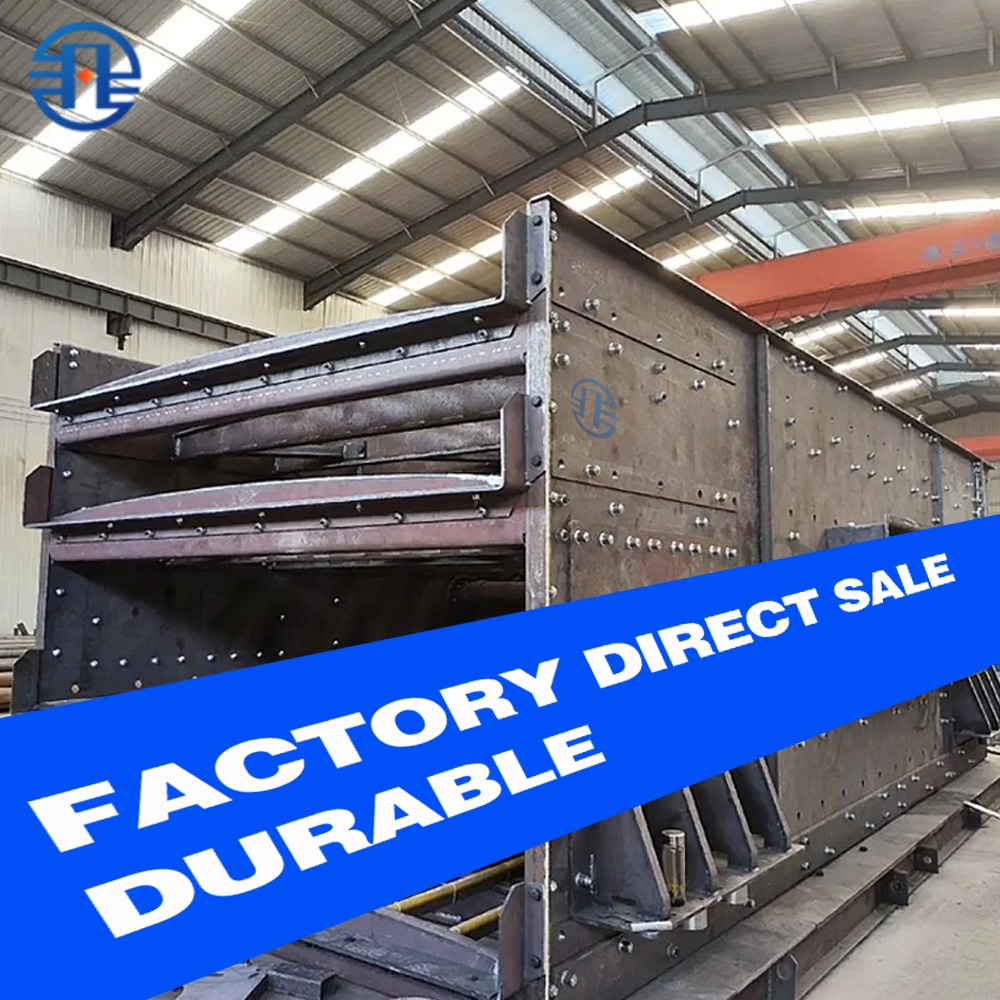
For technical evaluators, a horizontal vibrating screen is rarely judged by nameplate size alone. In quarrying, mining, and aggregate plants, the real question is whether the machine can maintain stratification, pass the required fraction efficiently, and stay stable under changing feed conditions. That is why stroke, speed, and G-force matter so much. These are not isolated settings. They work as a system, and a screen that looks adequate on paper can still perform poorly if those parameters are mismatched to the material, deck configuration, and duty cycle.
In practice, many screening problems that get blamed on media wear, feed inconsistency, or poor sizing trace back to the dynamic setup. Undersize carryover, pegging, poor throughput, excessive side plate stress, and premature bearing failure often reflect an imbalance between motion amplitude and rotational speed rather than a single defective component.
Why these three parameters should be evaluated together
Stroke defines how far the screen box moves in each vibration cycle. Speed determines how many cycles occur per minute. G-force expresses the acceleration imposed on the material and the structure. On a Horizontal Vibrating Screen, these values collectively determine whether material spreads, stratifies, and clears the apertures fast enough for the target capacity.
A larger stroke generally helps move coarser or wetter material and can improve transport across the deck. Higher speed increases the number of opportunities particles have to encounter an opening. Higher G-force can improve separation efficiency when properly controlled, but it also raises mechanical stress and can accelerate wear in bearings, side plates, fasteners, and screen media support structures.
The engineering mistake is to optimize one variable in isolation. A screen with high speed but insufficient stroke may look energetic while still failing to move a heavy bed depth effectively. A machine with large stroke but low speed may transport material but not give fines enough presentation opportunities to pass through. A high G-force design may boost performance in demanding service, but if applied without regard to structure, feed characteristics, and maintenance discipline, the result can be instability rather than productivity.
What stroke really changes on the deck
Stroke is often treated as a simple capacity lever, but its effect is more nuanced. On horizontal machines, where gravity contributes less to material travel than on inclined screens, stroke plays a central role in conveying the bed forward. If the stroke is too short for the application, material may dwell too long near the feed end, creating excessive bed depth and reducing stratification. Fine particles become trapped in the upper layers and screening efficiency drops even when the opening size is technically correct.
When stroke is increased appropriately, the bed opens more effectively, larger particles are turned and advanced, and the fines gain access to the screening surface. This is especially relevant in crushed stone, manufactured sand, and mining feeds with variable shape and moisture.
But more stroke is not always better. Excessive amplitude can cause material to bounce instead of stratify. For near-size material, that can reduce actual separation precision. It may also overstress modular polyurethane panels or fastening systems if the media was selected for a milder motion profile. Technical reviewers should therefore assess stroke not only against tonnage targets, but against cut size, moisture, deck length, and screen media design.
Why speed affects both efficiency and sensitivity
Speed is usually expressed in rpm, but its importance lies in how often the material is excited and presented to apertures. Higher speed often benefits fine screening because more vibration cycles can improve particle presentation and accelerate separation. This is one reason some high-efficiency screening applications favor relatively fast operating conditions combined with controlled stroke.
Still, speed has a narrow practical window. If it is pushed too high for the feed type, the material can lose stable contact with the deck. Instead of a controlled stratification process, the bed becomes overly active, and near-size particles may skip over openings. This is particularly problematic when the objective is not just high throughput but accurate classification.
Speed must also be read alongside drive synchronization and structural response. On dual-motor or exciter-driven equipment, stable phase relationship matters. If synchronization quality degrades, the intended linear motion can become distorted, with consequences for side loading, uneven wear, and vibration transmission into support steel. In upstream feeding sections, equipment such as OEM Shock Absorbing Base Machine With Dual Drive Motor For Continuous Feeding Under High Load And Severe Working Conditions Machine is often evaluated partly on the same principle: not just nominal power, but how controlled vibration behavior remains under severe load.
G-force is useful, but often misunderstood
G-force is attractive because it gives evaluators a single comparative number. In simple terms, it reflects how strongly the machine accelerates the material. In screening duty, higher G can improve loosening of difficult material beds, help prevent blinding in some conditions, and support high-capacity operation where rapid separation is required.
Yet G-force should not be used as a proxy for overall screen quality. Two screens with similar G values may behave very differently if their stroke, speed, motion angle, deck layout, and feed distribution differ. A high G-force machine with poor feed spread or uneven loading can still underperform a better-balanced unit with lower nominal acceleration.
There is also a structural trade-off. More G means more cyclic stress. That affects fatigue life in the screen body, weld zones, cross members, spring supports, and base frame. For technical evaluation, this means dynamic performance data should be reviewed together with structural design evidence: finite element analysis if available, weld quality control, bearing selection, and maintenance accessibility. Without that broader context, “high G” is not a meaningful purchasing criterion.
The interaction that determines real-world performance
The most important evaluation question is not whether a machine has large stroke, high speed, or strong G-force. It is whether the combination fits the duty.
For coarse scalping or heavy aggregate applications, a stronger conveying effect is often needed, so evaluators may favor a motion profile with enough stroke to move a deep bed without choking the feed end. For precision sizing of finer fractions, especially where the cut point is commercially sensitive, a more controlled balance of speed and stroke may be preferable to avoid particle bouncing and preserve classification accuracy.
Moist or sticky feeds complicate the picture further. In these cases, the wrong combination can make blinding worse. A machine may have adequate nominal acceleration but still struggle if deck cleaning, media openness, and feed spread are poorly matched. This is why performance assessment should include the whole screening circuit, including feeder stability, crusher discharge pattern, and transfer chute design.
That systems view is often missed during factory comparison. Evaluators focus on motor power, deck area, or advertised capacity, while the more decisive issue is whether the vibration regime suits the process objective across normal and upset conditions.
Common technical evaluation mistakes
One frequent mistake is using dry, uniform test material as the reference for sizing a machine that will actually run variable quarry feed. Another is comparing screens only by capacity figures without confirming test conditions, aperture type, and acceptable screening efficiency threshold. Capacity claims without those conditions are incomplete.
A second mistake is treating screen media as interchangeable. The same stroke and speed combination may work well with woven wire but produce a different result with polyurethane panels because open area, elasticity, and cleaning behavior change the deck response.
A third mistake is ignoring support structure and isolation. Even a correctly specified Horizontal Vibrating Screen can show unstable behavior if installation stiffness, spring selection, or base isolation is inadequate. In integrated plant design, this becomes relevant not only for the screen itself but for adjacent vibrating equipment, including feed systems such as OEM Shock Absorbing Base Machine With Dual Drive Motor For Continuous Feeding Under High Load And Severe Working Conditions Machine, where transmitted vibration affects overall line reliability.
What technical evaluators should ask suppliers
Useful evaluation goes beyond brochure values. Ask how stroke is adjusted and measured in service. Confirm whether the quoted speed is under no-load or operating load. Request the target operating G-force range and how it was validated. Review the intended material envelope: top size, bulk density, moisture range, and percentage of near-size particles.
It is also reasonable to ask for references from comparable applications, not just the same industry. A granite aggregate screen, a recycled concrete screen, and a metal ore screen may all be “horizontal vibrating screens,” but their dynamic demands differ materially.
Where available, maintenance records from existing installations are often more revealing than nominal technical data. Bearing life, panel retention performance, crack history, and consistency of motor synchronization provide a more realistic picture of whether the dynamic design is sustainable.
What a balanced design looks like
A well-designed screening machine does not chase the maximum value for any single parameter. It achieves an operating window where stroke, speed, and G-force support the intended cut size and throughput while preserving media life, structural durability, and stable operation. That balance is what technical evaluators should be looking for.
In other words, the right machine is not the most aggressive one. It is the one whose vibration profile remains effective across real feed variation, integrates with the upstream and downstream circuit, and does not purchase short-term capacity at the cost of long-term mechanical risk. For screening applications in mining and aggregates, that is usually the difference between a unit that merely runs and one that consistently delivers specification material.
Leave A Message
If you are interested in our products and want to know more details, please leave a message here, we will reply you as soon as we can.