How Screen Mesh Service Life Changes the Cost per Tonne in Mining Operations
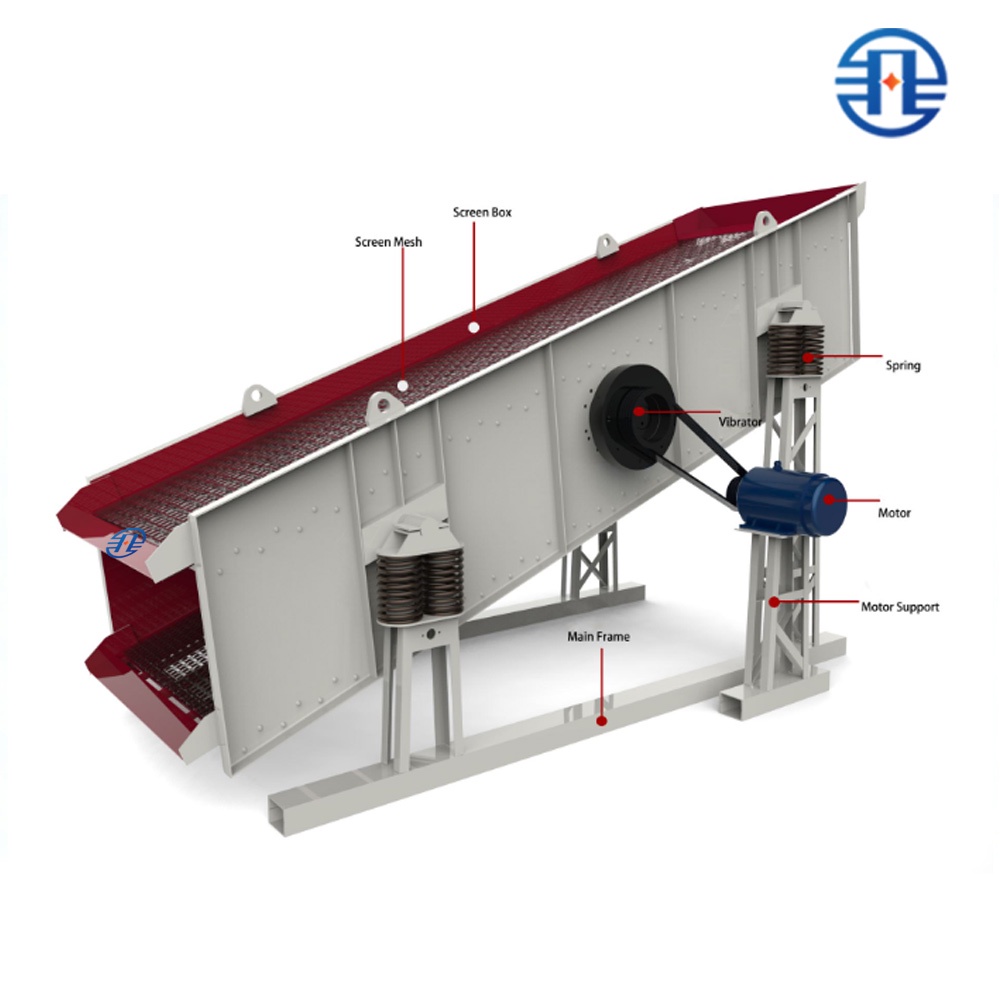
The purchase price of a Mining Screen Mesh is rarely the figure that determines its real cost. In a crushing and screening plant, mesh life affects how often production is interrupted, how consistently material is classified, how much labour is tied up in change-outs, and whether downstream equipment receives a stable feed. The relevant measure is therefore not cost per panel or per square metre, but cost per tonne of saleable material processed while the screen remains within its required performance range.
A lower-priced mesh that wears out early can become the expensive option even if it appears attractive on a quotation. Conversely, a premium mesh is not automatically economical: if its aperture shape, open area, fastening system, or material is wrong for the feed, a long wear life may come with reduced throughput, poor separation, or unnecessary blinding. The economic objective is to achieve the lowest sustainable screening cost per tonne at the required product quality.
Why service life has a larger cost effect than the replacement invoice
Screen media expenditure is only one part of the cost created by wear. A useful decision model is:
Screening cost per tonne = (mesh purchase cost + installation cost + downtime cost + disposal cost + quality-loss cost) / tonnes processed during effective service life
The denominator is more important than it looks. It should not be calculated from calendar life alone. It should reflect the tonnes processed while the mesh still delivers the specified cut point, acceptable open area, and stable product gradation. A panel may remain physically intact after its apertures have enlarged, wires have thinned, or polyurethane surfaces have deformed enough to compromise the screening duty. Continuing to run it may reduce the apparent replacement cost, but it can increase the cost of off-spec material, recirculating load, or downstream washing and crushing.
Downtime magnifies the difference between mesh options. Changing screen media involves isolation, access, removal of worn panels or tensioned wire, cleaning of support surfaces, installation, tensioning or fastening, and post-start inspection. The loss is not limited to the vibrating screen. Feed preparation, crushers, conveyors, washers, and stockpile management may all be affected. Where a plant has limited surge capacity, an unplanned mesh failure can disrupt the entire production sequence.
For this reason, an additional month of useful mesh life has a different value in a plant with a planned maintenance window than in a plant that must stop a high-throughput line immediately. Service life should be valued alongside maintenance scheduling, not in isolation.
“Longer life” must mean stable screening performance
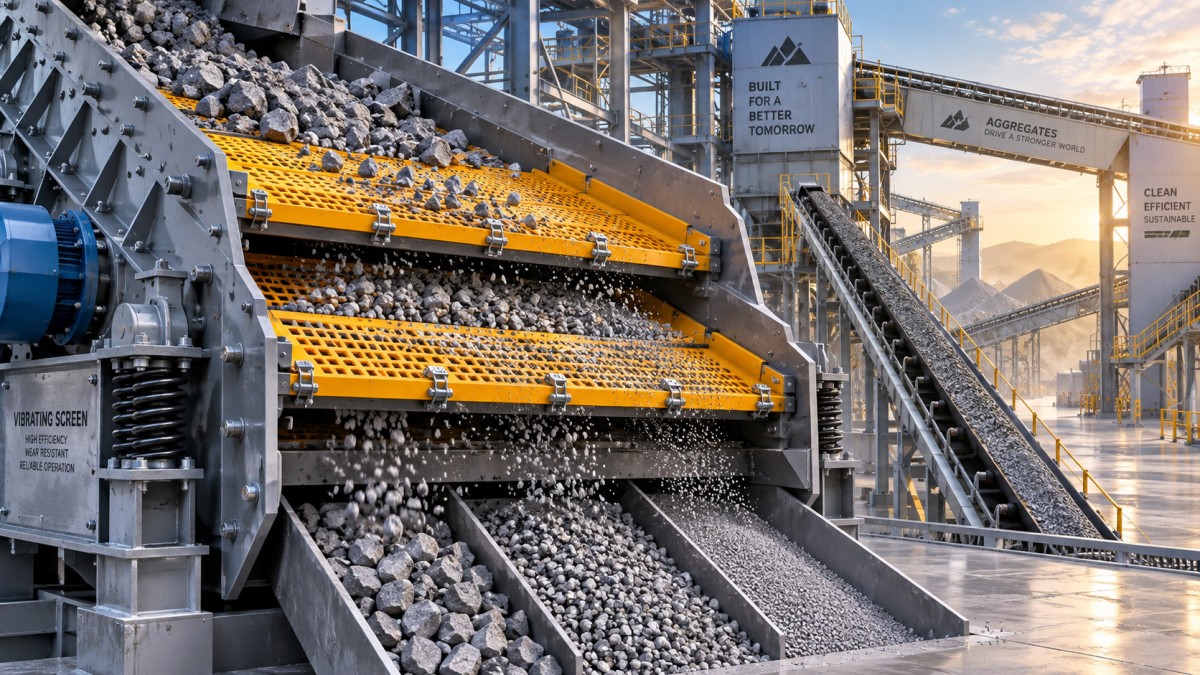
The practical end of life for Mining Screen Mesh is often performance-based rather than failure-based. Decision-makers should distinguish between three conditions:
- Wear without immediate classification loss: the surface shows abrasion, but aperture geometry and panel retention remain acceptable.
- Functional degradation: openings become oversized, uneven, blocked, or distorted; the required separation becomes less reliable.
- Mechanical failure: broken wires, torn media, loose fastening, panel cracking, or damage to supporting structures creates an immediate operating and safety concern.
A procurement comparison based only on the point of mechanical failure overstates the value of a mesh that loses sizing accuracy early. This is particularly relevant where the screen produces multiple commercial aggregate fractions or where downstream equipment depends on controlled top size. The correct question is not “How long will the panel stay on the deck?” but “How many tonnes can pass before the panel no longer performs its assigned duty?”
What determines tonnes processed before replacement
Abrasiveness and feed characteristics are the starting point. Hard, angular rock generally imposes a very different wear mechanism from rounded gravel, even at a similar nominal feed rate. High silica content, sharp particle edges, large top-size particles striking the feed end, and a high proportion of near-size material can all accelerate wear. Moisture and clay introduce a separate problem: blinding and pegging can reduce effective open area long before abrasion consumes the material.
The selection of media must match these mechanisms. Steel wire mesh can offer high open area and efficient stratification in suitable dry-screening duties, but wire diameter, weave pattern, alloy choice, and tensioning quality influence both service life and separation performance. Polyurethane panels can provide strong abrasion resistance and noise reduction in demanding wet or abrasive applications, but their flexibility, aperture design, thickness, and support arrangement need to suit the duty. A thicker wear surface may improve life while reducing open area; that trade-off has to be measured against required capacity.
Aperture geometry also changes the cost equation. Square, rectangular, slotted, and shaped openings do not pass material in the same way. A slotted aperture may help capacity or reduce pegging in a specific direction of travel, but it can alter the product shape distribution compared with a square opening. A nominal aperture size alone is not a complete specification. The required product definition, particle shape, screen motion, deck position, and feed presentation all matter.
Installation quality is another frequently underestimated variable. Poorly seated panels, inadequate tension, worn rails, damaged side clamps, uneven support bars, and incorrect fastener torque can shorten mesh life regardless of the media’s material quality. A procurement decision should therefore consider the condition and design of the existing screen deck. Buying stronger media without correcting support problems can simply transfer stress into the new panel.
Availability costs often outweigh material costs
Planned change-outs can be coordinated with crusher liner changes, bearing inspections, conveyor maintenance, or wash plant cleaning. Unplanned failure cannot. The financial effect depends on the plant’s production economics, but the mechanism is consistent: lost operating hours reduce available tonnes, while restart can create additional instability in feed rate and stockpile management.
Mesh life variability is therefore a procurement risk, not merely a maintenance inconvenience. Two batches with the same quoted specification may produce different operating outcomes if wire hardness, polyurethane formulation, reinforcement, mould quality, aperture consistency, or fastening tolerances are not controlled. For critical decks, supply evaluation should include documentation that connects the offered media to its actual manufacturing specification rather than relying on generic descriptions such as “high wear resistance.”
Lead time has a similar effect. Custom apertures and non-standard panel dimensions may be technically justified, but they create exposure if the operation does not hold a realistic contingency stock or if the supplier cannot reproduce the profile consistently. The most durable design is not necessarily the lowest-risk choice when replacement availability is uncertain.
A purchasing comparison should use plant-specific assumptions
A meaningful quotation request should define more than length, width, and aperture. It should include the screen make and deck arrangement, material being processed, maximum feed size, moisture condition, estimated tonnage, operating hours, screen inclination and motion where available, required product size, and whether blinding, pegging, breakage, or rapid abrasion is the current failure mode.
Suppliers should be asked to state the proposed media construction in a way that can be checked on delivery: material grade or formulation category, wire diameter or panel thickness, aperture geometry, open-area implications, reinforcement arrangement, fastening method, and recommended deck position. For wire media, the specified weave and edge treatment matter. For modular polyurethane media, the panel support and locking interface deserve equal attention.
It is also useful to compare options against a defined evaluation period rather than a single purchase order. The record should capture installed date, tonnes processed, operating hours, reason for removal, maintenance time, observed wear pattern, and any measurable impact on product quality or throughput. This does not require a complex digital system; a consistent change-out log can reveal whether failures occur at the feed end, along a support rail, around locking points, or across the full panel surface. Each pattern points to a different corrective action.
Screen mesh economics cannot be separated from the whole plant
Screening efficiency affects more than screen-deck maintenance. Oversize carryover can raise crusher recirculation. Excess fines in a coarse product can affect aggregate specifications. Reduced effective open area can force operators to lower feed rate or accept poorer separation. In wet processing, an unstable screen discharge can alter the load placed on washing and dewatering equipment.
That connection is relevant when assessing broader plant configurations. For example, a wheel sand washer with a power configuration matched to local voltage standards may simplify electrical integration in an international project, but it does not compensate for poor upstream classification. Equipment choices such as an OEM Custom Power Configuration Wheel Sand Washer For Different Regional Voltage Standard Machine should be assessed as part of a material-flow system: feed consistency, retained oversize, moisture, fines content, and the required final product all influence the real operating result.
The same principle applies to screen media. A mesh selected only for long wear life can constrain capacity; a mesh selected only for open area can create excessive replacement frequency. The lowest cost per tonne comes from balancing wear resistance, effective screening area, classification accuracy, installation time, and supply reliability within the actual plant duty.
Where procurement decisions commonly go wrong
One recurring error is comparing media by unit price while treating downtime as a maintenance issue rather than a production cost. Another is specifying a material type without defining the failure mechanism. “Polyurethane” and “steel mesh” are broad categories, not complete engineering specifications. A third is using calendar replacement intervals when the relevant variable is processed tonnage and screening quality.
There is also a tendency to blame the mesh when the underlying issue is feed distribution. If material lands heavily on one section of the deck, the local impact zone may fail repeatedly even when the rest of the panel is lightly worn. Improving feed-box design, reducing drop height where practical, fitting impact protection in the correct location, or changing the deck layout may produce a better return than simply purchasing a heavier mesh.
The strongest purchasing decision treats service life as an operational output, not a supplier claim. Define the required performance window, identify the actual wear and blockage mechanisms, value planned and unplanned downtime, and compare media by verified tonnes processed at acceptable separation. That approach turns Mining Screen Mesh from a recurring consumable line item into a controllable contributor to cost per tonne.
Leave A Message
If you are interested in our products and want to know more details, please leave a message here, we will reply you as soon as we can.