How Preventive Maintenance Extends Mining Equipment Life in Remote Operations
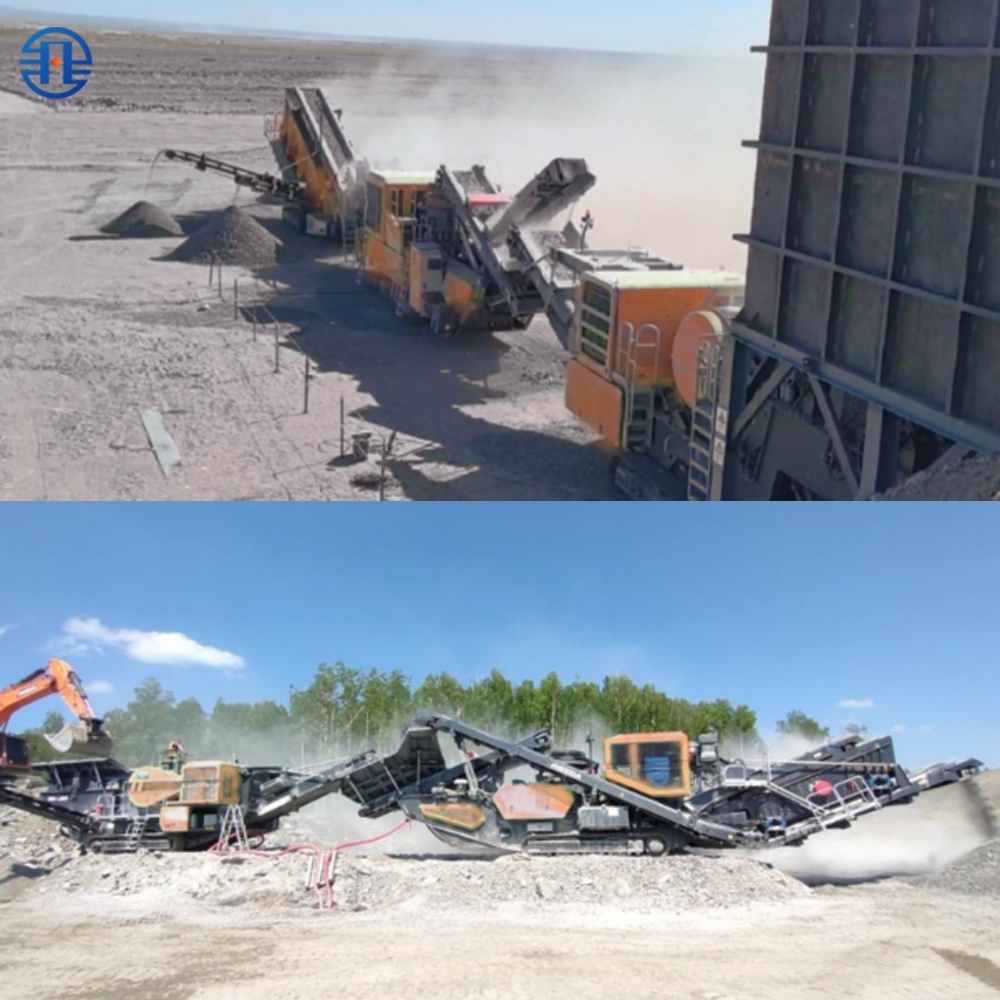
In remote mining operations, preventive maintenance is not simply a way to reduce repair bills. It is the operating discipline that protects equipment life when access to parts, specialist labor, fuel, lifting tools, and reliable transport is limited. A crusher bearing failure or a conveyor belt tear at an isolated site can stop an entire processing circuit long before a replacement reaches the mine.
The practical objective is to detect deterioration while it is still manageable: before vibration becomes structural damage, before lubricant contamination becomes bearing failure, and before a worn screen panel compromises product gradation or overloads downstream equipment. For Mining Equipment operating under dust, shock loading, temperature swings, and variable feed material, service intervals alone are not enough. Maintenance decisions need to be tied to actual operating conditions and observable change.
Remote conditions accelerate ordinary wear mechanisms
Most major equipment failures begin with familiar mechanisms: inadequate lubrication, loose fasteners, misalignment, fatigue cracking, abrasive wear, or contamination. Remote conditions make these mechanisms more severe and make their consequences harder to contain.
Dust is a persistent example. Fine material can enter bearing housings, hydraulic systems, electrical enclosures, and conveyor idlers. Once it contaminates grease or oil, it acts as an abrasive and shortens the useful life of rolling elements, gears, and seals. Water creates a different risk. It may wash lubricant from exposed points, corrode structural connections, reduce belt traction, and turn fine material into a buildup problem around chutes, screen decks, and return rollers.
Variable feed is equally important. A crusher designed around a defined feed size and throughput can experience repeated overload events when blasted rock, clay-bound material, or oversize enters the circuit without proper control. The damage may not be immediate. Repeated shock loads can loosen foundation bolts, raise bearing temperatures, deform liners, crack welds, and increase vibration levels over time.
Preventive maintenance extends equipment life because it interrupts this chain early. It replaces the costly pattern of “run until failure” with controlled intervention: tightening, cleaning, lubricating, aligning, adjusting, and replacing wear parts before secondary damage develops.
Inspection quality matters more than a longer checklist
Remote sites often use routine inspection sheets, but a checklist has limited value if it records only that a task was completed. The useful question is whether the condition of the asset has changed. A maintenance record should make it possible to compare today’s inspection with the previous one.
For crushers, this means tracking more than lubricant level. Inspectors should look for changes in oil condition, rising bearing temperature, unusual noise under load, discharge-setting drift, leakage, damaged guards, cracked supports, and the condition of liners and fastening systems. A gradual increase in drive current or a reduction in output at the same nominal setting can indicate liner wear, feed problems, or internal mechanical resistance. These signs deserve investigation before the machine reaches a forced shutdown.
Vibrating screens require a different focus. Their function depends on controlled vibration, yet that same vibration constantly stresses fasteners, side plates, cross members, exciter mounts, springs, and screen media. Loose bolts and fractured components should never be treated as minor defects. They can alter the motion of the screen body, accelerate fatigue, and damage the supporting structure.
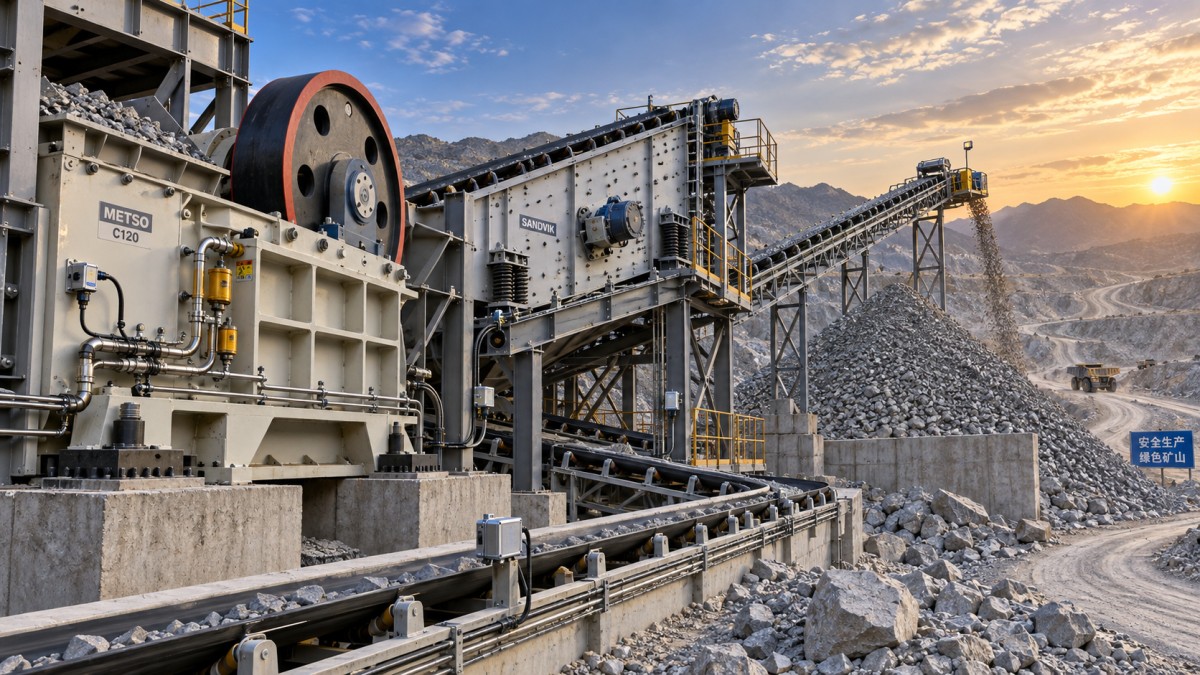
On conveyors, belt tracking, idler rotation, scraper condition, pulley lagging, skirt sealing, and take-up travel provide an early view of system health. A belt that repeatedly tracks to one side is not merely an inconvenience. It can cut edges, damage structure, overload idlers, and create a larger belt replacement event. Correcting the source may involve checking loading alignment, pulley squareness, material buildup, idler condition, or belt tension—not simply adjusting the nearest training idler.
Lubrication must be treated as contamination control
Lubrication failure is frequently described as under-greasing or over-greasing, but the larger issue is whether the correct lubricant reaches the correct point in usable condition. In remote operations, grease guns, storage containers, and open drums can become contamination sources if they are not protected from dust and moisture.
A sound program identifies the lubricant grade, relubrication interval, quantity, and delivery method for each critical component. It also defines what should trigger an earlier service: high ambient temperature, extended running hours, water exposure, abnormal vibration, or visibly contaminated lubricant. Mixing incompatible greases can reduce performance, while excessive grease in certain bearing arrangements may create heat and force seals outward.
Oil systems deserve the same discipline. Visual inspection can reveal water ingress, foaming, darkening, or metallic debris, but condition monitoring becomes more valuable when oil samples are taken consistently and interpreted as a trend. A single sample rarely explains the full condition of a gearbox or crusher lubrication circuit. Repeated samples can reveal whether contamination or wear debris is rising, allowing maintenance to be scheduled before a component fails.
Wear parts should be managed as operating components, not consumables
Screen media, crusher liners, conveyor scrapers, chutes, and belt-contact components are often classified as consumables. That description can obscure their effect on equipment life. A worn or unsuitable wear part can shift stress and inefficiency into more expensive equipment.
For example, a screen mesh with incorrect aperture, wire diameter, open area, or tensioning compatibility can reduce screening efficiency and increase recirculating load. That added load may force crushers and conveyors to run harder than intended. Similarly, delayed replacement of badly worn crusher liners can affect chamber geometry, throughput, power draw, and the distribution of wear within the crushing chamber.
When woven wire mesh is used, preventive maintenance should include checks for tension loss, broken wires, edge damage, blocked apertures, and excessive wear in high-impact feed zones. Mesh selection also needs to match material abrasiveness and the deck’s clamping arrangement. In applications requiring 65Mn woven media, an item such as OEM 65mn crimped woven wire mesh for mining sieving crusher screen mesh vibrating screen mesh should be assessed not only by aperture specification, but also by crimp consistency, wire diameter, hook design, deck fit, and expected impact exposure. A mesh that fits poorly or is inadequately tensioned can fail prematurely even when its material grade is appropriate.
The maintenance implication is clear: wear-part replacement should be planned around condition and process effect, rather than waiting for complete failure. Keeping a record of service life by material type, feed condition, and installation location helps distinguish normal consumption from an underlying operational problem.
Condition-based triggers are more useful than calendar-only servicing
Time-based maintenance remains necessary for basic tasks, especially lubrication and safety inspections. However, fixed intervals alone may miss the effect of changing production conditions. A machine running at reduced load in dry conditions does not age in the same way as the same machine processing abrasive, wet, high-tonnage feed.
Condition-based triggers allow the maintenance plan to respond to those differences. Useful triggers include:
- Persistent changes in bearing temperature or motor current;
- Increasing vibration, abnormal sound, or visible movement at mounts and supports;
- Recurring belt misalignment or accelerated idler failures in one zone;
- Repeated screen mesh breakage at a specific deck position;
- Lubricant discoloration, water contamination, or unusual particle content;
- Crack propagation around high-stress structural areas;
- Declining throughput or poorer product separation without an intentional process change.
These indicators do not automatically identify one root cause. They do provide a reason to investigate before a small defect becomes a multi-component failure. The goal is not to introduce complex monitoring on every asset. It is to apply more attention to components whose failure would stop production, create safety exposure, or require long lead-time replacement.
Spare parts planning is part of preventive maintenance
A maintenance plan cannot protect uptime if a known critical part is unavailable. Remote operations need to distinguish between routine consumables, operational spares, and shutdown-critical spares. The distinction should reflect lead time, transport difficulty, replacement duration, and the consequences of failure—not only unit price.
Critical spares commonly include bearing assemblies, seals, belts, idlers used in high-risk locations, gearbox components where practical, electrical protection devices, screen media, fasteners, and crusher wear parts matched to the installed machine. Storage conditions matter. Rubber parts degrade under poor storage; bearings can corrode; lubricants can be contaminated; and screen meshes may be damaged if stacked without protection.
Interchangeability should be verified before an emergency occurs. A part that appears dimensionally similar may differ in material, fit, electrical rating, sealing arrangement, or load capacity. Maintaining accurate equipment serial numbers, component specifications, and revision records reduces the risk of ordering incompatible parts during a breakdown.
Shutdown planning protects both equipment and people
Planned maintenance windows are most effective when they combine inspection findings with process priorities. A shutdown should not become a collection of unrelated tasks. It should focus on identified defects, known wear limits, safety-critical checks, and work that requires the equipment to be isolated.
Before shutdown, maintenance teams should confirm required parts, tools, lifting arrangements, access platforms, permits, and isolation procedures. This preparation is especially important for crushers, screens, and conveyors because stored energy, suspended loads, rotating components, and confined access areas create significant hazards. Rushed work during an unplanned outage often increases the chance of incorrect assembly, damaged threads, missing guards, or incomplete alignment.
After maintenance, recommissioning should verify more than whether the equipment starts. Check rotation direction, guards, lubrication flow, fastener security, belt tracking, vibration behavior, and load response. Recording baseline readings after a major repair provides a useful reference for future inspections.
The practical measure of success
Preventive maintenance does not eliminate wear, and it cannot compensate for incorrect equipment selection, poor installation, or uncontrolled feed conditions. Its value lies in making deterioration visible early enough to manage it. In remote mining operations, that means fewer emergency logistics decisions, fewer cascading failures, and better control over when equipment is taken offline.
The most durable maintenance programs are built around equipment condition, operating context, and disciplined records. When a recurring fault appears, the useful response is not simply to replace the failed item. It is to determine what changed in lubrication, alignment, feed, vibration, installation quality, or operating load. That root-cause approach is what turns routine servicing into a method for extending asset life.
Leave A Message
If you are interested in our products and want to know more details, please leave a message here, we will reply you as soon as we can.