How Feed Size and Mud Content Affect Single and Double Spiral Sand Washers

Start with the two factors that actually change washer behavior
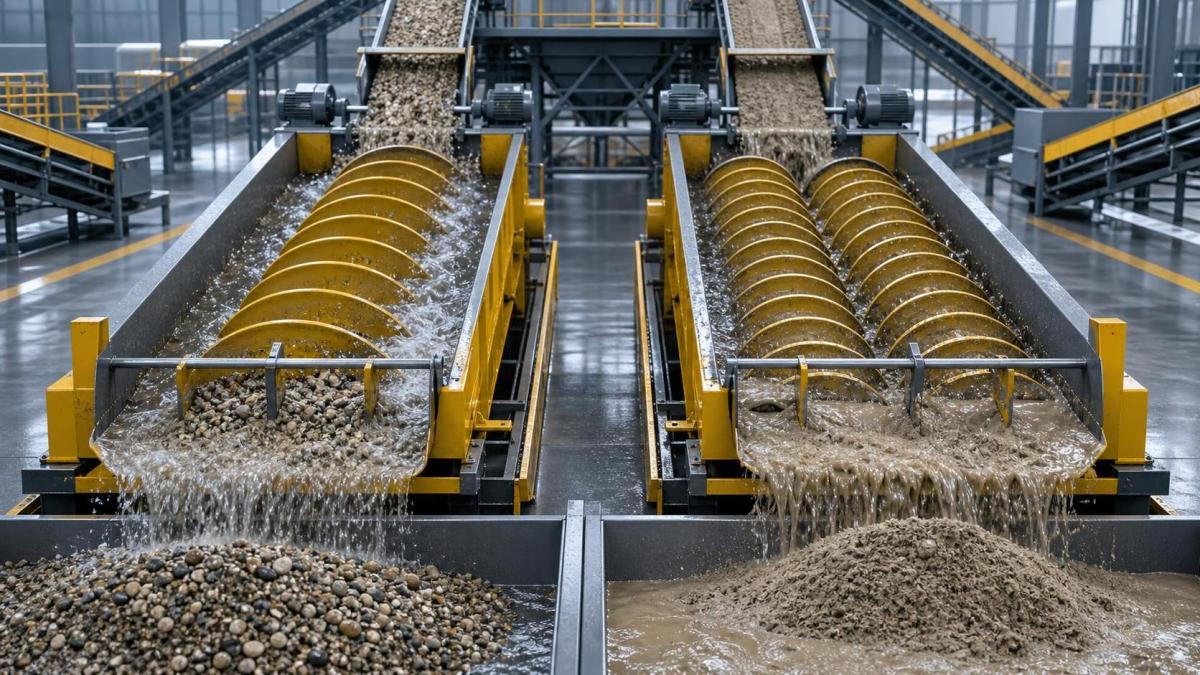
When operators ask, What is the difference between single and double spiral sand washing machine, the useful answer is not just structure. In day-to-day production, the real separator is feed condition. Feed size and mud content decide whether the washer will clean properly, how much fine sand you lose, how fast the spiral wears, and whether one screw is enough or two screws are worth the extra footprint and power.
If you are choosing, adjusting, or troubleshooting a spiral sand washer, run through the checks below in this order. It saves time because most poor washing results come from mismatched feed, not from the washer itself.
Check the feed size before you compare machine types
A spiral washer works best when the feed grading is reasonably stable. If oversize material enters the tank too often, both single and double spiral machines start doing a job they were not meant to do. Instead of washing sand, they spend energy moving coarse material, and that changes the whole result.
- Look for frequent coarse particles in the feed stream. If you see too much gravel mixed into the sand feed, the washer loading becomes uneven. That usually shows up as unstable discharge moisture, poor mud removal, and accelerated blade wear.
- Check whether the upstream screen is doing its job. Operators often blame the sand washer first, but if the pre-screen cut is drifting or screen media is damaged, the washer is forced to handle material outside its normal range.
- Watch the fines recovery, not just the visual cleanliness. Coarser feed can make the washed sand look acceptable while quietly carrying useful fine sand away with the overflow.
As a rule of operation, a single spiral sand washer is easier to manage when feed size is more uniform and the washing load is moderate. A double spiral sand washer becomes more practical when the feed volume is larger, the grading varies more, or the plant needs stronger agitation and longer material retention in the washing zone.
Then judge the mud content honestly
Mud content changes everything. Light surface dust is one thing. Sticky clay adhering to sand particles is another. Many wrong machine selections happen because these two conditions are treated as the same problem.
If the feed contains only light silt, a single spiral unit can often clean it effectively, especially when feed rate is controlled and the tank is not overloaded. But when mud content rises and the material starts forming lumps, a double spiral machine usually gives a more dependable result because the second spiral adds more mixing force and more washing contact time.
What operators should actually check:
- Does the mud wash off easily in water, or does it stay bonded to the sand?
- Does the slurry thicken quickly in the tank during operation?
- Is the overflow carrying too much suspended solids for too long?
- After washing, does the finished sand still feel coated rather than clean and granular?
If the answer to several of these is yes, do not size the machine based only on tonnage. Mud-heavy material needs washing intensity, not just throughput.
Use this field comparison when deciding between single and double spiral units
Do not ignore the overflow and returned water condition
This is one of the most common blind spots on site. Operators look at the discharge end, but the overflow tells you whether the washer is really separating mud from usable sand. When feed is too fine or mud content is too high, the overflow can carry a lot of valuable material away. That means the machine may appear to be washing well while yield is quietly dropping.
Check the water visually and over time. If the return water stays heavily loaded with fines and does not stabilize after feed adjustment, investigate three things: feed rate, upstream grading control, and whether the current washer configuration is too light for the mud level.
Match the washer to the production line, not to the machine brochure
A spiral washer never works alone. Its performance depends on the crusher discharge, the screen cut, the water supply, the settling system, and the target sand specification. That is why the answer to What is the difference between single and double spiral sand washing machine should always be tied back to the whole line.
In a compact batching sand setup, for example, a smaller model such as FEIFAN FG10 Compact Structure Washing Equipment for Concrete Batching Sand with High Cleaning Efficiency Spiral Sand Washer may fit the layout and process logic better when the feed is relatively controlled. That does not mean compact is always enough; it means model choice has to follow actual feed condition, not just available floor space.
Common mistakes that lead to poor washing results
- Choosing double spiral only because “bigger is safer”. If feed is stable and mud is low, that can add complexity without solving any real problem.
- Using a single spiral on clay-heavy feed to save initial cost. The result is often repeated rewash, lower finished quality, and faster wear.
- Judging by output volume alone. High output means little if the sand still carries mud or if fines are being lost in the overflow.
- Skipping upstream checks. A damaged screen panel or unstable crusher discharge can make a correctly selected washer look undersized.
A practical selection sequence for operators
Use this sequence on site. It is more reliable than starting with model preference:
- Confirm whether the feed contains frequent oversize particles.
- Separate light silt from sticky mud in your judgment.
- Observe overflow loss, not just washed sand appearance.
- Check whether the upstream screen and water system are stable.
- Choose single spiral for simpler, steadier feed conditions; move toward double spiral when mud is heavier, washing intensity needs to rise, or feed fluctuations are harder to control.
That is the decision path that usually prevents the expensive mistake: buying based on machine form first and material condition second. In spiral sand washing, the material tells you the answer early if you read it carefully enough.
Leave A Message
If you are interested in our products and want to know more details, please leave a message here, we will reply you as soon as we can.