How does wire diameter affect screen mesh open area?
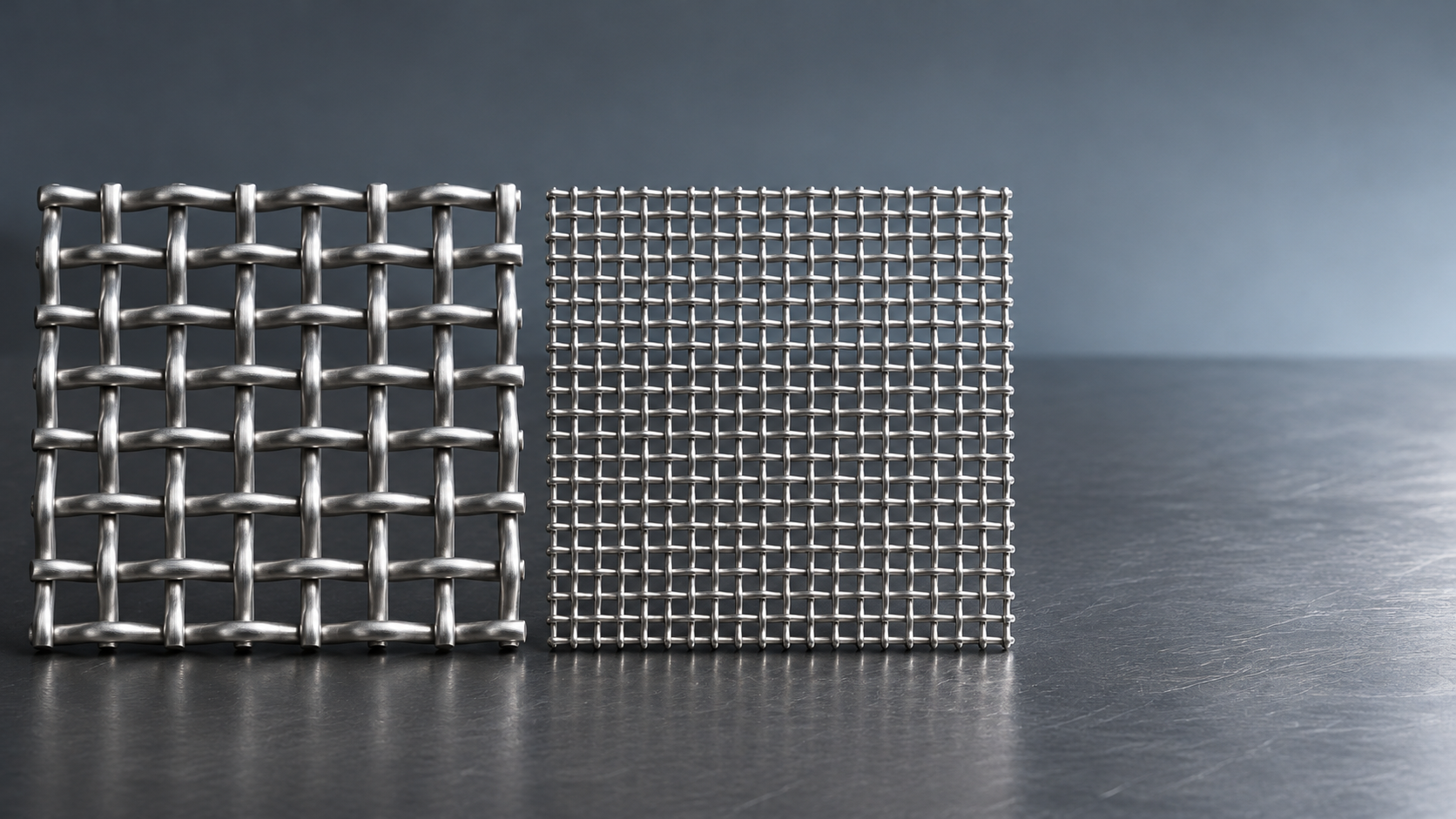
Wire diameter directly affects the open area of a Screen Mesh, influencing screening capacity, material flow, and wear life. Selection requires balancing these competing effects.
For a given aperture size, thicker wires reduce open area but generally improve strength and durability. Thinner wires increase open area but may wear faster.
For technical evaluators, the key is to compare screens at the same required aperture, then assess capacity, separation performance, and replacement costs under actual operating conditions.
How does wire diameter change open area?
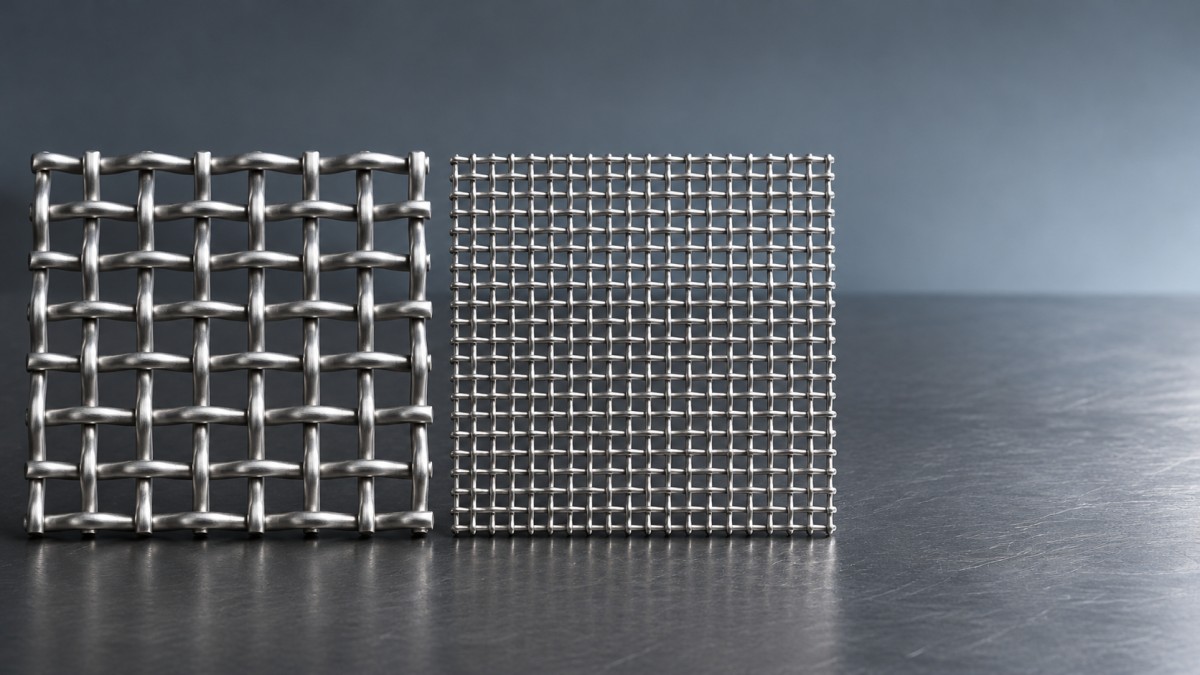
Open area is the percentage of the screen surface occupied by openings. For square woven mesh, it depends on the clear aperture and wire diameter.
At a fixed aperture, increasing wire diameter increases the distance between neighboring openings. More surface is occupied by wire, so the percentage of open area falls.
For a regular square mesh with equal wires in both directions, calculate the theoretical open area using consistent units for aperture and wire diameter:
Open area (%) = [aperture ÷ (aperture + wire diameter)]² × 100
The aperture is the clear distance between adjacent wires. The sum of aperture and wire diameter is the mesh pitch, measured between adjacent wire centers.
This formula describes the geometric open area of a flat, regular square mesh. It does not account for blocked openings, support bars, or damaged wires.
How much difference does wire diameter make?
The following comparison keeps the square aperture at 10 mm while changing wire diameter. It shows why diameter should be evaluated alongside the required separation size.
Increasing the wire diameter from 2 mm to 4 mm reduces theoretical open area by 18.4 percentage points, even though the specified aperture remains unchanged.
That does not mean capacity will fall by exactly 18.4%. Actual throughput also depends on feed characteristics, screen motion, bed depth, and the required separation efficiency.
Check which dimension stays constant when comparing supplier data. If pitch or mesh count is fixed instead, increasing wire diameter also makes the aperture smaller.
A smaller aperture can change the separation size and increase near-size particle problems. Two screens with the same mesh count therefore may not produce equivalent cuts.
Will a higher open area increase screening capacity?
More open area gives particles more opportunities to pass through the deck, which can increase capacity when other operating conditions and the aperture remain comparable.
However, a screen can have ample theoretical open area and still perform poorly if the material forms a deep bed or openings become obstructed.
Moisture, clay, and particles close to the aperture size can cause blinding or pegging. These conditions reduce the area available for screening during operation.
Screen inclination, vibration settings, feed distribution, and deck loading also affect how readily particles reach an opening. Evaluate these factors before attributing low capacity to wire diameter.
For a meaningful comparison, record feed rate, material gradation, moisture, and product quality for each candidate. Measure performance over a representative operating period, not just startup.
When is thicker wire worth the reduced open area?
Thicker wire can provide greater resistance to impact, abrasion, and breakage, making it a useful option for coarse, heavy, or highly abrasive aggregate feeds.
Its advantage depends on wire material, weave, tension, support spacing, and operating conditions. A larger diameter alone does not guarantee a specific service life.
Choose a heavier wire when premature breakage or frequent replacement dominates operating cost and the screen has enough capacity margin to tolerate reduced open area.
Choose a lighter wire when capacity is limiting, the feed is less aggressive, and trials show that its wear life remains acceptable for the application.
Compare total operating cost as well as purchase price. Include screen replacement, labor, downtime, lost production, and any change in saleable product recovery.
What else should evaluators check before specifying a Screen Mesh?
Start with the required separation size and confirm whether the supplier specifies clear aperture, mesh count, or another dimension. Request the tolerance and measurement method.
Identify feed gradation, maximum particle size, bulk density, moisture, abrasiveness, and expected tonnage. Include the proportion of near-size material, which can strongly affect screening behavior.
Confirm deck dimensions, tensioning arrangement, support spacing, screen motion, and installation details. A mesh that fits poorly or lacks support can fail before its expected wear life.
Ask suppliers to state wire material, diameter, weave, aperture, and calculated open area. For critical applications, request performance evidence from comparable material and operating conditions.
Feed consistency matters too: surges can overload a deck and obscure differences between mesh options. A controllable feeder helps maintain a more stable screening load.
One example is the FEIFAN High Feeding Accuracy TDG-12 Apron Feeder With Stepless Speed Regulation For Feldspar And Silica Sand Processing Production Lines Apron Feeder.
Before considering any feeder, verify its capacity, material compatibility, and control range against the screening circuit. The product title alone does not establish application suitability.
How to make the final selection
Hold the required aperture constant, calculate open area for each wire diameter, and shortlist options that satisfy both expected capacity and mechanical operating requirements.
Then compare candidates using site measurements and replacement costs. The best Screen Mesh is the one that delivers the required separation and throughput at an acceptable service life.
Leave A Message
If you are interested in our products and want to know more details, please leave a message here, we will reply you as soon as we can.