How does feed depth affect linear vibrating screen capacity?
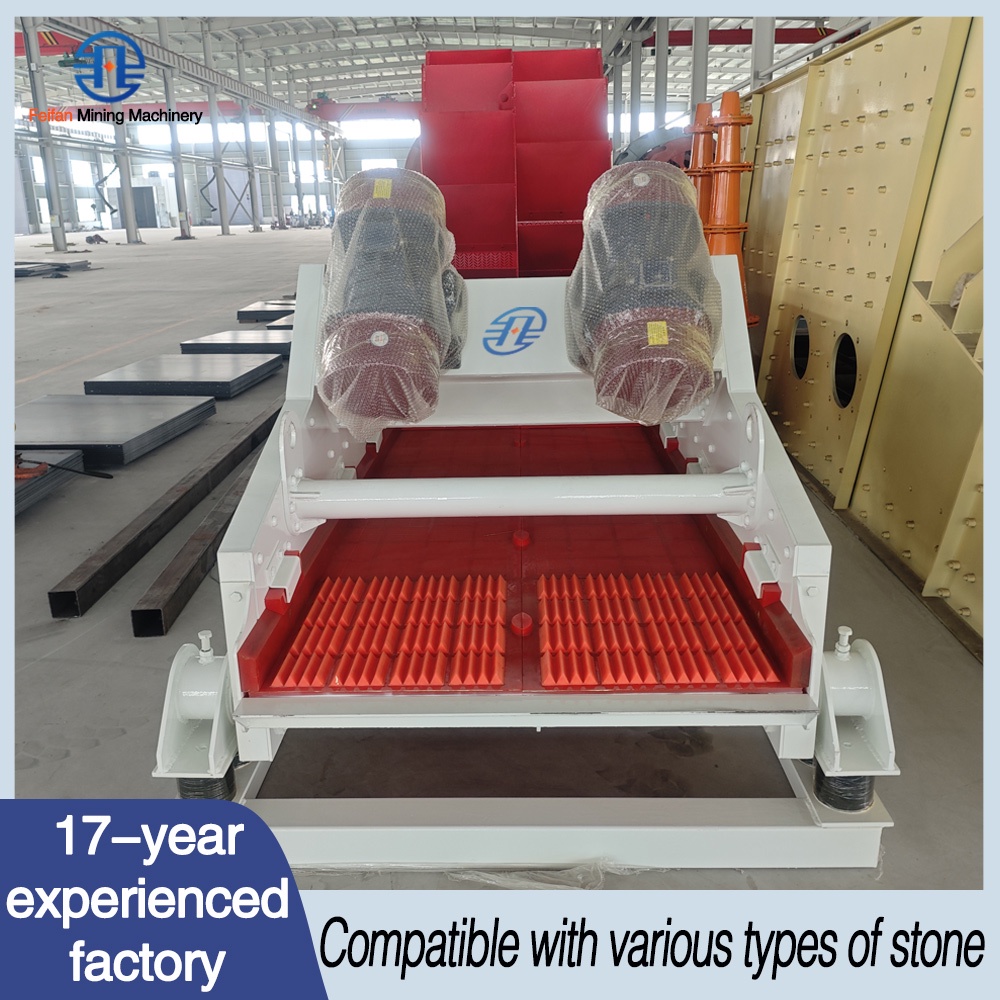
Feed depth directly affects how efficiently a Linear Vibrating Screen separates material and how much it can process. The best operating depth balances throughput with separation efficiency.
A bed that is too deep can prevent fine particles from reaching the screen surface, while an excessively shallow bed may leave available screening area underused.
For technical evaluators, understanding this balance is essential when assessing capacity, separation accuracy, and equipment sizing. Material properties, screen openings, and operating conditions all influence the result.
How Does Feed Depth Change Screening Capacity?
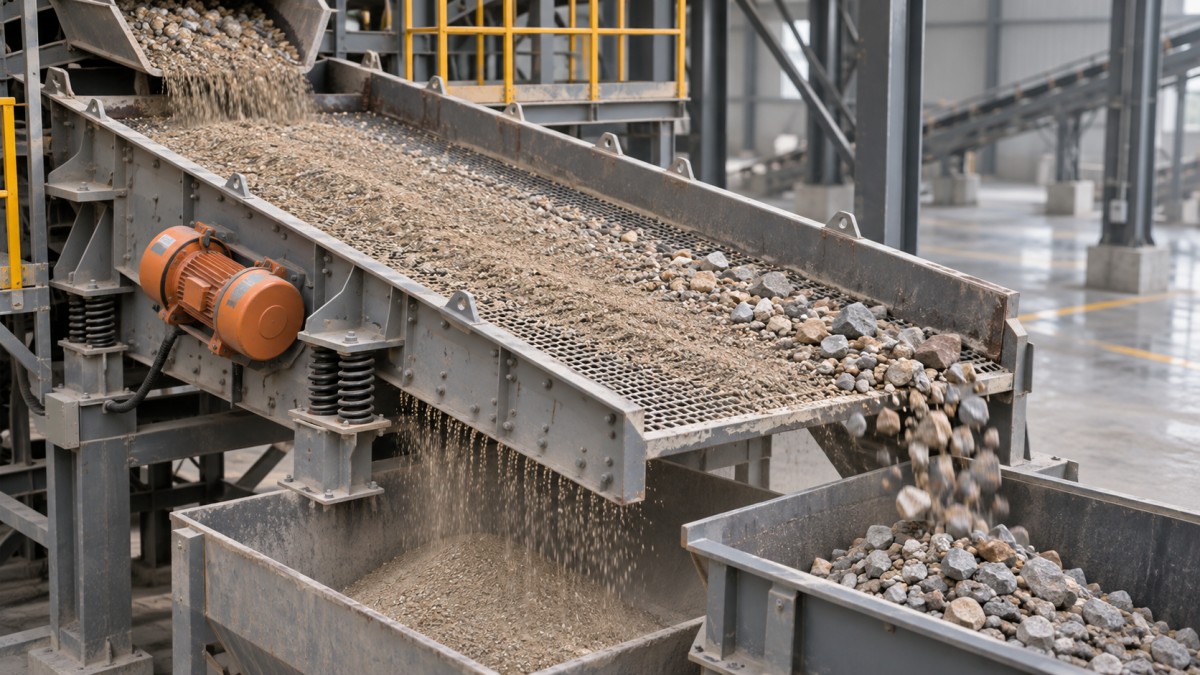
Increasing feed initially raises throughput because more material reaches the deck. Beyond a certain point, however, additional material can reduce the proportion of fines passing through.
Particles must move through the bed before they can encounter an opening. A thick bed increases that travel distance and limits opportunities for separation.
When fines remain trapped above the screen surface, they leave with the oversize fraction. The machine may process more tonnes per hour while producing a less accurate separation.
The practical capacity is therefore the highest sustained feed rate that meets the required product specifications, rather than the highest rate the machine can physically convey.
At the other extreme, a very shallow bed can indicate that the screen is underfed or that material distribution is uneven. Either condition may leave deck area unused.
What Feed Depth Is Too Deep?
There is no universal feed depth that guarantees good performance. Acceptable depth depends on the aperture, particle size distribution, bulk density, moisture, deck motion, and required separation efficiency.
A useful starting point is to compare local bed depth with the screen opening and the size of the largest particles. The ratio helps identify potentially overloaded sections.
Do not treat a single ratio as an equipment guarantee. Fine screening, high near-size content, and wet or sticky material generally require more conservative loading than free-flowing coarse material.
Measure depth across the width and along the deck, especially near the feed end. An acceptable average can conceal a deep central ridge or overloaded side.
Depth should normally decrease as undersize passes through the deck. If the bed remains unusually deep near discharge, check for excessive feed, poor distribution, or restricted separation.
Which Material Properties Make Bed Depth More Critical?
Near-size particles are close to the aperture size and need more opportunities to pass. A deep bed makes these difficult separations harder by limiting screen contact.
Moisture and clay can cause particles to stick together or blind openings. Even a moderate bed depth may then produce poor separation and an unstable capacity.
Bulk density also matters. Two feeds with the same mass flow can occupy different volumes, creating different bed depths and loading conditions on the same deck.
Particle shape affects passage as well. Flat or elongated material may orient poorly against openings, so a capacity estimate based only on nominal particle size can be misleading.
How Should Feed Depth Be Measured and Evaluated?
Start with stable operating conditions. Record feed rate, screen opening, deck inclination, machine settings, moisture, and representative feed gradation before comparing different operating points.
Observe the bed at several accessible positions across the deck. Use a site-approved method for measuring depth, with guards and safety procedures appropriate to operating machinery.
Where direct measurement is unsafe, use suitable remote observation or measure only after a controlled shutdown. Record whether a stopped bed represents normal running conditions.
Sample the feed, undersize, and oversize over the same representative period. Test their size distributions to determine how much material reports to the wrong product stream.
For a simple recovery check, calculate undersize recovery as the mass of material below the target size in the undersize product divided by that in the feed.
Also check oversize contamination in the undersize product. High fines recovery alone does not establish an acceptable separation if the product contains too much coarse material.
Compare these results at several feed rates. The useful operating range ends where product quality, recovery, or mechanical limits fail to meet the project requirements.
Can Operating Adjustments Improve Capacity?
Improving feed distribution is often a practical first step. A centered chute or suitable spreader can use more deck width and reduce local bed depth.
Adjusting vibration amplitude, frequency, or deck inclination can change how material moves and stratifies. The effect depends on the machine and should be confirmed through testing.
Faster conveying may reduce bed depth but also shorten the time available for particles to pass. A thinner bed does not automatically mean a better separation.
Keep all adjustments within the manufacturer’s approved operating limits. Excessive motion or unapproved changes can increase structural loads and compromise screen or support component life.
Screen media selection is another consideration. Aperture geometry, open area, wear resistance, and resistance to blinding all influence performance under the actual feed conditions.
When Should You Consider a Larger Screen or a Different Design?
If distribution, media, and approved settings have been optimized but the required separation still fails at design throughput, additional screening area may be necessary.
A longer deck can provide more opportunity for separation, while a wider deck can reduce loading per unit width. Both choices require verification against the available installation space.
A banana screen is another design worth evaluating for demanding applications. Its varying deck slopes affect material travel and bed depth, so sizing must reflect the intended duty.
For a hard-rock crushing application, evaluators can review the FEIFAN High Capacity Banana Vibrating Screen with Adjustable Amplitude for Hard Rock Crushing Operations Vibrating Screen alongside conventional linear configurations.
Request a duty-specific proposal with the feed gradation, moisture range, bulk density, target cuts, required throughput, and expected product tolerances clearly stated.
Ask the supplier to explain the sizing basis, assumed screening efficiency, operating settings, and allowance for variation. Manufacturer data or representative testing can support the comparison.
What Should Technical Evaluators Conclude?
Feed depth controls how readily particles reach the screen surface, but capacity must be judged together with recovery, product quality, and reliable operation.
Evaluate the actual bed across the deck, test representative product streams, and compare machines at the required separation standard. That approach makes capacity claims more useful for equipment selection.
Leave A Message
If you are interested in our products and want to know more details, please leave a message here, we will reply you as soon as we can.