Horizontal vs Inclined Vibrating Screen for Aggregates: What Changes?
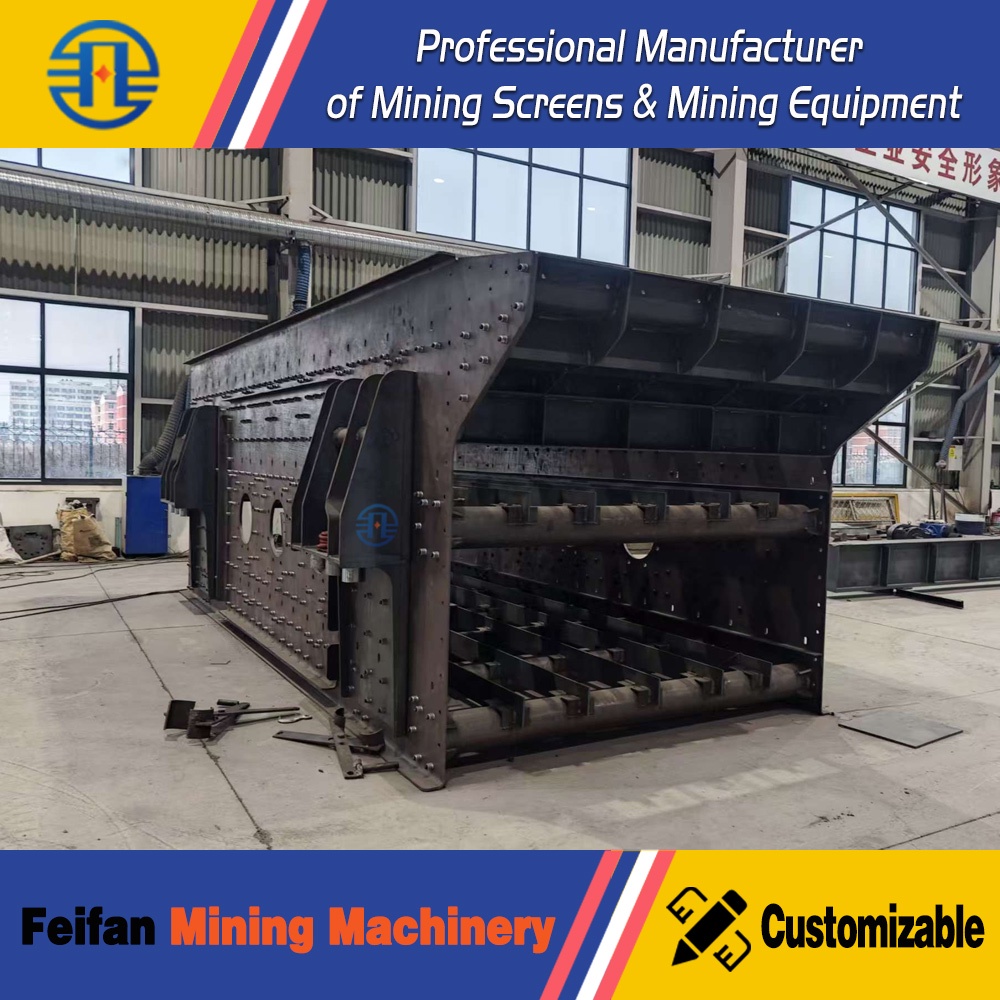
Choosing between a Horizontal Vibrating Screen and an inclined screen changes more than screen angle. It affects how much aggregate you can move per hour, how clean your final fractions are, how tall your structure needs to be, and how often your team has to stop for maintenance. If you are planning a new plant or upgrading an existing line, the right choice is usually not about which screen is “better” in general. It is about which one fits your material, layout, and operating target with the least compromise.
A short answer first: horizontal screens are usually chosen when screening accuracy, control of finer cuts, and lower installation height matter most. Inclined screens are often preferred when you want simpler gravity-assisted material travel, solid capacity, and a more conventional layout. In aggregates, that difference shows up quickly in daily production.
Meta Title: Horizontal Vibrating Screen vs Inclined Screen for Aggregates: What Changes?
What really changes in aggregate production
On paper, both machines separate stone by size. In operation, they behave differently.
An inclined screen uses the deck angle to help material move forward. That sounds simple, and it is. Feed enters, vibration throws it upward, and gravity helps it travel across the deck. This makes inclined models a familiar choice in many crushing and screening plants, especially where the material is not too sticky and the cut points are not extremely demanding.
A Horizontal Vibrating Screen, by contrast, relies more on vibration parameters than gravity to move material. That usually means a more controlled material bed and longer effective screening time on the deck. For project managers, that matters when the plant must hold tighter gradation or handle more challenging feed conditions.
The practical question is not whether one screen can screen aggregates. Both can. The practical question is what you need the machine to do every day for the next few years.
Capacity is only one part of the decision
Many buyers assume an inclined screen is always the higher-capacity option. That is too simplistic.
Inclined screens often move material efficiently because gravity helps convey the rock. In many standard quarry applications, that gives strong throughput with a straightforward setup. But throughput alone can hide a problem: if the material moves too quickly for the required cut, you may get carryover, oversize contamination, or the need to recirculate more material than expected.
Horizontal screens often perform well where the product specification is tight and the feed contains a higher share of near-size particles. Because the material usually spends more time on the deck, the machine can improve separation efficiency in those situations. That does not mean every horizontal unit will outperform every inclined one. Screen media, stroke, speed, deck design, and feed condition still decide the result.
For a project manager, the better question is this: do you want the highest possible tons per hour at acceptable quality, or the most stable product quality at a target throughput? Those are not always the same target.
Where a Horizontal Vibrating Screen usually makes more sense
If your plant is producing multiple commercial aggregate sizes and penalties for off-spec material are real, horizontal designs deserve serious attention.
They are commonly favored when:
- the final product specification is strict
- the feed contains many near-size particles that are difficult to separate
- plant height is limited and a lower-profile screen arrangement helps
- you want more controlled material movement across the deck
- fine screening performance matters more than the simplest structure
In actual plant discussions, one overlooked point is downstream balance. A screen does not work alone. If your jaw crusher, secondary crusher, conveyor speeds, and return loop are already close to their limit, changing to a horizontal screen can improve classification but also change the load pattern across the whole circuit. That is why screen selection should be checked against the complete line, not treated as an isolated equipment purchase.
For example, if the front end of the line uses a primary crusher such as OEM PXE Jaw Crusher Remote Monitoring Compatible, Adjustable CSS 40-200mm, For Cement Plant Or Road Construction Aggregate Machine, the screen decision should be coordinated with the crusher discharge range and the target gradation of the next stage. A screen can only classify what the upstream equipment is consistently feeding.
When an inclined screen is still the better fit
Inclined screens remain the default choice in many aggregate plants for good reasons. They are familiar to operators, widely used, and often easier to integrate into conventional process layouts. If your material is relatively easy to screen, the required product sizes are not unusually tight, and your team values a simpler operating pattern, an inclined model may be the more economical route.
This is especially true in projects where:
- plant layout already allows the necessary elevation
- the stone is dry and free-flowing
- product contamination tolerance is reasonable
- maintenance access is already designed around an inclined structure
- the project priority is dependable production rather than finer classification control
There is no benefit in paying for extra screening precision if the market does not reward it.
The hidden issues that usually decide the purchase
Most selection mistakes come from focusing on brochure comparisons and missing operating realities.
First, material condition. Moisture, clay content, particle shape, and the amount of near-size material can change screen performance more than many buyers expect. A machine that looks ideal in a catalog can behave very differently with wet crushed stone or dirty feed.
Second, media life and maintenance routine. Horizontal and inclined screens can both run reliably, but maintenance difficulty depends on access, screen media type, side tensioning arrangement, and how often your crew has to change panels. In operations with limited maintenance manpower, this matters as much as capacity.
Third, structural and civil cost. A lower installation height can be an advantage for a horizontal screen, especially in retrofit work. In a greenfield plant, the overall structural steel, chute arrangement, and service platform design should be evaluated together. The screen itself is only part of the capex picture.
Fourth, vibration behavior across the whole plant. Some projects overlook support structure design and isolation requirements. Poor support engineering creates problems that get blamed on the screen manufacturer later.
A common mistake: choosing by habit
Many teams choose inclined because “that is what we always use,” or choose horizontal because they want higher precision everywhere. Both shortcuts can be expensive.
If your current line suffers from poor separation, the screen type may not be the only problem. Feed distribution, undersized screen area, wrong vibration settings, bad spray arrangement, worn media, or unstable crusher discharge can all be the real cause. Replacing an inclined screen with a horizontal one will not fix poor system design by itself.
That is also why experienced suppliers usually ask for more than capacity targets. They want feed size distribution, moisture condition, required finished products, layout limits, and maintenance expectations. That level of questioning is not sales talk. It is basic engineering discipline.
Companies with long involvement in aggregates EPC and equipment manufacturing tend to approach selection this way because screening performance is tied to the entire circuit. In our field, where complete sand and gravel lines, vibrating screens, crushers, conveyors, and screen media must work together, the best result usually comes from matching the machine to the line rather than optimizing one item in isolation.
How to make the decision with fewer regrets
If you are comparing proposals, ask each supplier to answer five points clearly:
- What feed condition is the recommendation based on?
- What screening efficiency assumption is being used?
- How will the choice affect supporting steel, chutes, and maintenance access?
- What screen media is recommended, and why?
- What part of the plant is most likely to become the next bottleneck after installation?
If the answers are vague, the proposal is not ready.
For retrofit projects, I would also verify whether the problem is capacity shortage, poor product quality, or maintenance burden. Those are three different problems, and they do not always point to the same machine choice.
Near the end, the decision usually becomes straightforward. Choose a Horizontal Vibrating Screen when your line needs tighter separation, more controlled material travel, and a layout that benefits from lower profile equipment. Choose an inclined screen when your aggregates are easier to classify, your plant design already supports the angle, and your priority is steady, familiar, high-volume operation without overcomplicating the circuit.
The better screen is the one that makes the whole plant easier to run, not the one that sounds stronger in a sales presentation.
FAQ
Is a horizontal screen always better for fine aggregate?
Not always. It is often stronger in difficult fine screening, but performance still depends on feed condition, screen area, and media selection.
Does an inclined screen cost less to maintain?
Sometimes, but not by default. Maintenance cost depends heavily on access, media life, and how the machine is integrated into the structure.
Can I replace an inclined screen with a horizontal one in an existing plant?
Yes, in some cases. But you need to recheck support structure, chute geometry, feed distribution, and circuit balance before deciding.
Which screen is better for a tight finished product specification?
In many aggregate applications, a horizontal screen is the safer choice when cut accuracy is a bigger concern than simple material travel.
Internal Link Anchor Text Suggestions
- Vibrating screen selection for aggregate plants: category page or buying guide
- Polyurethane screen mesh vs steel screen media: product comparison page
- How to balance crushing and screening capacity: technical blog page
- Aggregate production line EPC solution: service page
- Jaw crusher and vibrating screen matching guide: application page
External Source Directions
- Equipment manufacturer official technical manuals for vibrating screens and screen media
- Mining or aggregates industry association technical guidance documents
- Academic or engineering research on screening efficiency, particle stratification, and aggregate processing
Leave A Message
If you are interested in our products and want to know more details, please leave a message here, we will reply you as soon as we can.