Evaluating Energy and Maintenance Costs of Inclined Aggregate Conveyors
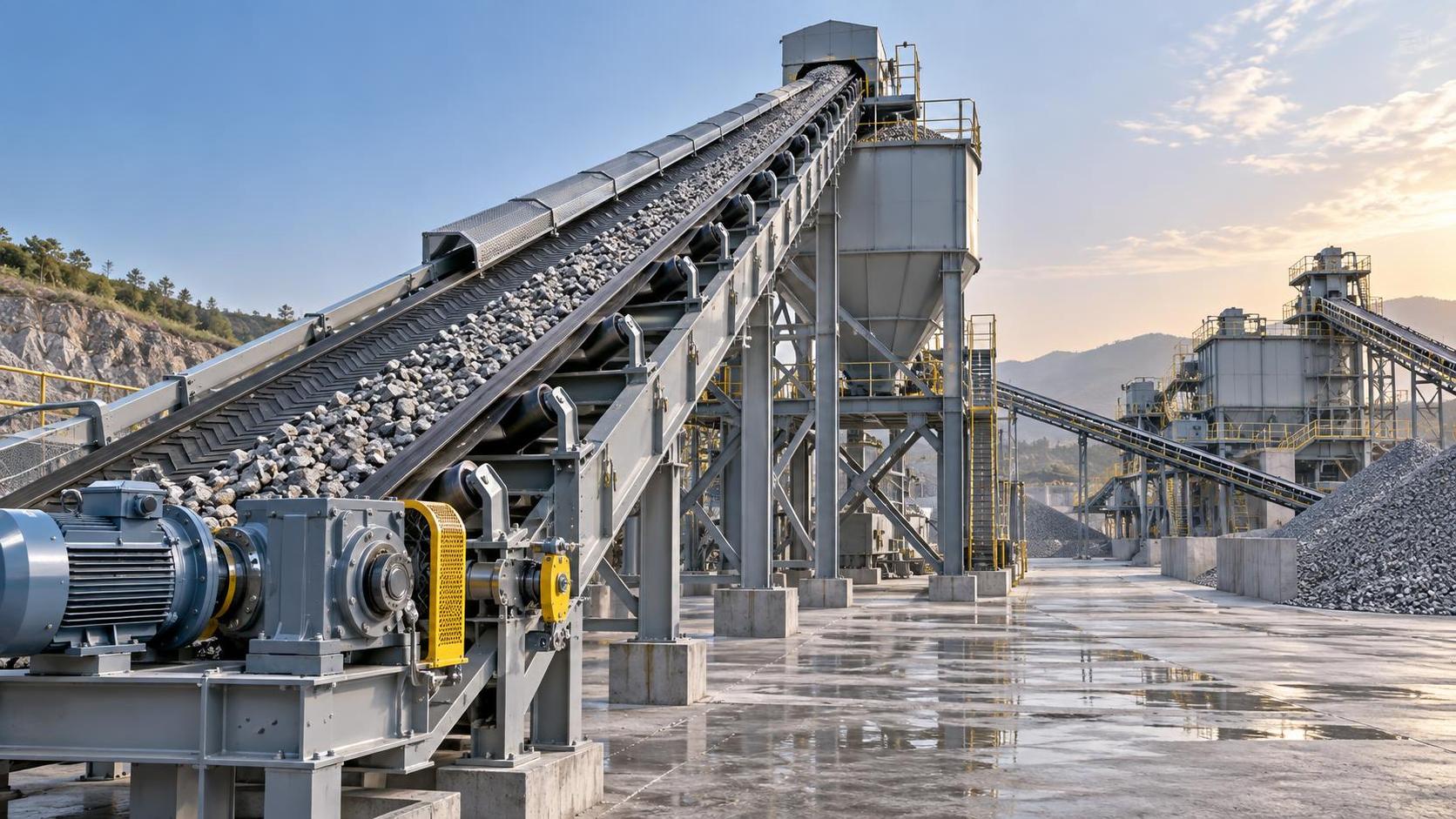
An inclined conveyor can look like a simple line item during plant planning, yet it often becomes a recurring operating cost once the plant is running at full load. A belt that is too wide, too fast, poorly loaded, or set at an unnecessarily steep angle can draw more power than expected and demand frequent attention from maintenance crews. Conversely, reducing the initial specification too aggressively may create spillage, rollback, belt tracking problems, and downtime that cost more than a larger drive or better belt construction.
For an inclined belt conveyor for aggregate plant, the sound purchasing decision is not to select the lowest-energy machine in isolation. The aim is to balance lift height, throughput, material characteristics, operating hours, drive efficiency, and expected maintenance exposure. The most economical conveyor is usually the one that moves the required tonnes steadily with reasonable belt speed, controlled loading, and components sized for the actual duty cycle rather than the nominal design capacity alone.
Start with the cost that matters: energy per tonne moved
Inclined conveying requires energy mainly because material must be raised vertically. The higher the discharge point, the more power is needed regardless of conveyor brand or layout. Horizontal distance also adds resistance through belt flexing, idler rotation, skirt friction, and material movement, but elevation is normally the dominant energy factor on a rising aggregate conveyor.
Decision-makers should ask suppliers to separate the power requirement into practical elements: lifting the material, moving the empty belt, overcoming idler and pulley resistance, accelerating the loaded belt, and allowing for losses in the drive system. A motor selected only from a simplified capacity figure may work under ideal conditions but operate near its limit when wet fines build up, the feed surges, or cold-weather startup increases resistance.
Comparing installed motor size alone can also be misleading. A conveyor with a larger motor may still consume less energy in daily operation if it uses an efficient gearbox, properly aligned idlers, appropriate belt tension, and a loading arrangement that avoids drag along the skirts. Ask for estimated operating power at normal throughput, not only the maximum motor rating.
Lift height and angle should be evaluated together
When the plant layout allows it, increasing conveyor length to reduce the incline angle can lower operational problems even though it adds more idlers and belt. A steep conveyor reduces footprint but places greater demand on traction, belt cover grip, material containment, and startup control. Coarse stone, wet sand, and mixed feed can slide backward when the angle exceeds what the belt surface and material condition can reliably handle.
A flatter conveyor often provides calmer material movement and less carryback, while a steeper layout may require chevron belts, cleats, specialized loading design, or additional transfer equipment. Those features can be justified where land is restricted, but they should be considered as lifetime-cost items rather than minor add-ons.
Where maintenance cost usually begins
Energy use is visible on utility bills; maintenance cost tends to appear in smaller events that accumulate over time. On inclined units, the critical wear areas are usually the loading zone, return side, head pulley area, belt cleaners, idlers near transfer points, and the sections exposed to fines, moisture, or impact.
Most premature belt and idler failures are not caused by normal conveying duty. They begin with uncontrolled loading. Material dropped from excessive height can damage covers and idlers. Material introduced off-center causes tracking drift. Feed entering faster than belt speed can create turbulence, causing spillage along skirts and abrasive buildup around rotating parts. These conditions also increase rolling resistance, so a maintenance issue becomes an energy issue.
During procurement, evaluate the conveyor as a system rather than treating the belt, chute, and drive as separate purchases. The loading chute should direct material in the belt travel direction and distribute it close to the belt centerline. Skirtboards need enough length to stabilize the load, but excessive skirt pressure creates unnecessary friction and shortens belt-cover life. Access doors should permit inspection and adjustment without dismantling major guards or chute sections.
Do not oversize belt speed to solve a capacity concern
A common response to future production uncertainty is to specify a faster belt. This can preserve capacity on paper, but higher speed brings trade-offs: more abrasive wear at transfer points, greater risk of fines becoming airborne, harder-to-control discharge trajectories, and potentially more carryback. On an incline, high speed can also make material loading less stable if the feed stream is not matched to belt velocity.
A better approach is to establish the required continuous tonnage, credible peak feed rate, bulk density range, and reserve capacity separately. Then assess whether reserve capacity should come from belt width, speed, operating hours, or a future parallel line. Belt width is often valuable because it can accommodate variation without forcing high belt speed, although wider belts also increase structural and drive requirements. The right balance depends on the site layout and feed behavior, not a single capacity formula.
Drive selection affects both electricity use and downtime
The drive assembly deserves close scrutiny because inclined conveyors face loaded starts, higher back-driving forces, and changing resistance as the belt condition changes. A drive should have adequate service factor for the duty, but excess motor size without suitable control can produce abrupt starts and unnecessary mechanical stress.
Soft-starting methods or variable-frequency control may be useful where starts are frequent, feed rate changes materially, or the conveyor must coordinate with crushers and screens. Controlled acceleration reduces belt shock and can limit the surge that occurs when a loaded incline starts. Variable-speed control is not automatically economical for every fixed-rate aggregate line; its value should be evaluated against the actual need for throughput adjustment and the operational benefit of smoother starts.
Backstop requirements should also be reviewed. A loaded inclined belt can move backward after power loss if the system is not designed to prevent reverse rotation. This is not merely a production concern: uncontrolled rollback can damage the conveyor and create a serious site hazard. The selected backstop, brake, or holdback arrangement must match the conveyor geometry and load condition.
Build a maintenance forecast into the purchase comparison
Instead of asking only for a spare-parts price list, request a practical wear-component schedule. It should identify belt construction, cover grade, splice method, idler type, pulley lagging, cleaners, scrapers, skirt sealing, bearings, and take-up components. The goal is to understand which parts are expected to need attention and whether they can be replaced without excessive downtime.
Aggregate plants processing abrasive rock may need more attention at the screening and transfer stages than at the conveyor itself. Screen media condition affects the feed size distribution delivered downstream. For operations where mesh durability and aperture control influence material flow, an OEM mining quarry manganese steel aperture 1 inch 3/8 inch crusher vibrating screen mesh can be considered alongside conveyor design, because excessive oversize or poorly controlled feed can raise impact loading at receiving conveyors.
Maintenance planning should include simple operating observations, not only scheduled replacement intervals. Belt wandering, rising motor current, unusual idler noise, material collecting beneath the return belt, recurring skirt leakage, or increased cleaner adjustment are early signals. Addressing these signs while the issue is localized is generally less disruptive than waiting for a belt edge failure, seized idler, or plugged chute.
Questions that expose hidden lifetime cost
- What normal operating power is expected at the stated throughput and lift, and what assumptions were used for material density and resistance?
- How will the conveyor behave during a loaded restart after an upstream interruption?
- Is the selected belt surface appropriate for the planned incline and the wettest material likely to be handled?
- Can idlers, cleaners, and belt-tracking devices be reached safely during planned maintenance?
- What provisions control impact and center the feed before it reaches the inclined section?
- Which components are standardized, and which require custom replacement lead times?
- Does the design allow for future changes in feed rate, aggregate gradation, or discharge elevation without forcing a major rebuild?
The lowest lifetime-cost design is usually not defined by one premium component. It comes from matching the conveyor angle and belt type to the material, avoiding excessive speed, selecting a drive that handles real startup conditions, and making wear areas accessible. When these points are reviewed before the order is placed, energy consumption becomes more predictable and routine maintenance is less likely to interrupt aggregate production.
Leave A Message
If you are interested in our products and want to know more details, please leave a message here, we will reply you as soon as we can.