Comparing Sand Loss and Fines Recovery in Spiral and Wheel Type Washers
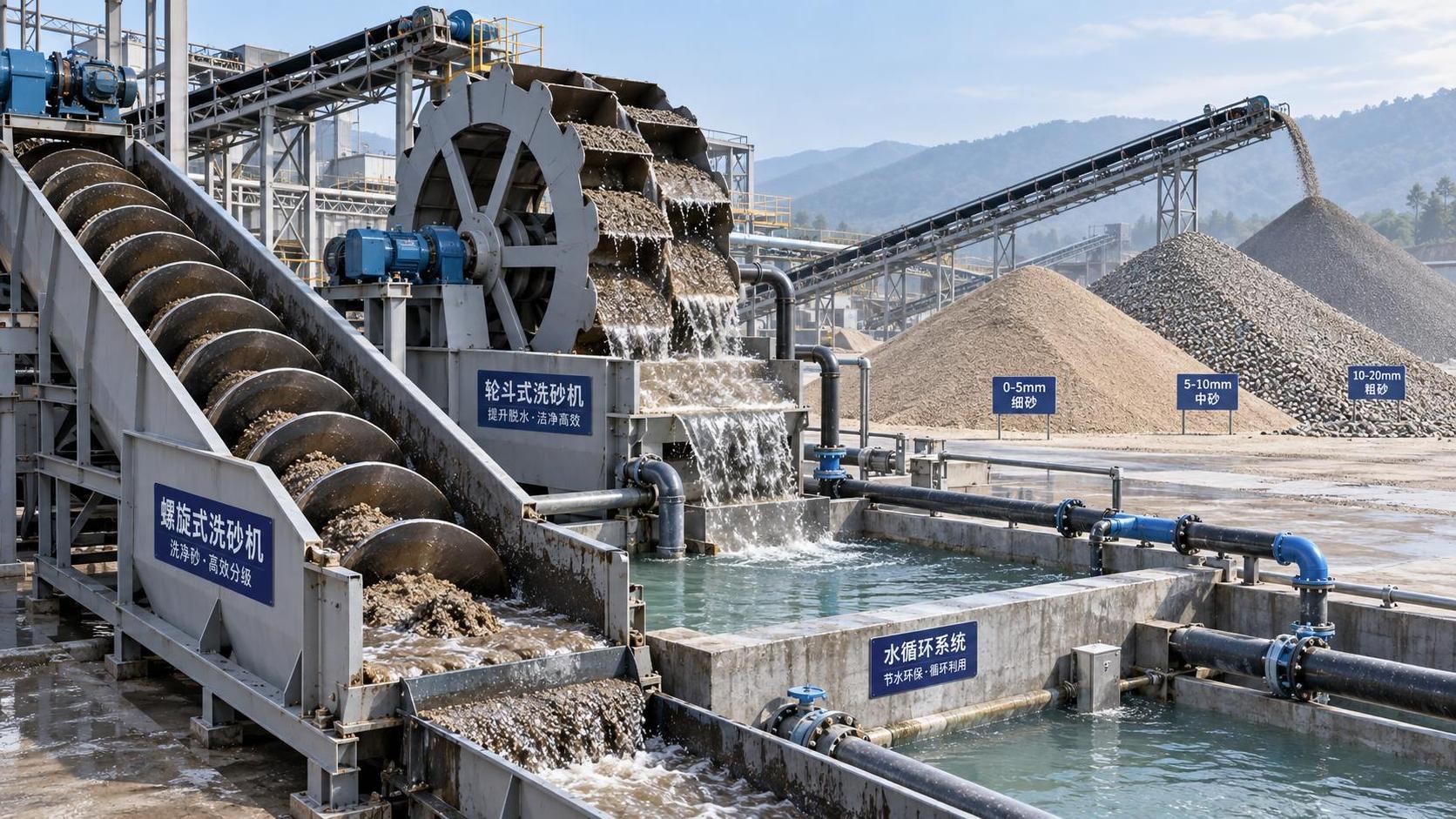
For quality-control and safety teams, a spiral sand washing machine vs wheel type comparison is not simply a question of which unit produces cleaner sand. The real decision affects sellable fines recovery, gradation stability, water management, slurry load, housekeeping, and the number of operating risks that emerge during a busy shift.
Both washer types can serve an aggregate plant well when matched to the feed. Problems begin when a machine is selected only by nominal capacity or initial purchase cost. A plant may then discover that valuable fine sand is leaving with the wastewater, or that sticky clay is still contaminating the final product, or that cleaning and maintenance are creating avoidable exposure for operators.
Why sand loss deserves closer attention
In washed manufactured sand and natural sand production, “sand loss” usually means more than visible particles in the overflow. It can include usable fine fractions carried out with wash water, material trapped in sludge, and inconsistent grading that forces a plant to blend or reject product later. For QC personnel, the important question is not whether a washer removes dirt; it is whether it removes contaminants without unnecessarily sacrificing specification-grade material.
A wheel type washer typically washes sand through a rotating bucket wheel. Material settles in a tank, while buckets lift the dewatered sand and allow water to drain back. A spiral washer, also called a screw classifier or spiral sand washer, uses one or two rotating screws to convey material up an inclined trough while water flows in the opposite direction. This difference in conveying and settling behavior drives most of the performance differences.
Fines recovery: where the two designs separate
Wheel type sand washers are often preferred where the feed already has a relatively narrow, controlled particle-size distribution and where retaining fine sand is important. Their gentler washing action can reduce disturbance to the sand bed. In a well-adjusted wheel washer, coarse and medium sand are lifted efficiently, and a meaningful portion of fine sand can remain in the product rather than reporting to the overflow.
That advantage has limits. Very fine particles, especially material near the lower end of the usable sand range, can still be carried away if the water flow is excessive, the tank level is poorly controlled, or the feed contains a high percentage of slimes. The apparent “clean” overflow may therefore conceal an economic loss. Routine sampling of both finished sand and overflow is more dependable than visual judgement alone.
Spiral washers generally apply stronger agitation and a longer washing path. They are effective at separating mud, clay, and lightweight impurities from sand, particularly where the incoming material is dirtier or contains more adhering fines. Yet their open-water discharge arrangement can lead to higher fine-sand loss if the overflow weir, water volume, screw speed, and feed rate are not balanced carefully.
In practical terms, a spiral washer may deliver a cleaner coarse fraction from challenging feed, while a wheel washer may retain more valuable fine material from cleaner, better-graded feed. Neither result is automatic. The plant’s target gradation and the characteristics of the raw material must lead the selection.
A working comparison for QC and safety reviews
Cleanliness and grading are not the same measure
A frequent mistake in a spiral sand washing machine vs wheel type evaluation is treating a visually clean sand pile as proof of quality. Sand can look clean while falling outside specification because the fine fraction has been stripped out. Conversely, a product with acceptable grading may still contain excessive clay or deleterious material.
QC teams should establish separate controls for cleanliness and particle-size distribution. A practical review includes feed sampling, final product sieve analysis, moisture checks, and periodic tests of overflow solids. The results should be tracked against operating settings: feed tonnage, wash-water pressure and volume, tank level, screw or wheel speed, and discharge condition. When these records are connected, process drift becomes easier to identify before it develops into a stockpile-quality problem.
Pay special attention after changes in quarry face, blasting conditions, rainfall, or recycled-water quality. These events can alter clay content and slurry density quickly. A setting that worked well for dry, consistent feed may cause unacceptable fines loss during wet weather or when a softer seam enters production.
Water circuits can decide the real cost of washing
Washer selection should be reviewed together with the plant’s water-recycling system, not as an isolated equipment decision. A spiral unit operating with high-silt feed can send a heavier slurry load downstream. If the settling pond, hydrocyclone, thickener, or filter press cannot handle that load, the issue becomes larger than sand loss: water clarity declines, pumps wear faster, and housekeeping worsens.
Wheel washers can also create a difficult water circuit when the feed includes excessive ultra-fines. Their comparatively gentle action does not eliminate the need for desliming, screening, or fines-recovery equipment upstream or downstream. In operations where recoverable fines have commercial value, a hydrocyclone-based recovery stage may be appropriate regardless of washer type.
Material transfer deserves the same planning. A steady, protected flow from the washer to stockpile or downstream classification reduces rehandling and helps preserve product consistency. In harsh quarry conditions, an all weather transport machine for full set stone aggregate crushing line quarry crushing site belt conveyor can be integrated into the line to support controlled movement between washing, screening, and storage sections.
Maintenance risks are quality risks, too
For safety managers, washer maintenance is not a secondary concern. Worn screw blades can change material transport and leave contaminants in the product. Damaged wheel buckets can reduce drainage, alter discharge behavior, and create imbalance. In both cases, declining mechanical condition eventually appears in QC data.
Spiral washers require attention to wear liners, screw flights, shaft alignment, bearing seals, and gearbox condition. Because abrasive sand and slurry are continuously present, inspection intervals should reflect actual feed abrasiveness rather than a generic calendar alone. A sudden increase in vibration, unusual drive load, or reduced discharge stability should trigger investigation before a failure develops.
Wheel washers require regular inspection of bucket edges, fasteners, wheel assemblies, tank liners, and drainage areas. Operators should never climb into a tank, remove buildup, or clear jams until isolation and lockout procedures have been completed. Slippery surfaces, standing water, rotating components, and unexpected restart are recurring hazards around all sand washing systems.
Choosing based on feed condition, not assumptions
A wheel type washer is often a sound option when the plant processes relatively clean sand, needs good retention of fine material, and has a stable feed size. It can suit producers focused on consistent finished-sand grading with moderate washing demand.
A spiral washer is often better suited to material carrying more clay, mud, or persistent surface contamination, especially when stronger washing action is needed. The trade-off is that its fines discharge must be monitored more closely, and the water-and-slurry circuit should be sized for the duty.
Before approving either machine, ask four operational questions: What proportion of the feed is recoverable fine sand? How variable is the clay content across seasons and quarry zones? What quality specification must the final product meet? Can the existing water recovery system process the resulting slurry without creating safety or environmental pressure?
The most reliable choice is the one supported by representative material testing and measurable acceptance criteria. For quality and safety teams, that approach turns washing equipment from a recurring source of uncertainty into a controlled part of the aggregate process.
Leave A Message
If you are interested in our products and want to know more details, please leave a message here, we will reply you as soon as we can.