Choosing a Horizontal Vibrating Screen for High Capacity Crushing Circuits
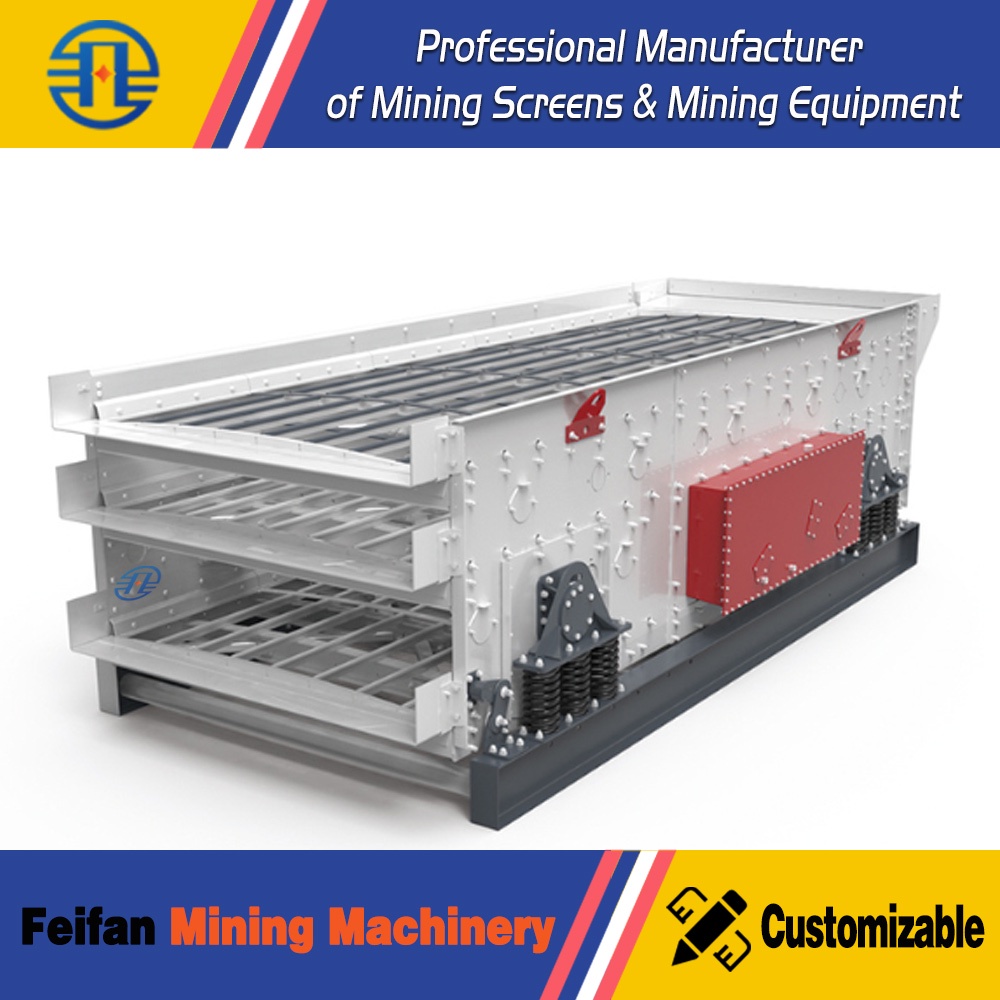
Choosing a Horizontal Vibrating Screen for High Capacity Crushing Circuits
In a high-capacity crushing circuit, the screen is rarely the most expensive machine on the flowsheet, but it often decides whether the line runs smoothly or keeps choking itself. A Horizontal Vibrating Screen sits at that exact pressure point. If it is undersized, too lightly built, or matched with the wrong media, the consequences show up fast: carryover rises, recirculating load climbs, crusher utilization drops, and maintenance teams spend more time dealing with blinding, broken panels, or cracked structures than they expected.
That is why screen selection should not start with deck size alone. For technical evaluation, the better approach is to read the screen as part of the entire crushing and screening circuit. Material gradation, moisture, feed consistency, crusher setting, transfer chute design, and even available maintenance access all influence whether one screen specification will behave well in the field and another will not.
Capacity is not just tons per hour on a brochure
When evaluating a Horizontal Vibrating Screen for aggregate or mining duty, the first question is usually throughput. Fair enough. But “high capacity” only means something when tied to feed top size, bulk density, percentage near the cut point, and required separation efficiency. A screen handling mostly clean, dry stone at one aperture can behave very differently from a screen handling sticky, flaky, or mixed-feed material at the same nominal tonnage.
In practice, the difficult material is often the deciding factor. A circuit may be rated for a certain hourly output under stable conditions, yet the real bottleneck appears when moisture rises after rain, when fines content drifts upward, or when the primary crusher starts sending a broader gradation than planned. For that reason, it makes sense to leave operating margin instead of selecting a screen that works only on paper at ideal conditions.
Pay close attention to the feed presentation
Many screening problems are blamed on the machine when the actual issue is how material arrives on the deck. A horizontal screen needs even distribution across the width, controlled velocity from the feed box, and enough stratification length for near-size particles to find the openings. If feed is concentrated on one side, dumped too deep, or accelerated by a poorly designed chute, you lose effective screening area long before you run out of motor power.
This matters even more in closed crushing circuits. Uneven feed can create localized wear, short-circuit oversize into the product stream, and send an unstable return load back to the crusher. A good selection process therefore includes the screen body, feed arrangement, support structure, and discharge paths together. EPC-focused manufacturers tend to see this more clearly because they are not isolating the screen from the rest of the line. That systems view is one reason some integrated suppliers in China’s aggregate equipment base, including long-established groups in Binzhou that build crushers, screens, conveyors, and screening media under one umbrella, are often involved early in line layout rather than only at the quotation stage.
Stroke, speed, and G-force need to match the job
Technical buyers usually compare motor power and deck area first, but vibration parameters deserve equal attention. Higher speed is not automatically better. More stroke is not always safer. For coarse separations, a more aggressive motion may help move material and prevent pegging. For finer cuts, especially where product accuracy matters, the balance between speed and stroke becomes more sensitive. Too much aggression can reduce the time particles spend in contact with the deck. Too little, and the bed will not stratify properly.
This is also where structural quality starts to matter. High-capacity screening generates continuous dynamic loads, and a screen that looks acceptable in static dimensions may still suffer if the side plates, cross members, shaft assembly, or bearing housings are not designed for long duty cycles. Evaluators should ask practical questions: How is stress managed around critical joints? How accessible are bearings for inspection? Is the frame intended for frequent media changes? What is the support arrangement on site? Those answers tell you more than a generic “heavy-duty design” claim.
Screen media selection changes the outcome more than many expect
A well-built Horizontal Vibrating Screen can still underperform with the wrong deck media. Polyurethane panels, woven wire, and steel plate options each have their place. Polyurethane often helps where wear life and noise reduction matter, but it may not always be the best answer for every open area requirement. Woven wire remains a practical choice in many crushing circuits because it offers high open area and responsive screening, especially where accurate sizing and throughput need to stay balanced.
The detail that gets missed is wire specification. Wire diameter, weave type, aperture shape, and material grade all affect durability and screening behavior. In abrasive stone applications, a stronger material such as 65Mn may be considered when wear resistance is a priority, but the final choice still depends on aperture, material impact, and deck position. For teams comparing media options, it is useful to review products like FEIFAN OEM 65Mn Crimped Woven Wire Mesh Plain Weave Mining Sieving Crusher Screen mesh alongside the actual feed conditions rather than treating all woven wire as interchangeable.
Reliability is built into the small things
On large crushing lines, downtime cost rarely comes from one dramatic failure. More often it comes from repeated short stops: loose fasteners, hard-to-change panels, blocked discharge lips, inaccessible exciters, or side tensioning systems that look fine in drawings but waste labor during replacement. A screen chosen for high output should also be chosen for maintainability.
This is where manufacturing depth matters. A supplier that only assembles the main machine may not control the quality of screen media, support components, or line integration details. By contrast, a group with in-house capabilities across screening machines, crushers, conveyors, and mesh production can usually give more grounded advice on how the screen will behave in a full aggregates plant. A company operating with dedicated R&D staff, modern production lines, and both equipment and mesh manufacturing under the same group structure is often better positioned to coordinate those interfaces, especially for custom or export-oriented projects where service access and spare planning need to be considered from the start.
A few evaluation mistakes are very common
One is selecting by nominal capacity only. Another is focusing on initial machine price while ignoring media life, liner replacement time, and structural fatigue risk. A third is assuming a horizontal screen can compensate for poor upstream control. It cannot. If the crusher is producing unstable shape and gradation, or the feed conveyor is surging badly, screening performance will drift no matter how good the machine is.
It is also worth checking whether the proposed machine has enough flexibility for future adjustments. Plants rarely run the same material forever. Quarry faces change, product demand shifts, and operators may later want to tighten or open a cut size. If changing media, adjusting vibration parameters, or reconfiguring the deck layout is too cumbersome, the screen may become a constraint earlier than expected.
What a solid selection process usually looks like
A practical review normally includes feed gradation, moisture tendency, target products, deck arrangement, wear media plan, structural support conditions, and maintenance routine. It should also cover how the screen connects with the crusher and conveyors before and after it. If the supplier can discuss not only the machine but also the surrounding line equipment, that is usually a good sign. In many real projects, the best screen choice is the one that creates the fewest operating compromises across the whole circuit, not the one with the most aggressive catalog specification.
For buyers narrowing down options, asking for a realistic media recommendation is often more revealing than asking for a headline capacity promise. The answer may point to woven wire, polyurethane, or a mixed deck arrangement, and in some cases a product such as FEIFAN OEM 65Mn Crimped Woven Wire Mesh Plain Weave Mining Sieving Crusher Screen mesh may fit part of that strategy. The key is not the product name itself, but whether the media, machine dynamics, and circuit duty actually match.
If a Horizontal Vibrating Screen is being chosen for a high-capacity crushing circuit, the right decision usually comes down to discipline: define the material honestly, review the whole line, leave operating margin, and do not separate screen body selection from screen media and maintenance reality. That is the difference between a screen that merely runs and one that keeps the plant producing without constant intervention.
Leave A Message
If you are interested in our products and want to know more details, please leave a message here, we will reply you as soon as we can.