Can a linear vibrating screen handle wet construction sand?
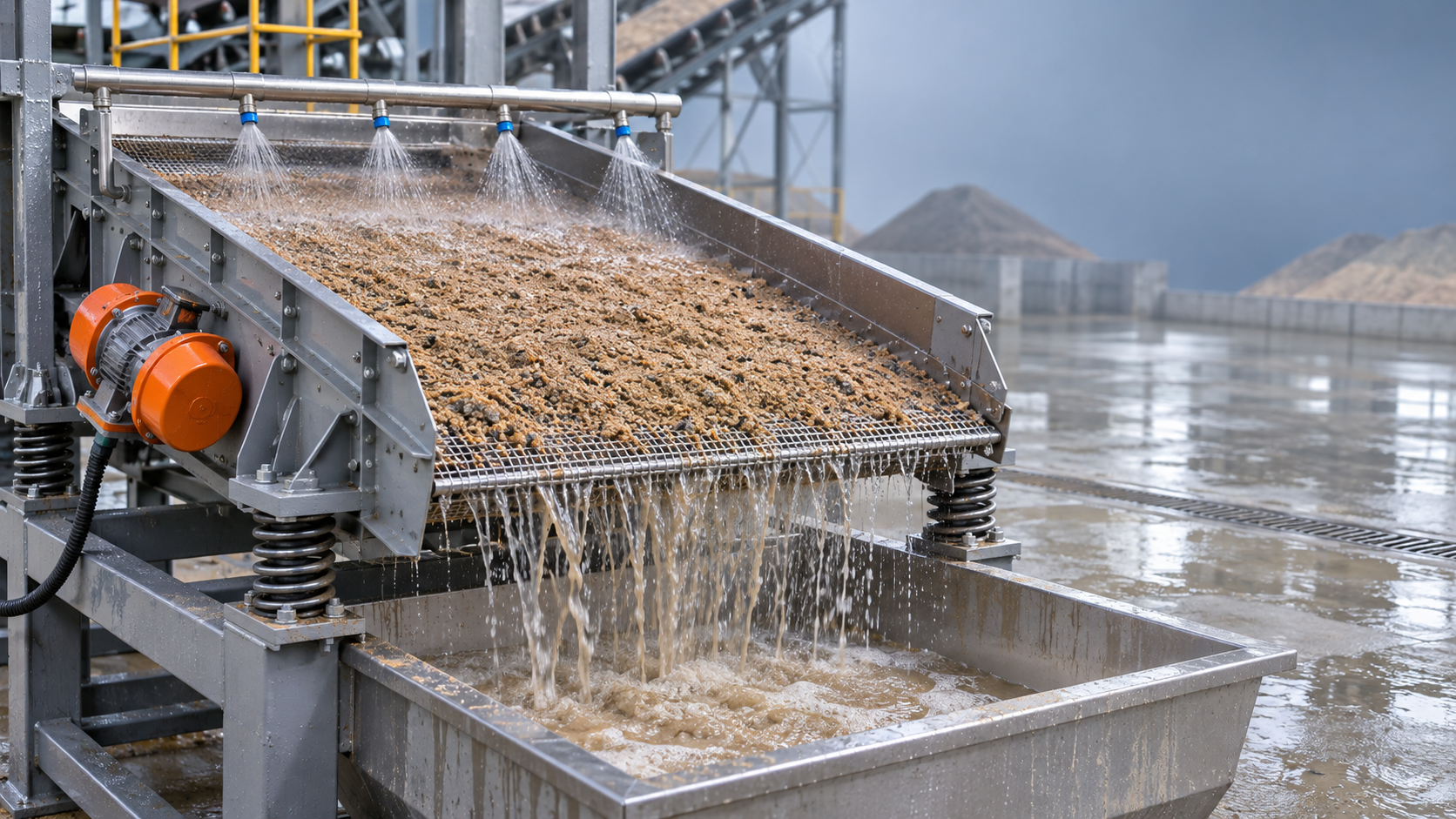
Yes. A linear vibrating screen can handle wet construction sand when the feed, screen media and water arrangement suit the material. Damp, relatively clean sand may be screened successfully with a suitable deck. Sand containing sticky clay or a high proportion of fine particles can blind the openings quickly, reducing throughput and making the separation unreliable.
For a project manager, the decision depends on the result required. A screen that removes oversized debris may be adequate for one job, while another needs a controlled sand grading, clay removal or a drainable final product. Those duties place different demands on the equipment and may require washing or dewatering alongside screening.
Start with the condition of the sand
Moisture content alone does not tell you whether sand will screen well. Water can make fine particles stick to each other and to the screen surface, especially when the sand contains silt or clay. At some moisture levels, material forms damp lumps that stay on top of the deck even though much of the sand inside them is smaller than the opening.
More water may help disperse the feed if the system is designed for wet screening, but adding water without a plan can create a slurry that overloads downstream equipment or carries valuable fines away. Clay is a separate concern: a screen may remove clay lumps, but it cannot be assumed to clean clay coating from individual sand grains. That may call for washing or scrubbing before classification.
The intended cut size matters as well. Fine openings are more vulnerable to blockage, and a separation that works on a coarse deck may become unstable when the same material is screened more finely. Consider the most difficult feed expected during production, including material from wetter stockpiles or clay-rich sections of the deposit.
When dry screening, wet screening or dewatering makes sense
Damp screening can be a practical choice when the sand is free-flowing enough to spread across the deck and the required separation is not excessively fine. The limiting signs are material building up on the screen, frequent cleaning and an increasing amount of acceptable sand leaving with the oversize.
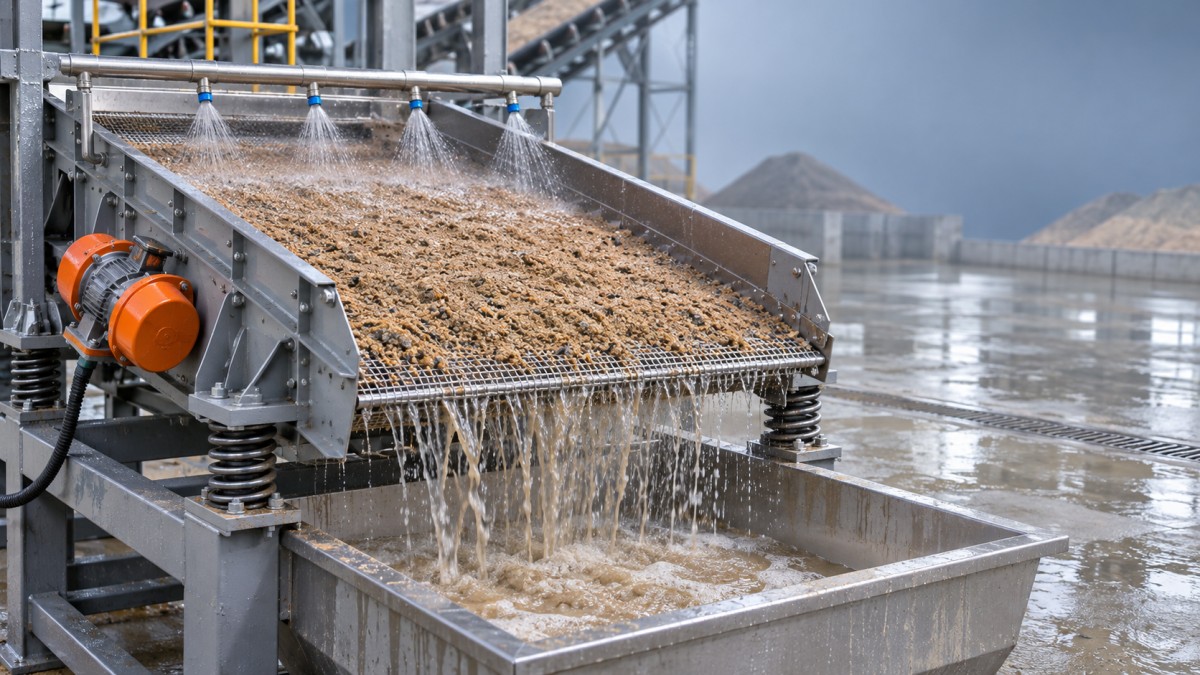
Wet screening with spray water can improve separation when water helps release fines and move material through the openings. It also requires a controlled water supply, drainage and downstream handling for the sand and water passing through the deck. Check whether the proposed arrangement will meet the required product grading and cleanliness, including any limit on lost fines.
Dewatering is a different duty. A linear-motion dewatering screen can drain washed sand and produce a more manageable product, but its ability to reduce moisture depends on the feed and system design. If the project needs both a precise size separation and a lower-moisture product, establish whether one machine can meet both duties or whether separate classification and dewatering stages are needed.
Match the deck to the feed and the required cut
Screen opening size must reflect the specified separation, but opening size alone is not enough. Aperture shape, wire diameter or panel geometry, open area and resistance to abrasion all affect performance. A finer or more heavily built deck can reduce the effective area available for material to pass through, so capacity should be assessed with the actual media installed.
Polyurethane panels may be worth evaluating where abrasion and wear life are major concerns. Woven wire can offer useful open area, depending on its construction. Stainless steel wire mesh is another option where corrosion resistance is relevant; an example is OEM stainless steel wire mesh screen for mining quarry stone crusher vibrating screen mesh. For any media, confirm the aperture, wire or panel construction, fastening arrangement and compatibility with the machine. Material choice alone will not prevent blinding.
Deck inclination, vibration settings, spray distribution and feed presentation also affect the result. Uneven feeding can overload one section while leaving the rest underused. A deep bed gives fine sand less opportunity to reach the openings, so a nominal machine capacity is only meaningful when it is tied to the proposed feed and separation duty.
What to establish before selecting a machine
Define the duty in terms the equipment supplier can assess: feed rate, particle-size distribution, desired cut size, moisture and clay content, and the required quality of each product stream. Include the expected range, rather than only the average. Identify whether water is available and how undersize slurry, recovered sand and process water will be handled.
Where blinding, clay contamination or a fine cut is a concern, arrange a representative material test using the proposed screen media and operating method. The sample should reflect the difficult feed as well as normal production. Assess throughput, separation quality, cleaning frequency and water demand together; a short demonstration of material passing through a deck does not establish sustained performance.
Before committing to the layout, also check how the screen can be accessed for washing, inspection and mesh replacement. If acceptable output depends on frequent shutdowns to clear blocked apertures, a larger screen alone may not solve the problem. The feed may need preparation, washing or a different screening arrangement before it reaches the deck.
Leave A Message
If you are interested in our products and want to know more details, please leave a message here, we will reply you as soon as we can.