Calculating the Lifecycle Return of Polyurethane Screen Mesh in High-Wear Plants
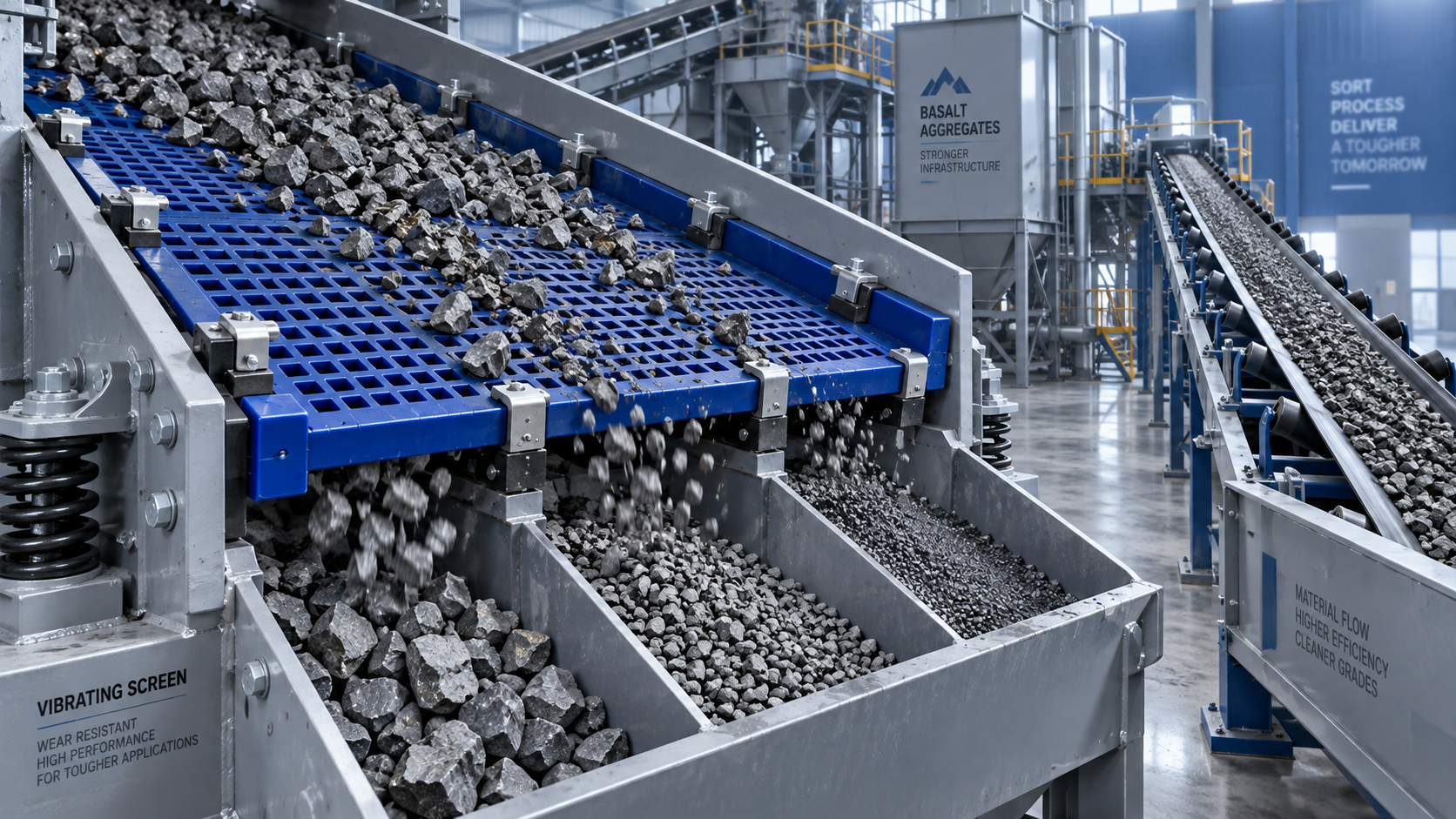
A screen deck in a high-wear plant can look inexpensive or expensive depending on which invoice is being reviewed. A low-cost panel may appear attractive at purchase, yet become the costlier choice when it wears prematurely, blinds over, requires repeated shutdowns, or allows off-spec material to reach the next stage. The practical answer is to calculate the lifecycle return of Polyurethane Screen Mesh from its installed cost and operating effect—not from unit price alone.
For a financial approval decision, the comparison should convert material performance into measurable operating terms: usable service life, changeout labor, lost production during shutdowns, screening efficiency, downstream wear, and residual value or disposal cost. The objective is not to prove that polyurethane is always the best media. It is to identify whether its higher initial cost is recovered under the plant’s actual wear, moisture, tonnage, and maintenance conditions.
Start with the cost of one screening position over time
The most reliable comparison uses a fixed period, such as one operating year, and evaluates competing media on the same screen deck, aperture duty, and feed condition. Avoid comparing one polyurethane panel with one wire screen panel only by purchase price. Their replacement intervals and production effects are rarely the same.
A useful lifecycle cost model is:
Lifecycle Cost = Purchase Cost + Installation Cost + Changeout Downtime Cost + Maintenance Cost + Quality Loss Cost + Disposal Cost − Residual Value
For each media option, calculate annualized cost:
Annualized Media Cost = Lifecycle Cost per Changeout × Expected Number of Changeouts per Year
This creates a base cost, but it does not yet show return. The return comes from the cost avoided or value gained compared with the current media:
Lifecycle Return = (Annual Cost Avoided + Annual Production Value Protected − Additional Investment) ÷ Additional Investment
“Additional investment” is normally the difference between the installed cost of polyurethane media and the baseline option. If polyurethane costs more initially but reduces replacements and interruptions, the avoided costs are the economic benefit that justifies approval.
Separate direct media cost from shutdown cost
In plants processing abrasive granite, basalt, crushed ore, or sharp manufactured aggregate, screen media wear is not an isolated consumable issue. A panel change commonly requires production to pause, personnel to access the deck, fasteners to be removed, worn sections to be handled, and the machine to be restarted and stabilized. Even when the work itself is brief, the interruption can affect crushers, conveyors, stockpiles, and downstream loading.
Calculate downtime cost using the plant’s own accounting basis. Depending on internal practice, this may be contribution margin per production hour, lost gross profit per tonne, or the cost of replacement feed and overtime needed to recover output. Do not use sales revenue alone unless that is the company’s approved measure of lost production value.
- Planned changeout cost: labor hours, lifting support, fasteners, maintenance supervision, and the production value lost during the planned stop.
- Unplanned failure cost: the same elements, plus the higher risk of disrupted scheduling, emergency labor, uneven deck coverage, and premature damage to adjacent panels.
- Partial-deck replacement cost: useful when only high-impact zones fail first, creating repeated small stoppages that are easy to overlook in monthly purchasing reports.
A purchasing record may show that lower-priced mesh saves money per order. A maintenance record may show that it is ordered more often because it consumes more labor and shutdown time. Both records must be combined before the true cost is visible.
Measure the operating factors that change the return
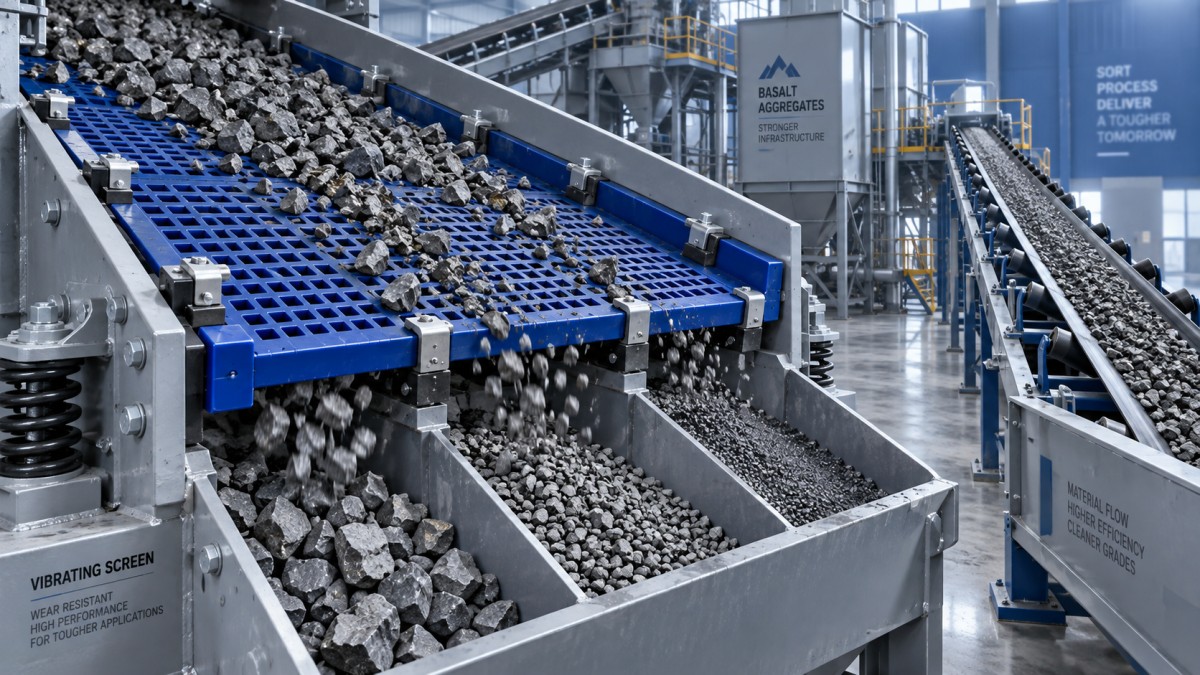
Polyurethane media usually earns its return where abrasion, impact, wet feed, or difficult-to-screen material causes conventional media to wear or clog too quickly. However, “polyurethane” is not a single operating outcome. Panel thickness, aperture shape, reinforcement, fastening system, hardness, open area, and deck location all affect performance.
Service life should be recorded in operating hours rather than calendar months. A plant running intermittent shifts cannot fairly compare its media with a continuously operating plant. Also record why the panel was removed: wear-through, broken support, aperture enlargement, blinding, loss of tension, or planned deck rotation. A panel removed before wear-through may still have had an unacceptable economic life if product quality or throughput had already deteriorated.
Do not assume longer wear life automatically means higher profit
A common error is to treat wear life as the only performance measure. A very thick or heavily reinforced screen may survive longer but reduce open area or alter material flow. If capacity falls, the plant may lose more value than it saves in replacement purchases. Conversely, a lighter panel with a shorter life may be economically sound on a low-impact section where changeout is easy and screening precision matters more than abrasion resistance.
The approval question should therefore be: Does the selected mesh maintain required classification efficiency for enough operating hours to offset its installed cost? This requires production and maintenance teams to agree on the specific failure threshold. For one deck, the threshold may be aperture wear. For another, it may be blinding, excessive carryover, or damage around the mounting area.
Use separate assumptions for high-impact feed zones, central screening zones, and discharge zones. Uniform replacement across the entire deck may simplify ordering, but it can mask expensive wear concentration. Zoned media selection can reduce cost when the feed end needs greater impact resistance while the remaining deck benefits from more open area.
Build the approval model with conservative assumptions
A short trial period can be useful, but it should not be converted into an annual savings claim without adjusting for feed variation. Material hardness, moisture, clay content, crusher settings, screen stroke, and seasonal operating patterns all influence results. The model should identify assumptions clearly rather than presenting a single optimistic figure.
Use three cases:
- Base case: expected polyurethane service life and expected reduction in changeouts based on normal operating conditions.
- Conservative case: shorter service life, limited downtime benefit, and no assumed increase in throughput.
- Adverse-feed case: includes high moisture, elevated fines, or severe impact conditions that may reduce effective life or increase blinding risk.
If the polyurethane option remains favorable in the conservative case, the investment is easier to defend. If the return only works under the most optimistic assumptions, approval should be tied to a controlled trial, staged purchase, or a revised media specification rather than a full deck conversion.
Include effects beyond the screen deck
Screening media affects more than the replacement budget. Worn apertures can send oversize material forward, increasing recirculating load or reducing final gradation control. A blinded deck can hold back material and place uneven load on downstream equipment. Poorly fitted panels may create gaps that allow bypass, compromising the purpose of otherwise efficient crushing and screening equipment.
Where the screen is fed by a primary crushing stage, the cost review should consider whether more stable sizing reduces avoidable downstream wear and reprocessing. For plants assessing coordinated equipment changes, a crusher option such as the FEIFAN PXE Jaw Crusher With Magnetic Separator Option, 75 Kw Motor, For Basalt & Granite, High Wear Resistance Jaw Plates Crusher may be relevant to feed preparation, but its economic model should remain separate from the screen-media calculation. Do not assign screen-mesh savings to a crusher purchase unless the plant can measure the operational link.
Use a decision rule that reflects actual replacement behavior
The clearest procurement decision is often based on break-even replacement frequency. Divide the additional installed cost of the polyurethane option by the fully loaded cost of one avoided changeout. The result shows how many avoided replacements are needed before the higher initial investment is recovered.
For example, the fully loaded avoided-changeout value should include the removed media purchase, labor, equipment access, lost production during the stop, and any quality-related loss caused by running until failure. If that amount is substantial, one avoided shutdown can carry more weight than several small differences in panel price.
Before issuing a larger order, confirm aperture requirements, panel dimensions, support-bar spacing, fastening compatibility, expected feed size, and the locations of impact concentration. The resulting calculation will be more credible because it links Polyurethane Screen Mesh to the costs the plant actually controls: replacement frequency, downtime exposure, production stability, and material classification performance.
Leave A Message
If you are interested in our products and want to know more details, please leave a message here, we will reply you as soon as we can.