Automation, Electrification, and Data: Mining Equipment Trends to Watch
Automation, Electrification, and Data: Mining Equipment Trends to Watch
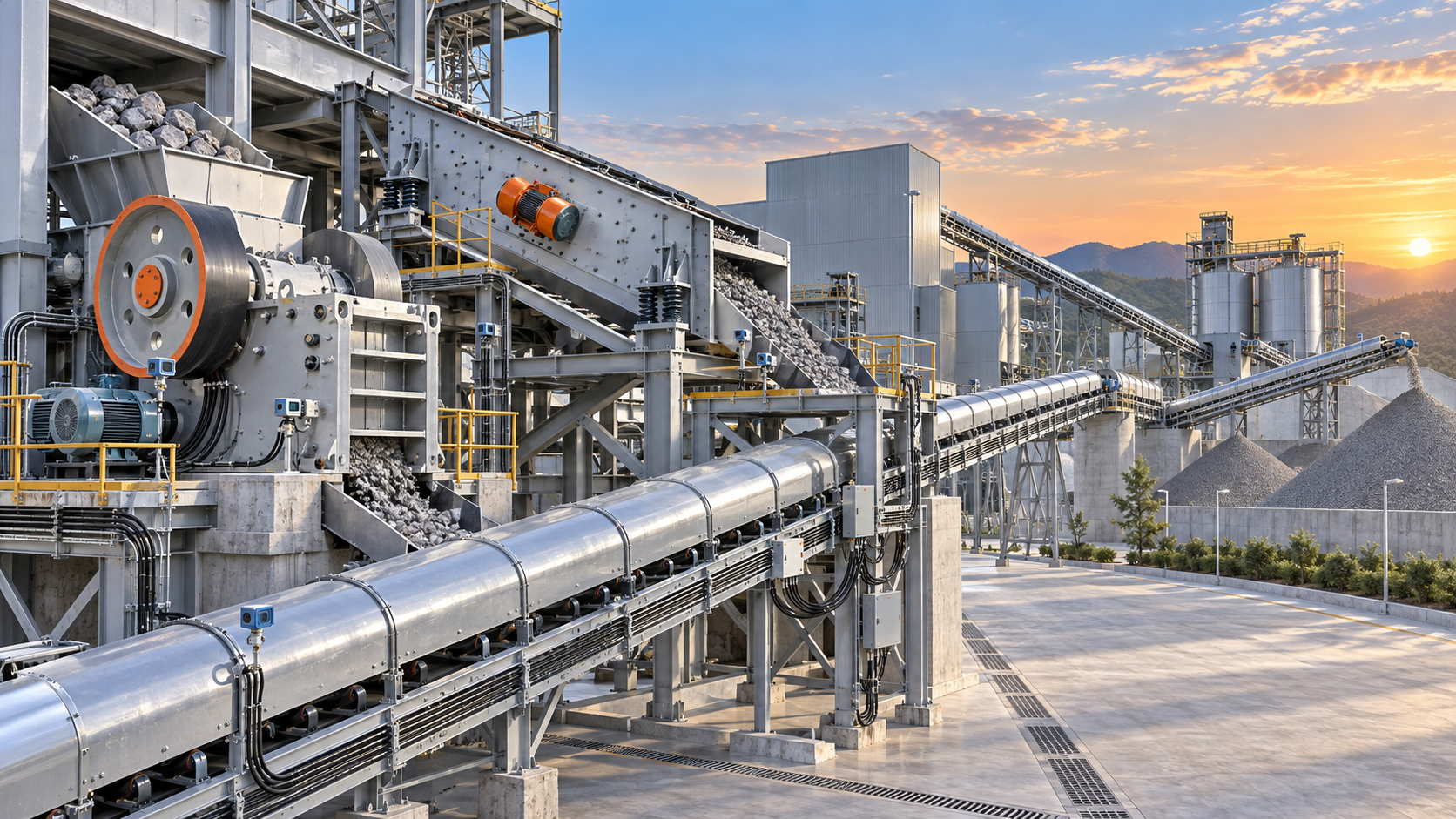
Automation, electrification, and real-time data are reshaping how mining operations improve productivity, safety, and cost control across aggregate processing plants worldwide.
For business decision-makers, selecting future-ready Mining Equipment is no longer only about output capacity. It means building reliable, scalable, intelligent production systems with measurable lifecycle value.
Where Should Decision-Makers Invest First?
The strongest investment case usually begins with operational bottlenecks, not technology labels. Plants should target recurring downtime, high energy use, inconsistent product grading, and labor-intensive processes.
Before purchasing new Mining Equipment, managers should establish baseline figures for throughput, availability, maintenance hours, energy consumption, wear-part costs, and finished aggregate quality.
This baseline turns technology selection into a financial decision. It helps management compare capital expenditure against reduced stoppages, improved recovery, lower labor exposure, and more predictable production.
Automation is especially valuable where operators repeatedly adjust feed rates, crusher settings, screen loads, or conveyor speeds based on changing material conditions.
However, a highly automated plant cannot compensate for poor equipment matching. The crusher, feeder, screen, conveyor layout, and screen media must first suit material characteristics.
Decision-makers should prioritize systems that can be upgraded in stages. A modular approach reduces implementation risk while allowing later integration of sensors, controls, and remote diagnostics.
For most aggregate operations, the practical goal is not a fully unmanned site. It is a stable plant requiring fewer emergency interventions and producing consistent saleable material.
Automation Is Moving From Isolated Machines to Connected Lines
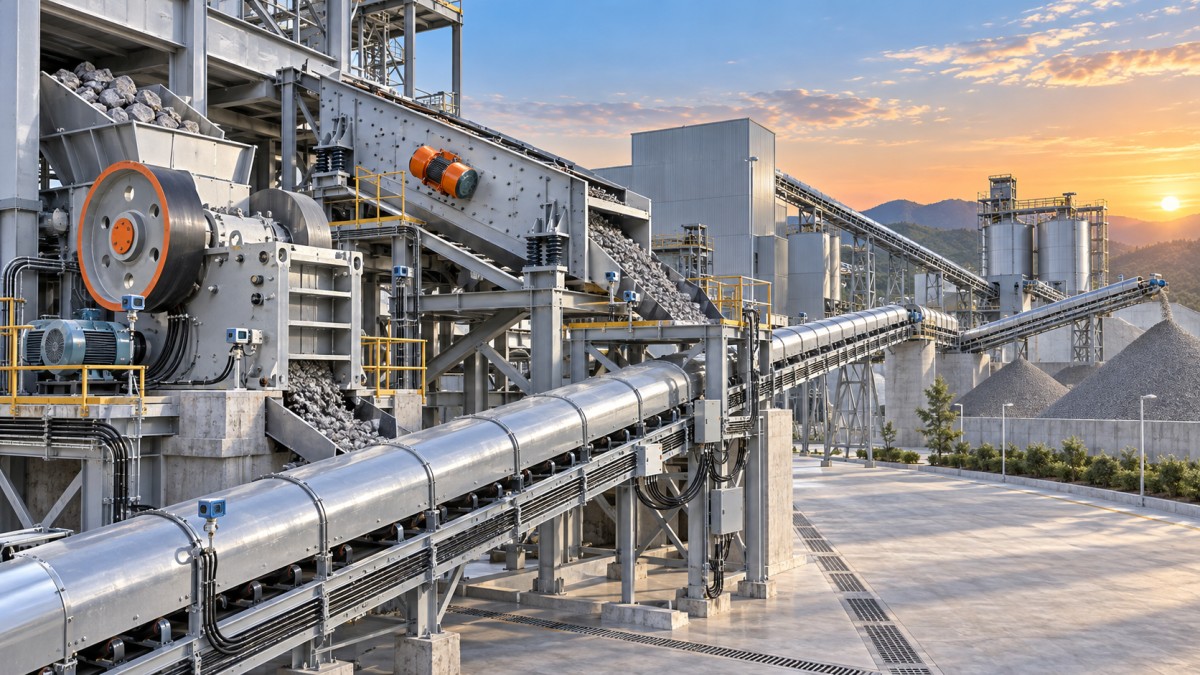
Earlier automation often focused on individual machine controls. Today, the greater opportunity comes from connecting the entire crushing, screening, washing, and conveying process.
Integrated controls can coordinate feeder speed with crusher load, adjust conveyor flow, and prevent overloaded screening stages before they cause production interruptions.
Variable frequency drives are central to this shift. They allow equipment speed to respond to operating conditions instead of running continuously at fixed settings.
For business leaders, this improves more than efficiency. Controlled material flow can reduce equipment shock, limit blockages, stabilize product quality, and extend component life.
Modern supervisory systems also give plant managers a clearer view of performance. They can compare shifts, identify repeated stoppages, and assess whether production targets are realistic.
Automation should be specified around defined operating scenarios. These may include wet feed, fluctuating gradation, hard rock, seasonal demand peaks, or restricted operator availability.
Ask suppliers how the control system handles abnormal conditions. A useful system should alarm operators, protect critical equipment, record the event, and support fast recovery.
Compatibility matters as much as functionality. New controls should communicate with existing electrical infrastructure, site networks, and future equipment additions without creating costly proprietary limitations.
Electrification Changes the Cost and Maintenance Equation
Electrification is becoming a strategic Mining Equipment trend because energy costs, emissions requirements, noise limits, and diesel logistics increasingly affect project profitability.
Electric crushers, screens, feeders, and conveyors can offer lower operating costs when dependable grid power is available and production hours are sufficiently high.
Conveyors are often an early electrification priority. Replacing truck movement over short internal routes can reduce fuel consumption, improve safety, and create steadier material flow.
The business case depends on local power pricing, grid reliability, production volume, and the distance between processing stages. It should be evaluated over the equipment lifecycle.
Decision-makers should also assess electrical capacity before committing to a new line. Transformer sizing, cable routes, motor starting requirements, and backup power influence total project cost.
Electric equipment is not automatically simpler. It requires competent electrical design, protection systems, trained maintenance teams, and spare-parts planning for drives and control components.
Hybrid configurations remain practical for remote projects. Fixed processing stations may use electric power, while mobile loading or extraction equipment continues using diesel or alternative energy sources.
For growing operations, electrification can support expansion planning. Properly designed electrical systems make it easier to add capacity without rebuilding the entire plant infrastructure.
Real-Time Data Must Lead to Better Decisions
Data creates value only when it changes a decision. Collecting machine information without clear operating rules can produce dashboards that look useful but deliver limited business impact.
Useful plant data typically includes motor load, vibration, bearing temperature, belt tracking, screen performance, throughput, power draw, downtime reasons, and maintenance history.
When these indicators are tracked together, managers can identify whether reduced output originates from feed inconsistency, crusher limitations, screen blinding, conveyor constraints, or operator response.
Predictive maintenance is one of the most practical applications. Condition monitoring can reveal developing bearing, lubrication, alignment, or vibration issues before a major failure stops production.
The value is not simply avoiding repairs. Planned maintenance allows teams to schedule labor, secure parts, minimize lost production, and avoid damage spreading through connected equipment.
Data should also support commercial decisions. Consistent measurement of product grading and yield helps managers understand which material blends and specifications deliver the best margins.
Cybersecurity should be included in every connected-plant project. Remote access, network segmentation, user permissions, backups, and vendor support procedures need clear ownership from the start.
Executives should request concise reporting rather than excessive dashboards. Weekly reports should link equipment performance to production, maintenance costs, energy use, and financial outcomes.
Screening Technology Has a Growing Influence on Plant Economics
In many aggregate plants, screening performance determines final product quality, recirculating load, crusher efficiency, and the amount of material that becomes saleable inventory.
As operations automate, screens need dependable lubrication, robust structures, accurate motion, and screen media selected for the material’s abrasiveness, moisture, and required cut sizes.
A banana-type screen can be particularly valuable where high capacity and stratification are important. Its deck geometry helps distribute material and support efficient screening across varying loads.
For operations seeking to reduce maintenance exposure and maintain stable output, consider the FEIFAN Heavy Duty Banana Type Vibrating Screen with Lubrication System for Low Maintenance Screening Plants Vibrating Screen.
Screen media deserves equal attention. Polyurethane meshes can improve wear life in abrasive applications, while steel screens may be suitable where open area, impact resistance, or specific sizing demands differ.
Management should evaluate screens using total operating value, rather than purchase price alone. Frequent panel replacement, poor screening efficiency, and unplanned stoppages quickly erode apparent savings.
Supplier capability is important for these applications. Equipment manufacturers that also understand screen media, material flow, and whole-line engineering can reduce interface problems during commissioning.
How to Evaluate a Future-Ready Equipment Supplier
A future-ready production line depends on more than individual machine specifications. Decision-makers need suppliers that can balance process design, fabrication quality, controls, commissioning, and after-sales support.
Start by reviewing comparable projects. Ask for operating conditions, material type, designed capacity, actual output, service requirements, and lessons learned after the line entered production.
Clarify performance responsibilities across the project. For an EPC or turnkey solution, contracts should define process scope, utility requirements, acceptance testing, training, commissioning, and warranty support.
Manufacturing depth also affects risk. A supplier with in-house engineering, production, quality control, and parts support can respond faster when design changes or service needs emerge.
For international projects, assess export experience carefully. Packaging, documentation, electrical standards, installation guidance, spare-parts availability, and remote technical support all affect delivery success.
Request a recommended critical-spares list before finalizing the purchase. This should cover wear parts, bearings, motors, sensors, screen media, lubrication components, and control-system essentials.
The most reliable supplier relationship is based on transparent operating data. Both parties should agree on capacity assumptions, feed properties, maintenance responsibilities, and realistic performance expectations.
Build a Roadmap Instead of Buying Technology All at Once
The best modernization programs are phased. They begin with equipment reliability and process stability, then add automation, electrification, and data systems where measurable gains are strongest.
First, eliminate physical constraints such as undersized conveyors, poorly matched screens, insufficient surge capacity, or crushers operating outside their intended feed conditions.
Second, install the sensors and electrical infrastructure needed for visibility. This creates a trustworthy operational baseline before management invests in more advanced control strategies.
Third, automate high-impact decisions such as feed regulation, overload prevention, lubrication monitoring, and coordinated start-stop sequences across the production line.
Finally, use accumulated data to refine maintenance planning, optimize product mix, evaluate energy performance, and justify capacity expansion with evidence rather than assumptions.
Automation, electrification, and data will continue changing Mining Equipment selection. The companies gaining the most value will focus on reliable process design, scalable upgrades, and disciplined lifecycle evaluation.
For decision-makers, the central question is not whether advanced technology matters. It is which investment will improve plant availability, product consistency, safety, and profitability first.
Leave A Message
If you are interested in our products and want to know more details, please leave a message here, we will reply you as soon as we can.