Apron Feeder vs Belt Feeder: Which Fits Abrasive Bulk Materials Better?
When sharp, heavy, and high-impact material starts moving through a quarry, mining plant, or aggregate line, the feeder becomes one of the first pieces of equipment to show whether the selection was right. Many teams compare an Apron Feeder and a belt feeder only by capacity or layout, then run into avoidable issues once abrasive bulk materials begin striking the loading zone, wearing contact surfaces, or causing unstable discharge.
If you are trying to decide which option makes more sense for hard rock, blasted stone, coarse ore, or other aggressive material, the real question is not which feeder is more common. It is which design can tolerate impact, resist wear, and stay maintainable under your actual feed conditions. That is where the difference between an Apron Feeder and a belt feeder becomes practical rather than theoretical.
Why this choice becomes difficult in abrasive material handling
A lot of confusion comes from the fact that both machines move bulk material in a controlled way, but they do not handle stress in the same manner. On paper, either one may seem suitable because both can sit under hoppers or bins and feed downstream equipment. In daily operation, though, abrasive material changes the decision.
Common trouble starts when the material is not only abrasive, but also large, angular, or dropped from height. Under those conditions, the feeder is not just transporting material. It is absorbing impact, carrying concentrated load, and dealing with fines mixed with sharp lumps. This is where the wrong selection often leads to faster wear, frequent stoppages, more cleanup around the loading point, and extra inspection work for the maintenance team.
For project managers, plant engineers, and procurement teams, this means the feeder decision should be tied to operating risk. If the selected machine struggles in the first transfer point, the whole line can lose rhythm. That is why the Apron Feeder is usually evaluated first when abrasive duty is part of the brief.
Apron Feeder vs belt feeder: the comparison standards that actually matter
When people compare an Apron Feeder with a belt feeder, they sometimes focus too much on basic conveying function and not enough on material behavior. For abrasive bulk materials, a more useful comparison starts with five practical checks.
- Impact tolerance: Can the feeder take heavy loading directly from a hopper, truck tip, or primary crushing circuit without its working surface becoming the weak point?
- Wear resistance: How well do the carrying components tolerate sharp stone, coarse ore, and continuous friction over time?
- Material size variability: Can the feeder handle a mix of fines and larger lumps without becoming unstable or difficult to control?
- Maintenance exposure: Which parts will wear first, and how disruptive is replacement or adjustment during normal production schedules?
- Line integration: Is the feeder working in a heavy-duty section of the process or in a cleaner, more measured feeding stage?
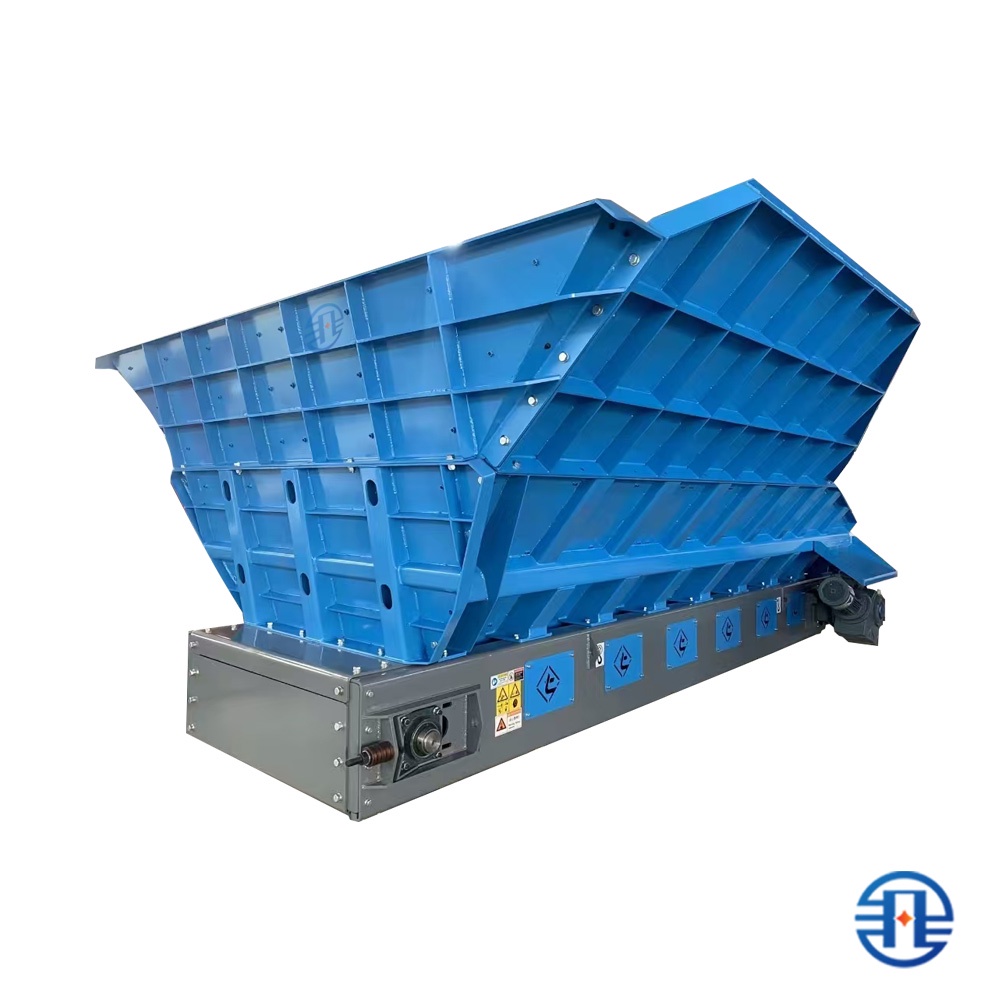
These standards usually make the decision clearer. An Apron Feeder is built around steel pans and a chain-supported structure that generally suits impact-heavy, abrasive service. A belt feeder, by contrast, is often more appropriate when the material is less aggressive, the feed is more controlled, and accurate, smooth withdrawal from a bin is the main requirement.
Where an Apron Feeder usually performs better
If your material is hard, angular, and dropped with force, an Apron Feeder is usually the safer choice. This is especially true in primary crushing stations, raw ore receiving points, and quarry applications where lump size is irregular and the feeder must survive direct loading instead of only metering flow.
The main advantage is structural resilience. Steel pans are less vulnerable to cutting and puncture than a belt surface in severe conditions. The machine is also better aligned with jobs where impact cannot be fully reduced by upstream design. Even if wear still happens, the wearing pattern is usually easier to predict as part of heavy-duty maintenance planning.
Another reason the Apron Feeder is often preferred is operating confidence. In abrasive applications, teams usually want equipment that can keep feeding even when the material is rougher than expected. That margin matters in real plants, because feed conditions are rarely perfectly consistent throughout a shift, let alone across seasons or blasting cycles.
When a belt feeder still makes sense
This does not mean a belt feeder is the wrong choice in every mineral or aggregate setting. It can still be the better option when the material is finer, the lump size is limited, the loading zone is controlled, and the goal is steady, uniform feed rather than impact resistance.
For example, a belt feeder is often considered where material has already been reduced in size, where hopper geometry supports smooth discharge, or where the process needs gentle handling and stable rate control. In these cases, the lower structural severity can make a belt-based system easier to integrate.
It is also common to see a heavy-duty feeder used at the front end and belt-based conveying used after the most abusive stage has passed. In a full line layout, that division of roles is often more practical than trying to force one equipment type into every position.
A practical selection process for abrasive bulk materials
If you are still deciding between the two, it helps to walk through the selection in a stricter order rather than starting from price or habit.
- Define the material condition at the actual feed point. Note whether the material is sharp, heavy, wet, mixed in size, or dropped from height. Abrasion alone matters, but abrasion combined with impact is what usually pushes the decision toward an Apron Feeder.
- Check the largest expected lump and the consistency of the feed. A stable fine feed and an irregular blasted-rock feed should not be treated as the same duty.
- Review hopper and chute behavior. Sometimes the feeder is blamed for problems caused by poor loading geometry. If material strikes one zone aggressively or bridges before release, the feeder choice must account for that.
- Separate feeding duty from conveying duty. In some layouts, the right answer is not choosing one machine for everything. It may be an Apron Feeder under the hopper, followed by a downstream conveyor selected for the next stage.
- Evaluate maintenance access and parts strategy. A feeder that looks acceptable initially may become inefficient if wear-prone components are hard to inspect or replace in your site conditions.
In lines where the front end is severe but downstream transport still needs long-distance efficiency, it is reasonable to pair a robust feeder with a heavy-duty conveyor solution such as High Tension Roller Belt Conveyor | Heavy Duty Mining for Hard Rock Quarry Line. That kind of combination reflects a process-based decision: one machine handles the abusive loading zone, another handles transfer over distance.
Common mistakes that lead to the wrong feeder choice
One common mistake is assuming that if a belt feeder can carry the material, it can also survive the loading condition. Carrying and surviving are not the same requirement. Abrasive bulk materials often fail equipment at the transfer and impact stage before nominal transport capacity becomes the issue.
Another mistake is treating all “mining material” as one category. Fine ore, washed aggregate, reclaimed stockpile material, and fresh blasted rock create very different demands. The term sounds broad, but the equipment decision should be specific to feed condition, not industry label.
A third mistake is ignoring the rest of the system. Feeders do not work alone. Chute design, hopper outlet shape, crusher entry condition, and conveyor take-away capacity all influence whether the selected machine will work smoothly. In engineered aggregate and mining lines, equipment should be chosen as part of the process path, not as isolated catalog items.
That system view is one reason manufacturers with feeder, conveyor, screening, and whole-line experience often see the selection differently. Groups that work across crushers, screens, conveyors, and custom process layouts are usually better positioned to judge whether an Apron Feeder should take the first duty and where a downstream conveyor, including options like High Tension Roller Belt Conveyor | Heavy Duty Mining for Hard Rock Quarry Line, fits more naturally.
Frequently Asked Questions
Is an Apron Feeder always better than a belt feeder for mining?
No. An Apron Feeder is usually better for severe, abrasive, high-impact conditions, especially at the front end of a line. A belt feeder can still be the better choice where material is smaller, flow is controlled, and smooth rate feeding is the priority.
What is the biggest sign that a belt feeder may be the wrong choice?
If the loading point involves large, sharp, heavy material falling with force, that is a strong warning sign. In those conditions, surface wear and impact stress often become more important than nominal throughput.
Should feeder selection be made separately from conveyor selection?
Usually they should be coordinated. The feeder handles how material leaves the hopper, while the conveyor handles what happens next. In abrasive systems, splitting those duties between different machine types is often the most practical arrangement.
Can an Apron Feeder improve maintenance planning?
In heavy-duty abrasive service, it often helps because the machine is designed for that kind of duty and wear points are more predictable. That does not remove maintenance needs, but it can make them easier to plan around harsh operating conditions.
Conclusion
If the material is abrasive, heavy, angular, and impact-loaded, an Apron Feeder is usually the more dependable choice. If the feed is more controlled and the material is less punishing, a belt feeder may still be appropriate. The best decision comes from checking the actual loading zone, lump condition, wear risk, and the role of the machine in the full process line. For abrasive bulk materials, the right answer is usually the one that respects operating reality first and equipment preference second.