When does a mobile crushing station for small quarry work make sense?
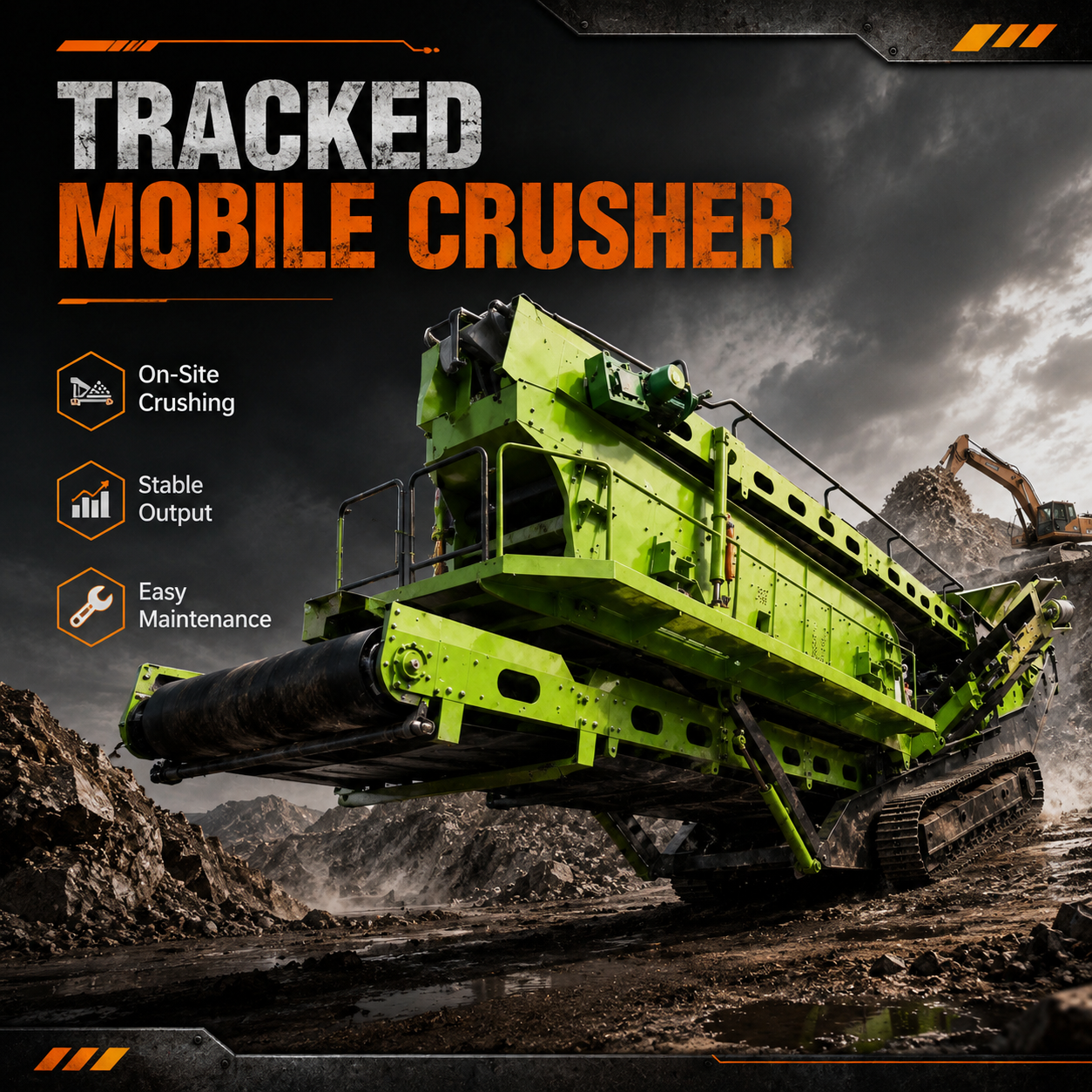
A mobile crushing station for small quarry work makes sense when the material source, production window, or site layout changes often enough that a fixed plant would spend too much time and money on civil works, internal haulage, and relocation. It is particularly suitable where the face advances in stages, available ground is restricted, or aggregate is needed for a defined infrastructure package rather than a long, uniform operating period.
The decision should begin with the quarry flow rather than the machine catalogue. Feed size, rock strength, moisture, required finished fractions, daily working hours, and stockpile space determine whether a mobile unit can maintain stable production. A compact machine that is easy to move but repeatedly chokes on oversize feed or produces an uncontrolled gradation will not improve the operation.
Situations where mobility has a clear operational value
Short transport distance from the blast or excavation face is often the strongest reason to use a mobile crushing station for small quarry production. Processing closer to the source can reduce the number of truck movements before primary reduction. This is relevant on sites with narrow internal roads, changing benches, or limited room for a large raw-material stockpile.
Mobility also fits projects where quarry reserves are split into separate pockets. Moving a tracked or wheeled plant between accessible areas may be simpler than constructing permanent feed hoppers, retaining walls, and conveyor galleries for each phase. The practical benefit depends on how often relocation is needed and whether access routes can carry the machine safely.
A mobile layout can be appropriate when production demand varies by contract stage. One period may require base-course aggregate, while another needs drainage stone or smaller concrete fractions. A modular arrangement of feeder, primary crusher, screen, return conveyor, and optional secondary crusher can be adapted as demand changes, provided the transfer points and screen media are selected for the material.
It is less compelling where the quarry has a long, stable reserve, consistent high-volume demand, ample land, and existing fixed infrastructure. In that setting, a stationary line may offer easier access for maintenance, larger surge capacity, and a simpler long-term material flow. The comparison should include site preparation, relocation frequency, electrical supply, wear parts, and internal transport, rather than relying only on the initial machine price.
Start with the rock and the required product
Material testing should precede equipment selection. Hard, abrasive granite, basalt, and similar rock can place high wear loads on jaw plates, cone liners, impact components, chutes, and screen meshes. Softer limestone may crush efficiently in an impact-based circuit, but clay contamination or wet fines can still cause buildup in the feeder and screen. A feed sample should represent the expected range of quarry conditions, including weathered material and fines from the floor of the working face.
Maximum feed size must be compared with the actual crusher opening, not only the nominal model designation. Oversize boulders may require hydraulic breaking or controlled blasting before loading. If a loader bucket regularly delivers slabs that bridge the hopper, output becomes irregular and fuel use rises while downstream equipment waits.
Finished-product requirements matter just as much. A single mobile jaw crusher may be enough when the objective is a broadly graded fill material. It will usually not be sufficient where several tightly controlled aggregate sizes are required. That application may need a jaw crusher for primary reduction, a cone or impact crusher for shaping and reduction, and a vibrating screen with correctly selected decks. Recirculating oversize back to the crusher can improve specification control, although it also raises circulating load and wear.
Match the plant configuration to the working pattern
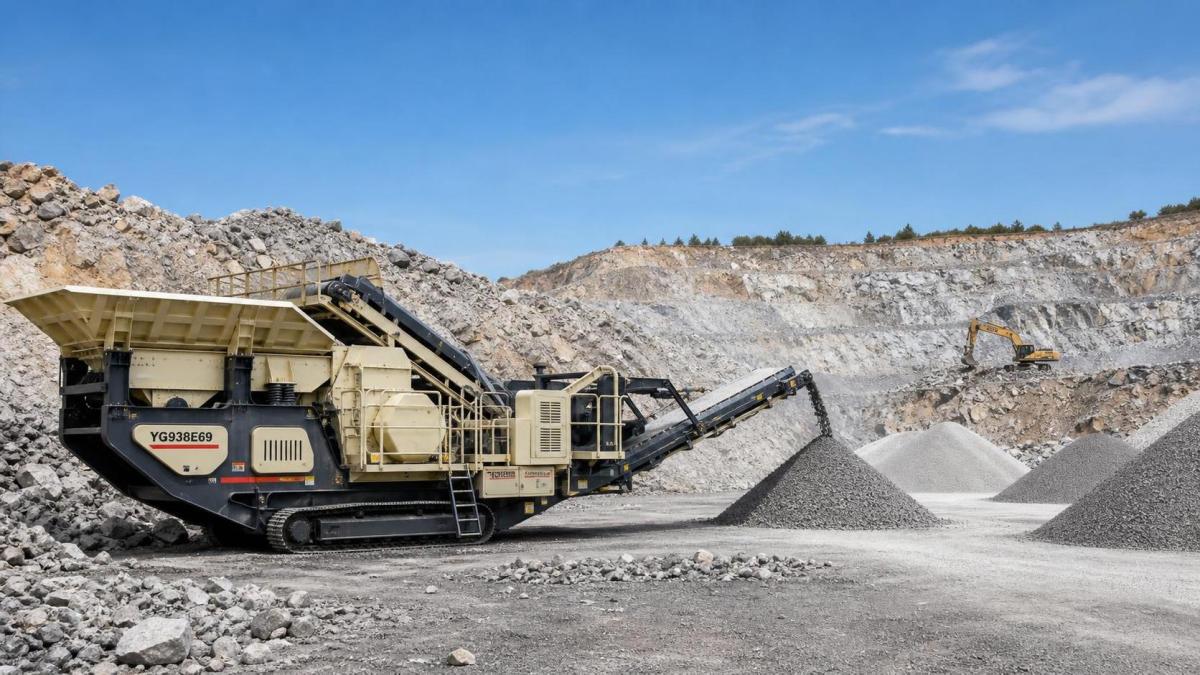
Tracked units are generally suitable for frequent repositioning within difficult quarry ground, provided the travel route is prepared and slopes remain within the equipment limits. They can follow the face more closely, but track wear, undercarriage inspection, and fuel logistics should be included in the operating plan. Wheeled units can be efficient where surfaces are firm and moves occur by road or between established pads, though they normally require more attention to setup and leveling.
A small installation often benefits from a simple flow. A vibrating grizzly feeder can remove scalpings before the primary crusher, protecting the chamber from unnecessary fine material. The feeder must have enough hopper volume to smooth intermittent loading, but an oversized hopper is not automatically beneficial if it encourages uncontrolled loading or makes the plant difficult to transport.
- For clean, moderately sized feed: a feeder and primary crusher may be sufficient when the output is used as general sub-base or further processed elsewhere.
- For multiple graded aggregates: add screening capacity and plan where each stockpile will sit. Material discharged too close to a conveyor can bury the discharge area and interrupt production.
- For a high proportion of flaky particles: assess a secondary crushing stage and screen recirculation. Crusher chamber selection, closed-side setting, and feed distribution affect particle shape.
- For wet feed with fines: allow for screening and washing requirements instead of expecting a dry crusher circuit to correct material cleanliness.
Where saleable sand or washed gravel is part of the output, the water loop and fines handling need to be designed alongside the crushing circuit. A unit such as FEIFAN Fully Automatic Intelligent Sand Washer Equipment For Gravel Separation Project High Efficiency Machine may be considered after the feed gradation, clay content, required cleanliness, and water-recovery arrangement have been defined. Washing equipment cannot compensate for poor upstream screening or an unsuitable crushing setting.
Capacity should be evaluated as a system figure
Nameplate capacity is normally based on defined feed conditions. Actual throughput can be lower when rock is hard, feed is poorly graded, moisture causes packing, or the loader cannot maintain a steady feed. Screen capacity can become the governing restriction even when the crusher itself has unused capacity. This is common when the required cut sizes are small or when material contains a large fines fraction.
Use the required finished tonnage per shift to build the evaluation. Account for planned stoppages for refueling, routine inspection, liner adjustment, screen cleaning, product changeover, and movement of stockpiles. Then review the bottleneck in each stage: loading, feeding, crushing, screening, conveying, and dispatch. A mobile plant should have sufficient buffer at transfer points without creating excessive material buildup.
Stockpile layout deserves early attention. Separate products need adequate clearance, stable ground, and loader access without crossing the raw-feed route. If trucks must queue beside the crusher discharge, the supposed saving in mobility can be lost through traffic conflicts. Dust suppression lines, drainage channels, and spill cleanup access should be included on the site drawing before equipment arrives.
Transport and setup can decide the project
Before placing an order, verify transport dimensions, total transport weight, axle arrangements where applicable, bridge restrictions, turning radii, unloading space, and local lifting requirements. Some configurations travel as separate modules, which adds flexibility but may require additional commissioning time and handling equipment. A machine that fits the production target but cannot reach the intended quarry pad without major road work is not a practical selection.
The operating pad needs bearing capacity, drainage, and enough level area for safe setup. Soft ground can affect tracking, leveling, conveyor alignment, and access for service. The crusher should not be placed where runoff from the face carries mud directly into the feed area. In wet seasons, this detail can have a larger effect on uptime than a minor difference in rated capacity.
Electrical arrangements also need a defined basis. Diesel-hydraulic, diesel-electric, and grid-connected options have different implications for fuel storage, cable routing, noise, emissions controls, and relocation. Where grid supply is available but unreliable, the plant arrangement may need a backup operating strategy rather than an assumption of continuous power.
Lifecycle cost is mainly controlled by wear and access
Small quarry output does not necessarily mean low maintenance intensity. Abrasive feed can consume liners and screen media quickly, while a neglected conveyor scraper or blocked chute can stop the entire line. Service access around the crusher, screen decks, engine compartment, hydraulic system, and conveyor drives should be reviewed during layout approval. Tight access may reduce the physical footprint but extend every maintenance task.
Critical spares should match the selected configuration: crusher wear parts, screen panels, belts, rollers, filters, hydraulic hoses, and sensors that could halt production. Screen media should be chosen for aperture accuracy, abrasion level, plugging tendency, and expected replacement method. Polyurethane panels may suit some wet or abrasive screening duties, while steel media can be appropriate for different feed sizes and impact conditions.
A mobile crushing station for small quarry work is justified when it shortens the material path, fits the actual production pattern, and can be maintained without creating a fragile site arrangement. The sound selection is the one that keeps feed, reduction, screening, stockpiling, and routine service in balance under the quarry conditions expected throughout the work period.
Leave A Message
If you are interested in our products and want to know more details, please leave a message here, we will reply you as soon as we can.