What Is a Circular Vibrating Screen Used for in Aggregate Processing?
A Circular Vibrating Screen separates crushed stone, gravel, and sand into size fractions that can move to the next processing stage or become finished aggregate products. Material travels across one or more vibrating screen decks: particles small enough to pass through the openings fall through, while larger pieces continue toward the discharge end. The result depends on the feed, screen openings, machine setup, and condition of the screening surface.
Where a circular vibrating screen fits in an aggregate line
A screen can be installed after a crusher to separate material that has reached the required size from oversize rock. The oversize fraction can return to a crusher for further reduction, while passing material moves to another screen, a washing stage, or a stockpile. This arrangement limits unnecessary crushing of material that is already small enough.
At a later stage, a multi-deck screen can divide crushed aggregate into several product sizes. A coarse upper deck removes larger pieces first; lower decks make finer separations. Each deck needs a suitable discharge path, because material mixed again after screening can undo the separation.
Screening can also precede a crusher when removing smaller feed particles is useful for the circuit. The right location depends on the material entering the plant and the size fractions required downstream.
How circular motion separates aggregate
An exciter creates vibration that moves the screen box in an approximately circular path. On a typical inclined screen, vibration lifts and advances the material toward the discharge end. Smaller particles work their way toward the screening surface and pass through when they meet an opening in a favorable position.
The screen opening is a separation point, not a guarantee that every passing particle has identical dimensions. Flat or elongated stones can pass through an opening in one orientation and remain on the deck in another. Particles close to the opening size also need more opportunities to pass than particles that are much smaller.
Screening efficiency describes how effectively the feed is separated at the intended size. A screen can move a large volume of material yet leave too much undersize in the oversize discharge if the bed is too deep or particles do not have enough time to reach the openings.
Common screening applications
- Crusher circuit control: separate oversize rock for recirculation and send suitably sized material onward.
- Finished aggregate grading: produce separate stone sizes for uses such as concrete, asphalt, or road construction, according to the required product specification.
- Sand and fine aggregate processing: remove unwanted coarse particles before subsequent handling or washing.
- Feed preparation: remove a suitable fraction before a downstream machine when doing so supports the intended process.
For each application, the required cut size must be considered alongside moisture and feed composition. A deck selected for dry, free-flowing crushed stone can perform differently when the same nominal feed contains sticky fines.
Screen setup and material conditions
Feed rate and distribution affect every deck. A thick, uneven bed prevents fine particles from reaching the surface and can overload one side of the screen. A well-distributed feed gives material access to the available screening area. A sudden change in crusher output can alter the bed even when the screen settings remain unchanged.
Incline, vibration speed, and stroke influence how material moves across the deck. Faster travel can increase throughput but leaves less time for separation; slower travel can improve the opportunity to pass while reducing capacity or causing material to build up. These settings work together and should remain within the equipment manufacturer's approved range.
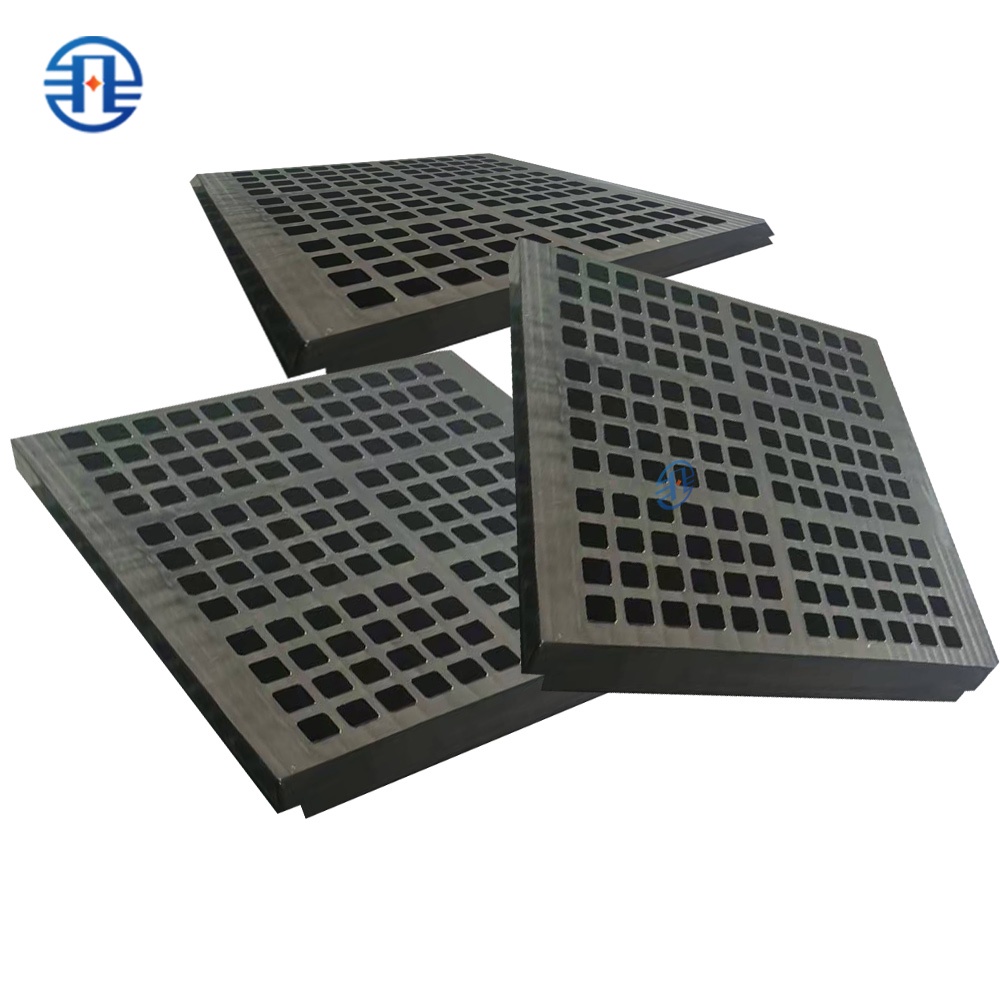
Screen media also changes performance. Wire mesh offers open screening area, while polyurethane panels can provide wear resistance in abrasive service. Opening shape, panel thickness, and support arrangement all affect the usable screening area and particle passage. A larger nominal opening alone does not establish a higher effective capacity.
Wet or clay-rich material can stick to the surface or bind particles together. Spray water can help wash and separate suitable material when the screen and downstream system are designed for wet operation. The resulting water and fines need a planned route for collection and treatment.
Symptoms that point to different screening problems
The same product defect can have several causes. Observe the feed, deck, and discharge together before changing a setting or replacing media.
- Too much fine material in the oversize: the feed bed could be too deep, openings could be blocked, or material could be moving across the deck too quickly. Near-size particles and sticky fines make separation harder even when the screen is mechanically sound.
- Oversize pieces in the passing product: inspect for torn mesh, worn or enlarged openings, and gaps around panels or seals. A downstream chute that mixes streams can produce a similar result.
- Material building up on the deck: restricted discharge, blocked openings, uneven feed, or an unsuitable operating setup can all be responsible. Reducing feed temporarily can help establish whether loading contributes to the problem.
- Unusual noise or vibration: loose components, damaged supports, bearing trouble, or material buildup require investigation. Stop the machine and isolate its power before inspection, in accordance with site procedures.
Circular and linear motion in screening
Circular screens are commonly used on inclined decks for aggregate sizing. Linear screens use a different vibration path and can be applied to screening or dewatering duties where their motion and deck arrangement suit the process. The OEM Stable Running No Dust Leakage Quarry Mining Linear Vibrating Screen is an example of a linear-motion screen; its suitability for a particular duty depends on the feed and required separation.
Before changing screen media or operating settings, record the feed condition and the problem observed at each discharge. Compare the material streams after the change under similar loading. This makes it easier to distinguish an equipment issue from a change in the material arriving at the screen.
Leave A Message
If you are interested in our products and want to know more details, please leave a message here, we will reply you as soon as we can.