What determines the replacement cost of polyurethane screen mesh?
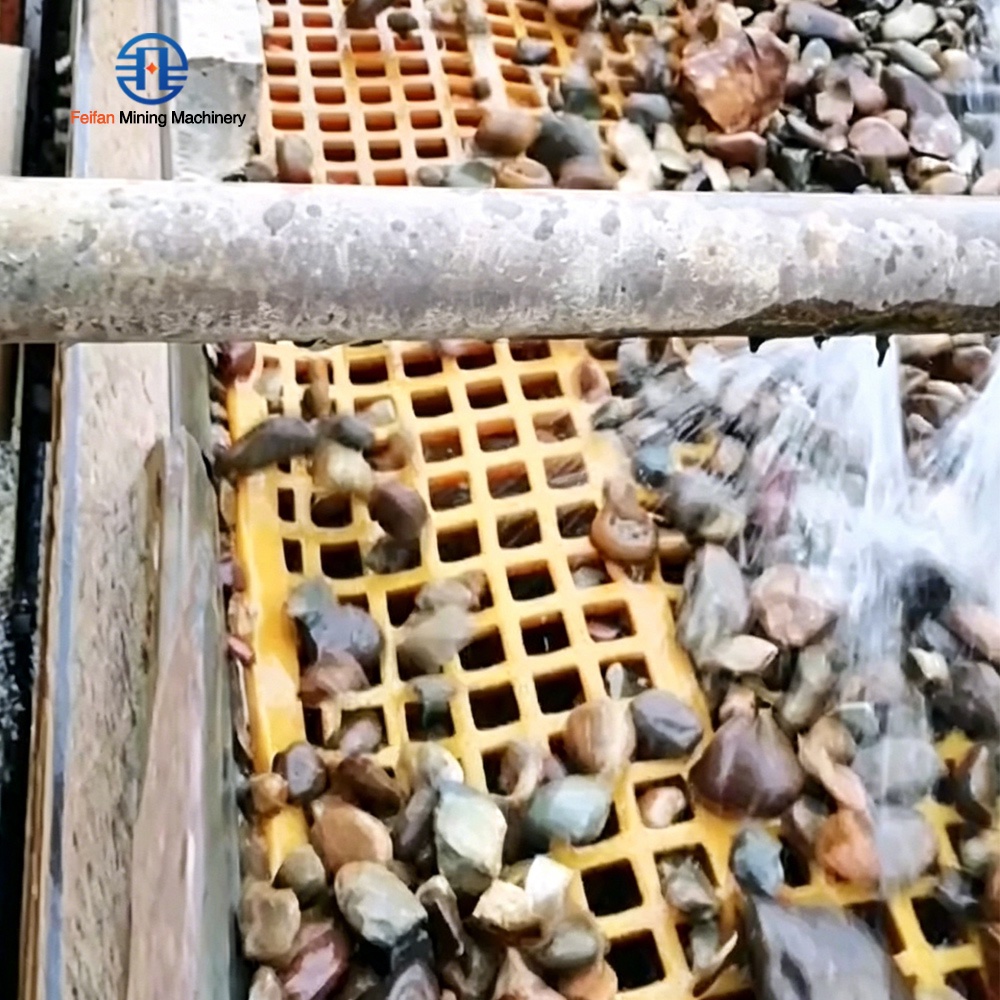
The replacement cost of Polyurethane Screen Mesh depends on more than the initial purchase price. For mining and aggregate operations, factors such as panel size, aperture design, material formulation, reinforcement structure, operating conditions, service life, and supplier support all affect total cost. Understanding these variables helps buyers compare quotations accurately, reduce unplanned downtime, and select screen media that delivers reliable screening performance and long-term value.
The difficulty is that screen panels with a similar external appearance can behave very differently on the same vibrating screen. A low quotation may reflect a lighter frame, thinner wear layer, simplified fastening details, or a polyurethane formulation that is acceptable for mild sand applications but unsuitable for abrasive crushed stone. Conversely, a higher unit price is not automatically justified if the panel geometry does not match the material, feed distribution, or deck arrangement.
Replacement cost should therefore be treated as a lifecycle question: what will it cost to purchase, install, operate, replace, and manage the mesh over a defined period of production?
Panel dimensions and fixing design establish the starting price
Size is the most visible cost driver. Larger polyurethane panels require more raw material, stronger internal support, and greater control during molding to prevent warping or dimensional variation. Thickness also matters, particularly where the panel must resist large feed particles, high drop heights, or aggressive vibration.
However, nominal length and width do not tell the full story. The fastening system can change both manufacturing cost and replacement expense. Hooked panels, side-tensioned panels, bolt-down modules, pin-and-sleeve systems, and rail-mounted modular panels all require different mold designs and reinforcement arrangements. A panel that is inexpensive to manufacture may be slow to install, while a modular system may cost more per square metre but reduce changeout time significantly.
Before comparing offers, confirm the complete interface specification: panel dimensions, bearing-bar spacing, support rail profile, fixing-hole locations, clamping method, required clearance, and the acceptable manufacturing tolerance. A quotation based only on “polyurethane mesh for a vibrating screen” is rarely comparable with another supplier’s price.
Aperture shape changes both material use and screening economics
Aperture size is often treated as the main technical specification, but its shape and open area are equally important. Square openings, slotted openings, elongated slots, anti-blinding designs, and tapered apertures produce different screening behavior. They also affect mold complexity, polyurethane volume, and panel strength.
Smaller openings usually increase the amount of polyurethane between apertures, which can raise weight and material consumption. Yet very fine apertures may require a more precise molding process to ensure that the opening size remains consistent and that edges do not close prematurely during service. In wet screening or high-clay material, designs intended to reduce pegging may have a higher initial cost but protect usable capacity.
A common mistake is to compare a panel with a large nominal open area against one with a more robust wear section without considering the process result. If the cheaper panel causes lower throughput, poor separation, or frequent blinding, the cost is transferred from the screen-media budget to lost plant output and reprocessing.
Polyurethane formulation is not a generic specification
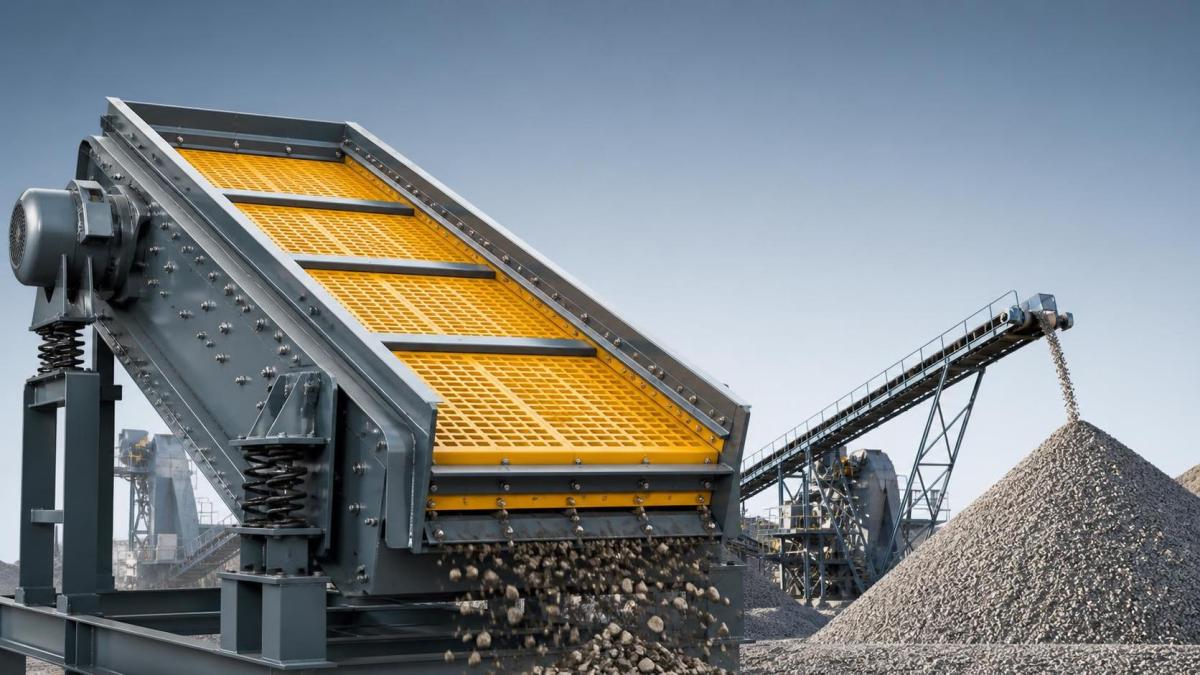
Polyurethane Screen Mesh is valued for abrasion resistance, resilience, noise reduction, and longer service life in many aggregate and mining applications. But “polyurethane” does not identify a single material grade. Formulations differ in hardness, resilience, tear resistance, hydrolysis resistance, temperature behavior, and bond compatibility with internal reinforcement.
For example, a panel used in dry crushed granite screening faces a different wear mechanism from one handling wet iron ore, coal washing feed, or sand containing fine clay. High abrasion calls for a wear-resistant compound and adequate thickness. Wet or chemically demanding environments may require attention to hydrolysis resistance. In cold regions, impact resistance and low-temperature flexibility become more important; a material that performs well in a moderate climate can become brittle or less resilient under severe cold.
Suppliers should be asked to state the proposed material grade, hardness range, intended operating conditions, and the basis for recommending the formulation. A generic promise of “high wear resistance” is not enough for a cost comparison. Where a project uses mixed feed or has seasonal variation, it may be preferable to test a limited quantity of panels before committing to a full deck conversion.
Internal reinforcement determines whether the panel survives the application
Most heavy-duty polyurethane panels are not simply solid molded sheets. They may incorporate steel frames, steel wire, fiberglass reinforcement, or other support structures. This reinforcement adds cost, but it has a direct influence on panel stiffness, load-bearing capacity, resistance to deformation, and the reliability of fixing points.
In a high-impact feed zone, insufficient reinforcement can lead to cracking around bolts, distortion along support rails, or premature failure at the edges. In contrast, excessive rigidity may be unnecessary on a lower deck handling fine material and may add weight without improving the useful life.
Replacement pricing should be evaluated by deck position, not only by a single average price. The top deck often sees larger particles and more impact, while lower decks may experience more abrasion from smaller material and higher moisture effects. Using the same panel construction across every deck can simplify inventory, but it is not always the lowest-cost operating strategy.
Operating conditions frequently outweigh the unit price
The same mesh can last very different lengths of time across two plants. Feed size, material hardness, bulk density, moisture, clay content, drop height, screen angle, vibration amplitude, frequency, and feed distribution all influence wear rates.
Poor feed distribution is particularly expensive. When material lands heavily on one side of a screen deck, a small group of panels can wear out far earlier than the rest. Replacing isolated panels may appear manageable, but repeated shutdowns, inconsistent screening, and stockholding of multiple panel types increase the real cost. Correcting the chute, feed box, or distribution plate can sometimes deliver a better return than upgrading to a more expensive mesh grade.
Screen machine condition must also be considered. Loose support rails, damaged clamping components, incorrect tension, cracked side plates, and abnormal vibration can shorten panel life regardless of material quality. In replacement discussions, a supplier should not be expected to guarantee service life without information about the screen model, deck structure, material characteristics, and operating history.
Downtime makes inexpensive panels expensive
The cost of a replacement includes labor, shutdown planning, lost tonnes, safety preparation, and the possibility that a failed panel damages adjacent panels or allows oversize material into downstream equipment. In high-output aggregate plants, the production value of a short shutdown can exceed the difference between two screen-media quotations.
This is why changeout speed deserves a financial value. Modular polyurethane systems can allow targeted replacement of worn sections rather than removal of an entire large panel. The benefit is strongest where wear is concentrated at the feed end or along specific material paths. On the other hand, a highly specialized modular system can increase dependence on one supplier if the locking parts and panel geometry are proprietary.
Replacement planning should also account for the wider circuit. A primary crusher handling variable feed, such as an OEM PXE Jaw Crusher Tracked Version Available, High Torque Motor, For Coal Gangue Or Shale, Primary Crushing In Cold Climate Machine, can alter the size distribution and shape of material reaching downstream screens. Changes in crusher settings, liner wear, or feed moisture may affect screen-media consumption even when the screen itself has not changed.
Supplier capability affects cost after the purchase order is issued
For custom or export projects, the cost of supply disruption can be substantial. A manufacturer’s ability to confirm drawings, maintain mold accuracy, provide batch consistency, package panels securely, and deliver replacement stock on schedule should be part of the commercial assessment.
Questions worth raising include whether the supplier manufactures the panels directly; whether it can produce customized aperture patterns and reinforcement layouts; how it controls dimensions and hardness; whether replacement panels can be matched to previous batches; and how quickly it can respond when a deck layout changes. For overseas supply, packaging against moisture and deformation, export documentation, spare-parts labeling, and logistics lead time are practical cost factors rather than administrative details.
It is also sensible to distinguish between a supplier offering a lower price because of efficient production and one offering a lower price because critical specifications have been omitted. Requesting a drawing confirmation, material description, unit weight, reinforcement details, and recommended application range reduces this risk.
A more useful way to compare quotations
Instead of selecting by price per panel alone, compare offers using a common operating basis. Record the price per square metre, expected service interval, number of panels required, installation hours, planned spare quantity, likely freight cost, and estimated production loss during replacement. Where historical data exist, calculate cost per processed tonne or cost per operating hour.
The expected service interval should be treated carefully. A stated lifespan is meaningful only when tied to a known material, aperture, feed condition, and screen configuration. If no comparable operating record exists, use a trial order and establish inspection intervals. Monitor wear at the feed end, aperture growth, cracking around fixings, blinding frequency, and changes in product grading.
The best replacement decision is rarely the cheapest panel and rarely the most heavily built panel. It is the option that fits the actual duty, maintains required separation efficiency, can be installed without excessive delay, and can be replenished reliably. When those conditions are assessed alongside purchase price, Polyurethane Screen Mesh becomes a controllable operating-cost category rather than an unpredictable maintenance expense.
Leave A Message
If you are interested in our products and want to know more details, please leave a message here, we will reply you as soon as we can.